Category
Compliance
69 OSHA and HazCom guides filed under Compliance — practical, CFR-cited, and verified against primary sources.

Your Crew Doesn't Have Email. Your Safety Software Demands It.
OSHA never asks whether a worker has an inbox. Most safety platforms do. The workaround crews reach for, one shared login for the whole trailer, destroys the one thing the records were supposed to prove: who did what.

The Job Ended. Who Can Still Ask for Your SDS?
When a crew demobilizes, the instinct is to shut off access. OSHA's text runs the other way: a safety data sheet is an exposure record, and the people who can ask for it include the ones who no longer work for you.

Does OSHA Require Safety Data Sheets in Spanish?
No for the document, yes for the training. 29 CFR 1910.1200(g)(2) requires the SDS in English and only permits other languages; the same standard, OSHA's 2010 policy statement and the 2026 HazCom directive require training in a language the worker understands. Which one an inspector cites, and what a defensible bilingual program looks like.
Does OSHA Require You to Separate Incompatible Chemicals?
Mostly no — and knowing exactly where the 'no' ends is what keeps you off a citation. The Hazard Communication Standard imposes no storage segregation rule. The explicit federal separation sentences are rare and narrow. The segregation charts your crew follows come from fire code. And OSHA can still cite the pile of oxidizers next to the solvents, through the General Duty Clause.
How Often Do Slings Need to Be Inspected? What OSHA Actually Requires
Each day before use by a competent person designated by the employer, in construction and general industry alike, every shift for all rigging on a construction site, and more often when conditions warrant. OSHA's sling rules in 29 CFR 1926.251 and 1910.184 also carry removal-from-service criteria with hard numbers, an identification tag requirement, and exactly one written record: the thorough inspection of alloy steel chain slings.
Is a Scissor Lift an Aerial Lift? OSHA Says It's a Scaffold
OSHA answered this in writing in 2000: a scissor lift is not an aerial lift. It is a mobile scaffold, covered by 29 CFR 1926.451 and 1926.452(w). That one classification decides whether your crew ties off, what training the operator needs, who inspects the machine and against which checklist.
Is There a Passing Score for an OSHA Forklift Evaluation?
No. 29 CFR 1910.178(l) contains no percentage, no grade and no pass mark — and the '80% to pass' number the training market sells can quietly convert a mandatory retraining trigger into a green light. What the rule actually demands is demonstrated competence, observed in the workplace, certified by name and date.
OSHA Hand and Power Tool Rules: What 1926 Subpart I Requires, Tool by Tool
The five tool standards at the front of 29 CFR 1926 Subpart I, 1926.300 through .304, govern the most-used equipment on any jobsite. They decide which tools need constant-pressure switches, when a grinder guard is mandatory, who may fire a powder-actuated tool, and why your carpenter's personal saw is still your compliance problem.
Are Safety Incentive Programs Legal Under OSHA? What 1904.35 Actually Prohibits
Yes. Safety bonuses, zero-injury awards and post-incident drug testing are all legal under 29 CFR 1904.35(b)(1)(iv). What the rule prohibits is punishing a worker for reporting. OSHA's 2018 position, the precautions that keep a rate-based program lawful, and the program designs OSHA calls always permissible.
The GC Wants Your OSHA 300 Log Before You Can Bid. Do You Have to Provide It?
No OSHA rule requires you to hand your 300 Log to a general contractor, owner or prequalification platform — and if you choose to share it, 1904.29(b)(10) requires the employee names to come off first. Who actually holds a right to your records, what to send instead, and the redaction the rule makes mandatory.
The Four-Business-Hour Rule: Producing Your OSHA 300 Logs During an Inspection
When an OSHA compliance officer asks for your injury and illness records, 29 CFR 1904.40 gives you four business hours to hand over copies. What they can ask for, how far back it reaches, who counts as an authorized government representative, and why late production is a citation of its own.
OSHA's July 2025 Penalty Cuts: How Small Businesses Stack Reductions to 80%+
OSHA's July 14, 2025 update handed small employers a much bigger break: a 70% size cut now reaches 25 employees, and a new 15% 'quick-fix' rewards fixing the hazard on the spot. Stacked, a small firm can cut a fine by more than 80%. This guide shows how each reduction works and how to earn it.

Hearing Conservation Program & Annual Training (1910.95)
At 85 dBA over an 8-hour day, OSHA requires a full hearing conservation program — monitoring, audiograms, hearing protection, and annual training. What the program contains and what the training must cover.

Is a Near Miss OSHA Recordable? The Log, the Report, and the Confusion
A near miss is not OSHA recordable and not reportable — no injury means no 1904.7 trigger. Here is why, the one training exception, and why you should still log every one.
Is It Work-Related? The 9 OSHA Exceptions That Make an Injury Not Recordable
An injury in the work environment is presumed work-related — but 29 CFR 1904.5(b)(2) lists nine exceptions that make it NOT recordable. The parking lot, the common cold, and seven more, with the aggravation rule.

60+ Free OSHA Compliance Tools: The Complete 2026 Toolkit
A curated toolkit of more than sixty free OSHA compliance tools — fine calculators, GHS label makers, JHA builders, SDS gap analyzers, permit generators, recordkeeping helpers — organized by the job you're trying to do. No signup, no cost, built on the actual CFR.

How Much Does OSHA HazCom & SDS Software Cost? A 2026 Buyer's Guide
The honest answer to 'how much does HazCom software cost' is that the pricing model matters more than the sticker price — because a per-seat plan quietly punishes you for doing exactly what OSHA wants: giving every worker access. A buyer's guide to what drives the price, and how to compare it against the real cost of manual compliance.

The OSHA Citation Defense Package: What Evidence Wins a Contest
When you contest an OSHA citation or sit down at the informal conference, the outcome turns less on argument than on evidence — the records you can produce, dated and complete, on demand. This is a field guide to the defense package that earns penalty reductions and dismissals, and how to assemble it before you ever need it.

HazCom Citations Decoded: The Most-Cited 1910.1200 Subparts and the $16,550 Penalty Math
Hazard Communication ranked second on OSHA's FY2025 list of most-cited standards. See which 1910.1200 subparts draw citations, how the $16,550 penalty math actually works, and how to close the gaps before an inspector does.

Mixtures and the 2027-2028 HazCom Deadlines: A Transition Guide for Formulators and Employers
Mixtures get later HazCom 2024 deadlines than substances: manufacturers comply by November 19, 2027 and employers by May 19, 2028. Here is the full transition plan, worked example, and the myths that get companies cited.

HCS 2024 Deadlines: The Complete Date-by-Date Compliance Calendar (Substances vs Mixtures)
OSHA's HCS 2024 has four staggered deadlines split by substances vs mixtures and by manufacturer vs employer. Here is the exact date-by-date compliance calendar.

Do You Have to Retrain Employees for HCS 2024? Your November 20, 2026 Training Obligation
HCS 2024 added new hazard classes and label elements, so employers must provide additional training on any newly identified hazards. Here is your November 20, 2026 date and exactly what to cover.

OSHA First Aid & CPR Requirements for Construction: Complete Guide
29 CFR 1926.50 requires trained first-aid personnel on site only when no hospital, clinic, infirmary, or physician is reasonably accessible in time and distance. See how that accessibility is judged, what certifications OSHA accepts, and what inspectors actually look for.

Hazardous Waste Disposal Requirements: OSHA & EPA Compliance Guide
Navigate OSHA and EPA hazardous waste disposal requirements. Covers RCRA, waste determination, labeling, storage limits, manifesting, and construction debris. Updated for 2026.

OSHA Chemical Storage Requirements: Complete Compliance Guide
Complete guide to OSHA chemical storage requirements for 2026. Covers flammable cabinets, incompatible chemicals, secondary containment, ventilation, and signage. Avoid $16,550+ fines.
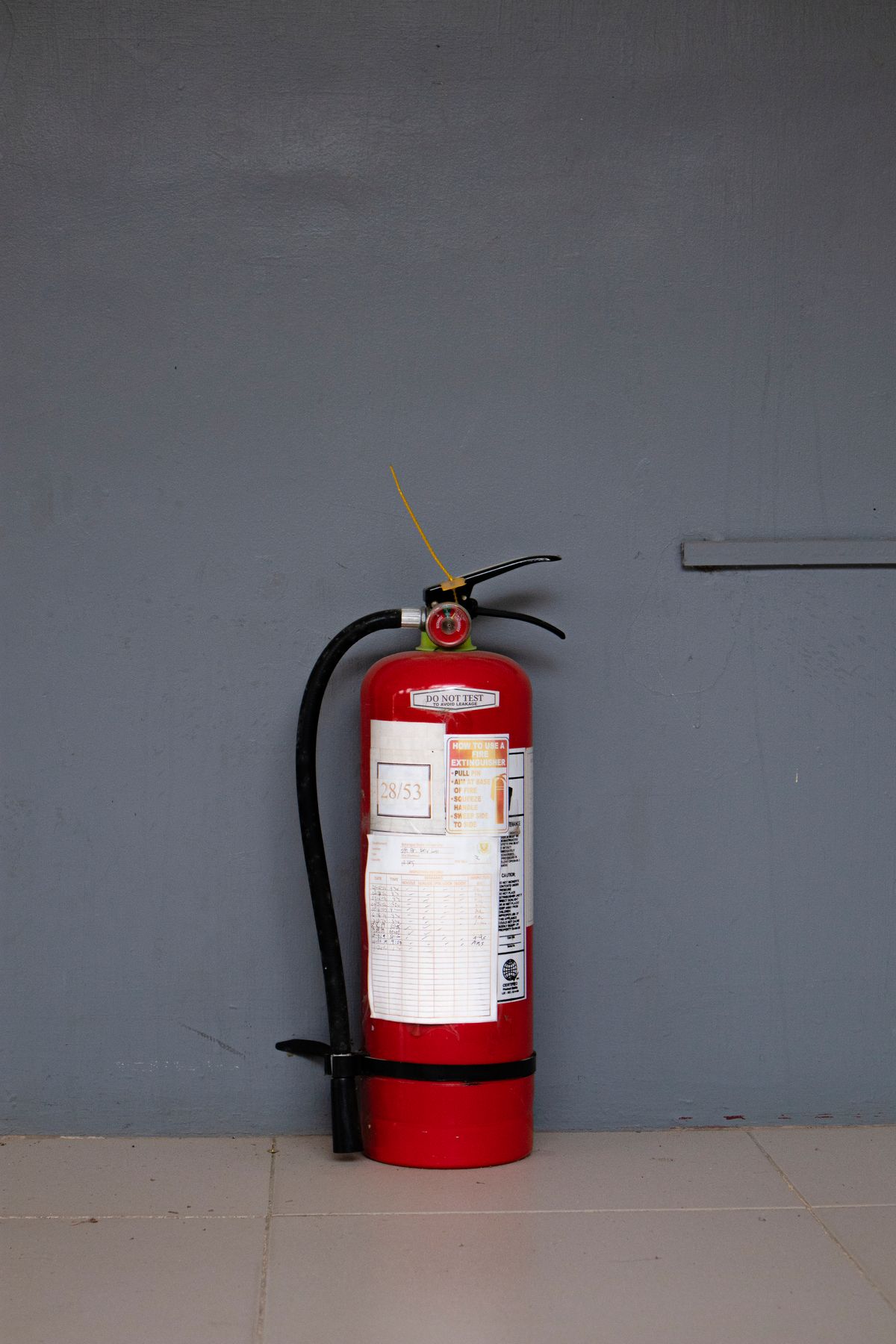
OSHA Fire Safety Requirements: Complete Workplace Compliance Guide
Complete OSHA fire safety requirements for workplaces. Covers fire extinguishers, exit routes, emergency action plans, hot work permits, and fire prevention plans. 2026 penalty rates included.

OSHA Inspection Process: What to Expect & How to Prepare
Complete guide to the OSHA inspection process. Learn the 4 phases, your rights during inspections, how to prepare, and what happens after citations. Updated for 2026 penalty rates.

OSHA Recordkeeping Requirements: 300 Log, 301, & 300A Complete Guide
Master OSHA recordkeeping: Forms 300, 300A, 301. Learn what's recordable, posting deadlines, electronic submission rules, and exemptions. Updated for 2026.
OSHA Safety Training Requirements: Complete Employer Guide
Every OSHA training requirement employers must meet in 2026. Covers HazCom, fall protection, confined space, LOTO, and more. Includes frequencies, documentation rules, and penalty avoidance.

OSHA Scaffolding Requirements: Complete Safety & Compliance Guide
Master OSHA scaffolding requirements (29 CFR 1926.451-454). Covers supported scaffolds, suspended scaffolds, competent person duties, fall protection, and inspection rules. 2026 penalties included.

Workplace Chemical Exposure Limits: PELs, TLVs & RELs Explained
Understand OSHA PELs, ACGIH TLVs, and NIOSH RELs. Complete guide to workplace chemical exposure limits with lookup tables, monitoring requirements, and compliance strategies.

Emergency Action Plans for Construction: OSHA Requirements & Free Template
When does OSHA actually require an Emergency Action Plan on a jobsite, what six elements must it contain under 1926.35(b), and what's the ≤10-employee oral exception? The construction EAP guide, with a free builder.

OSHA Top 10 Most Cited Violations 2026: Complete Rankings & How to Avoid Them
OSHA's preliminary Top 10 for FY2026: fall protection leads, then hazard communication and lockout/tagout. Every standard on the list, the citations behind it, and how to fix it before your next inspection.

HazCom vs GHS: What's the Difference? A Clear Explanation
HazCom vs GHS, settled: GHS is the UN's international framework; HazCom (29 CFR 1910.1200) is the enforceable US law that adopts it. What's the same, what's different, and what US employers must actually do.
How to Contest an OSHA Citation: Step-by-Step Guide for Employers
Received an OSHA citation? You have 15 working days to contest. Your three options, how the Review Commission process runs after a notice of contest, the penalty reductions OSHA applies, and the defenses that hold up.

EPCRA Tier II Reporting for Construction: Do You Need to File?
If your jobsite holds 10,000 lb of a hazardous chemical, or the lower of 500 lb or the TPQ of an Extremely Hazardous Substance, at any one time, EPCRA section 312 requires an inventory report by March 1. The thresholds, the aggregation trap, Tier I vs Tier II, the exemptions and the per-day penalty.

HazComFast vs SafetyCulture (iAuditor): Construction HazCom Comparison 2026
Compare HazComFast and SafetyCulture for OSHA HazCom compliance. See how offline SDS access, GHS label generation, chemical inventory, and construction-specific features compare — and which one actually maps to 29 CFR 1910.1200 / 1926.59.

OSHA Multi-Employer Worksite Doctrine: Who Gets the Citation?
On a shared jobsite, OSHA can cite more than one employer for the same hazard. The four roles in CPL 02-00-124, the two-step test, all thirteen of OSHA's own examples, and what the courts have said.
OSHA Recordkeeping 101: When Is an Injury Recordable?
Not every workplace injury goes on the OSHA 300 log. Learn the recording criteria, first aid vs. recordable distinctions, and the 7-day rule that trips up most employers.

OSHA Silica Compliance for Construction: The Complete Guide
OSHA estimates its silica rule will save 600+ lives and prevent 900+ silicosis cases a year. This guide covers Table 1 controls, exposure monitoring, medical surveillance, and the written exposure control plan every contractor needs in 2026.

Digital Permits for Construction: Hot Work, Confined Space, Excavation & Scaffold
Digital permit-to-work systems replace paper for hot work, confined space, excavation, and scaffold — closing the proof gap that gets contractors cited. What each permit must capture, the exact CFR that governs it, and how to build an audit trail OSHA accepts.

HazComFast vs KHA Online SDS: Construction Compliance Comparison 2026
Compare HazComFast and KHA Online SDS (now VelocityEHS) for OSHA HazCom compliance. Offline access, GHS labels, pricing, and construction-specific features compared, with the CFR cites and 2026 deadlines that matter.
HazCom Program Updates You Need to Make Before November 20, 2026
The November 20, 2026 HCS 2024 employer deadline is for SUBSTANCES — and a January 2026 final rule already moved every date. Here are the 7 updates every written HazCom program needs now, with the exact deadlines that apply to you.

HazComFast vs SiteDocs: Which Is Better for Construction HazCom in 2026?
A feature-by-feature, OSHA-grounded comparison of HazComFast and SiteDocs for construction HazCom in 2026: SDS, offline access, GHS labels, pricing, and what each tool is actually built for.

Read Proof: SDS Confirmation & Digital Signatures for OSHA Compliance
Prove your crew read every SDS: digital read-confirmations and e-signatures that satisfy OSHA HazCom training and access rules — and support a good-faith penalty reduction.

Custom Safety Form Builder: Create Digital Inspection Forms for Construction
OSHA rarely dictates a form's layout — it requires documentation that proves compliance. How to build custom digital inspection forms, checklists, and incident reports that hold up as evidence, work offline, and retain for the required 5 years.

Safety Dashboard & Audit Logs: Real-Time Visibility Across Every Jobsite
How centralized safety dashboards and complete, timestamped audit logs give construction managers real-time compliance visibility and OSHA-ready documentation.

OSHA Forms 300, 300A & 301: The Complete Recordkeeping Guide for 2026
Master OSHA injury and illness recordkeeping with this complete guide to Forms 300, 300A, and 301. Learn who must file, key deadlines, electronic submission rules, and how to avoid costly penalties.

Legal Hold & Record Locking: Protect Safety Records During Litigation
How legal hold and record locking preserve OSHA safety records during citations and lawsuits — meeting 1910.1020 and 1904.33 retention duties and preventing spoliation sanctions.

30-Year Record Retention: OSHA 1910.1020 for Construction (Full Guide)
OSHA 1910.1020 requires exposure records for 30 years and medical records for employment + 30 years. See exactly what to keep, how long, the exceptions, and a worked retain-until example.

Defense Package: Automated OSHA Citation & Litigation Evidence Export
When OSHA cites you, you have 15 working days to respond. How to assemble a complete defense package — SDS logs, training records, permits, audit trails — and which evidence actually reduces the penalty.

Subcontractor Safety Management: Multi-Employer HazCom Compliance
How a general contractor manages subcontractor chemical safety on a shared jobsite: prequalification, chemical coordination, training checks, inspections and the record that answers OSHA's reasonable-care questions.

Construction HazCom 1926.59: The Legal Standard
OSHA's construction HazCom standard, 29 CFR 1926.59, adopts 1910.1200 by reference. What it requires, the November 20, 2026 deadline, multi-employer liability, and how to comply on a moving jobsite.

Offline SDS Access: Critical Compliance for Remote Sites
Digital HazCom fails when connectivity drops. OSHA mandates 'immediate' access without barriers. Discover why offline backups are essential for compliance.

OSHA HazCom for Contractors: The Essentials Guide
A targeted guide for contractors facing the 2026 HazCom updates. Focus on multi-employer liability, new labeling rules, and the Nov 20 compliance deadline.

Subcontractor HazCom: Managing Liability on Job Sites
On a shared jobsite, every employer that brings chemicals owes the others three written exchanges under 1910.1200(e)(2), and the GC is usually the controlling employer under OSHA's multi-employer policy. How to run both.
The November 20 Deadline: Your 2026 HazCom Compliance Audit
November 20, 2026 is the OSHA date by which employers update, as necessary, HazCom labeling, programs, and training for newly identified hazards (GHS Revision 7). Use this construction-ready audit checklist — with the exact CFR cites — to verify you're compliant before an inspector arrives.

The 60-Second OSHA Inspection Response Plan
When an OSHA CSHO knocks, the first 60 seconds set the trajectory of the entire inspection. Use this minute-zero Go-Team protocol — verify credentials, alert the team, escort to neutral ground — to stay in control.
Automate RFI Requests for Subcontractor SDSs: Close the Compliance Gap
Chasing missing SDSs from subs by email costs time and leaves a multi-employer citation risk. How to automate the SDS request workflow, the OSHA duty behind it, and how to price your own manual process.

Chemical Compatibility Matrix: Prevent Jobsite Reactions
Don't store oxidizers with flammables. Use our segregation guide and compatibility matrix to prevent catastrophic chemical reactions on your jobsite.

The True ROI of Safety: Calculating the Cost of Workplace Injuries
Safety is often treated as a cost center. OSHA's Safety Pays math shows the opposite: direct vs. indirect costs, the 1.1–4.5x hidden multiplier, and how much you must sell to cover one injury.

The $16,550 Mistake: Understanding HazCom Penalties in 2026
For 2026, OSHA civil penalty amounts are unchanged from 2025 — no inflation adjustment was made. Hazard Communication ranked second on OSHA's FY2025 list of most-cited standards. For a small contractor, the fines can threaten solvency.

Ultimate Chemical Inventory: OSHA & Tier II Template
Streamline your 2026 Tier II reporting with a chemical inventory template that bridges OSHA HazCom and EPA EPCRA requirements. Download the essential fields.

Write an OSHA HazCom Program in 10 Minutes: A Template
Don't start from scratch. Use this 10-minute guide to build a compliant written HazCom program covering labeling, SDS access, and training requirements.

How to Prepare for an OSHA HazCom Inspection: Be Audit-Ready
Be audit-ready for OSHA HazCom (1910.1200) inspections. Serious citations up to $16,550; you have 15 working days to contest. Written program, SDS access, labels, proof of training.
OSHA Penalties for Construction (2026): Complete Fine Schedule & How to Avoid Citations
Construction leads all industries in OSHA violations. See the full 2026 penalty schedule, understand how fines are calculated, learn which violations are most common, and get actionable steps to avoid costly citations.

Complete Guide to OSHA HazCom Compliance
The definitive construction HazCom 2026 guide: the Nov 20, 2026 employer deadline, GHS Rev 7 changes, the eight required pictograms, penalty caps, and a 90-day action plan — all verified against the CFR.

How to Read a Safety Data Sheet (SDS): A Complete Guide
Safety Data Sheets contain critical chemical safety information, but they're often confusing. Learn how to quickly find the information you need in each of the 16 SDS sections, from hazard identification to disposal considerations.

OSHA HazCom Standard: Key Updates & GHS Rev 7 Transition
The HCS 2024 requirements and GHS Revision 7 changes, explained. We break down what's changed and what it means for your workplace in 2026.