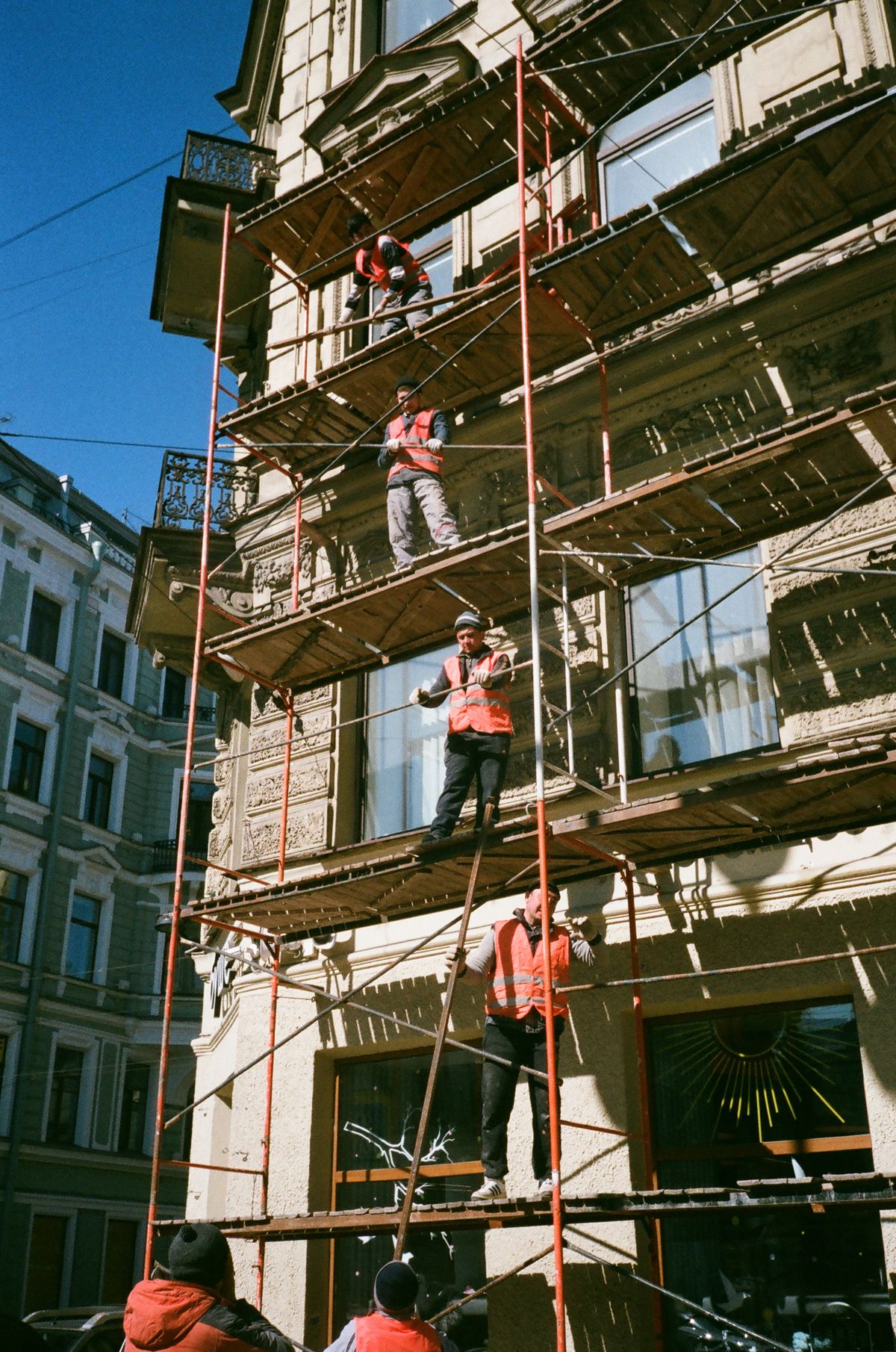
Introduction to OSHA Scaffolding Requirements for 2026
Scaffolding is one of the most cited parts of construction safety: 29 CFR 1926.451 ranked sixth on OSHA's FY2025 list of the most frequently cited standards. For a construction company owner or safety manager, failing to meet OSHA scaffolding requirements is both a safety failure and a financial liability.
For 2026, OSHA's maximum penalty amounts are unchanged from 2025 (no inflation adjustment was made for 2026). A "Serious" violation carries a maximum penalty of $16,550, while a "Willful" or "Repeated" violation can reach $165,514 per violation (29 CFR 1903.15(d)). Five serious scaffold items on one site could be proposed at up to $82,750 combined, before any reduction. Our OSHA Fine Calculator estimates a penalty with the Field Operations Manual method.
The foundational regulation for scaffolding in the construction industry is 29 CFR 1926 Subpart L. This subpart is divided into several specific sections, primarily 1926.451 (General Requirements), 1926.452 (Specific Scaffold Types), 1926.453 (Aerial Lifts), and 1926.454 (Training Requirements). This guide works through those four sections as they apply on a live jobsite. Under 29 CFR 1926 Subpart L, every scaffold must hold its own weight and four times its maximum intended load, workers more than 10 feet up must be protected from falls, and a competent person must inspect the scaffold before each shift.
The scaffold numbers OSHA checks
A competent person must inspect before every shift and after anything affecting structural integrity (1926.451(f)(3)).
1. Overview of OSHA Scaffold Standards (1926.451-454)
The OSHA scaffold standards are performance-based, meaning they define the objective (safety) while allowing some flexibility in how that objective is met, provided specific engineering and safety criteria are satisfied.
29 CFR 1926.451: General Requirements
This is the "core" of the standard. It covers everything from capacity and construction to access, use, and fall protection. If you violate a rule related to how a scaffold is built or used, it almost always falls under .451.
29 CFR 1926.452: Additional Requirements for Specific Types of Scaffolds
This section provides unique rules for 25 different types of scaffolds. For example, the requirements for a pole scaffold differ significantly from those for a mobile scaffold or a ladder jack scaffold.
29 CFR 1926.453: Aerial Lifts
Aerial lifts (cherry pickers, boom lifts) sit in Subpart L, but their criteria are set out exclusively in 1926.453 (1926.450(a)): only authorized persons may operate one (1926.453(b)(2)(ii)), and the worker in the basket is tied off with a lanyard attached to the boom or basket (1926.453(b)(2)(v)). Scissor lifts are the reverse case: OSHA classifies them as mobile scaffolds under 1926.451 and 1926.452(w), not as aerial lifts — the distinction that decides whether the crew ties off.
29 CFR 1926.454: Training Requirements
This section requires that any employee who works on a scaffold be trained by a person qualified in the subject (1926.454(a)), and that anyone erecting, disassembling, moving, operating, repairing, maintaining, or inspecting one be trained by a competent person (1926.454(b)). It requires no written record, but a sign-in sheet shows the training happened; our HazCom Training Record prints one.
2. Types of Scaffolds Covered
Under OSHA scaffolding requirements, scaffolds are generally categorized into three main groups. Understanding which category your equipment falls into dictates which specific regulations apply.
| Scaffold Category | Examples | Primary Risk Factors |
|---|---|---|
| Supported Scaffolds | Frame, Tube & Coupler, Pole, Mobile (Rolling) including scissor lifts, Ladder Jacks | Tipping, structural collapse, foundation failure |
| Suspended Scaffolds | Single-point, Multi-point, Two-point (Swing-stage), Catenary | Rope failure, motor failure, anchor point failure |
| Aerial Lifts (criteria only in 1926.453) | Boom lifts, bucket trucks | Fall from basket, tip-over, electrical contact |
Each type carries its own rules. A suspended scaffold depends on its support devices, tiebacks, and ropes (1926.451(d)), failure points that a frame scaffold standing on a slab does not have.
3. Supported Scaffold Requirements
Supported scaffolds consist of one or more platforms supported by outrigger beams, brackets, poles, legs, uprights, posts, frames, or similar rigid support. Following 29 CFR 1926.451(c), the following rules are non-negotiable:
Foundation and Base
Footings must be level, sound, rigid, and able to carry the loaded scaffold without settling (1926.451(c)(2)(i)), and poles, legs, frames, and uprights bear on base plates and mud sills or another adequate firm foundation (1926.451(c)(2)).
- Mud sills: Usually 2x10 or 2x12 planks placed under the base plates to spread the load. Unstable objects, such as loose bricks or concrete blocks, may not support a scaffold (1926.451(c)(2)(ii)).
- Plumb and braced: Poles, legs, posts, frames, and uprights must be plumb and braced to prevent swaying and displacement (1926.451(c)(3)).
Stability (The 4:1 Rule)
Supported scaffolds with a height-to-base width ratio of more than 4 to 1 must be restrained from tipping by guying, tying, bracing, or equivalent means. For example, a frame scaffold with a 5-foot base must be restrained once its height exceeds 20 feet (1926.451(c)(1)).
Bracing
On fabricated frame scaffolds, frames and panels are braced by cross, horizontal, or diagonal braces, or a combination, that secure vertical members together laterally (1926.452(c)(2)). This keeps the scaffold "square" so it does not "rack" or lean under load.
4. Suspended Scaffold Requirements
Suspended scaffolds are platforms suspended by ropes or other non-rigid means from an overhead structure (29 CFR 1926.451(d)). These are common in masonry cleaning and high-rise glazing.
Anchorages and Tiebacks
The most critical failure point for a suspended scaffold is the anchor.
- Support devices such as outrigger beams, cornice hooks, and parapet clamps must rest on surfaces that can carry at least 4 times the load imposed at the hoist's rated load, or 1.5 times the load at the hoist's stall capacity, whichever is greater (1926.451(d)(1)).
- Tiebacks must be secured to a structurally sound anchorage on the building and never to a standpipe, vent, other piping, or electrical conduit (1926.451(d)(3)(ix)).
Wire Ropes and Hoists
A competent person inspects ropes for defects before every shift and after any occurrence that could affect their integrity, and a rope showing any of the listed defects, such as kinks or bird caging, must be replaced (1926.451(d)(10)). Besides the normal operating brake, hoists need a braking device or locking pawl that engages automatically on an uncontrolled movement (1926.451(d)(16)).
Fall Protection for Suspended Scaffolds
Unlike supported scaffolds where guardrails might suffice, 29 CFR 1926.451(g)(1)(ii) requires that workers on a single-point or two-point adjustable suspension scaffold be protected by both a guardrail system AND a personal fall arrest system (PFAS).
5. Scaffold Platform Requirements: Planking, Width, and Gaps
The platform is where the work happens, making it the most likely area for slips, trips, and falls. OSHA is very specific about how these platforms are constructed under 1926.451(b).
Planking Quality
All platforms must be fully planked or decked between the front uprights and the guardrail supports (1926.451(b)(1)). Whatever the planking, each platform must carry its own weight and at least 4 times the maximum intended load (1926.451(a)(1)); the non-mandatory Appendix A to Subpart L gives example criteria for wood planks.
Gaps and Widths
- Gaps: No more than 1 inch of space between adjacent planks, unless a wider space is shown to be necessary (1926.451(b)(1)(i)).
- Width: Most scaffold platforms must be at least 18 inches wide (1926.451(b)(2)).
- Front Edge Distance: The front edge of all platforms must not be more than 14 inches from the face of the work, unless guardrails are erected along that edge or personal fall arrest systems are used (1926.451(b)(3)). For plastering and lathing operations, this distance can be up to 18 inches; for outrigger scaffolds it is 3 inches.
Overlap and Extensions
- Overlap: Where planks are overlapped to create a long platform, the overlap must occur only over supports and must not be less than 12 inches unless the planks are nailed together or otherwise restrained (1926.451(b)(7)).
- End Overhang: Unless cleated or otherwise restrained, each end must extend over the centerline of its support at least 6 inches (1926.451(b)(4)), and no more than 12 inches for platforms 10 feet or shorter, or 18 inches for longer ones, unless the cantilever is designed to carry the load or guarded (1926.451(b)(5)).
6. Fall Protection Requirements on Scaffolds
Fall protection is the "big one" for OSHA inspectors. Under 29 CFR 1926.451(g), fall protection is required for any employee on a scaffold more than 10 feet above a lower level.
Thresholds and Systems
While 6 feet is the standard for most construction work, 10 feet is the specific threshold for scaffolds. Protection can be achieved through:
- Guardrail Systems: Top rails on supported scaffolds placed in service after January 1, 2000 must be between 38 and 45 inches high (1926.451(g)(4)(ii)); midrails, when used, go approximately midway between the top rail and the platform (1926.451(g)(4)(iv)).
- Personal Fall Arrest Systems (PFAS): Includes a full-body harness, lanyard, and anchor point.
Guardrail Strength
Top rails must withstand at least 200 pounds applied in any downward or horizontal direction, or 100 pounds on single- and two-point adjustable suspension scaffolds (1926.451(g)(4)(vii)). On a site with high wind or heavy materials, adding PFAS to the guardrails is often the safer choice.
Toeboards
Where toeboards are used to protect workers below, they must be at least 3.5 inches high and withstand 50 pounds of force (1926.451(h)(4)).
Falling-Object Protection Beyond Toeboards (1926.451(h))
Toeboards are only one option. 29 CFR 1926.451(h) treats a dropped tool or brick as its own hazard, separate from the worker's own fall. In addition to hard hats, each employee on a scaffold must be protected from falling hand tools, debris, and other small objects by toeboards, screens, or guardrail systems, or by debris nets, catch platforms, or canopy structures that contain or deflect the falling objects (1926.451(h)(1)).
Where tools, materials, or equipment could fall and strike workers below, 1926.451(h)(2) gives a choice of measures: barricade the area below and keep workers out (1926.451(h)(2)(i)); or run a toeboard along the edge of platforms more than 10 feet above lower levels (1926.451(h)(2)(ii)), with paneling or screening where materials are piled above it (1926.451(h)(2)(iii)); or use a guardrail with openings small enough to stop the objects (1926.451(h)(2)(iv)); or erect a canopy, debris net, or catch platform strong enough to take the impact over the people below (1926.451(h)(2)(v)). A toeboard used for this purpose must be at least 3½ inches high and withstand a 50-pound force in any downward or horizontal direction (1926.451(h)(4)). For how the same struck-by logic governs forklifts, vehicles, and cranes, see the Struck-By Safety hub.
7. Scaffold Access Requirements
OSHA 29 CFR 1926.451(e) states that when scaffold platforms are more than 2 feet above or below a point of access, portable ladders, hook-on ladders, attachable ladders, stair towers, stairway-type ladders, ramps, walkways, integral prefabricated scaffold access, or direct access from another scaffold must be used.
Prohibited Access Methods
- Cross-bracing: Never use the X-braces as a ladder; crossbraces may not be used as a means of access (1926.451(e)(1)).
- Climbing the Frames: Unless the frame is specifically designed with a built-in ladder (rungs spaced no more than 16¾ inches apart, 1926.451(e)(6)(vi)), you cannot climb the side of the scaffold.
Ladder Safety
Ladders must be positioned so as not to tip the scaffold (1926.451(e)(2)(i)). For hook-on and attachable ladders, the rungs must be at least 11.5 inches long and spaced no more than 16.75 inches apart (1926.451(e)(2)(v) and (vi)).
8. Load Capacity and Structural Requirements
Every scaffold must be designed by a "Qualified Person" and must be able to support its own weight plus at least 4 times the maximum intended load (1926.451(a)(1) and (a)(6)). This is known as the 4x Safety Factor.
Types of Loads
- Dead Load: The weight of the scaffold itself (frames, planks, braces).
- Live Load: The weight of workers, tools, and materials on the platform.
OSHA Load Classifications
| Classification | Intended Load |
|---|---|
| Light Duty | 25 lbs per square foot over the entire span |
| Medium Duty | 50 lbs per square foot over the entire span |
| Heavy Duty | 75 lbs per square foot over the entire span |
These ratings come from the non-mandatory Appendix A to Subpart L.
Loading past the design invites structural failure. A registered professional engineer must design pole scaffolds over 60 feet (1926.452(a)(10)), tube and coupler scaffolds over 125 feet (1926.452(b)(10)), and fabricated frame scaffolds over 125 feet above their base plates (1926.452(c)(6)).
9. Competent Person Duties and Qualifications
The term "Competent Person" is defined in 29 CFR 1926.450(b) as "one who is capable of identifying existing and predictable hazards in the surroundings or working conditions which are unsanitary, hazardous, or dangerous to employees, and who has authorization to take prompt corrective measures to eliminate them."
Specific Responsibilities for Scaffolds
A competent person is required to:
- Inspect scaffolds for visible defects before each work shift (1926.451(f)(3)).
- Supervise the erection, moving, dismantling, or alteration of any scaffold (1926.451(f)(7)).
- Determine if it is safe for employees to work on or from a scaffold during storms or high winds (1926.451(f)(12)).
- Train employees who are involved in erecting or disassembling scaffolds (1926.454(b)).
Note: Having a title like "Safety Director" does not automatically make someone a competent person. They must have the specific knowledge related to the type of scaffold being used.
10. Scaffold Inspection Requirements
According to 29 CFR 1926.451(f)(3), scaffolds and scaffold components must be inspected for visible defects by a competent person before each work shift and after any occurrence which could affect a scaffold's structural integrity.
The Inspection Process
The inspection should look for:
- Cracked or rusted welds on frames.
- Split, rotted, or burned planks.
- Missing components (pins, braces, base plates).
- Loose ties or guy wires.
- Mud or oil on platforms that could cause slips.
Subpart L requires no tags, but a "Tagging System" (Green = Safe, Yellow = Caution/PFAS Required, Red = Danger/Do Not Use) shows each shift's inspection at a glance. Our Weekly Site Safety Inspection checklist includes a ladders and scaffolds section.
11. Electrical Hazard Protection Near Scaffolds
One of the most lethal hazards on a job site is the proximity of metal scaffolds to overhead power lines. OSHA 29 CFR 1926.451(f)(6) sets strict clearance distances.
Minimum Clearance Distances
- Insulated lines under 300 volts: 3 feet.
- Insulated lines from 300 volts to 50 kV, and uninsulated lines under 50 kV: 10 feet.
- Lines over 50 kV: 10 feet plus 0.4 inches for each 1 kV over 50 kV, or twice the length of the line insulator, but never less than 10 feet.
Safety Protocols
Working closer is allowed only where the work requires it, after the utility or electrical system operator has been notified and has de-energized, relocated, or covered the lines (exception to 1926.451(f)(6)). Treat every wire as "live" until the utility confirms otherwise.
12. Weather and Environmental Considerations
Weather can turn a safe scaffold into a death trap in minutes. 29 CFR 1926.451(f)(12) prohibits work on scaffolds during storms or high winds unless a competent person has determined that it is safe and that employees are protected by a PFAS or wind screens.
Hazards to Monitor
- High Winds: Can lift planks off the scaffold or tip the entire structure.
- Ice/Snow: Employees may not work on a scaffold covered with snow, ice, or other slippery material except to remove it (1926.451(f)(8)).
- Lightning: A storm falls under the same rule as high wind (1926.451(f)(12)); on a metal scaffold, stopping at the first lightning is the prudent call.
Use our Silica Exposure Calculator if your scaffold work involves cutting or grinding in these environmental conditions, as dust control becomes more difficult in wind.
The standard, tools & related reading
- The hub: Fall Protection (OSHA 1926.501) — the 6-ft trigger, the three systems, anchorage, and rescue (scaffolds trigger fall protection at 10 ft under 1926.451(g))
- The standard: Scaffolding — 29 CFR 1926.451
- Related: Fall Protection in Construction (2026) · Scaffold Safety: OSHA Requirements · Ladder Safety (Subpart X)
- Tools: Fall Protection Plan Builder · Weekly Site Safety Inspection
13. Training Requirements for Scaffold Users and Erectors
Under 29 CFR 1926.454(a), training for scaffold users must cover:
- The nature of electrical, fall, and falling object hazards.
- The correct procedures for dealing with those hazards.
- The proper use of the scaffold and the handling of materials on it.
- The maximum intended load and the load-carrying capacities.
Retraining Requirements
Retraining is required (1926.454(c)) when:
- Changes at the worksite present new hazards.
- Changes in the types of scaffolds or fall protection occur.
- An employee demonstrates a lack of proficiency or understanding.
To facilitate quick, on-site safety meetings, use our Toolbox Talk Generator.
14. Common Scaffolding Violations and Real-World Penalties
Scaffolds (1926.451) ranked sixth and fall protection (1926.501) first on OSHA's FY2025 Top 10. The three scenarios below are illustrative composites — built to show how OSHA classifies a scaffold failure (Serious vs. Repeat vs. Willful) and roughly what that classification costs at the 2026 caps. They are not specific docketed citations.
Example 1: The improper base → Repeat
A scaffold supported by stacked cinder blocks instead of mud sills and base plates is a clear violation. If the same company was cited before for a substantially similar hazard, OSHA can classify it Repeat: the Field Operations Manual multiplies the gravity-based penalty by 2 or 5 for employers with 250 or fewer employees, or by 5 or 10 above that, within the $165,514 cap (29 CFR 1903.15(d)(2)).
Example 2: No fall protection → Willful
Workers on a 15-foot scaffold with no guardrails and no harnesses — while harnesses sit unused in the truck "to save time" — is the kind of fact pattern that can support a Willful classification (intentional disregard). A single willful violation can reach $165,514 (29 CFR 1903.15(d)(1)), and under the egregious policy (CPL 02-00-080) each instance can be cited separately.
Example 3: Training lapse → Serious
Even a perfectly built scaffold can draw a Serious citation (up to $16,550) if a worker can't explain how to inspect a harness or state the load capacity — because the .454 training duty is independent of how the scaffold is assembled.
You can review the real penalty structure and reductions at OSHA Penalties in Construction, and model your own exposure with the OSHA Fine Calculator.
15. Comprehensive Scaffolding Safety Checklist
Use this checklist daily to ensure your job site meets the OSHA scaffolding requirements.
- Capacity: Does the scaffold support 4x its maximum intended load?
- Foundation: Are base plates and mud sills present and on firm ground?
- Plumb and braced: Are poles, legs, frames, and uprights plumb and braced (1926.451(c)(3))?
- Planking: Are all platforms fully planked or decked (1926.451(b)(1))?
- Gaps: Is the space between planks 1 inch or less?
- Access: Is there a safe ladder or stair tower provided? (No climbing braces!)
- Guardrails: Are top rails (38"-45") and mid-rails installed on all open sides?
- Falling objects: Do toeboards, screens, nets, canopies, or barricades protect those below (1926.451(h))?
- Fall Protection: Is every worker more than 10 feet up protected, with both guardrails and PFAS on single- and two-point adjustable suspension scaffolds (1926.451(g)(1))?
- Ties/Guys: If height-to-base ratio is > 4:1, is it tied into the building?
- Electrical: Does the scaffold keep the 1926.451(f)(6) clearances (3 feet from insulated lines under 300 volts, 10 feet from most others up to 50 kV)?
- Competent Person: Has the scaffold been inspected before the current shift?
- Training: Have all employees on the scaffold been trained?
For a weekly site walk, use our Weekly Site Safety Inspection checklist.
Summary and Next Steps for Compliance
Mastering OSHA scaffolding requirements is not a one-time task; it is a continuous process of inspection, training, and maintenance. By following the standards outlined in 29 CFR 1926 Subpart L, you protect your workers' lives and your company's financial future.
Subpart L requires no written inspection or training record, but a dated tag, an inspection log, and a sign-in sheet are the simplest way to show that the competent person inspected each shift and that the crew was trained.
How HazComFast Can Help
HazComFast's tools cover the paperwork around the job. Whether you need to generate a site-specific safety plan, manage your Safety Data Sheets (SDS), or train your crew, our suite of tools is designed specifically for the construction industry:
- Generate a Program: Create your required written safety plans at HazCom Program Generator.
- Labels and SDS: Ensure your chemicals on-site are labeled correctly with our GHS Label Generator.
- Stay Organized: Use SDS QR Code Generator to give workers quick access to the SDS from the scaffold.
- Record Keeping: Total your 300 Log into the 300A summary with the OSHA 300A Auto-Filler.
Don't wait for an OSHA inspector to show up at your gate. Start today with HazComFast and ensure your team goes home safe every night. For more specialized guides, check out our blog on Secondary Container Labels: OSHA Rules or use our Safety Pays Calculator to see how much you save by preventing accidents.
Sources & verification (read on the eCFR and osha.gov, October 5, 2026): 29 CFR 1926 Subpart L: 1926.450 (scope, competent person), 1926.451 (capacity (a), platforms (b), supported scaffolds (c), suspension scaffolds (d), access (e), use and inspection (f), including power-line clearances (f)(6), slippery platforms (f)(8) and storms (f)(12), fall protection (g), falling objects (h)), 1926.452 (specific types, engineer design), 1926.453 (aerial lifts), 1926.454 (training), and the non-mandatory Appendix A (load ratings). FY2025 ranks from OSHA's Top 10 list. Penalty maximums per 29 CFR 1903.15(d) (2026, unchanged from 2025); repeat multipliers per the Field Operations Manual (CPL 02-00-164); egregious policy per CPL 02-00-080. The enforcement examples above are illustrative composites, not specific docketed citations. Not legal advice; State-Plan rules may differ.
Frequently Asked Questions
What is the OSHA standard for scaffolding?
OSHA scaffolding requirements are found in 29 CFR 1926.451 (General Requirements), 1926.452 (Specific Types), 1926.453 (Aerial Lifts), and 1926.454 (Training). Scaffolding (1926.451) ranked sixth on OSHA's FY2025 list of most-cited standards.
Who is the competent person for scaffolding?
Under 29 CFR 1926.450(b), a competent person can identify existing and predictable hazards and is authorized to take prompt corrective measures to eliminate them. That person inspects scaffolds for visible defects before each work shift and after any occurrence that could affect structural integrity (1926.451(f)(3)), and supervises erecting, moving, dismantling, or altering them (1926.451(f)(7)).
What fall protection is required on scaffolds?
Each employee on a scaffold more than 10 feet above a lower level must be protected from falling (29 CFR 1926.451(g)(1)). The system depends on the scaffold type, and single- and two-point adjustable suspension scaffolds need both guardrails and a personal fall arrest system (1926.451(g)(1)(ii)). Top rails on supported scaffolds placed in service after January 1, 2000 sit between 38 and 45 inches (1926.451(g)(4)(ii)), with midrails about halfway down (1926.451(g)(4)(iv)).
How much weight can scaffolding support?
Each scaffold and component must support its own weight and at least 4 times the maximum intended load (29 CFR 1926.451(a)(1)). Suspension ropes on non-adjustable suspension scaffolds take at least 6 times the maximum intended load (1926.451(a)(3)). A qualified person designs the scaffold, and it is built and loaded to that design (1926.451(a)(6)).
How often must scaffolds be inspected?
A competent person inspects scaffolds and components for visible defects before each work shift and after any occurrence that could affect structural integrity (29 CFR 1926.451(f)(3)), and inspects suspension ropes before each shift (1926.451(d)(10)). Subpart L does not require a written inspection record, but a dated tag or log shows the inspection happened.
What training is required for scaffold workers?
Each employee who works on a scaffold must be trained by a person qualified in the subject to recognize the hazards of that scaffold type and the procedures to control them (29 CFR 1926.454(a)). Erectors, dismantlers, and inspectors are trained by a competent person (1926.454(b)). Retraining is required when worksite or equipment changes bring a hazard the employee was not trained on, or when the employee's work shows a lack of proficiency (1926.454(c)).
OSHA figures and citations here come from our regulatory source-of-truth modules, last checked against the eCFR, OSHA.gov, and the Federal Register on October 5, 2026. Last reviewed October 5, 2026.
About This Article
Published by: HazComFast
Published: March 27, 2026
Last Updated: October 5, 2026
This content is for informational purposes only and does not constitute legal advice.