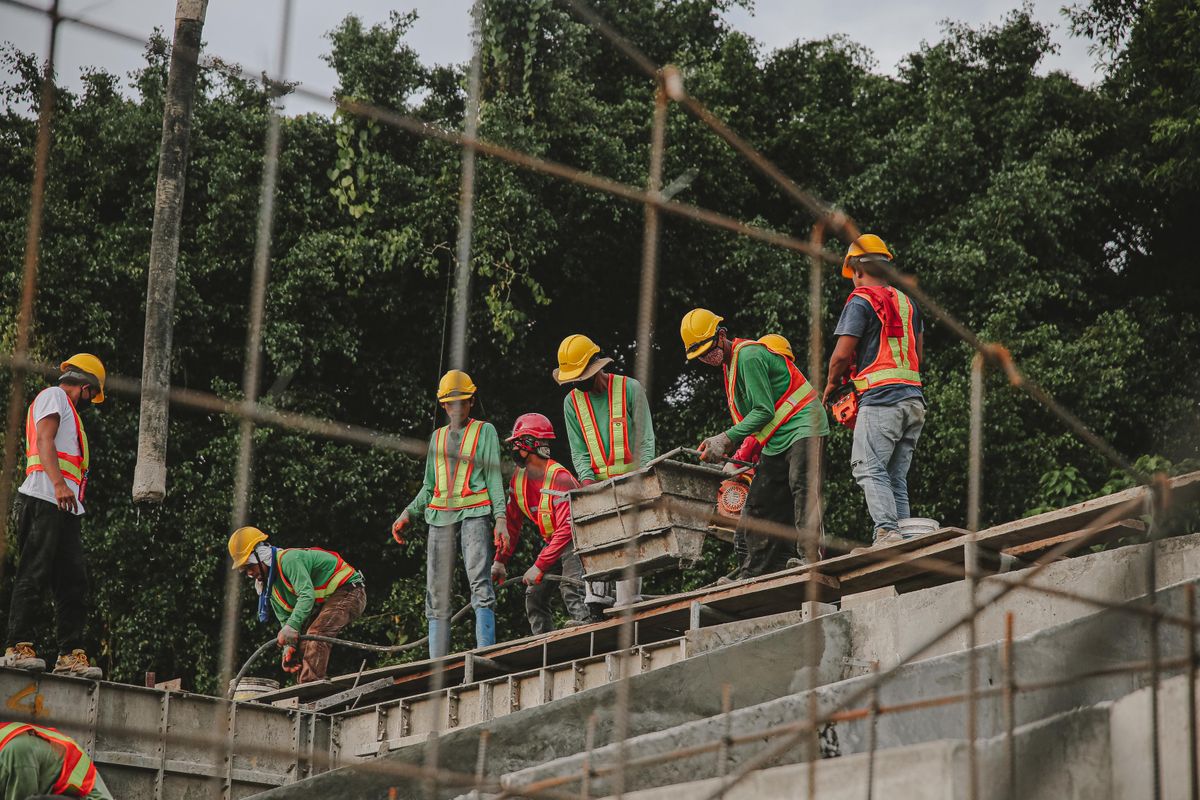
The Foundation of OSHA’s Training Mandate: Philosophy and Enforcement Strategy
In the eyes of the Occupational Safety and Health Administration (OSHA), a worker is only as safe as their understanding of the hazards surrounding them. Several standards ask for more than attendance: HazCom training must be effective (1910.1200(h)(1)), PPE users must demonstrate that they can use their equipment before they work (1910.132(f)(2)), and forklift operators must pass an evaluation in the workplace (1910.178(l)(2)(ii)). A sign-in sheet alone shows none of that.
The training duties themselves sit in specific standards across 29 CFR 1910 (general industry) and 29 CFR 1926 (construction); the General Duty Clause, Section 5(a)(1) of the OSH Act, covers recognized hazards that no standard addresses. In construction, 1926.21(b)(2) requires instruction in the unsafe conditions and the regulations of each employee's own work environment, which a generic course does not supply.
A missing training is cited as serious when there is a substantial probability that the hazard could cause death or serious physical harm (OSH Act section 17(k)). The maximum penalty for a serious violation is $16,550, and a willful or repeated violation can reach $165,514 per violation (29 CFR 1903.15(d), amounts in effect since January 15, 2025). Under OSHA's egregious policy (CPL 02-00-080, October 21, 1990), a willful violation that meets its criteria can be cited instance by instance, for example once per untrained employee.
Most OSHA training is required at initial assignment and again when something changes; only a few standards, such as respiratory protection, bloodborne pathogens, hearing conservation, the HAZWOPER refresher, and asbestos, lead, and arsenic, require training every year.
Our OSHA Fine Calculator estimates the penalty for a given violation with the Field Operations Manual method.
Training Requirements by Standard: 2026 Frequency Table
Training frequencies differ from one standard to the next. Some standards require training "annually," while others only require it "initially" or when "hazards change." The following table covers 26 standards and the training frequency each one sets.
| Standard (29 CFR) | Topic | Initial | Annual | Refresher/Trigger |
|---|---|---|---|---|
| 1910.1200 / 1926.59 | Hazard Communication | Yes | No | When new hazard is introduced |
| 1910.134 / 1926.103 | Respiratory Protection | Yes | Yes | Change in PPE or workplace condition |
| 1910.147 (general industry; construction uses 1926.417/1926.702(j)) | Lockout/Tagout (LOTO) | Yes | No | Annual inspection/Change in equipment |
| 1926.1207 (construction; Subpart AA) | Confined Space Entry | Yes | No | Change in permit space/Deviations |
| 1926.503 | Fall Protection | Yes | No | Inadequacy in work/New hazards |
| 1910.132 | PPE (General) | Yes | No | Changes in PPE type |
| 1910.1030 | Bloodborne Pathogens | Yes | Yes | Changes in tasks/Annual update |
| 1910.157 | Fire Extinguishers | Yes | Yes | Familiarization for emergency use |
| 1910.178 | Powered Industrial Trucks | Yes | No | Evaluation every 3 years (1910.178(l)(4)(iii)); refresher after an accident or near-miss (1910.178(l)(4)(ii)(B)) |
| 1910.179 | Overhead/Gantry Cranes | Designated operators | No | Only designated personnel may operate (1910.179(b)(8)) |
| 1926.454 | Scaffolding | Yes | No | Changes in scaffold type |
| 1926.21(b)(2) | Trenching/Excavation | Yes | No | 1926.651 sets no training rule of its own; instruction on unsafe conditions falls under 1926.21(b)(2) |
| 1926.1153 | Respirable Crystalline Silica | Yes | No | Each covered employee must be able to demonstrate knowledge (1926.1153(i)(2)) |
| 1910.95 | Occupational Noise Exposure | Yes | Yes | For employees at 85dB TWA |
| 1910.120 | HAZWOPER (8-hour) | Yes | Yes | Annual refresher required |
| 1910.269 | Electric Power Generation | Yes | No | Annual compliance inspections (1910.269(a)(2)(iv)); retrain on noncompliance, new technology, or new procedures (1910.269(a)(2)(v)) |
| 1910.1018 | Arsenic | Yes | Yes | Annual retraining |
| 1910.1001 | Asbestos | Yes | Yes | Annual retraining |
| 1910.1025 | Lead | Yes | Yes | Annual retraining |
| 1926.1430 | Cranes & Derricks | Yes | No | Refresher when conduct or an evaluation shows a need (1926.1430(g)(2)); operator certification valid 5 years (1926.1427) |
| 1910.332 | Electrical Safety (Qualified) | Yes | No | Classroom or on-the-job, scaled to the risk (1910.332(c)) |
| 1910.119 | Process Safety Mgmt (PSM) | Yes | No | Every 3 years |
| 1910.38 | Emergency Action Plans | Yes | No | Change in plan or employee duties |
| 1910.217 | Mechanical Power Presses | Yes | No | Before operation |
| 1910.272 | Grain Handling Facilities | Yes | Yes | At least annually and on new job hazards (1910.272(e)(1)) |
| 1926.602 | Material Handling Equipment | Yes | No | Training before operation |
To score the HazCom part of your program, use our HazCom Compliance Scorer.
Which trainings require ANNUAL retraining? (the commonly-missed ones)
- Respiratory Protection · 1910.134
- Bloodborne Pathogens · 1910.1030
- HAZWOPER refresher · 1910.120
- Asbestos / Lead / Arsenic · 1910.1001/1025/1018
- Noise (hearing conservation ≥85 dBA) · 1910.95
- HazCom — retrain on a NEW hazard · 1910.1200(h)
- Fall Protection — on inadequacy/change · 1926.503
- LOTO — on procedure/inspection findings · 1910.147
- Forklift — evaluation every 3 yrs / after incident · 1910.178
- Confined Space — on deviations · 1926.1207
Hazard Communication (HazCom) Training: 29 CFR 1910.1200(h)
The Hazard Communication Standard ranked second on OSHA's FY2025 list of most-cited standards across all industries. Under 29 CFR 1910.1200(h)(1), employers must provide employees with effective information and training on hazardous chemicals in their work area at the time of their initial assignment, and whenever a new chemical hazard is introduced into their work area.
Critical Elements of HazCom Training
Under 1910.1200(h)(3), your training must cover:
- Methods and Observations: How to detect the presence or release of a chemical (visible smoke, odors, etc.).
- Physical and Health Hazards: The specific health risks (carcinogenicity, sensitization) and physical risks (flammability, reactivity) of chemicals in the work area.
- Protective Measures: Specifically, what PPE is required and what work practices (like ventilation) must be followed.
- The Written Program: Where the Safety Data Sheets (SDSs) are kept and how to read them.
The "New Hazard" Trigger
HazCom training is not one and done. If you switch to a solvent that contains toluene and your crew has never been trained on its hazards, you must train them on that new hazard (1910.1200(h)(1)). The training can cover a category of hazards, such as flammability, rather than each product.
Generate your site-specific plan using our HazCom Program Generator and ensure every employee has access to our SDS QR Code Generator so a phone scan opens the right SDS.
Fall Protection Training: 29 CFR 1926.503
Fall protection (1926.501) ranked first on OSHA's FY2025 Top 10 list. According to 29 CFR 1926.503(a)(1), the employer shall provide a training program for each employee who might be exposed to fall hazards.
What Must Be Taught:
- The nature of fall hazards in the work area (1926.503(a)(2)(i)), such as leading edges, floor holes, and unprotected sides.
- Correct procedures for erecting, maintaining, disassembling, and inspecting the fall protection systems in use (1926.503(a)(2)(ii)), and the use and operation of each system (1926.503(a)(2)(iii)).
- Each employee's role in a safety monitoring system or a fall protection plan (1926.503(a)(2)(iv) and (vii)).
Retraining Requirements:
Retraining is required under 1926.503(c) when the employer has reason to believe that any affected employee who has already been trained does not have the understanding and skill required. This includes:
- Changes in the fall protection systems used.
- Changes in the workplace that render previous training obsolete.
- Inadequacies in an employee's knowledge or use of fall protection equipment.
If your site relies on a written fall protection plan (1926.502(k), allowed only for leading edge, precast concrete, and residential work), build it with our Fall Protection Plan Builder.
Confined Space Entry Training: 29 CFR 1926 Subpart AA (1926.1207)
Confined space entries are high-risk operations. OSHA requires that all employees involved in confined space work (Entrants, Attendants, and Supervisors) be trained before their first assignment.
Training Specifics:
- The Entry Permit: Understanding how to fill out and interpret a permit. You can use our Confined Space Permit Generator for this.
- Atmospheric Testing: How to use multi-gas monitors and what the alarm levels mean (e.g., Oxygen < 19.5% or > 23.5%).
- Non-Entry Rescue: Training on retrieval systems such as tripods and winches; non-entry rescue is required unless the retrieval equipment would increase the overall risk of entry or would not contribute to the rescue (1926.1211(c)).
Documentation:
The employer must keep training records showing each employee's name, the name of the trainers, and the dates of training, available to employees and their representatives for as long as the employee works there (1926.1207(d)). See our guide on How to Prepare for an OSHA HazCom Inspection for more on documentation strategy.
Lockout/Tagout (LOTO) Training: 29 CFR 1910.147(c)(7)
Construction note: 29 CFR 1910.147 is the general-industry LOTO standard and, by its own terms (1910.147(a)(1)(ii)), does not apply to construction work. Construction hazardous-energy control is governed by 29 CFR 1926.417 (and 1926.702(j) / Subpart V), backed by the General Duty Clause. The training principles below apply to both, but cite the construction sections for construction sites.
LOTO training is divided into two distinct categories: Authorized Employees and Affected Employees.
- Authorized Employees: Those who lock out machinery to perform service or maintenance. They require intensive training on the recognition of hazardous energy sources, the type and magnitude of the energy, and the methods for energy isolation and control.
- Affected Employees: Those whose jobs require them to operate equipment being serviced or to work in an area where service is being performed. They must be instructed in the purpose and use of the energy control procedure.
The Annual Audit Trigger
While LOTO training doesn't technically expire annually, 29 CFR 1910.147(c)(6) requires an annual inspection of the energy control procedures. If the inspection reveals deviations or inadequacies, retraining is required (1910.147(c)(7)(iii)(B)). Our LOTO Procedure Generator drafts the written procedure itself (1910.147(c)(4)).
Respiratory Protection Training: 29 CFR 1910.134(k)
Respiratory protection is a "multi-step" compliance standard. Training is only one part, but it is critical. Under 1910.134(k)(1), the employer must ensure that the employee can demonstrate knowledge of seven topics, including:
- Why the respirator is necessary and how improper fit, usage, or maintenance can compromise the protective effect.
- What the limitations and capabilities of the respirator are.
- How to use the respirator effectively in emergency situations.
- How to inspect, put on and remove, use, and check the seals of the respirator.
The Annual Retraining Mandate
Unlike HazCom, Respiratory Protection requires annual retraining (1910.134(k)(5)), and earlier retraining when changes in the workplace or in the type of respirator make the last training obsolete, or when an employee's knowledge or use of the respirator shows gaps. For silica tasks, our Silica Exposure Calculator estimates the 8-hour exposure against the PEL and shows whether Table 1 applies.
Construction-Specific Training: OSHA 10 and 30-Hour Cards
Federal OSHA does not require the "OSHA 10" or "OSHA 30" cards. Some states require them by statute, several only on public projects, and some general contractors require them on their sites.
- OSHA 10-Hour: Intended for entry-level laborers. It covers the Focus Four hazards (Falls, Struck-By, Caught-In/Between, and Electrocution).
- OSHA 30-Hour: Tailored for supervisors, foremen, and safety directors. It provides deeper detail on management responsibility and site-wide safety planning.
The cards are not a substitute for the training individual standards require (like HazCom or LOTO): an OSHA 10 card does not answer a citation for missing LOTO training. For the full comparison and how state mandates work, see OSHA 10 vs OSHA 30 and state mandates.
Deep Dives: High-Consequence Trainings in Depth
The frequency table gives the when; these standards carry enough depth to deserve their own treatment. Each links to a full guide.
HAZWOPER — 40 / 24 / 8-hour (1910.120(e))
Hazardous-waste cleanup workers who may be exposed above permissible limits need 40 hours of instruction plus 3 days of supervised field experience (1910.120(e)(3)(i)); occasional or low-exposure workers need 24 hours plus 1 day (1910.120(e)(3)(ii)–(iii)); supervisors add 8 hours (1910.120(e)(4)); and everyone takes an 8-hour annual refresher (1910.120(e)(8)). Emergency responders follow a separate five-level system (1910.120(q)(6)). → HAZWOPER training levels explained
Crane operators — certify AND evaluate (1926.1427)
Certification (accredited testing organization, audited employer program, or government license; valid 5 years) is only half the rule — the employer must separately evaluate and document that the operator can run the specific equipment (1926.1427(f)), and must qualify the signal person (1926.1428) and the rigger (1926.1425(c)(3)). → Crane operator certification & qualification
Hearing conservation — annual training at 85 dBA (1910.95(k))
Once workers reach an 85 dBA 8-hour average (the action level, 1910.95(c)), the hearing conservation program applies, and its annual training must cover the effects of noise on hearing, the use and care of hearing protectors, and the purpose of audiometric testing (1910.95(k)(3)). → Hearing conservation program & annual training
Confined space — train every role (1926.1207)
A permit entry has four trained roles — authorized entrant, attendant, entry supervisor, and rescue (1926.1208–1211) — and training is required before first assignment and on any change or new hazard (1926.1207). → Confined space training by role
PPE — train, and certify the hazard assessment (1910.132)
The employer must assess the workplace for hazards requiring PPE and certify that assessment in writing (1910.132(d)), and must train each employee who uses PPE on when and what PPE is necessary, how to don, doff, adjust, and wear it, its limitations, and its care (1910.132(f)(1)) — with retraining when the workplace or the PPE changes (1910.132(f)(3)).
First aid / CPR on site (1926.50(c))
When no infirmary, clinic, or hospital is reasonably accessible by time and distance, a person with valid first-aid training must be available at the worksite to render first aid (1926.50(c)) — the requirement that catches remote and early-phase construction sites before EMS can reach them.
Documentation and Recordkeeping Requirements
Some standards require a training record and others do not. HazCom sets none, while fall protection (1926.503(b)(1)), forklifts (1910.178(l)(6)), LOTO (1910.147(c)(7)(iv)), and permit-required confined spaces in construction (1926.1207(d)) each require one. Where no record is required, a record is still the simplest way to show the training happened.
What a Training Record Should Show:
- Employee Name (and signature)
- Date of Training
- Topic Covered (be specific—rather than "Safety," use "Confined Space Entry and Rescue")
- Trainer Name and Qualifications
- Assessment Results (e.g., "Passed quiz with 90%")
Our free HazCom Training Record builds a sign-in record as a PDF for attendees to sign.
Language Access and Multilingual Training
OSHA's Training Standards Policy Statement of April 28, 2010 applies to every OSHA training requirement: the employer must instruct employees in a language and vocabulary they can understand, so a worker who does not comprehend English must be trained in a language the worker understands.
- Language: The test is each worker's understanding, not a share of the workforce. If one crew member does not comprehend English, that worker's training must be in a language the worker understands.
- Vocabulary and literacy: The memo covers vocabulary too, and some standards say it in their own text: bloodborne pathogens training must use material appropriate to educational level, literacy, and language (1910.1030(g)(2)(vi)).
Check our blog post on Secondary Container Labels: OSHA Rules to see how language applies to labeling and training simultaneously.
Online vs. In-Person Training: The Rules for 2026
Can you train your employees entirely via video? The answer is "Yes, but..."
OSHA's interpretation letter of November 22, 1994 is the reference: self-paced, interactive computer-based training is a useful tool, but by itself it does not meet the intent of most OSHA training requirements. Two things fill the gap:
- Ability to Ask Questions: Trainees need a way to ask a qualified trainer about unfamiliar material; the letter gives a telephone hotline as an example.
- Hands-On Components: The letter stresses hands-on exercises, and some standards require a demonstration outright: PPE users must show they can use it properly before working (1910.132(f)(2)), and forklift training includes practical exercises and an evaluation in the workplace (1910.178(l)(2)(ii)). Fall protection training must come from a competent person (1926.503(a)(2)), and putting a harness on in front of that person is the practical test.
For short refreshers on site, use our Toolbox Talk Generator.
Training Frequency Matrix: A Quick Reference
| Trigger Event | Action Required | Relevant Standard |
|---|---|---|
| New Hire | Full Safety Orientation + Site Specifics | 1910.1200 / 1926.21 |
| Introduction of New Chemical | HazCom Update Training | 1910.1200(h) |
| Near-Miss / Accident | Refresher for the operator involved | 1910.178(l)(4)(ii)(B) (forklifts) |
| Annual Milestone | Respirator, BBP, Hearing Conservation | Various |
| Change in Equipment | LOTO, Crane, or PIT Retraining | 1910.178 / 1910.147 |
| New Job Site | Site-Specific Hazard Review | 1926.21(b)(2) |
For the HazCom part, our 2026 HazCom Audit Checklist lists what to check.
Common Training Violations and Penalties
Compliance officers may question employees privately during an inspection (OSH Act section 8(a)(2)), and a question like "Where is the SDS for the adhesive you’re using?" tests the training directly.
Three Training Citations to Avoid:
- Failure to Train on Hazard Recognition (1926.21(b)(2)): The "catch-all" for construction companies that don't brief workers on daily site hazards. Penalty: up to $16,550 if serious.
- Inadequate HazCom Training (1910.1200(h)(1)): Training was too general and didn't cover the specific chemicals on site. Penalty: up to $16,550 if serious.
- Failure to Certify Training (1910.147(c)(7)(iv)): The training happened, but there is no certification with each employee's name and the training dates. Penalty: up to $16,550 per violation.
The Safety Pays Calculator estimates what an injury costs the business.
Building an OSHA Training Program from Scratch: Step-by-Step
Providing a safe workplace doesn't happen by accident. Follow this 6-step checklist to build a compliant 2026 training program.
- Step 1: Conduct a Hazard Assessment. Walk the site and list every chemical, machine, and height hazard; general industry must also certify its PPE hazard assessment in writing (1910.132(d)(2)).
- Step 2: Determine Which Standards Apply. Use the frequency table above to see which 29 CFR mandates you fall under.
- Step 3: Create Site-Specific Materials. Don't use a generic PowerPoint. Take photos of your equipment and your chemicals.
- Step 4: Designate a "Competent Person." Ensure you have someone on staff qualified to oversee specific hazards like scaffolding or excavations.
- Step 5: Schedule and Execute. Conduct initial training for all staff. Use a mix of classroom and hands-on "round-robin" stations.
- Step 6: Document and Audit. Keep all records in one place, and review your 300 Log for injury patterns that point to training gaps.
The Role of Chemical Compatibility
Part of advanced HazCom training is teaching workers about chemical storage. Mixing incompatible chemicals, such as bleach and ammonia, releases toxic gas. Utilize our Chemical Compatibility Matrix as a training aid for your warehouse and janitorial staff.
Practical Scenarios: Training in Action
Scenario A: The New Chemical A construction crew starts using a new fast-setting epoxy. The Safety Manager must:
- Make the SDS readily accessible on site (1910.1200(g)(8)).
- Conduct a 15-minute "Toolbox Talk" on the specific health hazards (skin sensitization) and required PPE (nitrile vs. latex gloves). Use PPE Selector to verify.
- Update the chemical inventory.
- Document the training (HazCom requires no record, but a record shows it happened).
Scenario B: The Forklift Near-Miss An operator clips a rack in the warehouse. Even if no one is hurt, 1910.178(l)(4)(ii)(B) requires the employer to provide refresher training because the operator was involved in an accident or near-miss.
National Emphasis Programs: Check the Directive
OSHA's National Emphasis Programs (NEPs) are enforcement directives with their own dates, and they come and go. As read on osha.gov on October 6, 2026:
- Falls (CPL 03-00-025, May 1, 2023) and respirable crystalline silica (CPL 03-00-023, February 4, 2020) are posted as current directives.
- Outdoor and indoor heat (CPL 03-00-024, reissued effective April 10, 2026) and warehousing and distribution centers (CPL-03-00-026, reissued effective July 31, 2026) are current too; the 2022 and 2023 versions they replaced are the ones now marked as archive documents.
Check the directive before you build training around a program. For loud work areas, our Noise Exposure Calculator is a starting point for the hearing conservation question.
Summary: The Cost of Compliance vs. Non-Compliance
Managing OSHA training requirements is an ongoing obligation, and the costs are lopsided: training costs time and materials, while a single willful violation for missing training can reach $165,514 (1903.15(d)(1)).
Add the indirect costs of an injury, such as workers' comp premiums, lost productivity, and reputation, and the case for training gets stronger. For the penalty amounts, read our deep dive on OSHA Penalties in Construction.
Related reading
- The hub: OSHA training requirements — how often is each one really due?
- Standard deep-dives: Respiratory Protection Program · Lockout/Tagout Complete Guide · Fall Protection in Construction · Silica Table 1
- Enforcement context: OSHA Top 10 Most-Cited Violations · OSHA Penalties for Construction (2026) · New-Hire Safety Orientation
- 2026 OSHA penalty schedule · penalties by state
Take Control of Your Compliance Today
Don't wait for a CSHO to knock on your trailer door to find out your training records are incomplete. HazComFast's free tools cover the paperwork side:
- Generate Site-Specific Programs: No more "canned" documents. HazCom Program Generator
- Train with Clarity: Use our Toolbox Talk Generator for impactful daily sessions.
- Audit your Readiness: Take the HazCom Compliance Scorer to see where your gaps are.
Stay Safe. Stay Compliant. Stay Profitable.
Sources & verification (read on the eCFR and osha.gov, October 5, 2026): training frequencies read off the standard text — HazCom 1910.1200(h), fall protection 1926.503, LOTO 1910.147(c)(7), respiratory protection 1910.134(k), forklift 1910.178(l), bloodborne pathogens 1910.1030(g)(2); PSM refresher every 3 years per 1910.119(g)(2). Deep-dive standards verified: HAZWOPER 1910.120(e)/(q)(6), crane operator 1926.1427(f) + signal person 1926.1428 + rigger 1926.1425(c)(3), hearing conservation 1910.95(c)&(k), confined space 1926.1207-1211, PPE 1910.132(d)&(f), first aid 1926.50(c). Penalty maximums per 29 CFR 1903.15(d); egregious policy per CPL 02-00-080; online training per OSHA's letter of November 22, 1994; training language per OSHA's Training Standards Policy Statement of April 28, 2010; NEP status per CPL 03-00-023, 03-00-024, 03-00-025 and 03-00-026. OSHA-10/30 state mandates are set by state law, not federal OSHA. General guidance, not legal advice; State-Plan states (e.g. California under 8 CCR 3203) impose additional training duties.
Frequently Asked Questions
What OSHA training is required annually?
Genuinely annual: bloodborne pathogens (1910.1030(g)(2)), hearing conservation for noise-exposed workers (1910.95(k)), the HAZWOPER refresher (1910.120(e)(8)), and respiratory protection retraining (1910.134(k)(5)) — plus the annual respirator fit test (1910.134(f)(2)). Two that are commonly miscounted as annual but are NOT: process safety management refresher is every three years (1910.119(g)(2)), and forklift operators need a performance evaluation every three years, not an annual class (1910.178(l)(4)(iii)).
How long must OSHA training records be kept?
There is no single rule, and two widespread claims are wrong. HazCom sets none at all: 29 CFR 1910.1200 contains no training-record requirement. And "employment plus 30 years" is the clock for *medical* records under 1910.1020(d)(1)(i); a training record is neither an exposure record nor a medical one. What does bind you is standard-specific: 1910.178(l)(6) requires a forklift training-and-evaluation certification naming the operator, the dates and the evaluator, with re-evaluation at least every three years (l)(4)(iii). Keep training records for as long as you may need to prove the training happened — that is a defensibility judgement, not a retention rule.
Can OSHA training be done online?
Partly. OSHA's interpretation letter of November 22, 1994 says computer-based training by itself does not meet the intent of most OSHA training requirements: trainees need a way to ask a qualified trainer questions, and hands-on practice matters. Some standards also require a demonstration, such as PPE use before work (29 CFR 1910.132(f)(2)) and a forklift evaluation in the workplace (1910.178(l)(2)(ii)).
What are penalties for missing OSHA training?
Failure to train is cited under the standard that requires the training, as a serious violation when there is a substantial probability of death or serious physical harm: up to $16,550 per violation (29 CFR 1903.15(d)(3)), or up to $165,514 if willful or repeated (1903.15(d)(1) and (d)(2)). Under OSHA's egregious policy (CPL 02-00-080, October 21, 1990), a willful violation that meets its criteria can be cited instance by instance, with a separate penalty for each.
Does OSHA require training in languages other than English?
Yes. OSHA's Training Standards Policy Statement of April 28, 2010 says training must be presented in a language and vocabulary employees can understand, so a worker who does not comprehend English must be trained in a language the worker understands. Some standards say it in their own text, such as bloodborne pathogens (29 CFR 1910.1030(g)(2)(vi)) and asbestos (1910.1001(j)(7)(iii)).
What training is required for new construction workers?
OSHA 10-hour is not a federal requirement, though some states and general contractors require it. Federal rules require instruction in recognizing and avoiding the unsafe conditions of the worker's own work environment (29 CFR 1926.21(b)(2)), HazCom training at initial assignment (1910.1200(h)(1), applied to construction by 1926.59), fall protection training for anyone who might be exposed to fall hazards (1926.503(a)(1)), and scaffold training where it applies (1926.454).
OSHA figures and citations here come from our regulatory source-of-truth modules, last checked against the eCFR, OSHA.gov, and the Federal Register on October 5, 2026. Last reviewed October 6, 2026.
About This Article
Published by: HazComFast
Published: March 27, 2026
Last Updated: October 6, 2026
- https://www.osha.gov/training
- https://www.osha.gov/laws-regs/regulations/standardnumber/1910/1910.1200
- https://www.osha.gov/laws-regs/regulations/standardnumber/1926/1926.21
- https://www.osha.gov/laws-regs/standardinterpretations/1994-11-22
- https://www.osha.gov/laws-regs/standardinterpretations/2010-04-28
- https://www.osha.gov/enforcement/directives/cpl-02-00-080
This content is for informational purposes only and does not constitute legal advice.