Tag
1910.1200
18 OSHA and HazCom articles tagged "1910.1200" — practical, CFR-cited guidance verified against primary sources.

HazCom on the Jobsite: What OSHA Actually Cited in FY2025 Construction Inspections
On a construction site, OSHA writes the general industry number: 698 HazCom citations under 1910.1200 in FY2025 against 14 under 1926.59, and 356 respirator citations under 1910.134 against none under 1926.103. The paragraph cited most wasn't a missing label. It was the written program.

Your Crew Doesn't Have Email. Your Safety Software Demands It.
OSHA never asks whether a worker has an inbox. Most safety platforms do. The workaround crews reach for, one shared login for the whole trailer, destroys the one thing the records were supposed to prove: who did what.

The Job Ended. Who Can Still Ask for Your SDS?
When a crew demobilizes, the instinct is to shut off access. OSHA's text runs the other way: a safety data sheet is an exposure record, and the people who can ask for it include the ones who no longer work for you.

Does OSHA Require Safety Data Sheets in Spanish?
No for the document, yes for the training. 29 CFR 1910.1200(g)(2) requires the SDS in English and only permits other languages; the same standard, OSHA's 2010 policy statement and the 2026 HazCom directive require training in a language the worker understands. Which one an inspector cites, and what a defensible bilingual program looks like.

Do SDSs Expire? How Often to Update Your SDS Binder
OSHA sets no expiration date on a Safety Data Sheet and no interval for reviewing your library — which is exactly why binders go stale. Here is who actually owes the update, what your compliance really turns on, a trigger-based review calendar, and what OSHA says to do with the sheet you're replacing.

Does Every Chemical Need an SDS? The OSHA Exemptions, Explained
Not everything on your jobsite needs a Safety Data Sheet. OSHA's Hazard Communication Standard exempts articles, consumer products used like a consumer would, food, drugs, and more — but every exemption is narrower than it sounds. Here is the full decision tree, with the gray-area calls spelled out.

Missing an SDS: How to Triage the Gaps in Your Library
The chemical is already on site, in use, and there's no Safety Data Sheet for it. This is the other missing-SDS problem — not a shipment that arrived empty-handed, but a hole you discover in a library you thought was complete. This guide shows how to find the gaps, decide which to close first, and handle the moment an inspector asks.

Trained Too Late: The Data on New-Worker Injuries and OSHA's Only Top-10 Training Standard
The most dangerous stretch of a job is often the first few months. In the US, workers with a year or less on the job are about a quarter of the workforce but a third of the injuries that cost days away from work — and the one standard in OSHA's Top 10 whose entire subject is training gets cited thousands of times a year. This is the data on the training gap, and what OSHA actually requires to close it.
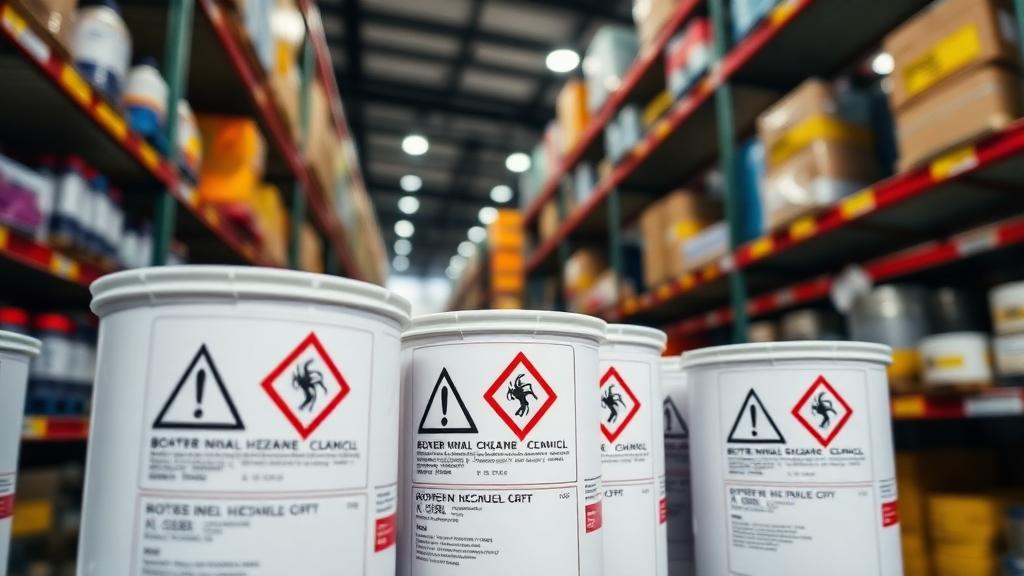
NFPA 704 & HMIS vs GHS Labels: Can You Use the Fire Diamond?
Can the NFPA fire diamond or an HMIS bar label be your workplace container label? Yes, with conditions. What OSHA allows, and the reversed 0-4 vs 1-4 rating trap that confuses everyone.