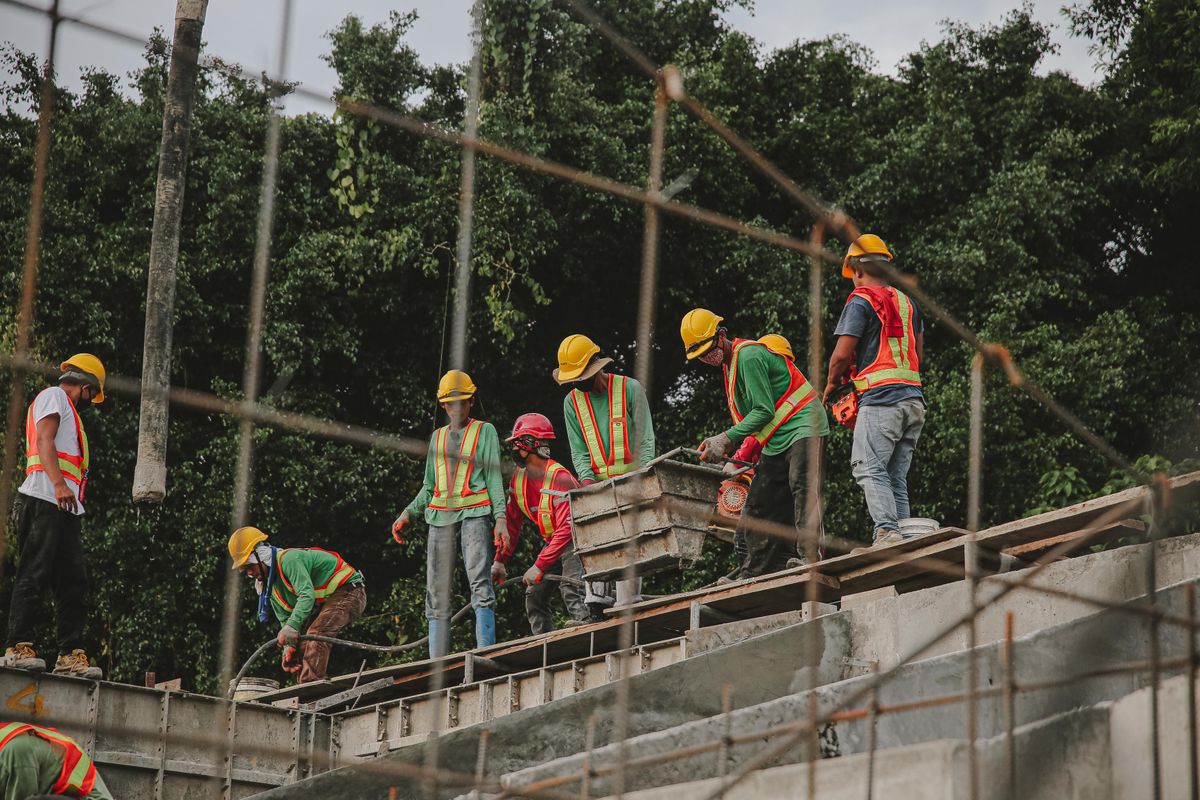
The most dangerous stretch of a job is often the first few weeks of it. In the US, workers with a year or less on the job make up about a quarter of the workforce but about a third of the injuries serious enough to cost days away from work — not because they are careless, but because they have not yet been taught the specific hazards, and frequently were put to work before any training happened at all. Meanwhile, the one standard in OSHA's all-industry Top 10 whose entire subject is training — fall protection training, 29 CFR 1926.503 — is cited thousands of times a year. Training is the cheapest control in safety, and this is the data on what the gap costs.
At a glance: In the US, workers with a year or less on the job were 24% of wage and salary workers but 34.5% of private-industry injuries with days away from work (BLS, 2021–22). Where injury rates by tenure can be computed (Italy), the first 6 months carry a 41% higher risk for under-30s (+22% over 40). Fall-protection training (1926.503) is the only training standard in OSHA's Top 10 (#7, FY2025). OSHA's rule is consistent: train before the work, retrain on any new hazard, and keep a record: some standards require a written certification (1926.503(b)), and training you cannot document is hard to defend. In the United States, workers with a year or less on the job were about a quarter of the workforce but a third of the injuries that caused days away from work, and fall-protection training is the only training standard in OSHA's Top 10 most-cited list.
The data: tenure is a hazard
The single most under-appreciated risk factor in workplace safety is not a chemical or a height — it is inexperience on this job. The US numbers show it plainly. In January 2022, 24% of wage and salary workers had been with their employer a year or less; in 2021–2022, workers with less than a year of service accounted for 34.5% of the private-industry injury and illness cases involving days away from work whose length of service was known (749,880 of 2,175,050). A quarter of the workforce, a third of the lost-time injuries. Research that can compute injury rates by tenure, which US federal statistics do not publish, finds the same gap. In Italy, after adjusting for background variables and previous work experience, workers with less than six months of tenure were injured at markedly higher rates than those with more than two years:
Higher injury risk in the first 6 months on the job (vs. > 2 years' tenure), Italy
Source: Bena, Giraudo, Leombruni & Costa, BMC Public Health 2013 (Italian WHIP-INAIL workers' compensation data; adjusted relative risk, < 6 months vs. > 2 years' tenure). In Ontario, Canada, Breslin & Smith (Trial by Fire, Occup Environ Med 2006) found workers in their first month over 4× as likely to file a lost-time claim as those with more than a year on the job.
The pattern repeats wherever it is measured. In Ontario workers' compensation claims, those in their first month on the job were over four times as likely to file a lost-time claim as workers with more than a year of tenure (Breslin & Smith, Trial by Fire, 2006). Back in the US, an analysis of more than 86,000 mining injuries reported to MSHA from 1995–2004 (Groves and colleagues) found 28% occurred among workers in their first year on the job. The mechanism is not mysterious: a new worker doesn't yet know which edge is unprotected, which valve is live, or which container holds what — the exact knowledge that training exists to transfer before the first shift, not after the first injury.
The enforcement mirror: OSHA's only Top-10 training standard
If tenure is the risk, training is the control — and OSHA's enforcement record shows how often it is missing. Of the ten standards OSHA cites most across all industries, exactly one is, in its entirety, a training requirement: fall protection training, 29 CFR 1926.503, which ranked #7 in FY2025 and was the third most-cited construction standard on its own that year. It sits in the Top 10 alongside the fall-protection duty standard (1926.501, #1) and hazard communication (1910.1200, #2), whose training paragraph (h) is one of its most-cited clauses.
Where training shows up in OSHA's FY2025 Top 10 most-cited standards
- #2Hazard Communication (1910.1200) — employee training under (h) is a top citation driver
- #7Fall Protection — Training (1926.503) — the only Top-10 standard that is entirely a training requirement
- #5Respiratory Protection (1910.134) — annual training and fit testing among its common findings
Source: OSHA Top 10 Most Frequently Cited Standards, FY2025. 1926.503 is cited so often because the absence of training — or of any record of it — is trivial for an inspector to establish.
Training citations cluster at the top for the same reason HazCom does: they are verifiable from the outside. An inspector doesn't need to catch a fall to cite 1926.503 — they ask the worker what they were taught and ask the employer for the certification record. If either is missing, the citation writes itself.
Why training fails: timing, documentation, and the "new hazard" trap
Three failures account for most training citations, and all three are avoidable:
- Timing. OSHA's standards are explicit that training comes before exposure — HazCom "at the time of their initial assignment" (1910.1200(h)(1)), fall protection before the work (1926.503). A worker trained in week two, after a week on the roof, was trained too late. The tenure data is the cost of that gap, quantified.
- Documentation. For fall protection, the employer must prepare a written certification naming the employee, the date, and the trainer's signature (1926.503(b)). Undocumented training is, for enforcement purposes, no training. "We trained them" is not a defense; the signed record is.
- The "new hazard" trap. Training is not one-and-done. A new chemical, a new machine, a changed procedure, or a worker who plainly didn't retain it all trigger retraining (e.g., 1926.503(c)). The most experienced crew on site still needs training the day the hazard changes.
What OSHA actually requires
There is no single universal training interval — the obligation is a mix of before-exposure initial training, event-triggered retraining, and, for specific hazards, a fixed cycle layered on top. In practice, an OSHA-defensible training program does four things: it trains each worker on their actual hazards before the work, retrains whenever a hazard or process changes, uses a language and vocabulary the worker understands, and documents every session — who, when, what topics, and the trainer. That last step is what survives an inspection and, more importantly, what a new worker can be held to.
Train before the work — and keep the proof
The tenure data says a worker's first months are their most dangerous; OSHA's citation record says training and its documentation are among the easiest things to get cited for. HazComFast builds the training records — topics, dates, the worker, and the trainer's certification — logs HazCom and task-specific training to each worker, and flags retraining when a new chemical or hazard is added. So the training that protects your newest worker is delivered on time and provable on the day an inspector asks. Plan it with the free tools, then keep the record on trial.
The standard, tools & related reading
- The hub: OSHA Training Requirements
- The standard: Fall Protection — Training, 29 CFR 1926.503
- Related reading: OSHA safety training requirements 2026 · HazCom training sign-in log · New-hire safety orientation checklist
- The enforcement context: Construction OSHA enforcement in FY2025
- Tools: Training Record Generator · Toolbox Talk Generator
- Glossary: Competent person · Hazard Communication Standard
Sources & verification (verified 2026-07-22): US shares: BLS Employee Tenure, January 2022 (24% of wage and salary workers with a year or less of tenure; release of September 22, 2022) and BLS Survey of Occupational Injuries and Illnesses, 2021–2022 case and demographic characteristics, Table R71 (private industry, cases involving days away from work: less than 3 months 277,840, 3 to 11 months 472,040, of 2,175,050 cases with length of service reported = 34.5%); the two surveys differ in scope (all wage and salary workers vs. private industry), so no rate is computed from them. Relative risks (+41% under 30, +22% over 40, < 6 months vs. > 2 years' tenure, adjusted) from Bena, Giraudo, Leombruni and Costa, BMC Public Health 2013 (Italy, WHIP-INAIL data); first-month lost-time claims over four times as likely from Breslin & Smith, "Trial by Fire" (Occup Environ Med, 2006; Ontario, Canada); "28% of injuries in the first year" from Groves and colleagues' analysis of MSHA mining injuries, 1995–2004. Fall-protection training (1926.503) ranking #7 in the FY2025 Top 10 and being the third most-cited construction standard is per OSHA's Top 10 Most Frequently Cited Standards (FY2025), verified on osha.gov; the written-certification requirement is 29 CFR 1926.503(b) and retraining triggers 1926.503(c). HazCom training timing per 29 CFR 1910.1200(h)(1). 2024 U.S. workplace fatalities (5,070; rate 3.3) per BLS CFOI. General guidance, not legal advice; State Plans may impose additional training requirements.*
Frequently Asked Questions
Are new workers really injured more often than experienced ones?
Yes. In January 2022, 24% of US wage and salary workers had been with their employer a year or less (BLS), yet workers with less than a year of service accounted for 34.5% of private-industry injury and illness cases involving days away from work in 2021–2022 whose length of service was known (BLS Survey of Occupational Injuries and Illnesses). Research that can compute injury rates by tenure points the same way: in Italy, workers with less than six months on the job had a 41% higher relative risk of injury than those with more than two years among under-30s, and 22% higher among workers over 40, after adjusting for background variables and previous work experience (Bena et al., BMC Public Health, 2013); in Ontario, Canada, workers in their first month were over four times as likely to file a lost-time claim as those with more than a year on the job (Breslin and Smith, 2006). New workers don't get hurt because they're careless; they get hurt because they haven't yet been taught the specific hazards of the task, and often haven't been trained at all before being put to work, although 29 CFR 1926.21(b)(2) requires instruction in recognizing and avoiding the hazards of the work.
Which OSHA training standard is cited the most?
Fall protection training — 29 CFR 1926.503 — is the only standard whose entire subject is training that sits in OSHA's all-industry Top 10 most-cited standards (it ranked #7 in FY2025). It was also the third most-cited construction standard on its own in FY2025. Hazard Communication training, 29 CFR 1910.1200(h), is another perennial citation driver as part of OSHA's #2 standard. Both are cited so often because the absence of training — or of any record of it — is one of the easiest things for an inspector to establish.
When does OSHA require training — before or after a worker starts?
Before. Across OSHA's standards the rule is consistent: train workers on the hazards of a task before they are exposed to it, and again whenever a new hazard is introduced, the process changes, or an employee shows they didn't retain it. HazCom training is required 'at the time of their initial assignment' (1910.1200(h)(1)); fall protection training must occur before the work (1926.503). Training a worker in their second week, after they have already been on the roof, is training too late.
Does OSHA accept undocumented training?
In practice, no. Several standards require the employer to keep a record of training — for fall protection, the employer must prepare a written certification that identifies the employee, the date of training, and the trainer's signature (1926.503(b)). During an inspection, training you cannot document is treated as training that did not happen. The certification record, sign-in sheets, and the topics covered are what convert a claim of 'we trained them' into a defense.
How often must workers be retrained?
There is no single universal interval — retraining is triggered by events, not just the calendar. OSHA requires retraining whenever a new hazard or new equipment is introduced, when procedures change, and whenever an employer has reason to believe a worker doesn't have the required understanding or skill (for example, 1926.503(c) for fall protection). Some standards add a fixed cycle on top — respirator and hazard-specific training is annual under several standards — but the event-based triggers apply to everyone.
OSHA figures and citations here come from our regulatory source-of-truth modules, last checked against the eCFR, OSHA.gov, and the Federal Register on October 5, 2026. Last reviewed October 6, 2026.
About This Article
Published by: HazComFast
Published: July 22, 2026
Last Updated: October 6, 2026
- https://www.osha.gov/top10citedstandards
- https://www.osha.gov/laws-regs/regulations/standardnumber/1926/1926.503
- https://www.bls.gov/iif/
- https://www.bls.gov/iif/nonfatal-injuries-and-illnesses-tables/case-and-demographic-characteristics-table-r71-2021-2022.xlsx
- https://www.bls.gov/news.release/archives/tenure_09222022.htm
- https://pubmed.ncbi.nlm.nih.gov/16361402/
- https://www.ncbi.nlm.nih.gov/pmc/articles/PMC3849089/
This content is for informational purposes only and does not constitute legal advice.