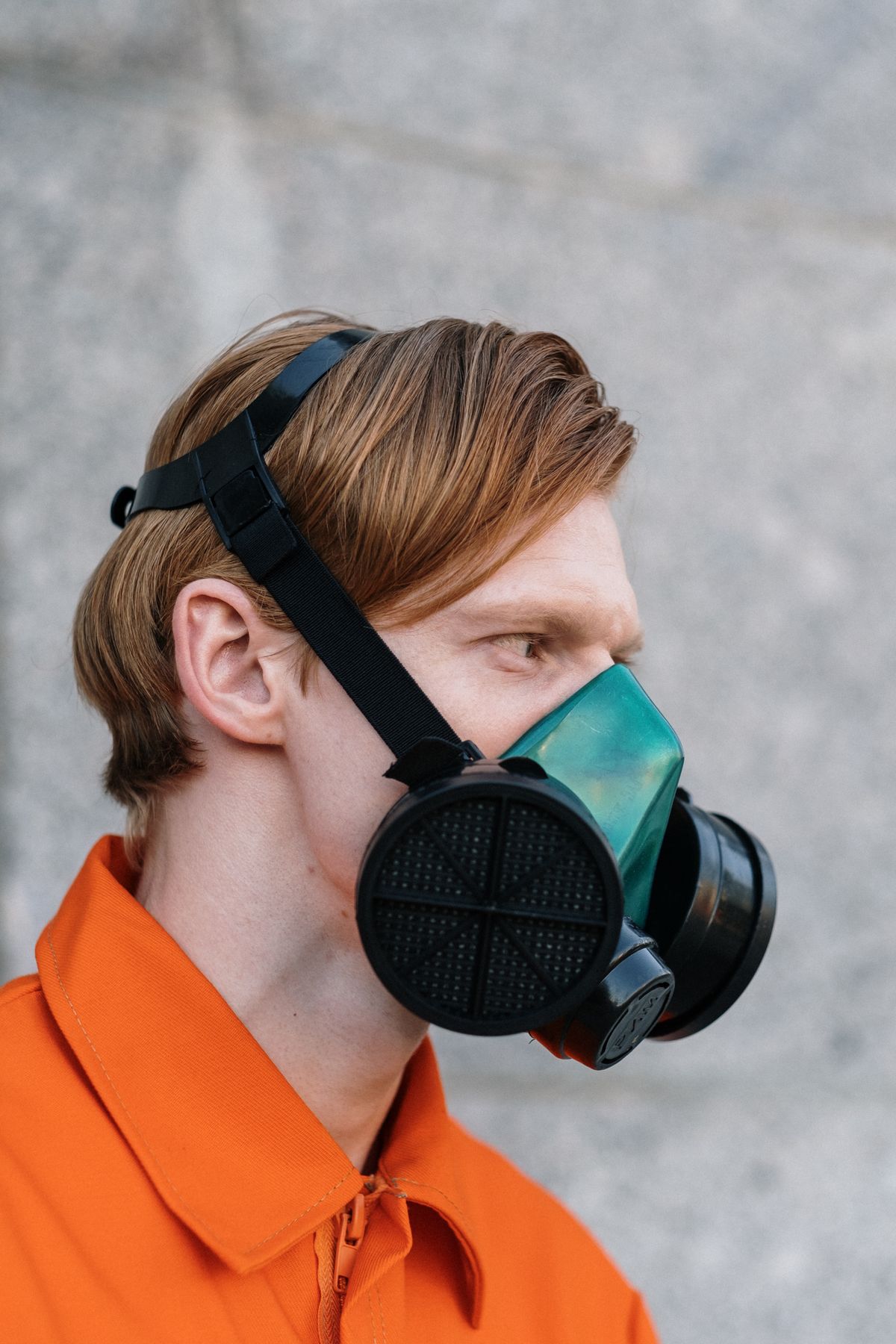
Asbestos work in construction is governed by 29 CFR 1926.1101, which sets a permissible exposure limit of 0.1 fiber per cubic centimeter as an 8-hour average and an excursion limit of 1.0 fiber per cubic centimeter over 30 minutes, and sorts all asbestos work into four classes, from Class I removal of pipe insulation and sprayed-on surfacing to Class IV custodial cleanup. Identifying your work class is the first compliance decision: it determines the controls, the regulated area, the respirator, the training and the monitoring that follow.
The Short Answer: Asbestos Exposure Limits
Under 29 CFR 1926.1101(c), no employee may be exposed above either of two limits:
| Limit | Value | Averaging period | Citation |
|---|---|---|---|
| PEL (TWA) | 0.1 f/cc | 8-hour time-weighted average | 29 CFR 1926.1101(c)(1) |
| Excursion limit | 1.0 f/cc | 30-minute sample | 29 CFR 1926.1101(c)(2) |
The two limits do different jobs. The PEL controls the full-shift dose an employee absorbs over eight hours. The excursion limit controls short peaks: a 30-minute burst of high fiber concentration that an 8-hour average would otherwise wash out. You can be under the PEL and still violate the excursion limit, so both must be checked.
These limits apply to all construction work involving asbestos-containing material (ACM) and presumed asbestos-containing material (PACM). The same numbers (0.1 / 1.0 f/cc) appear in the general-industry asbestos standard, 29 CFR 1910.1001; 1926.1101 is the construction counterpart. Its scope in 1926.1101(a) names demolition and salvage, removal or encapsulation, construction, alteration, repair, maintenance or renovation of structures that contain asbestos, installation of asbestos products, spill cleanup, and the transport, storage and disposal of asbestos on the construction site.
ACM vs. PACM and the Pre-1981 Presumption
Two definitions in 1926.1101(b) decide whether the standard even applies:
- ACM, asbestos-containing material: any material containing more than 1% asbestos.
- PACM, presumed asbestos-containing material: thermal system insulation (TSI) and surfacing material found in buildings constructed no later than 1980. OSHA presumes these contain asbestos.
The pre-1981 presumption is the trap most contractors fall into. Pipe lagging, boiler insulation, sprayed-on fireproofing, and troweled-on acoustic plaster in an older building are PACM by default: you must treat them as asbestos unless you rebut the presumption. Under 1926.1101(k)(5)(ii), a rebuttal takes either a completed inspection under EPA's AHERA rules showing the material is not ACM, or bulk-sample tests collected by an accredited inspector or a certified industrial hygienist and analyzed by a laboratory that takes part in a recognized proficiency program. "It probably isn't asbestos" is not a rebuttal.
Flooring has its own presumption. Under 1926.1101(k)(1)(i), asphalt and vinyl flooring installed no later than 1980 must also be treated as asbestos-containing unless an industrial hygienist determines, with recognized analytical techniques, that it is not (1926.1101(g)(8)(i)(I) and (k)(5)(iii)).
Before Work Starts: Who Has to Find the Asbestos
The standard splits the job of locating asbestos between the building owner and the contractors, and it puts the general contractor in the chain:
- The building or facility owner determines the presence, location and quantity of ACM and PACM before work begins (1926.1101(k)(2)(i)) and tells the employers bidding for the work, its own employees, every employer on a multi-employer site who will work in or next to those areas, and the tenants (1926.1101(k)(2)(ii)).
- Each employer whose crew will work in those areas identifies the ACM and PACM before work starts, informs the owner and the employers working nearby of the location, the quantity and the precautions, and, within 10 days after finishing, reports what asbestos remains and any final monitoring results (1926.1101(k)(3)).
- Anyone who discovers new ACM or PACM on the site tells the owner and the other employers within 24 hours (1926.1101(k)(4)).
- On a multi-employer site, the asbestos contractor tells the other employers about its regulated areas (1926.1101(d)(1)); the contractor that created or controls the source abates the hazard (1926.1101(d)(2)); employers working next to a regulated area check the enclosure daily (1926.1101(d)(4)); and the general contractor is deemed to exercise general supervisory authority over the asbestos work, must find out whether the asbestos contractor complies, and must require it to comply when it does not (1926.1101(d)(5)).
The employer also includes asbestos in its hazard communication program under 1910.1200 and trains employees on its hazards, at least cancer and lung effects (1926.1101(k)(1)(ii)). See the multi-employer citation doctrine for how OSHA assigns roles on a shared site.
The Four Classes of Asbestos Work
OSHA classifies asbestos construction work by the type of material disturbed and the kind of activity. The class is the master switch for the rest of the standard.
| Class | Scope (1926.1101(b)) | Typical materials or tasks | Risk |
|---|---|---|---|
| Class I | Removal of TSI and surfacing ACM/PACM | Pipe & boiler lagging, sprayed-on fireproofing, acoustic plaster | Highest |
| Class II | Removal of other ACM | Wallboard, floor tile and sheeting, roofing and siding shingles, mastics | High |
| Class III | Repair & maintenance where ACM/PACM is likely to be disturbed | Drilling, small-scale patching, accessing a wall cavity | Moderate |
| Class IV | Maintenance and custodial work that contacts but does not disturb ACM, and cleanup of Class I-III dust, waste & debris | Cleanup after Class I-III work, contaminated filters and waste | Lower |
The class is the master switch: controls escalate with disturbance risk
Both limits apply to every class: 0.1 f/cc PEL (8-hr TWA) · 1.0 f/cc excursion (30-min).
The class-specific rules that trip people up:
- Class I is OSHA's most heavily controlled work. A competent person supervises all of it (1926.1101(g)(4)(i)). For jobs removing more than 25 linear or 10 square feet of TSI or surfacing material, and for smaller jobs without a negative exposure assessment or with employees working next to the regulated area, critical barriers go over all openings to the regulated area, or another isolation method is verified by perimeter monitoring (1926.1101(g)(4)(ii)). HVAC systems are sealed with a double layer of 6-mil plastic, and surfaces and objects are covered with impermeable dropcloths (1926.1101(g)(4)(iii) to (v)). The work itself uses one or more of the methods listed in 1926.1101(g)(5): a negative pressure enclosure, glove bags, negative pressure glove bags or glove boxes, a water spray process, or a mini-enclosure.
- Class II controls depend on the material, and a competent person supervises the work (1926.1101(g)(7)(i)). For flooring, sanding is prohibited, tiles come off intact unless that is not possible, resilient sheeting is cut with the snip point wetted rather than ripped up, and mechanical chipping is allowed only inside a negative pressure enclosure (1926.1101(g)(8)(i)). For roofing, material comes off intact to the extent feasible, non-intact material is removed wet unless that is infeasible or unsafe, cutting machines are misted, and removed ACM is never dropped or thrown to the ground (1926.1101(g)(8)(ii)).
- Class III work uses wet methods and, where feasible, local exhaust ventilation (1926.1101(g)(9)(i) and (ii)). When the job drills, cuts, abrades, sands, chips, breaks or saws TSI or surfacing material, the employer lays impermeable dropcloths and isolates the operation with a mini-enclosure, a glove bag or another isolation method (1926.1101(g)(9)(iii)). Without a negative exposure assessment, the area is contained with dropcloths and plastic barriers or isolated with a (g)(5) system (1926.1101(g)(9)(iv)).
- Class IV workers get asbestos awareness training and follow the wet-method, HEPA-vacuum and prompt-cleanup rules (1926.1101(g)(10)). They wear respirators when they clean up inside a regulated area where respirators are required (1926.1101(g)(10)(i)), and where friable TSI or surfacing material is accessible, the debris they clean up is assumed to contain asbestos (1926.1101(g)(10)(ii)).
Required Engineering Controls (1926.1101(g))
Paragraph (g)(1) sets the controls for every operation covered by the standard, regardless of the exposure level:
- HEPA-filtered vacuums to collect all debris and dust containing ACM and PACM.
- Wet methods or wetting agents during handling, mixing, removal, cutting, application and cleanup, unless the employer shows they are infeasible, for example because they would create an electrical hazard.
- Prompt cleanup and disposal of asbestos waste and debris in leak-tight containers.
To meet the PEL and excursion limit, (g)(2) adds HEPA-filtered local exhaust ventilation, enclosure or isolation of the processes producing dust, and ventilation of the regulated area that moves contaminated air away from workers and toward a HEPA filter. Where those controls are not enough, the employer uses them to get as low as they can and supplements them with respirators (1926.1101(g)(2)(v)).
Paragraph (g)(3) prohibits four practices, regardless of measured exposure:
- High-speed abrasive disc saws that do not have a point-of-cut ventilator or an enclosure with HEPA-filtered exhaust.
- Compressed air to remove asbestos or asbestos-containing material, unless it is used with an enclosed ventilation system that captures the dust cloud.
- Dry sweeping, shoveling or other dry cleanup of dust and debris containing ACM and PACM.
- Employee rotation as a way to reduce exposure.
Regulated Areas and Respiratory Protection
| Requirement | Trigger | Citation |
|---|---|---|
| Regulated area | All Class I, II and III work, and any other operation where airborne asbestos exceeds, or may reasonably exceed, a PEL | 29 CFR 1926.1101(e)(1) |
| Respiratory protection | All Class I work; Class II work when ACM is not removed substantially intact; Class II and III work without wet methods or without a negative exposure assessment; Class III work disturbing TSI or surfacing material; Class IV work in regulated areas where others must wear respirators; exposure above a PEL; emergencies | 29 CFR 1926.1101(h)(1) |
A regulated area is a demarcated, access-controlled zone. Only authorized persons may enter (1926.1101(e)(3)), warning signs mark it (1926.1101(k)(7)), and eating, drinking, smoking, chewing tobacco or gum, and applying cosmetics are prohibited inside (1926.1101(e)(5)). A competent person supervises all asbestos work inside it (1926.1101(e)(6)), and for Class I jobs inspects the site at least once every work shift (1926.1101(o)(3)).
Respirator selection follows 1926.1101(h)(3) and a written respiratory protection program under 1910.134 (1926.1101(h)(2)(i)):
- No filtering facepieces. An N95 or any other filtering facepiece respirator may not be used against asbestos fibers, and air-purifying respirators carry HEPA filters (1926.1101(h)(3)(i)).
- Half mask as the floor. Class II or III work without a negative exposure assessment, and Class III work disturbing TSI or surfacing material, call for at least an air-purifying half mask other than a filtering facepiece (1926.1101(h)(3)(iii)).
- PAPR on request. A worker who chooses a tight-fitting powered air-purifying respirator gets one when it gives adequate protection (1926.1101(h)(3)(ii)).
- Class I without a negative exposure assessment. A tight-fitting PAPR or a full facepiece supplied-air respirator in pressure-demand mode when the assessment shows 1 f/cc or less as an 8-hour TWA, and a full facepiece supplied-air respirator with an auxiliary SCBA above that (1926.1101(h)(3)(iv)).
Where a tight-fitting respirator is required, the wearer must be medically cleared and fit-tested. See our Respiratory Protection Program Builder and the deep dive on QLFT vs. QNFT fit testing.
Exposure Monitoring and the Negative Exposure Assessment
Exposure monitoring (1926.1101(f)) requires the employer to know each employee's exposure:
- Initial exposure assessment. A competent person assesses expected exposures immediately before or at the start of each operation (1926.1101(f)(2)(i)). For Class I work, until monitoring shows otherwise or a negative exposure assessment is made, the employer presumes employees are exposed above the TWA and the excursion limit (1926.1101(f)(2)(ii)).
- Negative exposure assessment (NEA). A demonstration, for one specific job done by trained employees, that exposures will stay below the PELs. It rests on one of three bases (1926.1101(f)(2)(iii)): objective data showing the material or activity cannot release fibers above the limits; monitoring of prior jobs within the past 12 months under closely resembling conditions and with workers no better trained; or initial monitoring of the current job.
- Periodic monitoring. Daily monitoring for each employee doing Class I or II work in a regulated area, unless an NEA covers the entire operation (1926.1101(f)(3)(i)); for other work expected to exceed a PEL, monitoring at intervals that confirm the prediction (1926.1101(f)(3)(ii)).
Employees get their results within 5 working days of the employer receiving them, individually in writing or by posting (1926.1101(f)(5)). The NEA is the most misused provision: it must be job-specific and documented, not a blanket assumption. Our Workplace Chemical Exposure Limits guide helps keep the PEL/TWA math straight when you interpret lab results.
Worked Example: A Class III Pipe-Insulation Repair
A maintenance crew in a 1974 mechanical room needs to replace a leaking valve wrapped in deteriorated pipe lagging.
- Identify the material. The building predates 1981 and the lagging is TSI, so it is PACM. No AHERA inspection or bulk sampling has been done, so the presumption is not rebutted: treat it as ACM (1926.1101(k)(5)).
- Classify the work. A repair likely to disturb TSI is Class III (1926.1101(b)), so the work happens inside a regulated area (1926.1101(e)(1)).
- Set up controls. Post warning signs and limit access; wet the lagging with amended water; because the job cuts TSI, lay impermeable dropcloths and isolate the section with a glove bag or mini-enclosure (1926.1101(g)(9)(iii)); HEPA-vacuum residue.
- Protect the worker. Class III work disturbing TSI requires a respirator (1926.1101(h)(1)(v)): at least a half mask with HEPA filters, never an N95 (1926.1101(h)(3)). Without an NEA, add protective clothing (1926.1101(i)(1)) and an equipment room or area at the edge of the regulated area, with work clothing HEPA-vacuumed before it comes off (1926.1101(j)(2)).
- Assess exposure. The competent person makes the initial exposure assessment; monitor if no NEA exists for this operation.
- Check the training and the medical-surveillance clock. Class III work requires training consistent with EPA's maintenance and custodial course, with hands-on practice and at least 16 hours (1926.1101(k)(9)(v)). Log the days: a worker who does Class I, II or III work for a combined 30 or more days in the year, or is exposed at or above a PEL, goes into medical surveillance (1926.1101(m)(1)(i)(A)). A day of Class II or III work on intact material lasting one hour or less, done fully to the standard's work practices, does not count; disturbed lagging is not intact, so this day counts.
- Dispose. Collect the waste in sealed, labeled, impermeable bags or other closed, labeled, impermeable containers (1926.1101(l)(2)).
Skipping step 1, assuming old lagging "isn't asbestos," is the most common way this job goes wrong: every control after it depends on that answer.
Medical Surveillance, Training & Records
| Element | What OSHA requires | Citation |
|---|---|---|
| Medical surveillance | A program for employees who, for a combined 30 or more days per year, do Class I, II or III work or are exposed at or above a PEL; a physician-supervised determination that anyone required to wear a negative-pressure respirator can do the work and use it | 29 CFR 1926.1101(m)(1)(i) |
| Training | At no cost, before or at initial assignment and at least annually. Class I, and Class II work needing critical barriers or negative pressure enclosures: equivalent to EPA's Model Accreditation Plan abatement worker course. Other Class II work on roofing, flooring, siding, ceiling tiles or transite: at least 8 hours with hands-on training. Class III: at least 16 hours. Class IV: at least 2 hours | 29 CFR 1926.1101(k)(9) |
| Labels & signs | Warning signs at each regulated area and warning labels on asbestos products, containers and waste | 29 CFR 1926.1101(k)(7), (k)(8) |
| Records | Exposure measurements for at least 30 years; medical records for the duration of employment plus 30 years, under 1910.1020; training records for one year beyond the last date of employment; rebuttal data for as long as you rely on it | 29 CFR 1926.1101(n) |
What OSHA Cites Under 1926.1101
In fiscal year 2025 (October 1, 2024 to September 30, 2025), federal OSHA issued 94 citations under 1926.1101 in inspections of construction employers. The paragraphs cited most often show where programs break down:
| Paragraph | What it requires | FY2025 citations |
|---|---|---|
| 1926.1101(k)(9)(i) | Train each employee who does Class I to IV work or may be exposed above a PEL | 7 |
| 1926.1101(f)(2)(i) | A competent person's initial exposure assessment | 6 |
| 1926.1101(d)(5) | The general contractor's supervisory duty | 5 |
| 1926.1101(i)(1) | Protective clothing | 5 |
| 1926.1101(e)(1) | Class I to III work inside a regulated area | 4 |
| 1926.1101(h)(2)(i) | A respiratory protection program under 1910.134 | 4 |
| 1926.1101(k)(9)(iv)(A) | Class II training on roofing, flooring, siding, ceiling tiles or transite | 4 |
Count: HazComFast, from the U.S. Department of Labor enforcement data (citations issued in the fiscal year, deleted citations excluded, federal OSHA inspections of employers classified in NAICS 23, extracted September 26, 2026). State Plan inspections are not included.
Common Mistakes & Myths
- Myth: "If it's not friable, it's not regulated." False. ACM is any material with more than 1% asbestos (1926.1101(b)); intact floor tile and roofing are covered, Class II has specific work practices for them, and disturbing them can make them friable.
- Myth: "We only worked on it for a day, so no medical surveillance." The 30-day trigger is a combined total over the year (1926.1101(m)(1)(i)(A)), not per job.
- Mistake: An N95 on an asbestos job. Filtering facepieces are prohibited against asbestos fibers (1926.1101(h)(3)(i)(A)).
- Mistake: Treating an NEA as automatic. A negative exposure assessment must be documented and job-specific (1926.1101(f)(2)(iii)), not assumed.
- Mistake: Dry cleanup or compressed air. Dry sweeping and shoveling are prohibited outright, and compressed air is allowed only with an enclosed ventilation system that captures the dust (1926.1101(g)(3)).
- Mistake: No rebuttal, no sampling. Pre-1981 TSI and surfacing material are PACM until the presumption is rebutted (1926.1101(k)(5)).
- Mistake: Skipping the regulated area for "small" Class III work. All Class I, II and III work goes in a regulated area, however small (1926.1101(e)(1)).
- Mistake: "Asbestos is the abatement sub's problem." The general contractor has a supervisory duty of its own (1926.1101(d)(5)).
Compliance Checklist
- Get the owner's ACM/PACM information; treat pre-1981 TSI and surfacing material as PACM unless rebutted under (k)(5)
- Determine the work class (I–IV)
- Keep exposure ≤ 0.1 f/cc (8-hr TWA) and ≤ 1.0 f/cc (30-min)
- Establish regulated areas for all Class I–III work, supervised by a competent person
- Apply the (g)(1) controls on every job and the (g)(2) controls to meet the PELs; no dry cleanup, no rotation
- Provide respirators per 1926.1101(h): no filtering facepieces; medical clearance and fit testing
- Make the initial exposure assessment; document any negative exposure assessment per job
- Enroll qualifying workers in medical surveillance (30+ days/yr or at or above a PEL)
- Train workers to the level of their work class, before assignment and annually
- Post warning signs, label waste, and keep exposure and medical records
Penalty Exposure (2026)
A single inspection can produce several asbestos citations (monitoring, controls, regulated area, respiratory protection). The maximum amounts are those 29 CFR 1903.15(d) sets for penalties proposed after January 15, 2025; there was no inflation adjustment for 2026:
| Violation type | Amount under 1903.15(d) |
|---|---|
| Serious | Up to $16,550 per violation |
| Other-than-serious | Up to $16,550 per violation |
| Willful | At least $11,823, up to $165,514 per violation |
| Repeated | Up to $165,514 per violation |
| Failure to abate | Up to $16,550 per day |
Estimate your exposure across multiple citations with the OSHA Fine Calculator. This is an estimate, not legal advice, and State Plan states may set different penalty amounts and adopt stricter asbestos rules.
What to Do Next
- Ask before you cut. The owner must determine where the ACM and PACM are before work begins (1926.1101(k)(2)(i)); on any pre-1981 building without that information, treat suspect TSI and surfacing material as PACM.
- Pick the class and write the plan. Document the class, controls, regulated area, and respirator selection before work starts.
- Monitor and document. Run the initial exposure assessment; keep NEA documentation job-specific.
- Track the 30-day clock so medical-surveillance enrollment is never missed.
- Keep records audit-ready. Exposure and medical records must survive for decades.
Related OSHA Construction Standards
Asbestos rarely travels alone on a renovation or demolition. The same crews deal with other Subpart Z substances:
- OSHA Lead Exposure Standards in Construction (1926.62)
- Hexavalent Chromium in Construction (1926.1126)
- OSHA Silica Compliance in Construction (1926.1153)
- Silica Medical Surveillance & the 30-Day Respirator Trigger
Trade pages that meet 1926.1101 on the job: demolition, roofing, insulation and building maintenance.
Document Your Asbestos Program
Keep exposure assessments, regulated-area logs, training records, respirator fit-test results, and SDS information audit-ready. Build your written program with the Respiratory Protection Program Builder, close documentation gaps with the SDS Gap Analyzer, and review the general-industry counterpart standard at 29 CFR 1910.1001.
Sources: 29 CFR 1926.1101 and 29 CFR 1903.15(d), read on the eCFR (title 29 current as of September 25, 2026) on October 2, 2026; citation counts from U.S. Department of Labor enforcement data, extracted September 26, 2026. This article is general information, not legal advice; State Plan states may impose stricter requirements.
Frequently Asked Questions
What is the OSHA PEL for asbestos in construction?
Under 29 CFR 1926.1101(c)(1), the permissible exposure limit (PEL) for asbestos is 0.1 fiber per cubic centimeter of air (0.1 f/cc) as an 8-hour time-weighted average. A separate excursion limit under 1926.1101(c)(2) caps exposure at 1.0 f/cc averaged over any 30-minute sampling period. Both limits apply to all four classes of asbestos work.
What are the four classes of asbestos construction work?
29 CFR 1926.1101(b) defines them. Class I is the removal of thermal system insulation (TSI) and surfacing ACM and PACM. Class II is the removal of other ACM, such as wallboard, floor tile and sheeting, roofing and siding shingles, and construction mastics. Class III is repair and maintenance where ACM, including TSI and surfacing ACM and PACM, is likely to be disturbed. Class IV is maintenance and custodial work that contacts but does not disturb ACM or PACM, and cleanup of dust, waste and debris from Class I to III work.
What is the asbestos excursion limit?
The excursion limit under 29 CFR 1926.1101(c)(2) is 1.0 fiber per cubic centimeter of air (1.0 f/cc) averaged over a sampling period of 30 minutes. No employee may be exposed above this short-term limit, which exists to catch high peaks that an 8-hour average would smooth over.
Is exposure monitoring required for asbestos work?
Yes. Under 29 CFR 1926.1101(f)(2)(i), a competent person makes an initial exposure assessment immediately before or at the start of each operation, and 1926.1101(f)(3)(i) requires daily monitoring of Class I and II work unless a negative exposure assessment covers the entire operation. A negative exposure assessment must rest on objective data, on monitoring of closely resembling jobs within the past 12 months, or on initial monitoring of the current job (1926.1101(f)(2)(iii)).
What is PACM and the pre-1981 presumption?
PACM means presumed asbestos-containing material: thermal system insulation and surfacing material found in buildings constructed no later than 1980 (29 CFR 1926.1101(b)). It is treated as asbestos unless the presumption is rebutted under 1926.1101(k)(5): by a completed AHERA inspection showing the material is not ACM, or by bulk-sample analysis collected by an accredited inspector or a CIH and run by a proficiency-tested laboratory.
What engineering controls does OSHA require for asbestos?
For every operation, 29 CFR 1926.1101(g)(1) requires HEPA vacuums, wet methods, and prompt cleanup and disposal in leak-tight containers. To meet the PELs, (g)(2) adds HEPA-filtered local exhaust ventilation, enclosure or isolation, and ventilation of the regulated area toward a HEPA device. Under (g)(3), OSHA prohibits high-speed abrasive disc saws without point-of-cut HEPA ventilation or enclosure, compressed air unless used with an enclosed ventilation system that captures the dust, dry sweeping or shoveling of ACM debris, and employee rotation.
Can a worker wear an N95 for asbestos work?
No. 29 CFR 1926.1101(h)(3)(i)(A) says employers must not select or use filtering facepiece respirators against asbestos fibers, and (h)(3)(i)(B) requires HEPA filters on air-purifying respirators. For Class II and III work without a negative exposure assessment, and for Class III work disturbing TSI or surfacing material, the minimum is an air-purifying half mask other than a filtering facepiece (1926.1101(h)(3)(iii)).
Does the general contractor have asbestos duties?
Yes. Under 29 CFR 1926.1101(d)(5), every general contractor on a project that includes asbestos work is deemed to exercise general supervisory authority over it, even if it is not qualified to be the asbestos competent person. The GC must find out whether the asbestos contractor complies with the standard and require it to come into compliance when it does not.
OSHA figures and citations here come from our regulatory source-of-truth modules, last checked against the eCFR, OSHA.gov, and the Federal Register on October 5, 2026. Last reviewed October 2, 2026.
About This Article
Published by: HazComFast
Published: June 25, 2026
Last Updated: October 2, 2026
This content is for informational purposes only and does not constitute legal advice.