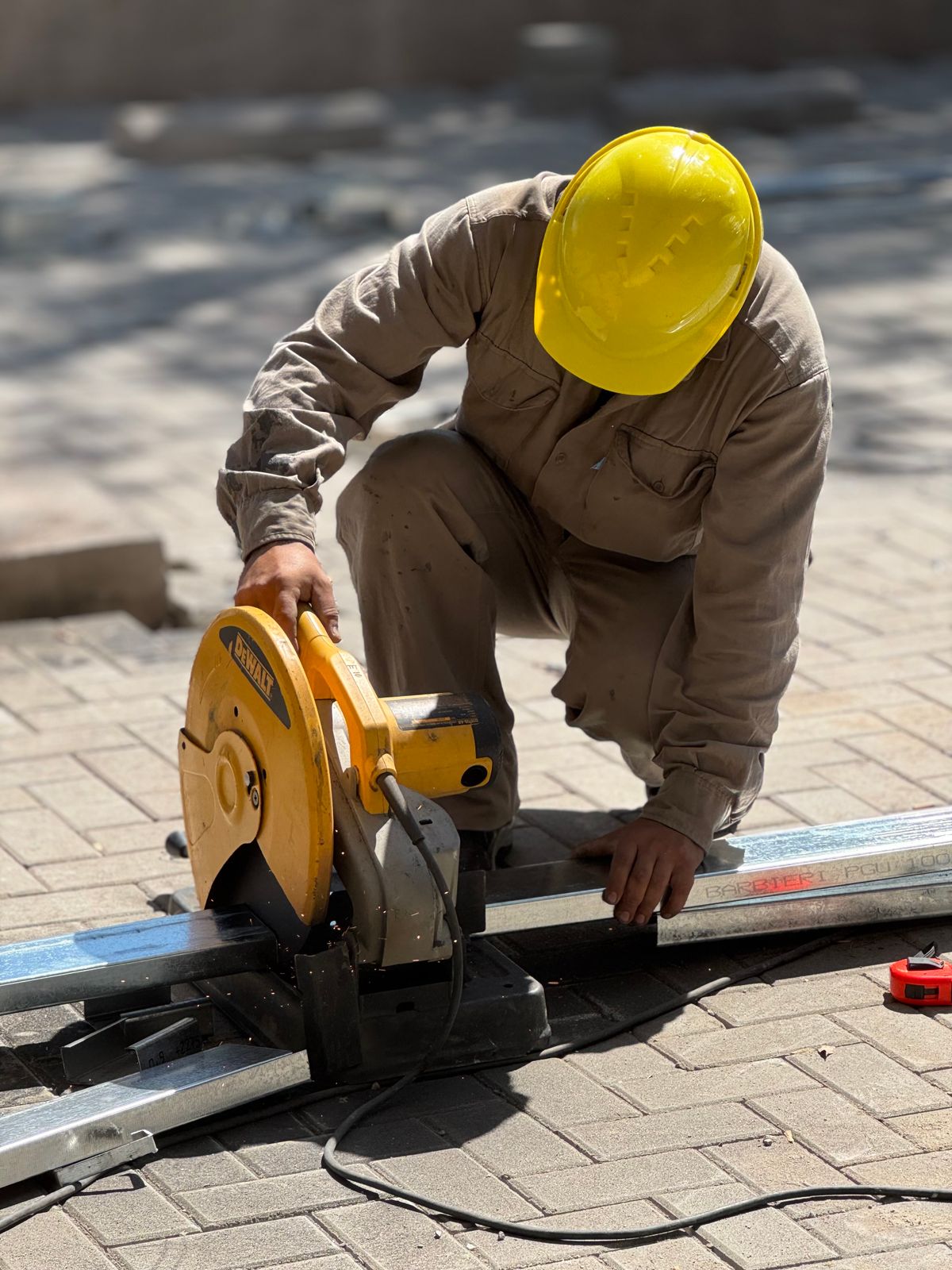
In construction, OSHA silica medical surveillance is triggered when an employee is required to use a respirator under the silica standard for 30 or more days per year — per 29 CFR 1926.1153(h). This part of the construction silica rule is often misread: the trigger is required respirator use for 30+ days, not simply being exposed at or above the PEL. For context, the respirable crystalline silica PEL is 50 µg/m³ (8-hour TWA) and the action level is 25 µg/m³ (8-hour TWA). This guide explains exactly when surveillance is owed, what it includes, and who pays.
At a glance: Construction silica medical surveillance is triggered by required respirator use ≥30 days/yr (1926.1153(h)) — not the PEL. Separately, exposure is governed by the 25 µg/m³ action level and 50 µg/m³ PEL. Surveillance is employer-paid: baseline + periodic exams (history, respiratory physical, chest X-ray, PFT). In construction, OSHA silica medical surveillance under 29 CFR 1926.1153(h) is triggered by required respirator use for 30 or more days per year, not by the permissible exposure limit — the 50 microgram PEL and 25 microgram action level govern exposure controls instead.
The 30-Day Respirator Trigger Explained
Many employers assume medical surveillance kicks in whenever a worker is exposed above the action level or PEL. In construction, that is incorrect. The trigger in 1926.1153(h) is tied to required respirator use:
Medical surveillance must be made available to each employee who will be required to use a respirator under the silica standard for 30 or more days per year.
So the question is not "how many days was the worker over the action level?" — it is "how many days is this worker required to wear a respirator under the silica standard?" Once that reaches 30 days in a year, medical surveillance is owed.
| Element | Value / Trigger | CFR |
|---|---|---|
| Medical surveillance trigger (construction) | Required respirator use 30+ days/yr | 1926.1153(h) |
| PEL (respirable crystalline silica) | 50 µg/m³ (8-hr TWA) | 1926.1153 |
| Action level | 25 µg/m³ (8-hr TWA) | 1926.1153 |
PEL and Action Level vs. the Surveillance Trigger
It is important to keep the two concepts separate:
- The action level (25 µg/m³) and PEL (50 µg/m³) govern exposure assessment and controls — when you must monitor, implement controls, and limit exposure.
- The 30-day required-respirator rule governs who gets medical surveillance.
A worker could be controlled below the PEL using Table 1 specified exposure control methods yet still be required to wear a respirator for certain tasks. If that required respirator use hits 30 days in a year, the employer must offer medical surveillance — regardless of the measured exposure.
Two separate rules — don't confuse them
What Medical Surveillance Includes
Under 1926.1153(h), the employer must make available, at no cost and at a reasonable time and place:
- An initial (baseline) medical examination within 30 days of initial assignment — unless the worker already had an equivalent exam in the last three years (1926.1153(h)(2)).
- Periodic examinations at least every three years, or more often if the PLHCP recommends it (1926.1153(h)(3)).
- Each exam generally includes:
- A medical and work history (including silica, dust, and respirator history).
- A physical examination with emphasis on the respiratory system.
- A chest X-ray, interpreted and classified under the ILO classification by a NIOSH-certified B Reader (1926.1153(h)(2)(iii)).
- A pulmonary function test (PFT) covering FVC, FEV1, and the FEV1/FVC ratio, given by a spirometry technician with a current NIOSH-approved certificate (1926.1153(h)(2)(iv)).
- Latent tuberculosis testing at the baseline exam only, since periodic exams leave it out (1926.1153(h)(3)), and any other tests deemed appropriate by the physician or licensed health care professional (PLHCP).
- A written medical report to the employee within 30 days of each exam (1926.1153(h)(5)) and a written medical opinion to the employer within 30 days (1926.1153(h)(6)), limited to what the standard allows unless the employee authorizes more.
- A specialist exam within 30 days after the opinion, if the PLHCP recommends one (1926.1153(h)(7)).
Mind the two “30 days.” They are different clocks. One is the trigger: surveillance is owed once required respirator use reaches 30 days in a year (1926.1153(h)(1)). The other is the deadline to act on it: once owed, the baseline exam must be made available within 30 days of initial assignment (1926.1153(h)(2)). Counting respirator-days tells you whether you owe surveillance; the second 30-day window tells you how fast you must deliver the first exam.
Why the exam matters: catching silicosis early
Medical surveillance exists to catch silicosis before it disables a worker. The chest X-ray is read and classified by a NIOSH-certified B-reader using the ILO system precisely to detect early lung scarring, when a worker still has options. That value is no longer theoretical: an aggressive, accelerated silicosis is now striking young engineered-stone (quartz) fabricators, and an exam like this one is how a case gets caught early. A worker whose baseline and periodic films are on file has a fighting chance; one who was never surveilled does not. See the full data in the silicosis comeback and every requirement organized in the Silica hub.
Employer Compliance Checklist
- Identify each employee required to use a respirator under the silica standard.
- Track respirator-use days per worker across the year.
- When required use reaches 30 days/yr, make medical surveillance available at no cost.
- Provide the baseline exam within the required timeframe and periodic exams thereafter.
- Ensure exams include history, respiratory-focused physical, chest X-ray, and PFT.
- Furnish the PLHCP with required information and obtain the written medical opinion.
- Give the employee their written medical report.
- Separately manage exposure monitoring against the 25 µg/m³ action level and 50 µg/m³ PEL.
Track respirator-days before they cross the 30-day line
The surveillance trigger is a counting problem: required respirator-days per worker per year, which paper misses until it's late. HazComFast's silica section walks each task through a Table 1 wizard; plan the controls with the free tools, and count every required respirator day per worker so the 30-day line never surprises you.
The standard, tools & related reading
- The silica hub: Silica — OSHA 1926.1153 — the two compliance paths, Table 1, the written plan, and the engineered-stone crisis
- The hub: Respiratory Protection (OSHA 1910.134) — fit testing, APFs, and the medical evaluation that respirator use requires
- The standard: Respirable Crystalline Silica — 29 CFR 1926.1153
- On the job: Silica Table 1 Control Selector · Silica Exposure Calculator · Respiratory Protection Program Builder
- Related guides: Silica Table 1 Control Plan Guide · Silica Compliance in Construction 2026 · Respiratory Protection Program
- 2026 OSHA penalty schedule · penalties by state
Sources & verification (read on the eCFR, October 6, 2026): construction silica medical-surveillance trigger (required respirator use ≥30 days/year), the baseline exam within 30 days of initial assignment (unless an equivalent exam within 3 years), periodic exams at least every 3 years, and the exam components (history, respiratory physical, ILO-classified chest X-ray, PFT, latent-TB test) per 29 CFR 1926.1153(h)(1)–(h)(3), with the reports, opinion, and specialist referral per (h)(5)–(h)(7); PEL 50 µg/m³ (d)(1) and action level 25 µg/m³ (b), 8-hour TWA. General guidance, not legal advice.
Frequently Asked Questions
What triggers silica medical surveillance in construction?
Under 29 CFR 1926.1153(h), construction medical surveillance must be offered to each employee who is required to use a respirator under the silica standard for 30 or more days per year. The trigger is required respirator use for 30-plus days, not exposure to the PEL by itself.
What is the OSHA silica PEL and action level for construction?
The OSHA respirable crystalline silica permissible exposure limit (PEL) is 50 micrograms per cubic meter of air as an 8-hour TWA, and the action level is 25 micrograms per cubic meter as an 8-hour TWA, under 29 CFR 1926.1153.
Is the 30-day medical surveillance trigger based on the action level?
No. The construction medical surveillance trigger in 1926.1153(h) is required respirator use for 30 or more days per year, not days above the action level. The 25 microgram action level and 50 microgram PEL govern exposure controls and monitoring, while the 30-day respirator rule governs who gets medical surveillance.
What does silica medical surveillance include?
Silica medical surveillance under 1926.1153(h) includes an initial baseline medical exam and periodic exams, including a medical and work history, a physical exam focused on the respiratory system, a chest X-ray, a pulmonary function test, and other tests deemed appropriate, with the results provided to the employee.
Who pays for silica medical exams?
The employer must make medical surveillance available at no cost to the employee and at a reasonable time and place, as required under 29 CFR 1926.1153(h) for employees who must wear a respirator under the silica standard for 30 or more days per year.
OSHA figures and citations here come from our regulatory source-of-truth modules, last checked against the eCFR, OSHA.gov, and the Federal Register on October 5, 2026. Last reviewed October 6, 2026.
About This Article
Published by: HazComFast
Published: June 25, 2026
Last Updated: October 6, 2026
This content is for informational purposes only and does not constitute legal advice.