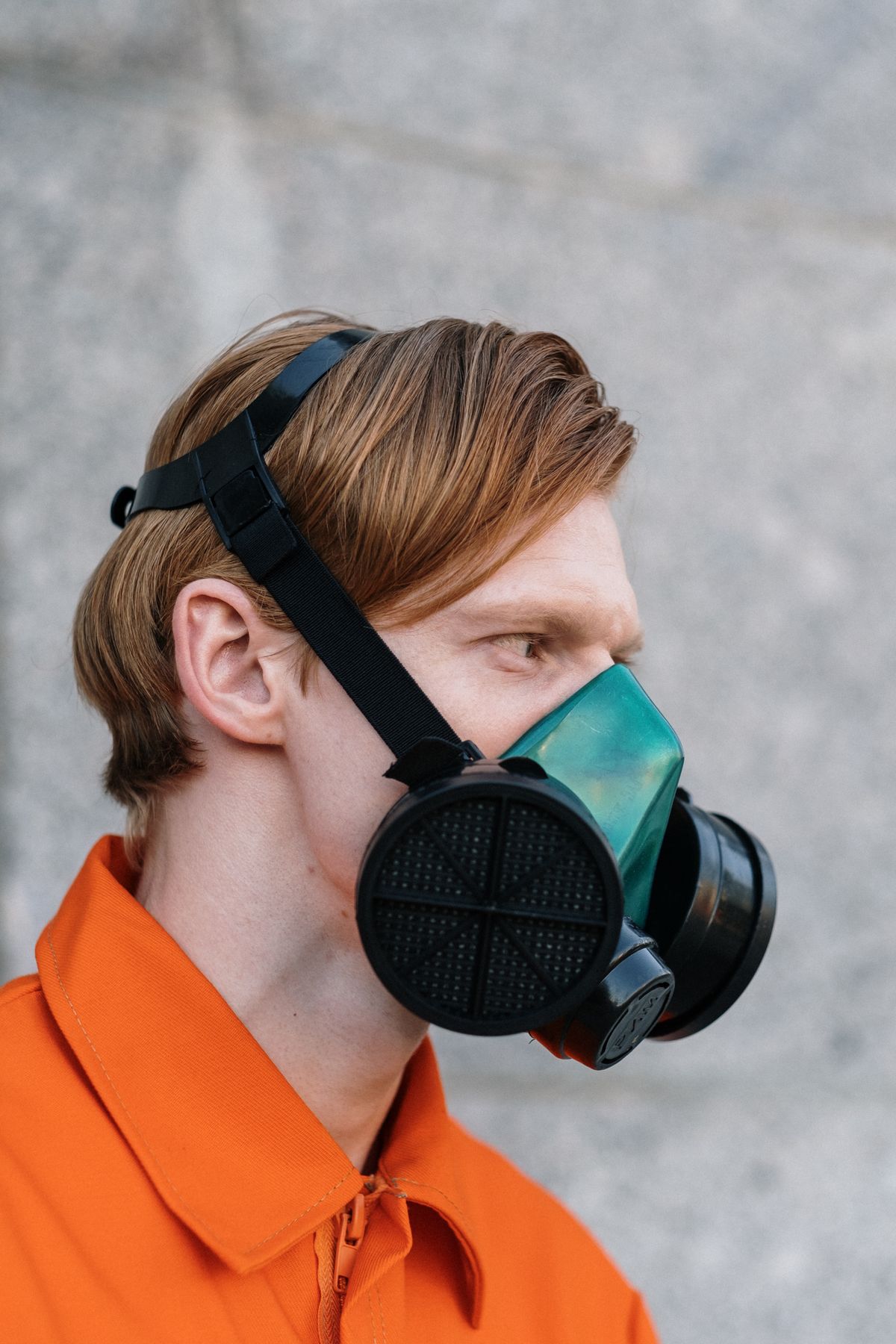
If your crews weld, cut, or grind stainless steel, you are almost certainly generating hexavalent chromium — Cr(VI) — a known human carcinogen. In construction, exposure is controlled by 29 CFR 1926.1126, which sets a PEL of 5 µg/m³ (8-hour TWA) and an action level of 2.5 µg/m³. OSHA names hot work such as welding on stainless steel as a major source of worker exposure.
At a glance: Construction Cr(VI) PEL = 5 µg/m³ (8-hr TWA), action level = 2.5 µg/m³ (1926.1126). At/above the action level → periodic monitoring; exposed ≥30 days/yr → medical surveillance. Stainless welding/cutting/grinding is a major source. OSHA's construction hexavalent chromium standard, 29 CFR 1926.1126, sets a permissible exposure limit of 5 micrograms per cubic meter and an action level of 2.5, with medical surveillance required for workers exposed at or above the action level for 30 or more days a year — and welding on stainless steel is a major source.
The Short Answer: Limits
| Limit | Value | Averaging period | Citation |
|---|---|---|---|
| PEL (TWA) | 5 µg/m³ | 8-hour TWA | 1926.1126(c) |
| Action level | 2.5 µg/m³ | 8-hour TWA | 1926.1126(b) |
The action level (2.5 µg/m³) is the threshold that switches on the most important compliance obligations — periodic monitoring and medical surveillance. The PEL (5 µg/m³) is the line that exposure must never cross.
Two numbers that run the standard
Why Welding Drives Cr(VI) Exposure
Cr(VI) does not just come from chromate paints and coatings. It is formed in the fume when you apply heat to chromium-bearing metals:
- Welding stainless steel (a major source, per OSHA)
- Cutting and grinding stainless and other chromium alloys
- Thermal spraying and plasma cutting chromium-containing material
- Disturbing chromate-containing paints and primers (e.g., on structural steel)
Because stainless fabrication and repair are routine in commercial and industrial construction, Cr(VI) exposure follows that work onto many jobsites.
What 1926.1126 Does Not Cover
The standard applies to Cr(VI) in all forms and compounds in construction, with three exceptions (1926.1126(a)):
- Pesticide application regulated by EPA or another federal agency, such as wood preservative treatment ((a)(2)).
- Portland cement ((a)(3)), so wet concrete work falls outside this standard even though cement can contain chromium.
- Materials or processes that, according to the employer's objective data, cannot release Cr(VI) at or above 0.5 µg/m³ as an 8-hour TWA under any expected condition of use ((a)(4)).
Required Exposure Monitoring
Under 1926.1126(d), the employer must determine the 8-hour TWA exposure for each employee. There are two compliant paths:
- Scheduled monitoring — perform initial monitoring; if results are at or above the action level, conduct periodic monitoring.
- Performance-oriented option — use any combination of air monitoring data, historical data, and objective data sufficient to accurately characterize exposures.
If initial monitoring shows exposures below the action level, the employer may discontinue monitoring for those employees (1926.1126(d)(2)(ii)). If exposures are at or above the action level, periodic monitoring runs at least every six months (1926.1126(d)(2)(iii)), and at least every three months above the PEL (1926.1126(d)(2)(iv)). Monitoring may stop once a periodic result below the action level is confirmed by another taken at least seven days later (1926.1126(d)(2)(v)).
Within 5 work days of an exposure determination, each affected employee is notified in writing, individually or by posting (1926.1126(d)(4)(i)). Keep the air-monitoring record (1926.1126(k)(1)) and any objective data you rely on (1926.1126(k)(3)).
Required Controls (Hierarchy)
1926.1126(e) follows the standard hierarchy of controls. The employer must use engineering and work-practice controls to reduce and maintain exposure at or below the PEL, except where they can demonstrate that such controls are not feasible:
- Local exhaust ventilation (fume extraction at the arc)
- General ventilation improvements
- Work-practice controls (positioning, fume avoidance)
- Respiratory protection where controls are insufficient or during their installation
Two rules frame the controls. A process or task that never puts anyone above the PEL on 30 or more days a year is exempt from the engineering-control requirement (1926.1126(e)(1)(ii)), and rotating workers to spread the exposure is never a compliance method (1926.1126(e)(2)).
Medical Surveillance, Hygiene & Training
| Requirement | Trigger / content | Citation |
|---|---|---|
| Medical surveillance | Exposed ≥ action level for 30+ days/yr; signs/symptoms; emergency exposure | 1926.1126(i) |
| Respiratory protection | When controls don't achieve PEL, during installation, and in emergencies | 1926.1126(f) |
| Protective clothing and equipment | Where skin or eye contact with Cr(VI) is a hazard, at no cost to employees | 1926.1126(g) |
| Hygiene areas/practices | Change rooms where protective clothing is required; washing facilities where skin contact occurs | 1926.1126(h) |
| Hazard communication | Cr(VI) goes into the HazCom program; train and label per HCS | 1926.1126(j) |
Compliance Checklist
- Identify Cr(VI) tasks (stainless welding/cutting/grinding, chromate coatings)
- Determine each employee's 8-hour TWA exposure (1926.1126(d))
- Keep exposure at or below 5 µg/m³; watch the 2.5 µg/m³ action level
- Install local exhaust / fume extraction at the arc
- Provide respirators when controls don't reach the PEL
- Enroll qualifying workers in medical surveillance (30+ days/yr at AL)
- Provide hygiene areas where skin/eye contact occurs
- Train workers on Cr(VI) carcinogen hazards under the HCS
Penalty Exposure (2026)
Maximums per 29 CFR 1903.15(d), unchanged from 2025:
| Violation type | 2026 penalty |
|---|---|
| Serious | Up to $16,550 |
| Willful | Min $11,823 / Max $165,514 |
| Repeated | Up to $165,514; the $4,256 minimum is a FOM policy floor |
Keep the Cr(VI) paper trail an inspector expects
The Cr(VI) standard is a documentation standard: exposure determinations, monitoring results, medical-surveillance enrollment, respirator fit, and carcinogen training. HazComFast keeps the SDSs, the chemical inventory, the training records, and each worker's respirator fit tests in one place; build the respiratory program and PPE assessment with the free tools, then keep the records on trial.
Related reading & terms
- Glossary: hexavalent chromium · permissible exposure limit (PEL)
- OSHA Welding Safety Requirements for Construction
- Respirator Fit-Test & Evaluations (OSHA)
- Related standard (general industry): Chromium (VI) — 29 CFR 1910.1026
- 2026 OSHA penalty schedule · penalties by state
Frequently Asked Questions
What is the OSHA PEL for hexavalent chromium in construction?
Under 29 CFR 1926.1126(c), the permissible exposure limit for hexavalent chromium is 5 micrograms per cubic meter of air (5 µg/m³) as an 8-hour time-weighted average. The action level is 2.5 µg/m³ as an 8-hour TWA.
What is the hexavalent chromium action level?
The action level under 1926.1126(b) is 2.5 µg/m³ as an 8-hour TWA. Reaching or exceeding it triggers periodic exposure monitoring (1926.1126(d)(2)(iii)), and 30 or more days a year at or above it triggers medical surveillance (1926.1126(i)(1)(i)(A)).
Why is welding the main hexavalent chromium hazard in construction?
Welding, cutting, and grinding on stainless steel and other chromium-containing alloys generates fume that contains hexavalent chromium (Cr(VI)), and OSHA calls this hot work a major source of worker exposure. Stainless work is common in commercial and industrial construction, and 29 CFR 1926.1126 covers it; exposures to portland cement are excluded from the standard (1926.1126(a)(3)).
When is hexavalent chromium monitoring required?
1926.1126(d) requires the employer to determine each employee's exposure. Initial monitoring is required unless a valid performance-oriented exposure determination shows exposure below the action level. Periodic monitoring follows at least every six months at or above the action level and every three months above the PEL (1926.1126(d)(2)(iii)-(iv)).
When does Cr(VI) trigger medical surveillance in construction?
Under 1926.1126(i), medical surveillance must be provided to employees occupationally exposed to Cr(VI) at or above the action level for 30 or more days per year, those with signs/symptoms of Cr(VI) exposure, and those exposed in an emergency.
OSHA figures and citations here come from our regulatory source-of-truth modules, last checked against the eCFR, OSHA.gov, and the Federal Register on October 5, 2026. Last reviewed October 6, 2026.
About This Article
Published by: HazComFast
Published: June 25, 2026
Last Updated: October 6, 2026
This content is for informational purposes only and does not constitute legal advice.