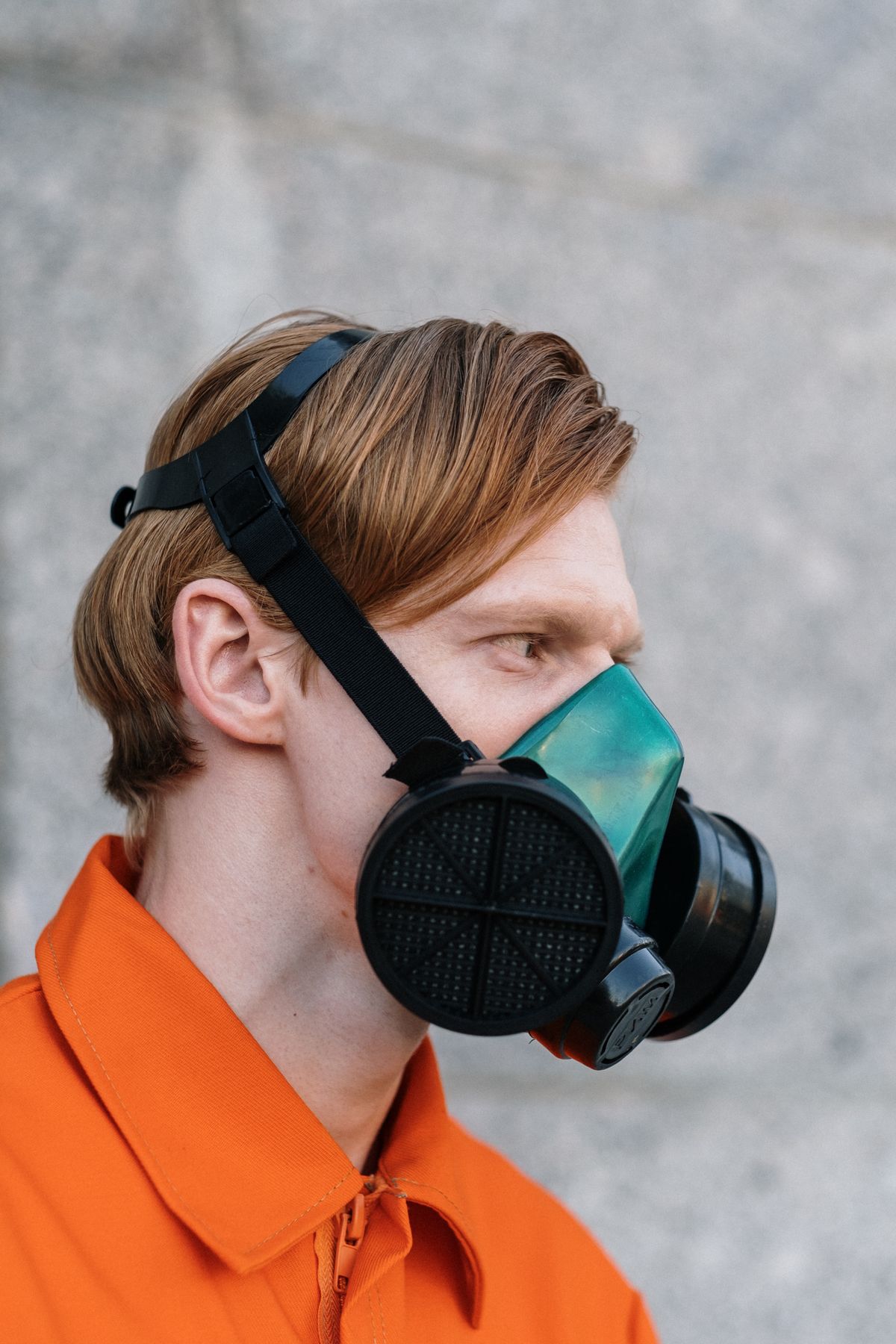
Introduction to OSHA Lead Standards
Lead remains one of the most significant occupational health hazards in construction. Despite decades of regulation, lead exposure continues to cause serious health effects, and the standard names the ones every employer's hazard communication must address: reproductive and developmental toxicity, central nervous system effects, kidney effects, blood effects, and acute toxicity (1926.62(l)(1)(i)).
OSHA regulates lead exposure through two primary standards:
- 29 CFR 1926.62 — Lead in Construction
- 29 CFR 1910.1025 — Lead in General Industry
The two standards share the same 50 µg/m³ PEL and 30 µg/m³ action level. What the construction standard adds is task-based interim protection (1926.62(d)(2)), because demolition, renovation, and bridge work produce high exposures that change from day to day.
This guide focuses primarily on the construction standard while noting key differences with the general industry standard where relevant.
In construction, 29 CFR 1926.62 limits airborne lead to 50 micrograms per cubic meter as an 8-hour average, with a 30 microgram action level; exposure at or above the action level on any day triggers blood testing and training, and a worker whose blood lead reaches 50 micrograms per deciliter on a periodic and a follow-up test must be removed with up to 18 months of earnings protection.
Understanding Lead Exposure in Construction
Common Exposure Sources
Construction workers encounter lead in numerous activities:
High-Exposure Tasks (several are presumed above the PEL; see interim protection below):
- Abrasive blasting of lead-painted structures
- Welding, cutting, or torch-burning lead-painted metal
- Manual demolition of lead-painted structures
- Rivet removal with power tools on bridges and steel structures
- Lead pipe soldering or removal
- Spray painting with lead-containing paints
Moderate-Exposure Tasks:
- Manual scraping and sanding of lead paint
- Heat gun stripping of lead paint
- Cleanup of lead-contaminated debris
- Installation of lead sheet metal or flashing
Lower-Exposure Tasks:
- Overseeing or inspecting lead abatement work
- Cleanup with HEPA vacuum equipment
- Intact lead paint that is not disturbed
Routes of Exposure
Lead enters the body through:
- Inhalation — The primary route in construction. Lead dust, fumes, and mist are generated during cutting, grinding, sanding, and abrasive blasting
- Ingestion — Lead dust on hands, clothing, food, and cigarettes. Particularly important in construction where hand-to-mouth contact is common
- Skin absorption — Organic lead compounds (tetraethyl lead) can be absorbed through intact skin, though this is rare in construction, and organic lead compounds other than lead soaps fall outside 1926.62 (1926.62(b))
OSHA Permissible Exposure Limits
Construction Standard (1926.62)
| Parameter | Level | Significance |
|---|---|---|
| PEL | 50 µg/m³ (8-hr TWA) | Maximum allowable exposure (1926.62(c)(1)); 400 divided by hours worked for shifts over 8 hours (1926.62(c)(2)) |
| Action Level | 30 µg/m³ (8-hr TWA) | Triggers periodic monitoring, blood testing, and training (1926.62(b)) |
| Presumed-exposure tasks | 1926.62(d)(2) | Interim protection required until an exposure assessment documents a lower exposure |
What Each Level Triggers
| Exposure | What the employer must do |
|---|---|
| At or above 30 µg/m³ on any day | Initial blood sampling for lead and ZPP (1926.62(j)(1)(i)); training before the job and at least annually (1926.62(l)(1)(ii)); monitoring at least every 6 months (1926.62(d)(6)(ii)) |
| At or above 30 µg/m³ for more than 30 days in any consecutive 12 months | The full medical surveillance program of blood tests and medical exams (1926.62(j)(1)(ii)) |
| Above the 50 µg/m³ PEL | Respirators (1926.62(f)(1)); protective clothing (1926.62(g)(1)); change areas, showers where feasible, and eating areas (1926.62(i)); warning signs (1926.62(m)(1)(i)); quarterly monitoring (1926.62(d)(6)(iii)) |
| Jobs where exposure may reach the PEL | A written compliance program established before the job starts (1926.62(e)(2)(i), as Appendix B summarizes it) |
Housekeeping applies on every job: all surfaces are kept as free as practicable of lead accumulations (1926.62(h)(1)).
Exposure Monitoring Requirements
Initial Determination
Every employer covered by the standard must first determine whether any employee may be exposed at or above the action level (1926.62(d)(1)(i)), counted as if no respirator were worn (1926.62(d)(1)(ii)). The standard allows three bases for that determination:
Option 1: Objective Data Data showing that a particular product, material, or process cannot produce exposure at or above the action level under any expected conditions of use (1926.62(d)(3)(iv), (n)(4)). Objective data cannot be used for the presumed-exposure tasks of 1926.62(d)(2) (1926.62(d)(3)(iv)(B)).
Option 2: Air Monitoring Personal full-shift samples, at least one for each job classification in each work area, representative of the employee's regular daily exposure (1926.62(d)(1)(iii)-(iv)), with an accuracy of plus or minus 25 percent at 30 µg/m³ and above (1926.62(d)(9)). Initial monitoring may be limited to a representative sample of the employees believed most exposed (1926.62(d)(3)(ii)).
Option 3: Recent Monitoring Results from the past 12 months, taken under closely resembling processes, materials, controls, work practices, and conditions, may stand in for new monitoring (1926.62(d)(3)(iii)).
Trigger Tasks and Interim Protection
The construction standard includes interim protection provisions for certain high-exposure tasks. Where lead is present, the employer must treat the employee as exposed at the level below, and provide interim protection, until an exposure assessment documents a lower exposure (1926.62(d)(2)):
- Above the PEL, up to 10 times it (50 to 500 µg/m³): where lead coatings or paint are present, manual demolition, manual scraping, manual sanding, heat gun applications, and power tool cleaning with dust collection systems; plus spray painting with lead paint (1926.62(d)(2)(i))
- Above 500 µg/m³: using lead-containing mortar and lead burning; where lead coatings or paint are present, rivet busting, power tool cleaning without dust collection, cleanup with dry expendable abrasives, and abrasive blasting enclosure movement and removal (1926.62(d)(2)(iii))
- Above 2,500 µg/m³ (50 times the PEL): where lead coatings or paint are present, abrasive blasting, welding, cutting, and torch burning (1926.62(d)(2)(iv))
- Any other task the employer has reason to believe may exceed the PEL is treated as above it (1926.62(d)(2)(ii))
Interim protection means respirators, protective clothing, change areas, hand washing facilities, blood sampling for lead and ZPP, and training (1926.62(d)(2)(v)).
Periodic Monitoring
After initial monitoring:
| Exposure Level | Monitoring Frequency |
|---|---|
| Below action level (30 µg/m³) | No further monitoring required unless equipment, process, controls, personnel, or tasks change (1926.62(d)(6)(i), (d)(7)) |
| At or above the action level, at or below the PEL | At least every 6 months, until two consecutive results at least 7 days apart fall below the action level (1926.62(d)(6)(ii)) |
| Above the PEL (50 µg/m³) | Quarterly, until two consecutive results at least 7 days apart are at or below the PEL (1926.62(d)(6)(iii)) |
Telling Employees Their Results
Employers must give each affected employee the monitoring results as soon as possible and no later than 5 working days after receiving them, individually in writing or by posting them where employees can see them (1926.62(d)(8)(i)). If results are at or above the PEL, the written notice must say so and describe the corrective action taken or planned (1926.62(d)(8)(ii)).
Medical Surveillance
Medical surveillance tracks what the air numbers miss: biological monitoring detects lead absorption before clinical symptoms appear.
Who Must Be Covered
The full program is required for employees who are or may be exposed at or above the action level (30 µg/m³) for more than 30 days in any consecutive 12 months (1926.62(j)(1)(ii)); anyone exposed at or above it on any single day gets initial blood sampling (1926.62(j)(1)(i)). Everything is provided at no cost to employees and at a reasonable time and place (1926.62(j)(1)(iv)), by or under the supervision of a licensed physician (1926.62(j)(1)(iii)).
Blood Tests and Medical Exams
Every blood sampling covers blood lead and zinc protoporphyrin (ZPP) (1926.62(j)(1)(i)), and the laboratory must be one OSHA has approved for blood lead analysis (1926.62(j)(2)(iii)). Medical exams come at least annually for anyone whose blood lead reached 40 µg/dL in the past 12 months, and as soon as possible when an employee reports symptoms, asks for advice about having children, is pregnant, or has trouble breathing in a respirator (1926.62(j)(3)(i)). The annual exam includes (1926.62(j)(3)(ii)):
- A detailed work and medical history, and a thorough physical examination
- A blood pressure measurement
- Blood lead, hemoglobin and hematocrit, red cell indices and peripheral smear, ZPP, blood urea nitrogen, and serum creatinine
- A routine urinalysis with microscopic examination
- Any other test the examining physician deems necessary
Periodic BLL Monitoring Schedule
| Time Period | BLL Monitoring Frequency |
|---|---|
| First 6 months | At least every 2 months (1926.62(j)(2)(i)(A)) |
| After 6 months (if BLL < 40 µg/dL) | At least every 6 months (1926.62(j)(2)(i)(A)) |
| When BLL ≥ 40 µg/dL | At least every 2 months until 2 consecutive BLLs < 40 (1926.62(j)(2)(i)(B)) |
| During a medical removal | At least monthly (1926.62(j)(2)(i)(C)) |
Each employee gets a written blood lead result within five working days of the employer receiving it, and anyone at or above 40 µg/dL is told that removal with medical removal protection benefits is required at the removal level (1926.62(j)(2)(iv)).
Medical Removal Triggers
Mandatory removal from lead exposure is required when:
- A periodic and a follow-up blood test both show 50 µg/dL or more (1926.62(k)(1)(i)); the follow-up comes within two weeks of the first result (1926.62(j)(2)(ii))
- A final medical determination finds a condition placing the employee at increased risk of material impairment from lead (1926.62(k)(1)(ii))
Return criteria (1926.62(k)(1)(iii)):
- Removed for blood lead: two consecutive tests below 40 µg/dL
- Removed by a medical determination: a later final medical determination that the condition no longer places the employee at increased risk
The three numbers that drive lead medical management
Medical Removal Protection (MRP)
During medical removal, the employer must:
- Maintain the employee's total normal earnings, seniority, and other employment rights and benefits for up to 18 months, as long as the job the employee was removed from continues (1926.62(k)(2)(i)-(ii))
- Continue to provide medical surveillance during the removal period, with blood tests at least monthly (1926.62(j)(2)(i)(C)); the benefits may be conditioned on the employee's participation (1926.62(k)(2)(iii))
This is a substantial financial obligation. For a full-time worker earning $35 an hour, a removal that runs the full 18 months exceeds $100,000 in protected earnings, which makes prevention far cheaper than reaction.
Engineering and Work Practice Controls
Hierarchy of Controls for Lead
OSHA requires employers to implement engineering and work practice controls, including administrative controls, to reduce exposure to or below the PEL to the extent feasible, and to supplement them with respirators where they fall short (1926.62(e)(1)). These must be the primary method of exposure reduction:
- Elimination/Substitution — Use lead-free paints and materials when possible
- Engineering Controls:
- Local exhaust ventilation (LEV) at the point of dust/fume generation
- HEPA-filtered vacuum systems for dust collection
- Enclosed abrasive blasting systems with negative pressure
- Wet methods for cutting, sawing, or grinding lead-containing materials
- Chemical paint strippers instead of heat or mechanical methods
- Work Practice Controls:
- Clean by HEPA vacuuming or other methods that keep lead out of the air; sweep or shovel only where those have been tried and failed (1926.62(h)(2)-(4))
- Prohibit eating, drinking, tobacco, and cosmetics in areas above the PEL (1926.62(i)(1))
- Require washing hands and face before eating, drinking, smoking, or applying cosmetics (1926.62(i)(4)(iii))
- Restrict employee access to lead work areas
- Rotate workers to reduce individual exposure time, with a written job rotation schedule (1926.62(e)(4))
When Respirators Are Required
Respirators must be used (1926.62(f)(1)):
- During periods when exposure exceeds the PEL
- In work operations where engineering and work practice controls are not sufficient to reduce exposure to or below the PEL
- Whenever an employee requests a respirator
- As interim protection during the presumed-exposure tasks of 1926.62(d)(2)
The respirator program follows 1910.134 (1926.62(f)(2)(i)).
Respirator selection for lead:
1926.62 no longer has its own respirator table. Since the 2006 assigned protection factors rule (71 FR 50191), employers select from the APF table of 29 CFR 1910.134(d)(3)(i)(A) (1926.62(f)(3)(i)(A)), and the maximum use concentration is the APF times the 50 µg/m³ PEL:
| Airborne lead (8-hr TWA) | Respirator class (APF, 1910.134 Table 1) |
|---|---|
| Up to 500 µg/m³ | Half-mask air-purifying respirator with HEPA filters (APF 10) |
| Up to 1,250 µg/m³ | Loose-fitting facepiece or hood/helmet PAPR with HEPA filters (APF 25) |
| Up to 2,500 µg/m³ | Full facepiece air-purifying respirator, or half-mask PAPR, with HEPA filters (APF 50) |
| Up to 50,000 µg/m³ | Full facepiece PAPR with HEPA filters, or full facepiece supplied-air respirator in continuous-flow or pressure-demand mode (APF 1,000) |
| Above 50,000 µg/m³ | Full facepiece SCBA in pressure-demand or other positive-pressure mode (APF 10,000) |
Three lead-specific rules sit on top: a full facepiece replaces a half mask where lead aerosols may irritate the eyes or skin (1926.62(f)(3)(i)(B)), air-purifying respirators use HEPA filters (1926.62(f)(3)(i)(C)), and an employee who asks for a PAPR gets one when it gives adequate protection (1926.62(f)(3)(ii)).
Hygiene and Housekeeping
Required Hygiene Facilities
When employees are exposed above the PEL (and, for change areas, during the presumed-exposure tasks), employers must provide:
- Change areas with separate storage for work clothing and street clothes (1926.62(i)(2))
- Shower facilities, where feasible; where showers are available, employees shower at the end of the shift, and where they are not, employees wash hands and face (1926.62(i)(3), (i)(5)(ii))
- Eating areas kept as free as practicable from lead, entered only after surface lead dust is removed from protective clothing (1926.62(i)(4))
- Hand washing facilities for everyone exposed to lead (1926.62(i)(5)(i))
Housekeeping Requirements
- All surfaces must be maintained as free as practicable of accumulations of lead (1926.62(h)(1))
- Clean by vacuuming or other methods that keep lead out of the air (1926.62(h)(2)), with HEPA-filtered vacuums (1926.62(h)(4))
- Sweeping, shoveling, and brushing only where vacuuming or equally effective methods have been tried and found ineffective (1926.62(h)(3))
- Compressed air only together with a ventilation system that captures the dust it raises (1926.62(h)(5))
- Waste disposal must comply with EPA RCRA rules; lead waste that fails the toxicity characteristic test at 5.0 mg/L is hazardous waste with code D008 (40 CFR 261.24)
Protective Clothing and Equipment
Above the PEL, for lead compounds that irritate skin or eyes, and as interim protection, employers must provide at no cost and ensure the use of (1926.62(g)(1)):
- Coveralls or other full-body work clothing
- Gloves, hats, and shoes or disposable shoe covers
- Face shields, vented goggles, or other appropriate eye and face protection
Clean clothing is supplied at least weekly, and daily above 200 µg/m³ (1926.62(g)(2)(i)).
Laundry requirements:
- Contaminated clothing goes into closed containers in the change area (1926.62(g)(2)(v)), labeled "DANGER: CLOTHING AND EQUIPMENT CONTAMINATED WITH LEAD" with the hazard statements of 1926.62(g)(2)(vii)(A)
- Employers must inform in writing anyone who cleans or launders the clothing of the harmful effects of lead (1926.62(g)(2)(vi))
- Employees may not leave the workplace wearing required protective clothing (1926.62(i)(2)(iii)), and lead may not be removed from it by blowing or shaking (1926.62(g)(2)(viii))
Training Requirements
Content
Every employee exposed at or above the action level on any day, or to lead compounds that irritate skin or eyes, must be trained (1926.62(l)(1)(ii)) in (1926.62(l)(2)):
- The content of 1926.62 and its appendices
- The specific operations that could result in exposure above the action level
- The purpose, selection, fitting, use, and limitations of respirators
- The medical surveillance and medical removal protection programs, including lead's health effects, with particular attention to reproductive effects and hazards to the fetus
- The engineering controls and work practices of the job, including the good work practices of Appendix B
- The contents of any compliance plan in effect
- That chelating agents should not be used routinely to remove lead from the body, and never except under a licensed physician's direction
- The employee's right of access to records
Lead also belongs in the hazard communication program, with labels, safety data sheets, and training on its hazards (1926.62(l)(1)(i)).
Frequency
- Initial training before job assignment (1926.62(l)(1)(iii))
- At least annually for each employee exposed at or above the action level on any day (1926.62(l)(1)(iv))
- Additional training when conditions change (good practice)
Signs
Warning signs must be posted in each work area where exposure is above the PEL (1926.62(m)(1)(i)). The required legend is:
DANGER
LEAD WORK AREA
MAY DAMAGE FERTILITY OR THE UNBORN CHILD
CAUSES DAMAGE TO THE CENTRAL NERVOUS SYSTEM
DO NOT EAT, DRINK OR SMOKE IN THIS AREA
The old "WARNING / LEAD WORK AREA / POISON / NO SMOKING OR EATING" legend was allowed only before June 1, 2016 (1926.62(m)(1)(v)).
Compliance Program
Before the job starts, the employer must establish and implement a written compliance program to achieve compliance with the PEL (1926.62(e)(2)(i)). It must include at least (1926.62(e)(2)(ii)):
- A description of each activity in which lead is emitted (equipment, materials, controls, crew size, job responsibilities, operating and maintenance practices)
- The specific means of compliance, with the engineering plans and studies behind any engineering controls
- A report of the technology considered in meeting the PEL
- Air monitoring data documenting the source of lead emissions
- A detailed implementation schedule
- A work practice program covering protective clothing, housekeeping, and hygiene
- The job rotation schedule, if administrative controls are used
- The arrangements among contractors on multi-contractor sites
The program provides for frequent and regular inspections by a competent person (1926.62(e)(2)(iii)), stays available at the worksite (1926.62(e)(2)(iv)), and must be revised and updated at least annually (1926.62(e)(2)(v)). The six-month review that the standard's non-mandatory Appendix B still mentions is out of date.
EPA Renovation, Repair, and Painting (RRP) Rule
Construction employers should also be aware of the EPA's RRP Rule (40 CFR 745), which applies to residential and child-occupied facilities built before 1978:
- Firms performing renovation must be EPA-certified
- A Certified Renovator must be assigned to each job, physically present while signs are posted, containment is set up, and cleaning is done, and available on site or by telephone the rest of the time (40 CFR 745.90(b))
- Lead-safe work practices must be used (containment, HEPA vacuuming, wet methods)
- Prohibited practices include open-flame burning or torching of painted surfaces, heat guns at 1,100°F or above, and high-speed sanding or grinding without a shroud and HEPA vacuum attachment (40 CFR 745.85(a)(3))
The RRP Rule is enforced by EPA or authorized states, and it does not replace 1926.62: the same job can owe both.
Recordkeeping
Employers must maintain:
| Record Type | Retention Period |
|---|---|
| Exposure monitoring and assessment records (1926.62(n)(1)) | 30 years (29 CFR 1910.1020(d)(1)(ii); construction applies the identical rule through 1926.33) |
| Medical surveillance records (1926.62(n)(2)) | Duration of employment + 30 years (1910.1020(d)(1)(i)) |
| Medical removal records | At least the duration of employment (1926.62(n)(3)(iii)) |
| Training records | No retention period in 1926.62; keep them as proof of training |
| Compliance program | Keep the current version available at the worksite (1926.62(e)(2)(iv)) |
Common Violations and Prevention
Common Citation Areas
- No initial exposure determination (1926.62(d)) — Employers must determine whether any employee may be exposed at or above the action level
- No medical surveillance (1926.62(j)) — Blood lead levels not tested for exposed workers
- Inadequate respiratory protection (1926.62(f)) — Wrong respirator selected or no respiratory protection program
- No hygiene facilities (1926.62(i)) — Missing change rooms, showers, or clean eating areas
- No training (1926.62(l)) — Workers not trained on lead hazards
Prevention Strategy
- ✅ Assume lead is present in pre-1978 structures until testing proves otherwise
- ✅ Conduct exposure assessments before any lead-disturbing activity
- ✅ Implement engineering controls first, then supplement with respiratory protection
- ✅ Establish a biological monitoring program for all exposed workers
- ✅ Provide hygiene facilities at every lead work site
- ✅ Train workers on lead hazards, controls, and medical rights
- ✅ Maintain meticulous records of monitoring, medical surveillance, and training
- ✅ Use digital tools to track BLL results, medical clearances, and exposure records
Conclusion
Lead compliance in construction requires vigilance across multiple regulatory requirements — exposure monitoring, medical surveillance, engineering controls, respiratory protection, hygiene, and training. The health consequences of lead exposure are severe and often irreversible, making compliance not just a legal obligation but a moral imperative.
The most effective approach combines rigorous exposure assessment with aggressive engineering controls, comprehensive medical surveillance, and ongoing worker training. Digital compliance tools can automate tracking of blood lead levels, medical clearance dates, and training records — ensuring nothing falls through the cracks on busy multi-employer construction sites.
The standard, related terms & tools
- Lead in Construction — 29 CFR 1926.62 (the standard itself) · general industry: 29 CFR 1910.1025
- Glossary: lead · permissible exposure limit (PEL)
- Respiratory Protection Program Builder · Respirator Medical Evaluation Questionnaire
- OSHA Silica Compliance for Construction (2026)
- 2026 OSHA penalty schedule · penalties by state
Sources & verification: 29 CFR 1926.62 and its Appendix B, 1910.134(d)(3)(i)(A), 1910.1020(d)(1), 1926.33, 40 CFR 261.24, and 40 CFR 745.85 and 745.90, read on the eCFR on October 6, 2026. General guidance, not legal advice.
Frequently Asked Questions
What is the OSHA PEL for lead in construction?
The permissible exposure limit for lead in construction is 50 micrograms per cubic meter of air (50 µg/m³) averaged over an 8-hour period (29 CFR 1926.62(c)(1)), and it drops for longer shifts to 400 divided by the hours worked (1926.62(c)(2)). The action level is 30 µg/m³ as an 8-hour TWA (1926.62(b)); exposure at or above it on any day triggers initial blood testing, training, and monitoring at least every 6 months.
When is blood lead level monitoring required?
Any employee exposed at or above the 30 µg/m³ action level on any day gets initial blood sampling for lead and zinc protoporphyrin (29 CFR 1926.62(j)(1)(i)). Employees exposed at or above it for more than 30 days in any consecutive 12 months enter the full program: blood tests at least every 2 months for the first 6 months and every 6 months after that, every 2 months while the last result is at or above 40 µg/dL, and monthly during a removal (1926.62(j)(2)(i)). A periodic and a follow-up test at or above 50 µg/dL require medical removal (1926.62(k)(1)(i)).
What triggers OSHA's lead medical removal protection?
Removal is required when a periodic and a follow-up blood test both show 50 µg/dL or more (29 CFR 1926.62(k)(1)(i)), or when a final medical determination finds a condition that puts the employee at increased risk from lead (1926.62(k)(1)(ii)). The employee keeps total normal earnings, seniority, and other rights and benefits for up to 18 months of medical removal protection (1926.62(k)(2)), and returns to the former job after two consecutive blood tests below 40 µg/dL (1926.62(k)(1)(iii)).
What construction activities involve lead exposure?
Common lead exposure activities in construction include demolition or renovation of structures with lead paint, bridge and structural steel maintenance, abrasive blasting of lead-painted surfaces, welding or cutting lead-painted metal, lead pipe installation or removal, and renovation, repair, and painting work in pre-1978 housing. The standard presumes high exposures for several of them until an assessment shows otherwise; abrasive blasting, welding, cutting, and torch burning where lead coatings are present are treated as above 2,500 µg/m³ (29 CFR 1926.62(d)(2)(iv)).
How much are OSHA fines for lead violations?
Under the maximums in effect since January 15, 2025 (29 CFR 1903.15(d)), a serious violation carries up to $16,550 and a willful or repeat violation up to $165,514. A lead inspection often produces several items at once, such as monitoring, medical surveillance, training, and protective clothing, so the total can climb quickly.
OSHA figures and citations here come from our regulatory source-of-truth modules, last checked against the eCFR, OSHA.gov, and the Federal Register on October 5, 2026. Last reviewed October 6, 2026.
About This Article
Published by: HazComFast
Published: March 24, 2026
Last Updated: October 6, 2026
This content is for informational purposes only and does not constitute legal advice.