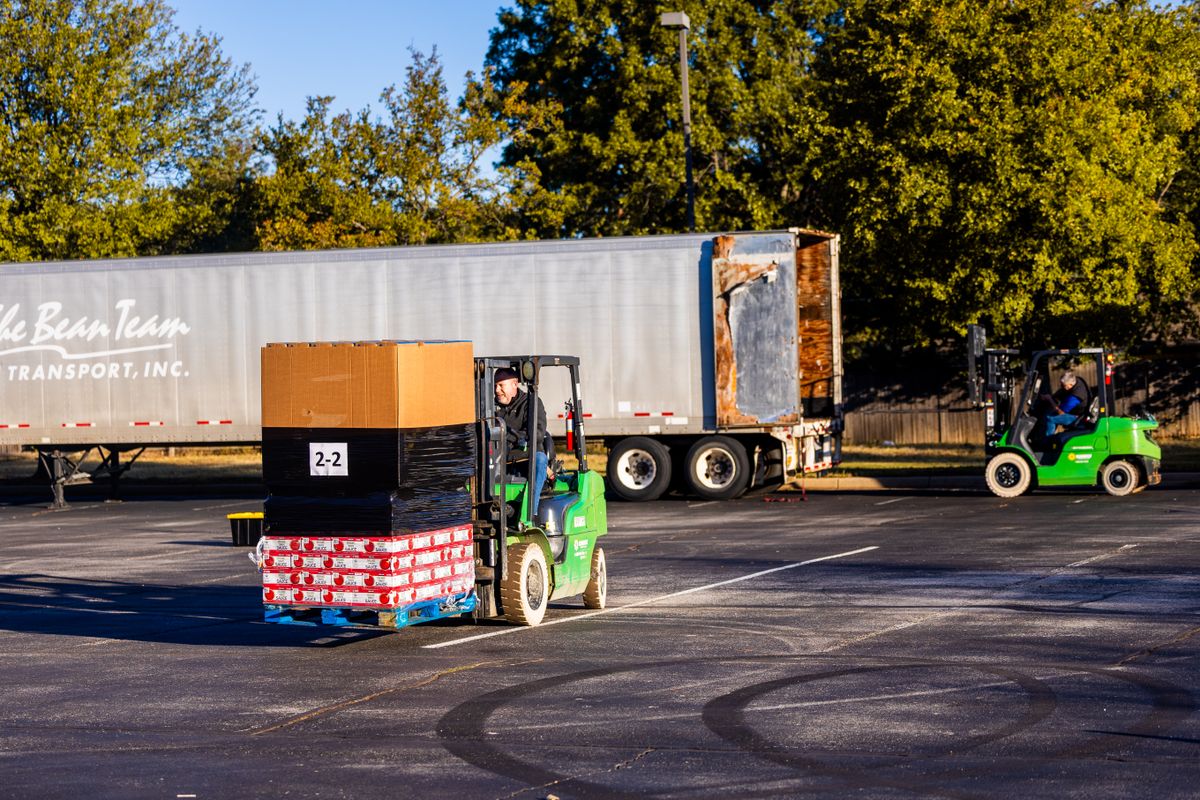
Powered industrial trucks (PITs) — what most people call forklifts — are grouped in OSHA's eTool into seven classes (I–VII) based on power source and design. On construction sites, the equipment side is governed by 29 CFR 1926.602 (material handling equipment), while operator training mirrors 29 CFR 1910.178(l). This cheat sheet maps the classes and the training rules in one place.
At a glance: Seven PIT classes (I–VII) by power/design; construction relies heavily on Class VII rough-terrain trucks (telehandlers). Equipment rules = 1926.602; operator training parallels 1910.178(l) — trained, evaluated & certified, re-evaluated at least every 3 years. OSHA groups powered industrial trucks into seven classes; on construction sites the equipment is governed by 29 CFR 1926.602 and operator training parallels 1910.178(l), requiring operators to be trained, evaluated, and certified, with re-evaluation at least every three years.
The Short Answer: The Seven PIT Classes
| Class | Description | Common examples |
|---|---|---|
| Class I | Electric motor rider trucks | Counterbalanced electric sit-down/stand-up |
| Class II | Electric motor narrow aisle trucks | Reach trucks, order pickers |
| Class III | Electric motor hand or hand/rider trucks | Pallet jacks, walkies |
| Class IV | Internal combustion engine trucks (cushion/solid tires) | Indoor LP/diesel counterbalanced |
| Class V | Internal combustion engine trucks (pneumatic tires) | Outdoor LP/diesel counterbalanced |
| Class VI | Electric and internal combustion engine tractors | Tow tractors / tuggers |
| Class VII | Rough terrain forklift trucks | Telehandlers, masted rough terrain |
Class VII rough terrain forklifts are the construction workhorse because jobsites have uneven ground, dirt, and outdoor conditions that cushion-tire trucks can't handle.
Seven PIT classes — grouped by power & design
Construction runs mostly Class VII. Equipment: 1926.602; operator training parallels 1910.178(l) — trained, evaluated & certified, re-evaluated every 3 years.
Which Standard Applies on a Jobsite?
| Topic | Construction citation | General industry analog |
|---|---|---|
| Material handling equipment | 29 CFR 1926.602 | — |
| Operator training/certification | Parallels 1910.178(l) | 29 CFR 1910.178(l) |
| Lift trucks: capacity plate, modifications, ANSI B56.1-1969 | 1926.602(c)(1) | 1910.178(a)(4) |
| Seat belts / rollover protection (earthmoving equipment) | 1926.602(a)(2)(i) / (a)(6), Subpart W | — |
OSHA's construction equipment rules in 1926.602 address material handling equipment requirements, while the agency applies powered-industrial-truck operator training expectations consistent with 1910.178(l).
What 1926.602 actually requires of industrial trucks (paragraph (c)(1), which also brings in the general rules of 1926.600):
- The rated capacity clearly posted where the operator can see it — 1926.602(c)(1)(i)
- No modifications or additions affecting capacity or safe operation without the manufacturer's written approval — 1926.602(c)(1)(ii)
- Design, construction, stability, inspection, testing, maintenance, and operation per ANSI B56.1-1969 — 1926.602(c)(1)(vi)
- Operator training identical to 1910.178(l) — the standard says so in a note at 1926.602(d)
The seat-belt rule (1926.602(a)(2)(i)) and the ROPS reference to Subpart W (1926.602(a)(6)) sit in paragraph (a), which applies to earthmoving equipment such as scrapers, loaders, tractors, and graders (1926.602(a)(1)). For a forklift's operator restraint, follow the truck manufacturer's instructions; overturn and struck-by, not the paperwork, are what the rules guard against. See the Struck-By Safety hub for how the pre-use inspection ties it together.
Operator Training & Certification
Training has three components (1910.178(l)(2)(ii)):
- Formal instruction — lecture, video, written material, or interactive computer-based training
- Practical training — hands-on demonstration and exercises performed by the trainee
- Workplace evaluation — observing the operator performing under jobsite conditions
The operator must be trained, evaluated, and certified before operating a truck. Training must cover both truck-related topics (controls, capacity, stability, attachments) and workplace-related topics (surface conditions, pedestrian traffic, ramps, hazardous locations), per 1910.178(l)(3)(i)-(ii). The certification records the operator's name, the training and evaluation dates, and who trained and evaluated (1910.178(l)(6)).
Refresher and Re-evaluation Triggers (1910.178(l)(4))
- Operator observed operating unsafely
- Involvement in an accident or near-miss
- Receiving an evaluation revealing unsafe operation
- Assignment to a different type of truck
- A change in workplace conditions affecting safe operation
- Evaluation at least once every three years
Daily Inspection Checklist
- Examine the truck before each shift; remove from service if unsafe (general industry: at least daily, 1910.178(q)(7); construction: ANSI B56.1-1969 via 1926.602(c)(1)(vi))
- Check tires, forks, mast, chains, and hydraulics for damage/leaks
- Test brakes, steering, horn, lights, and backup alarm
- Verify the data/capacity plate is legible and matches the load
- Confirm seat belt and any rollover protection are intact
- On rough terrain (Class VII): assess ground stability and slope
- Never exceed rated capacity; account for attachments
- Verify the operator is trained and certified for that truck class
Penalty Exposure (2026)
| Violation type | 2026 penalty |
|---|---|
| Serious | Up to $16,550 |
| Willful | Min $11,823 / Max $165,514 |
| Repeated | Up to $165,514; the $4,256 minimum is a FOM policy floor |
Maximums per 29 CFR 1903.15(d), unchanged from 2025. Powered industrial trucks (1910.178) ranked eighth on OSHA's FY2025 Top 10, and separate requirements, such as training and the three-year evaluation, can be separate citation items.
Keep operators certified and evaluations current
An untrained operator or a lapsed three-year evaluation is a citation waiting to happen. HazComFast records each operator's evaluation and certificate with an expiration date, marks it expiring 30 days ahead and expired after, and prints the record as a PDF. Document the training and talks with the free tools, or run the whole matrix on trial.
The standards, tools & related reading
- The standards: Material Handling Equipment — 1926.602 (construction) · Powered Industrial Trucks — 1910.178
- On the job: HazCom Training Record · Toolbox Talk Generator
- Related guides: OSHA Forklift Certification Requirements · Forklift Respirator Fit Evaluations · OSHA Top 10 Most-Cited Violations
- 2026 OSHA penalty schedule · penalties by state
Frequently Asked Questions
What are the 7 classes of powered industrial trucks?
Class I: electric motor rider trucks. Class II: electric motor narrow aisle trucks. Class III: electric motor hand or hand/rider trucks. Class IV: internal combustion engine trucks (cushion tires). Class V: internal combustion engine trucks (pneumatic tires). Class VI: electric and internal combustion engine tractors. Class VII: rough terrain forklift trucks. Those are the classes of OSHA's powered industrial truck eTool; the regulation itself sorts trucks into eleven fire-safety designations, D, DS, DY, E, ES, EE, EX, G, GS, LP, and LPS (29 CFR 1910.178(b)).
Which OSHA standard covers forklifts on construction sites?
Powered industrial trucks used in construction are addressed under 29 CFR 1926.602 (material handling equipment). Operator training requirements parallel the general industry powered industrial truck rule, 29 CFR 1910.178(l).
Which forklift class is most common in construction?
Class VII rough terrain forklift trucks, including telehandlers, are the class built for uneven ground, dirt, and outdoor jobsite conditions. On a construction site they fall under 29 CFR 1926.602(c)(1): rated capacity posted, no modification without the manufacturer's written approval, and ANSI B56.1-1969 for design, inspection, and operation.
Is forklift operator training and certification required?
Yes. Operators must be trained and evaluated before operating a powered industrial truck (29 CFR 1910.178(l)(1)(ii), applied to construction by 1926.602(d)), and the employer certifies it with the operator's name, the training and evaluation dates, and the evaluator (1910.178(l)(6)). Training combines formal instruction, practical training, and a workplace evaluation (1910.178(l)(2)(ii)), with refresher training and an evaluation at least every three years (1910.178(l)(4)).
How often must forklift operators be re-evaluated?
An evaluation of each operator's performance must be conducted at least once every three years (29 CFR 1910.178(l)(4)(iii)). Refresher training is also required after unsafe operation, an accident or near-miss, an evaluation showing unsafe operation, assignment to a different type of truck, or a workplace change affecting safe operation (1910.178(l)(4)(ii)).
OSHA figures and citations here come from our regulatory source-of-truth modules, last checked against the eCFR, OSHA.gov, and the Federal Register on October 5, 2026. Last reviewed October 6, 2026.
About This Article
Published by: HazComFast
Published: June 25, 2026
Last Updated: October 6, 2026
This content is for informational purposes only and does not constitute legal advice.