The Materials of Trade exception covers eligible hazardous materials carried by motor vehicle, including materials used directly in a contractor's work. A movement meeting 49 CFR 173.6 follows that section's conditions and referenced provisions instead of the other requirements of the Hazardous Materials Regulations (HMR) subchapter. Check the purpose of carriage, classification, quantities, packaging, securement and hazard communication.
Check those conditions for each load. The familiar 440-pound figure is a general aggregate limit with specified exceptions, including lithium-battery provisions changed in September 2026. The DOT hazmat hub for contractors walks a load through the same conditions in seven questions.
What qualifies as a material of trade?
49 CFR 171.8 identifies three purposes for carriage on a motor vehicle:
- Protecting the health and safety of the operator or passengers.
- Supporting vehicle operation or maintenance, including auxiliary equipment.
- Carriage by a private motor carrier directly supporting a principal business other than motor-vehicle transportation.
For a contractor relying on the third purpose, identify the work the material supports and the carrier performing the movement. Then determine the product's DOT transport classification and packing group where assigned. Workplace GHS pictograms describe a different classification and labeling system: the HazCom and DOT comparison shows where each one applies.
Check excluded materials
49 CFR 173.6(a)(5) excludes self-reactive materials, materials poisonous by inhalation and hazardous waste. Under 49 CFR 173.6(a)(6), Class 7 radioactive substances, instruments and articles are not authorized either.
For this HMR definition, hazardous waste means material subject to EPA's hazardous-waste manifest requirements in 40 CFR Part 262 (49 CFR 171.8). Determine that status before evaluating the exception; waste and leftover product need their actual classification and intended disposition established. The hazardous waste disposal guide covers the generator side.
Package quantity limits
The following table summarizes the quantity routes in 49 CFR 173.6(a). Apply the packaging and communication provisions as well.
| Material or route | Quantity provision |
|---|---|
| Eligible Class 3, 8 or 9, or Division 4.1, 5.1, 5.2 or 6.1, Packing Group I | Packaging gross mass or capacity up to 0.5 kg or 0.5 L, under 49 CFR 173.6(a)(1)(i). |
| The same eligible classes or divisions, Packing Group II or III | Packaging gross mass or capacity up to 30 kg or 30 L, under 49 CFR 173.6(a)(1)(ii). |
| Diluted Class 9 mixture, concentration no more than 2% | Packaging capacity up to 1,500 L, under 49 CFR 173.6(a)(1)(iii). |
| Division 2.1 or 2.2 in a cylinder | Cylinder gross weight up to 100 kg, under 49 CFR 173.6(a)(2), with the pressure-vessel provisions. |
| Division 4.3, Packing Group II or III | Packaging capacity up to 30 mL, under 49 CFR 173.6(a)(3). |
| Specified Division 6.2 materials, excluding Category A | Combination packaging and the inner and outer quantity limits in 49 CFR 173.6(a)(4). |
| Qualifying limited-quantity package | One of the specific authorizations referenced in 49 CFR 173.6(a)(6). |
| Listed classes or divisions without a packing group in Hazardous Materials Table Column 5 | The route in 49 CFR 173.6(a)(7); lithium cells and batteries have their own provision. |
Paragraph (a)(2) also authorizes a Dewar flask meeting 49 CFR 173.320 and certain permanently mounted ASME tanks for non-liquefied Division 2.2 material without a subsidiary hazard. Check those specific conditions when using either arrangement.
Gross weight, capacity and battery net weight
Gross weight includes the packaging and its contents. Capacity refers to the receptacle's capacity. The lithium-battery provision uses net battery weight. Record the measure the paragraph names rather than substituting one for another.
Division 6.2 samples, biological products and regulated medical waste
Paragraph (a)(4) covers specified human or animal samples transported for research, diagnosis, investigation, treatment or prevention, as well as biological products and regulated medical waste. Category A infectious substances are excluded. Determine whether the material fits the provision before using these limits.
| Authorized arrangement under 49 CFR 173.6(a)(4) | Inner packaging limit | Total material in the outer packaging |
|---|---|---|
| Material other than regulated medical waste, one or more inner packages | 0.5 kg or 0.5 L each | 4 kg or 4 L |
| Material other than regulated medical waste, single-inner alternative | 16 kg or 16 L in one inner package | 16 kg or 16 L, in one inner package |
| Regulated medical waste | 4 kg or 4 L each | 16 kg or 16 L |
These are combination-packaging arrangements. For liquids, the inner packaging is leakproof and the outer packaging holds enough absorbent material for the full liquid contents. Sharps go in a rigid, puncture-resistant inner container that is securely closed. The outer package is strong, tight, securely closed and secured against shifting in the vehicle. Apply the general aggregate limit as well.
Packaging and securement
Under 49 CFR 173.6(b)(1), packagings are leak tight for liquids and gases, sift proof for solids, securely closed, secured against shifting and protected against damage. Paragraph (b)(2) calls for the manufacturer's original packaging or packaging of equal or greater strength and integrity.
The outer-packaging exception in 49 CFR 173.6(b)(3) covers receptacles, articles or batteries secured against shifting in cages, carts, bins, boxes or compartments, or by other means. Securement still applies.
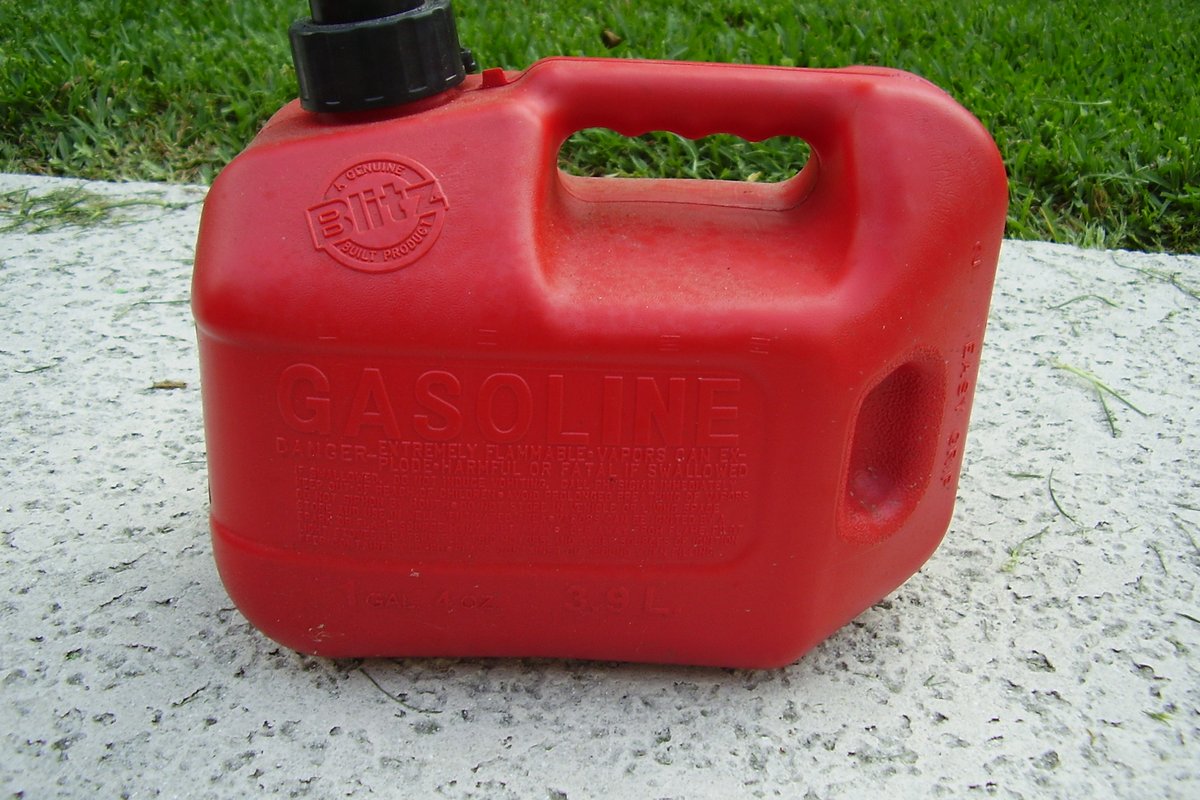
Two common contractor loads need additional checks. Gasoline goes in metal or plastic packaging that conforms to the HMR or to the OSHA provisions referenced in 49 CFR 173.6(b)(4): 29 CFR 1910.106(d)(2) or 29 CFR 1926.152(a)(1). A cylinder or other pressure vessel holding Division 2.1 or 2.2 material conforms to the packaging, qualification, maintenance and use provisions of the HMR, with no outer packaging needed, and cylinders can be manifolded when all valves are tightly closed (49 CFR 173.6(b)(5)).
Separate and position products to prevent damage during the trip. The chemical storage guide can support incompatibility review alongside the transport-specific provisions.
Lithium batteries: the September 2026 change
A final rule published August 4, 2026, effective September 3, 2026, amended the battery provisions (91 FR 49345).
Under current 49 CFR 173.6(a)(7)(iii), cells and batteries described in 49 CFR 173.185 have these limits unless contained in equipment:
| Measure | Limit |
|---|---|
| Net weight of each cell or battery | 30 kg |
| Aggregate net weight on the motor vehicle | 500 kg |
Cells and batteries contained in equipment are excepted from those two weight caps. Cells and batteries, including those contained in or packed with equipment, are still of a type proven to meet the referenced UN Manual of Tests and Criteria, Part III, subsection 38.3.
Under 49 CFR 173.6(b)(6), the packaging or securement prevents short circuits, damage from shifting or placement, and accidental activation of the equipment.
Paragraph (c)(4) adds a package-level provision: packages exceeding 30 kg net weight of batteries, including batteries contained in or packed with equipment, carry the Class 9 label of 49 CFR 172.447 and the applicable four-digit UN identification number.
Distinguish a loose spare, a battery packed with equipment and a battery contained in equipment when recording the load.
Damaged, defective or safety-recalled batteries
A quantity check cannot clear a battery with a safety defect for transport. Stop routine loading when a battery is damaged, swollen, leaking or subject to a safety recall, and have its condition and shipping provisions assessed. PHMSA's damaged, defective and recalled battery guide explains warning signs and the dedicated provisions in 49 CFR 173.185(f).
The 200 kg aggregate limit and its exceptions
Under 49 CFR 173.6(d), the aggregate gross weight of materials of trade on a motor vehicle is generally limited to 200 kg, or 440 pounds.
The paragraph excepts:
- Diluted Class 9 mixtures authorized by (a)(1)(iii).
- Cells and batteries authorized by (a)(7)(iii).
Keep separate totals for categories governed by those exceptions and for the remaining materials of trade. The battery allowance does not increase the general allowance for paint, cylinders or other chemicals.
Markings, labels and driver information
| Package or duty | Provision in 49 CFR 173.6(c) |
|---|---|
| Non-bulk package other than a cylinder | Mark with the common name or proper shipping name; include "RQ" when it contains a reportable quantity of a hazardous substance. |
| Bulk package of an eligible diluted Class 9 mixture | Display the four-digit identification number on two opposing sides using the specified display methods. |
| DOT specification cylinder | Follow the referenced marking and labeling rules; DOT-39 has its specified marking provision. |
| Battery package exceeding 30 kg net battery weight | Apply the Class 9 label and applicable four-digit UN identification number. |
| Vehicle operator | Inform the driver of the hazardous material, any reportable quantity and the section's provisions. |
Give the driver that information before departure in a form they can use.
Does full DOT hazmat training apply?
For a movement fully conforming to 49 CFR 173.6, the section's opening provision excepts other requirements of the HMR subchapter except those it sets out or references. The full 49 CFR 172.704 training program therefore is not imposed solely by that conforming movement. The driver-information duty in 49 CFR 173.6(c)(5) remains.
Assess the employee's other regulated transport functions separately. Under 49 CFR 173.6(e), eligible materials of trade may travel with other hazardous materials without losing their exception; those other materials need their own compliance determination. The DOT hazmat training guide sorts training by employee function.
Workplace chemical training and other motor-vehicle duties also have separate scopes.
Vehicle load checklist
- The purpose of carriage fits 49 CFR 171.8.
- Each product's transport classification and packing group, where assigned, are known.
- Excluded materials have been identified.
- Package limits use the correct mass, capacity or net-weight measure.
- Relevant aggregate limits are met.
- Packaging, closures and securement meet paragraph (b).
- Special gasoline, pressure-vessel, battery or infectious-material provisions are addressed.
- The markings and labels that apply are present.
- The driver has the information 49 CFR 173.6(c)(5) calls for.
- Other hazardous materials and regulated functions have been assessed.
Keep product identifiers and supplier information accessible through the chemical inventory and SDS records, or start a list with the free chemical inventory template. Retain the classification and load information supporting the transport decision.
Federal OSHA penalty limits were last checked against the eCFR, OSHA.gov and the Federal Register on October 19, 2026, and HCS transition dates on June 23, 2026. Last reviewed November 16, 2026.
About This Article
Published by: HazComFast
Published: November 16, 2026
Last Updated: November 16, 2026
- https://www.ecfr.gov/current/title-49/subtitle-B/chapter-I/subchapter-C/part-173/subpart-A/section-173.6
- https://www.ecfr.gov/current/title-49/subtitle-B/chapter-I/subchapter-C/part-171/subpart-A/section-171.8
- https://www.ecfr.gov/current/title-49/subtitle-B/chapter-I/subchapter-C/part-173/subpart-E/section-173.185
- https://www.federalregister.gov/documents/2026/08/04/2026-15823/hazardous-materials-reducing-burdens-on-domestic-companies-using-battery-powered-equipment-in-trades
- https://www.phmsa.dot.gov/sites/phmsa.dot.gov/files/2023-03/DDR-brochure.pdf
This content is for informational purposes only and does not constitute legal advice.