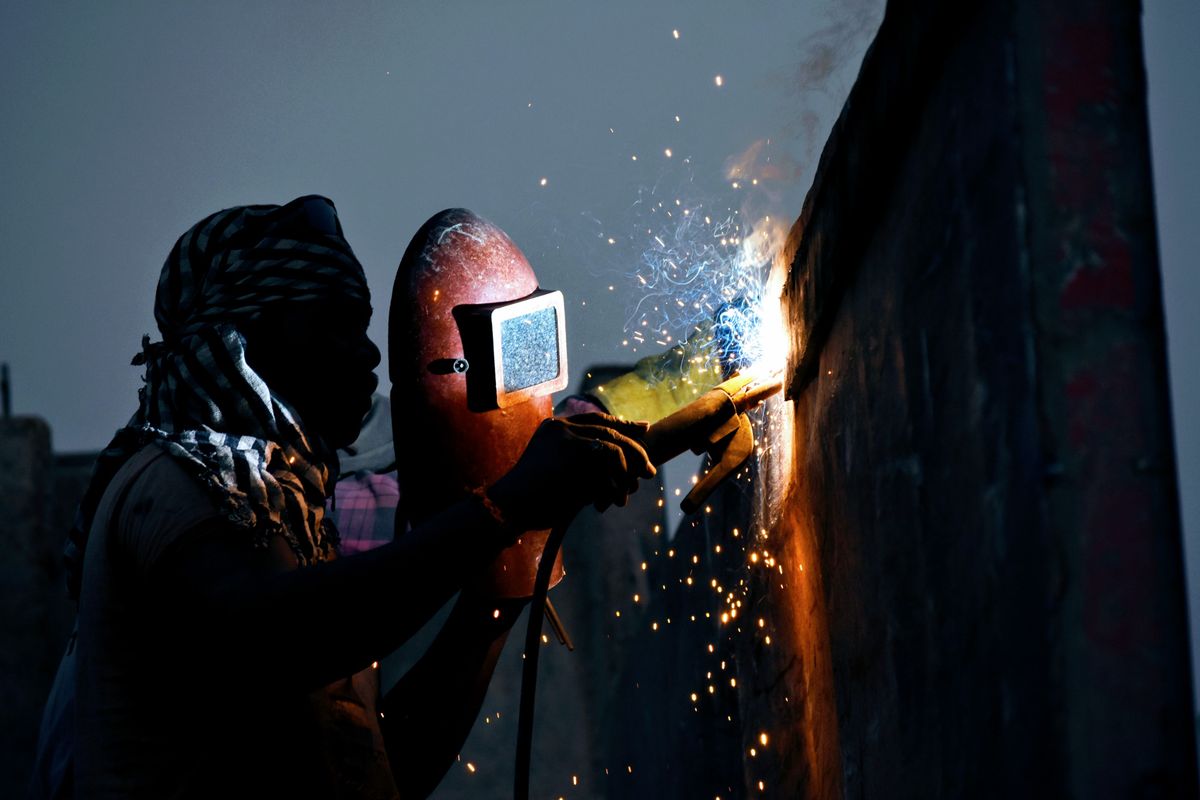
Hot work — welding, cutting, grinding, torch work — keeps killing the same way. Since 2001, the U.S. Chemical Safety Board has investigated 15 fatal or catastrophic hot-work incidents, and the U.S. Bureau of Labor Statistics recorded 5,070 total workplace fatalities in 2024 alone. Strip the hot-work cases down and they collapse into a single sentence: someone put a flame or a spark on or near a tank whose atmosphere was never tested. This is the data behind the rule — the CSB's investigation record, the seven lessons it drew, and the exact OSHA standards an inspector writes when the lessons are ignored.
At a glance: The CSB has investigated 15 hot-work incidents (2001–2017); it finds explosions and fires from hot work are among the most common incidents it investigates, and the leading cause is a flammable atmosphere in a confined space. The fix that fails most: atmospheric monitoring with a calibrated combustible-gas detector. The CSB recommends; OSHA cites — under 1926.352 (fire watch), 1926.353 (welding ventilation), and 1926.1204 (confined space). The U.S. Chemical Safety Board has investigated fifteen fatal hot-work incidents since 2001, and finds the most common cause of hot-work death is a flammable atmosphere in a confined space that was never tested with a combustible-gas detector before welding began.
The record: 15 CSB hot-work investigations, 2001–2017
The CSB does not investigate every workplace fire — it takes the serious chemical incidents. That its hot-work docket runs to fifteen cases, clustered at refineries, tank farms, and food and waste-treatment plants, tells you how lethal a torch near a tank really is. Every row below is a CSB investigation or deployment (verbatim from the CSB's own fact sheet):
| Year | Company | Location |
|---|---|---|
| 2017 | Packaging Corporation of America (PCA) | DeRidder, LA |
| 2016 | Sunoco Logistics Partners | Nederland, TX |
| 2014 | Omega Protein | Moss Point, MS |
| 2012 | Long Brothers Oil Company | El Dorado, AR |
| 2009 | ConAgra Foods | Boardman, OR |
| 2009 | A.V. Thomas Produce | Atwater, CA |
| 2009 | E.I. DuPont de Nemours & Company | Buffalo, NY |
| 2009 | TEPPCO Partners | Garner, AR |
| 2008 | MAR Oil | La Rue, OH |
| 2008 | EMC Used Oil | Miami, FL |
| 2008 | Philip Services Corporation | Kapolei, HI |
| 2008 | Packaging Corporation of America (PCA) | Tomahawk, WI |
| 2006 | Partridge-Raleigh LLC | Raleigh, MS |
| 2006 | Bethune Point Wastewater Plant | Daytona Beach, FL |
| 2001 | Motiva Enterprises | Delaware City, DE |
Notice the clustering: four separate hot-work investigations in 2008 and four more in 2009. The 2008 explosion at Packaging Corporation of America in Tomahawk, Wisconsin killed three workers welding atop a large fiberglass storage tank — the incident that prompted the CSB's landmark bulletin.
CSB hot-work investigations by year (2001–2017)
Source: CSB, Safe Hot Work Practices fact sheet (April 2018), investigation/deployment table. Bars scaled to the 2008/2009 peak of 4.
One pattern behind all of them
The CSB is blunt about the common thread: "the most common causes of worker death due to hot work are explosions and fires due to flammable atmospheres in confined spaces." The scenario repeats — a worker welds on, above, or beside a tank that once held oil, fuel, or organic waste. Residue vapors, or gases generated by decaying material, sit at or above their lower flammable limit inside or around the vessel. A spark reaches them. The tank becomes a bomb.
What almost every case shares is not exotic. It is the absence of atmospheric testing. No one put a calibrated combustible-gas detector in the space before the torch was lit, and no one monitored it while the work continued. That single omission is why the CSB's operational lessons lead with monitoring — and why OSHA's confined-space rule makes testing a pre-entry gate.
The Seven Key Lessons (CSB, 2010)
After the Tomahawk explosion, the CSB published Seven Key Lessons to Prevent Worker Deaths During Hot Work In and Around Tanks (2010). They are, verbatim in substance from the CSB:
- Use alternatives — avoid hot work when a bolted flange, mechanical cut, or off-site fabrication will do.
- Analyze the hazards — a written hazard assessment before the work: scope, hazards, controls.
- Monitor the atmosphere — a properly calibrated combustible-gas detector used before and during hot work, even where a flammable atmosphere is not anticipated.
- Test the area — drain and purge equipment and piping; when welding near tanks, test and, if needed, continuously monitor surrounding tanks and adjacent spaces.
- Use written permits — qualified personnel review, authorize, and issue a permit naming the work and the required precautions.
- Train thoroughly — including detector calibration, in a language the workforce understands.
- Supervise contractors — provide safety supervision and inform them of site-specific hazards, including flammables present.
These weren't just advice. The CSB reports the lessons were incorporated into the 2015 International Fire Code, in a new Section 3510, Hot Work On Flammable And Combustible Liquid Storage Tanks — a rare, direct line from an investigation bulletin to adopted code.
From lesson to citation: what OSHA writes
Here is the division of labor that trips people up. The CSB does not issue citations or fines — it investigates and recommends. OSHA is the enforcement agency. So when a hot-work death matches the CSB pattern, the citations come from the OSHA standards:
The CSB investigates the lesson — OSHA cites the standard
Per OSHA's Feb 2019 enforcement memo, hot work inside a confined space is cited under both the welding standard (Subpart J) and the confined-space standard (Subpart AA) — two standards, one entry.
That 2019 OSHA memo is the enforcement key. It confirms that when welding, cutting, or heating happens inside a confined space, the welding standard continues to apply to the welding hazards while Subpart AA covers the rest — and that the welding-in-confined-space provision at 1926.353(b)(1) is triggered by the act of welding, regardless of measured exposure. A hot-work death in a tank, then, is rarely one citation. It is a fire watch that wasn't posted (1926.352(e)), an atmosphere that wasn't tested (1926.1204(e)), and a welding-ventilation failure (1926.353) — stacked.
What the record means for your jobsite
On a construction site the same lessons carry Subpart J citations: move or protect combustibles (29 CFR 1926.352(a)-(b)), keep containers that held flammable liquids closed or moved away (1926.352(h)), fill or clean, ventilate, and test containers before heating them (1926.352(i)), vent them before heat is applied (1926.352(j)), and post a fire watch where normal precautions are not enough (1926.352(e)).
The CSB's fifteen cases are not a museum. They are a maintenance-department risk profile: any time a crew takes a torch to a tank, a drum, a vault, or a line that ever held something flammable, the same failure mode is available. The controls that break the chain are exactly the ones OSHA enforces and the CSB reduced to seven lessons:
- Test the atmosphere with a calibrated detector — before and during, even when you "know" it's clean. This is the lesson that fails most, in case after case.
- Purge and isolate the vessel; assume residue and generated gases until a reading proves otherwise.
- Post a fire watch and keep it after the torch stops (1926.352(e) fixes no duration; NFPA 51B sets a 60-minute minimum, and OSHA general industry a half-hour floor at 1910.252(a)(2)(iii)(B) — and 51B is not incorporated by reference in construction, so the enforceable duty is the result 1926.352(e) demands).
- Issue a written permit — and where the work is inside the vessel, a confined-space entry permit too. Two documents, gated on the readings.
Make the readings the gate — and keep the proof
Every case in the CSB record is a permit that should have blocked the torch until the atmosphere read clean. HazComFast builds the hot-work permit and the confined-space entry permit, logs the calibrated gas readings, and stores the signed record — so the controls the CSB spent fifteen investigations teaching are on paper before anyone strikes an arc. Plan it with the free tools, then keep the record on trial.
The standard, tools & related reading
- The hub: Safety Permits — confined space & hot work
- The standard: Fire prevention, welding & cutting — 29 CFR 1926.352
- Explainer: OSHA Hot Work Permit & Fire Watch (1926.352 vs NFPA 51B)
- The confined-space companion data piece: Who dies in confined spaces — 1,030 deaths & the rescuer trap
- Related reading: Confined Space Entry Permit Guide · Digital Permits for Construction · OSHA Welding Safety Requirements
- Tools: Hot Work Permit Generator · Confined Space Permit Generator
- Glossary: Confined space · Competent person · 2026 OSHA penalties
Sources & verification (verified 2026-07-21): the count of 15 hot-work investigations (2001–2017), the "most common cause = flammable atmospheres in confined spaces" finding, the seven key lessons, and the 2015 International Fire Code §3510 outcome are from the U.S. Chemical Safety Board (CSB) Safe Hot Work Practices fact sheet (April 2018) and the CSB hot-work recommendations page (csb.gov); the PCA Tomahawk, WI 2008 three-fatality detail is from the CSB. OSHA framework per 29 CFR 1926.352(e) (fire watch), 1926.353(b)(1) (welding in confined spaces, per OSHA's Feb 6 2019 enforcement memo), and 1926.1204 (confined-space program), verified against osha.gov; the 60-minute fire-watch figure is NFPA 51B recognized practice (60 minutes since the 2019 edition), not CFR text, and the 30-minute figure often attributed to NFPA is OSHA general industry at 1910.252(a)(2)(iii)(B), which does not apply to construction. Total 2024 U.S. workplace fatalities (5,070) per BLS CFOI 2024. The CSB investigates and recommends but does not issue citations. General guidance, not legal advice.*
Frequently Asked Questions
How many hot-work fatalities has the CSB investigated?
The U.S. Chemical Safety Board (CSB) fact sheet lists 15 hot-work investigations and deployments from 2001 to 2017, and the CSB states that explosions and fires caused by hot work are among the most common incidents it investigates. Nearly all involved welding or cutting on or near a tank or container that held flammable material — the 2001 Motiva Enterprises tank explosion in Delaware, the 2006 Bethune Point and Partridge-Raleigh incidents, four separate incidents in 2008 (including Packaging Corporation of America in Tomahawk, WI, which killed three), and four more in 2009. In OSHA terms, general industry hot work falls under 29 CFR 1910.252 and construction under 1926 Subpart J.
What is the single most common cause of hot-work deaths?
According to the CSB, the most common causes of worker death from hot work are explosions and fires due to flammable atmospheres in confined spaces — welding or cutting on or near a tank whose vapors were never tested. The recurring failure is skipping atmospheric monitoring: the CSB's number-one operational lesson is to use a properly calibrated combustible-gas detector before and during hot work, even where a flammable atmosphere is not anticipated. OSHA's rules say the same about containers: no hot work on used drums, tanks, or other containers until they are cleaned of flammable materials (29 CFR 1910.252(a)(3)(i)), or, in construction, filled with water or cleaned, ventilated, and tested (1926.352(i)).
Does OSHA cite hot-work deaths, or does the CSB?
They do different jobs. The CSB investigates and makes recommendations but does not issue citations or fines. OSHA is the enforcement agency: it cites hot-work failures under 29 CFR 1926.352 (fire prevention and the fire watch), 1926.353 (ventilation and protection in welding), and — when the work is inside a confined space — 29 CFR 1926 Subpart AA (1926.1204). A 2019 OSHA enforcement memo confirms that both the welding standard and the confined-space standard apply to hot work in a confined space.
What are the CSB's seven key lessons for hot work?
From the CSB's 2010 bulletin 'Seven Key Lessons to Prevent Worker Deaths During Hot Work In and Around Tanks': (1) use alternatives to hot work when possible; (2) analyze the hazards first; (3) monitor the atmosphere with a calibrated combustible-gas detector before and during the work; (4) test the area — drain and purge equipment and monitor surrounding tanks; (5) use written permits authorized by qualified personnel; (6) train thoroughly, including gas-detector calibration; and (7) supervise contractors. These lessons were later incorporated into the 2015 International Fire Code, new Section 3510. In OSHA's general industry rule, the permit lesson maps to 29 CFR 1910.252(a)(2)(iv) and the fire watch to 1910.252(a)(2)(iii)(B).
Is a written hot-work permit required by OSHA?
OSHA's construction standard (1926.352) requires the fire-prevention controls and a fire watch but does not use the word 'permit.' The written hot-work permit is the recognized way to document those controls (NFPA 51B, and now the 2015 International Fire Code §3510 for flammable-liquid tanks), and the CSB's fifth key lesson is to use written permits authorized by qualified personnel. In practice, inspectors and insurers expect the permit as the proof the controls were in place before the torch.
OSHA figures and citations here come from our regulatory source-of-truth modules, last checked against the eCFR, OSHA.gov, and the Federal Register on October 5, 2026. Last reviewed October 6, 2026.
About This Article
Published by: HazComFast
Published: July 21, 2026
Last Updated: October 6, 2026
This content is for informational purposes only and does not constitute legal advice.