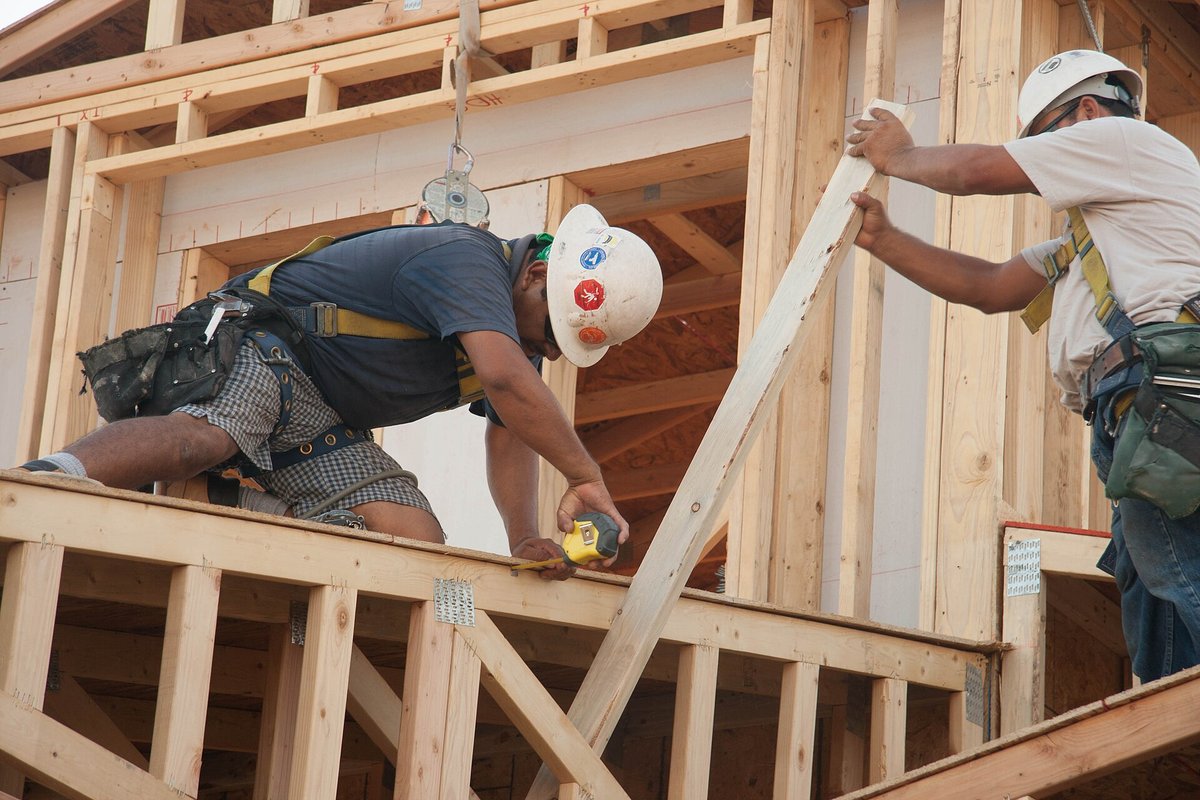
A personal fall arrest system may keep a worker from striking a lower level. It does not necessarily get that worker back to safety. After an arrested fall, an employee may remain hanging below a roof edge, beside structural steel, or against a building, possibly unable to reach a safe surface.
Under 29 CFR 1926.502(d)(20), construction employers must provide for prompt rescue after a fall or assure that employees are able to rescue themselves. In applicable general-industry personal fall protection systems, 29 CFR 1910.140(c)(21) requires prompt rescue. Neither provision sets a universal minute-based rescue-completion deadline. OSHA expects a reliable arrangement that is effective quickly enough to prevent serious injury. OSHA construction rule; OSHA interpretation; general-industry rule.
Before work starts, verify that the selected rescue arrangement can reach the anticipated suspended position, works with the actual fall-protection equipment and can be operated by available personnel. It needs to bring the worker to a safe location while protecting the rescuers.
Downloadable resources
- Editable jobsite fall rescue plan (Word)
- Printable jobsite fall rescue plan (PDF)
- Fillable fall rescue emergency card (PDF)
Complete and approve the rescue documents for the actual work area before use. The emergency card is a short reference to the full technical rescue procedure.
1. prevent the fall before planning the rescue
First assess whether the work can be protected by an appropriate guardrail, restraint system, safety net, or other permitted arrangement under the standards that govern the task. A compliant fall-prevention system may remove the suspended-worker scenario entirely. A rescue plan is not a substitute for the fall-protection duties in 29 CFR 1926.501 and other applicable standards. If a personal fall arrest system (PFAS) is used, plan for the possibility that it will stop a fall but leave the employee suspended.
2. suspension trauma and suspension syndrome
Suspension trauma is the familiar occupational-safety term. Medical researchers increasingly use suspension syndrome: potentially serious circulatory and cardiovascular deterioration during passive, near-vertical harness suspension, which can occur even without major physical trauma. An ICAR MEDCOM scoping review published in December 2023 included 23 articles containing original evidence.
What happens during suspension?
Potential contributors include venous pooling in the legs, lack of leg-muscle pumping, pain or pressure from the harness, a possible neurocardiogenic response causing reduced heart rate and blood pressure, and simultaneous injuries or environmental conditions. The older explanation that venous pooling alone causes every case is not supported. The mechanisms remain under investigation. ICAR MEDCOM 2023: Pathophysiology.
| Possible finding | What it may indicate |
|---|---|
| Dizziness, light-headedness or blurred vision | Presyncope or another medical problem |
| Nausea, sweating, pallor or weakness | Possible circulatory disturbance |
| Confusion or loss of responsiveness | Serious deterioration or associated injury |
| Harness-related numbness or pain | Pressure, compression or other injury |
These findings are not unique to suspension syndrome. A fall may also cause head injury, spinal injury, internal bleeding or shock. Do not wait for symptoms before starting rescue.
Is there a safe suspension time?
No universal safe duration has been established. Onset varies considerably; symptoms may appear within minutes in some settings and may occur without a recognizable warning stage. The ICAR authors recommend extracting a suspended person as soon as possible even when asymptomatic. The review describes suspension syndrome as rare, while emphasizing that its actual incidence is poorly characterized. Rarity may not be used to justify delay or disregard the legal prompt-rescue duty. ICAR MEDCOM: Epidemiology, Limitations and Recommendation 2.
Dorsal industrial harnesses and unconscious workers
Many industrial harnesses use a dorsal D-ring. Some, but not all, research found differences in suspension tolerance compared with sit harnesses using ventral attachments; body position and self-rescue capability can also differ. These findings do not establish that all dorsal harnesses cause the same physiological response. Construction body-harness attachment criteria appear in §1926.502(d)(17). In general industry, §1910.140(c)(22) additionally permits a presternal attachment when free fall is limited to 2 feet or less; that exception should not be imported into construction rules automatically.
An unconscious suspended employee cannot operate self-rescue equipment or adjust position. The ICAR review also discusses possible airway obstruction from excessive neck flexion or extension during unconscious suspension. A jobsite evaluation should therefore consider the actual suspended orientation and whether the chosen method remains effective without the worker's cooperation. ICAR MEDCOM: Harness types and Pathophysiology.
Complications and evidence limits
Potential severe complications include syncope or cardiovascular collapse; prolonged suspension can be associated with rhabdomyolysis, hyperkalemia, kidney injury, neurological effects and environmental hypothermia. These complications reinforce the need for prompt extraction and medical assessment. There is no safe waiting period established for an individual worker. The review notes few clinical cases, small or heterogeneous studies and no randomized controlled intervention studies. Actual risk cannot be calculated for an individual construction worker from the published literature. ICAR MEDCOM 2023.
3. fall arrest is not rescue
A PFAS typically includes a full-body harness, suitable anchorage and connecting subsystem. It arrests a fall, subject to the applicable criteria, but may leave the worker suspended.
| Fall arrest | Fall rescue |
|---|---|
| Stops a fall and limits forces | Returns the worker to a safe location |
| Uses the PFAS | Uses appropriate self-rescue or aided-rescue capability |
| Can activate during the fall | Calls for an effective planned response |
| Does not guarantee independent escape | Needs to address the actual suspended position |
4. Federal OSHA requirements: what is binding?
Construction: §1926.502(d)(20)
The construction standard expressly allows prompt employer-provided rescue or assured self-rescue. It does not universally prescribe two separate systems. Nevertheless, assured self-rescue needs to be a real capability under the expected work conditions; an unchecked assumption that every suspended worker will remain conscious and able to use a device does not establish the capability. Evaluate foreseeable injury, entanglement, difficult access, and equipment limitations and determine whether the selected approach can still satisfy the applicable requirement. Rule; official interpretation.
General industry: §1910.140(c)(21)
This paragraph calls for the employer to provide prompt rescue for each employee following a fall. Its wording does not repeat the construction paragraph's express self-rescue alternative. Self-rescue can still be part of an effective arrangement. The 2016 OSHA final-rule explanation discusses effective procedures and the availability of rescue personnel and equipment.
Does OSHA call for a written rescue plan?
Not universally under construction §1926.502(d)(20). OSHA's December 18, 2003 interpretation states that this paragraph independently requires neither a written rescue-plan document nor a formal rescue-preplanning meeting. Practical arrangements are still needed to meet the rescue duty. A site-specific written plan is recommended because it identifies methods, people, equipment, access, limitations and contingencies. The specific written fall protection plan provisions under §1926.502(k) are a different matter. OSHA interpretation.
What does prompt mean? Is there a six-minute rule?
OSHA explains prompt as sufficiently quick to prevent serious injury and describes the obligation as performance-based. A six-minute contact recommendation from ANSI/ASSE Z359.4-2007 is discussed in OSHA's rulemaking history, but is not a universal federal regulation requiring rescue completion in six minutes. Contact and completed retrieval are different events. A company's internally selected performance criteria are not OSHA time limits. 2003 interpretation; 2016 rulemaking.
Non-binding OSHA guidance
Construction Subpart M Appendix C recommends evaluating rescue personnel, ladders, equipment and self-descent options. General-industry Subpart I Appendix C also discusses workers unable to self-rescue. These are non-binding appendices, not new universal written-plan or rescue-time rules.
Specialized work
Steel erection, scaffolds and electric-power operations can involve specialized provisions and different fall-protection or training requirements. Review the actual scope: steel erection §1926.760, training §1926.761, scaffolds §1926.451, scaffold training §1926.454 and power transmission/distribution §1926.954. State OSHA plans may add or strengthen requirements.
5. why calling 911 May not be enough
Calling EMS is important, but ordinary ambulance response does not prove that responders can retrieve a worker suspended beneath a roof or steel beam. OSHA explains that many conventional 911 responders are not trained for suspended-worker or high-angle rescue. An employer relying on an external service needs to determine whether that service has the needed equipment, competent personnel, availability and actual access to the worker. An external team can form part of an effective arrangement when its capability is established. A blanket claim that reliance on 911 is always illegal is inaccurate. OSHA Technical Manual; 2016 rulemaking.
Verify the service's technical specialty, shift coverage, equipment, entrance and gate access, roof or steel-frame access, and known limitations. Record verified capabilities and realistic access constraints. Medical transport and technical extraction are distinct tasks.
6. construction medical and first-aid duties: §1926.50
The requirements below are separate from the fall-rescue provision and need to be evaluated on their own terms. Full regulation.
| Provision | Binding construction requirement / condition |
|---|---|
| (a) | Medical personnel need to be available for advice and consultation on occupational health. This does not automatically call for a physician to be present on site. |
| (b) | Before the project begins, arrange prompt medical attention for serious injury. |
| (c) | If an infirmary, clinic, hospital or physician suitable for treatment is not reasonably accessible in time and distance, a person with valid, documentable first-aid training needs to be available at the worksite. No universal accessibility time is specified. |
| (d)(1)-(2) | Where needed, first-aid supplies need to be easily accessible. The kit needs to have a weatherproof container with individually sealed packages for each item type; check it before sending it to a job and no less than weekly at each job. |
| (e) | Provide suitable equipment for prompt transport to a physician or hospital, or a communication system to contact needed ambulance service. |
| (f)(1) | Where 911 dispatch is unavailable, conspicuously post the telephone numbers of physicians, hospitals or ambulances. |
| (f)(2) | Where 911 exists and a communication system is used, ensure it effectively contacts EMS. Additional conspicuous worksite location posting is needed in the specified circumstances when the system does not automatically supply latitude/longitude, subject to the readily available location-identifying landline exception. |
Section 1926.50(g) separately addresses suitable emergency flushing facilities where eyes or bodies may encounter injurious corrosive materials; it is not a universal fall-rescue equipment requirement. General-industry employers should evaluate their separate medical standard, including §1910.151, rather than importing every construction-specific provision.
7. building a workable jobsite rescue arrangement
Identify the likely suspended positions
Assess where the worker could hang after fall arrest: below a parapet, along a wall, beneath a beam, between columns, near equipment or beyond direct ladder reach. Check swing-fall effects, clearance, edges, line abrasion, obstructions, possible entanglement and the route to a safe landing area.
Choose and verify the method
Self-rescue may be appropriate when a worker actually can use a compatible descent system or other manufacturer-approved method. Aided rescue might involve suitable ladder/platform access, a dedicated mechanical raising/lowering arrangement, or a verified external technical rescue service. Do not create improvised rope-rigging instructions during an emergency. Personnel need to use the approved technical procedure and compatible equipment.
| Feasibility question | Evidence to retain |
|---|---|
| Can the worker be reached in the anticipated suspended orientation? | Site drawing, access review, exercise record |
| Can the equipment work in this configuration? | Manufacturer/model, instructions, equipment IDs |
| Are connectors, loads and anchorage appropriate? | Complete-system assessment, relevant technical verification |
| Can rescuers remain protected? | Rescuer fall-protection and hazard-control plan |
| Who is available on the actual shift? | Personnel roster and rescue-method competence record |
| What happens when worker cooperation is unavailable? | Foreseeable-incapacity assessment and selected additional capability where needed |
| What if the primary arrangement is unusable? | Verified alternative and activation condition |
Construction personal fall-arrest anchorages under §1926.502(d)(15) must meet the stated 5,000-lb per-employee criterion or its complete-system qualified-person alternative with safety factor at least two. Those criteria do not automatically design or qualify a separate rescue system. Evaluate the complete rescue configuration and loads appropriately. §1926.502(d)(15).
Keep a short emergency card at the worksite
If the employer adopts the attached emergency card, issue a completed, supervisor-signed copy under its document-control procedure and place it where workers and designated responders can use it. The card and signature are features of this employer template, not a separate form prescribed by §1926.502(d)(20). The card should identify the actual emergency contact method, anticipated hanging position, planned rescue method and equipment location, verified anchorage reference, access instructions, and both the document ID and physical or offline location of the full approved technical rescue procedure. Record the actual hanging position during an incident only when doing so will not delay rescue. The card is a quick-reference aid, not a rope-rigging procedure or proof of regulatory compliance; never rely on a blank, unsigned or superseded copy.
Prevent a second casualty
Control roof and platform edges, fragile surfaces, unstable steel, energized equipment, cranes, traffic, sharp edges, rope abrasion, weather, and falling objects. Establish rescuer fall protection and an exclusion zone when needed. A nearby coworker may not improvise climbing over an exposed edge or connect equipment to an unverified structure.
Assign responsibilities and coordinate employers
Identify the incident coordinator, rescue leader, trained rescuers, worker observer, EMS caller, access guide and first-aid personnel where applicable. On multi-employer jobsites identify which employer controls work access, provides equipment, maintains responders and communicates shift or configuration changes. OSHA's Multi-Employer Citation Policy explains enforcement responsibility; a coordination table does not automatically transfer every legal duty to the general contractor.
8. training, inspection and exercise performance
Training duties vary: construction §1926.503, steel erection §1926.761, general industry §1910.30, and scaffolds §1926.454. The terms competent person and qualified person needs to be used as each particular rule calls for. General harness training does not automatically qualify an employee for technical rescue. Construction §1926.503 includes training certification and retraining requirements; avoid presenting them as identical for all activities.
Construction PFAS must be inspected before each use under §1926.502(d)(21). Impact-loaded components must be removed immediately and may only be reused after the specified competent-person determination under §1926.502(d)(19). General-industry personal systems have related requirements in §1910.140(c)(17)-(18). Separate rescue equipment requires its own appropriate inspections and maintenance. Construction criteria.
Define success before the exercise
A written rescue-readiness assessment should identify job-specific acceptance criteria before an exercise. Examples are correct notification, trained-personnel availability, equipment deployment, safe access to the simulated suspended position, execution of the approved retrieval method, effective EMS communication, and no unresolved critical hazard. These are employer-defined evaluation criteria, not an OSHA scoring system.
Observe and record the exercise conditions, participants, configuration, outcome, limitations and corrective actions. Record actual durations for stages if useful; they are not OSHA rescue limits or guarantees of actual emergency performance.
| Internal result | Meaning (not an official OSHA classification) |
|---|---|
| Demonstrated | Defined capability was observed under the tested conditions |
| Partially demonstrated | A material step or condition was not fully verified |
| Not demonstrated | The needed capability was not shown |
| Not applicable | Not relevant, with a documented reason that does not waive a legal duty |
The assessor must record the critical failures, corrective-action owner, verification of the correction, reviewer/approver and triggers for reassessment (new anchor, equipment, access, work area, shift or personnel). A form signed without an effective arrangement is not rescue readiness. Section 1926.502(d)(20) does not prescribe a universal annual drill interval.
9. medical response and post-rescue actions
Activate EMS according to the emergency procedure and communicate fall history, approximate suspension duration if known, consciousness, visible or suspected injuries, and rescue details. A worker who appears alert after extraction is not automatically medically cleared.
ICAR MEDCOM recommends horizontal supine positioning following extraction in the context of suspension syndrome, and does not support older blanket advice that all rescued workers need to stay upright. This is clinical guidance, not an instruction for untrained workers to disregard head, neck or spine precautions. Follow dispatch instructions and care appropriate to the responder's training; qualified medical professionals determine assessment and treatment. Potential complications of prolonged suspension may call for clinical evaluation beyond a visual worksite assessment. ICAR MEDCOM recommendations.
After safe extraction, if an adult is unresponsive and is not breathing normally, activate EMS, start CPR according to current training and dispatcher instructions, and use an AED as soon as available. Lay responders should not delay CPR to search for a pulse. AHA 2025 Adult Basic Life Support.
Remove affected fall-arrest equipment from service as needed; preserve relevant equipment, document the incident and review rescue deficiencies before comparable work resumes.
10. hypothetical roofing example: Conscious and unresponsive worker
Hypothetical roofing job. A contractor works at a 24-foot-high commercial roof's west parapet. A full-body PFAS is used. The employer has identified the likely hanging position, a mechanically assisted retrieval arrangement, an emergency entrance and designated personnel.
| Fictional record | Function |
|---|---|
| RF-R01 | Rescue configuration drawing |
| AV-R01 | Anchorage technical verification |
| EQ-R01 | Equipment inventory and location |
| RP-R01 | Approved technical rescue procedure |
| TR-R01 | Personnel competence record |
| EX-R01 | Controlled exercise and corrective actions |
| EA-R01 | Emergency route and contacts |
Conscious worker: A fall is arrested below the parapet. The observer reports dizziness, the supervisor stops nearby work, EMS is activated and the trained team follows RP-R01 after confirming that the actual position and hazards match the evaluated scenario. The worker is transferred to suitable medical care; impact-loaded equipment is handled under OSHA requirements.
Unresponsive worker: The employee ceases responding. The observer immediately reports the change and EMS is updated. The rescue leader verifies whether the already selected aided-rescue method can retrieve an employee unable to cooperate. If the method is no longer safe or feasible, the pre-established alternative is activated; the team does not improvise technical rigging. The medical handover includes the loss of consciousness and relevant fall/suspension details.
Exercise evidence: EX-R01 would list the observed notification, access, equipment deployment, simulated retrieval and medical communication stages, measured times if actually taken, and verified corrections. Replace these example identifiers with the actual controlled records for the job. A roofing scenario does not automatically validate a steel-erection rescue beneath a beam; geometry, access, equipment and applicable rules need to be separately assessed.
11. jobsite rescue planning checklist
- Confirm applicable construction/general-industry and State Plan rules.
- Prioritize prevention and compliant fall protection.
- Identify likely suspended-worker positions and hazards.
- Choose employer-provided prompt rescue or assured self-rescue where the construction alternative applies.
- Assess foreseeable incapacity and any extra company safeguards.
- Verify equipment, connectors, anchors, access and safe extraction route.
- Assign actual available and competent personnel for the work shift.
- Confirm emergency communications, access and external rescue capability if relied upon.
- Check §1926.50 medical advice, first-aid, supplies, transport and conditional emergency-location duties where applicable.
- Define exercise acceptance criteria before testing; record evidence, findings and actual timing if useful.
- Correct deficiencies and obtain authorization before using the arrangement.
- Keep a completed, approved one-page emergency reference at the work area, never a blank form.
- Review after a fall, exercise failure or material worksite change.
Related HazComFast resources
Primary sources
- OSHA 29 CFR 1926.502, especially (d)(15), (17), (19)-(21).
- OSHA interpretation, December 18, 2003.
- OSHA 29 CFR 1910.140, especially (c)(21)-(22).
- OSHA 29 CFR 1926.50, subsections (a)-(f).
- OSHA final rule, November 18, 2016.
- OSHA Construction Appendix C (non-mandatory).
- OSHA General Industry Appendix C (non-mandatory).
- OSHA Technical Manual, Fall Protection in Construction.
- OSHA Multi-Employer Citation Policy, CPL 02-00-124.
- Rauch S, Lechner R, Strapazzon G, et al. Suspension syndrome: a scoping review and recommendations from the International Commission for Mountain Emergency Medicine (ICAR MEDCOM). Scand J Trauma Resusc Emerg Med. 2023;31:95. DOI:10.1186/s13049-023-01164-z.
- American Heart Association, 2025 Adult Basic Life Support.
- NIOSH, The Problem of Falls from Elevation in Construction and Prevention Resources (2024).
Scope: Federal OSHA baseline and evidence-informed planning. State Plans and specialized rules may differ.
Frequently Asked Questions
Does federal OSHA mandate a written fall rescue plan?
The construction prompt-rescue paragraph, 1926.502(d)(20), does not independently call for one. It calls for prompt rescue or assured self-rescue; a written site-specific plan is a recommended way to organize the actual arrangement. Other specialized rules may create their own documentation duties.
How fast does an employee have to be rescued?
Promptly enough to prevent serious injury. There is no universal minute-based completion deadline in the construction or general-industry provisions discussed here, 1926.502(d)(20) and 1910.140(c)(21).
Can a contractor rely on calling 911?
Only when the relevant external rescue capability, equipment, personnel, availability and actual access make the arrangement effective. EMS transport alone does not establish high-angle retrieval capability under 1926.502(d)(20).
How should the arrangement address a worker who cannot assist?
Evaluate foreseeable injury, loss of consciousness, entanglement and inability to operate the equipment. The selected approach must satisfy the applicable rescue duty under those work conditions. Section 1926.502(d)(20) does not prescribe a universal number of rescue systems.
What first-aid preparations are needed on construction sites?
Section 1926.50 addresses medical consultation (a), prompt medical response (b), trained first-aid personnel under specified conditions (c), accessible supplies and kit inspections (d), transport or ambulance communications (e), and conditional emergency-number and location posting (f).
Does OSHA mandate an annual fall-rescue drill?
Not universally under §1926.502(d)(20). Employers should evaluate and practice their actual arrangements at an interval and under conditions appropriate to the rescue method, personnel and worksite changes.
Site-wide regulatory figures such as compliance dates and penalty amounts come from our regulatory source-of-truth modules, last checked against the eCFR, OSHA.gov, and the Federal Register on October 19, 2026. Last reviewed November 14, 2026.
About This Article
Published by: HazComFast
Published: November 14, 2026
Last Updated: November 14, 2026
- https://www.osha.gov/laws-regs/regulations/standardnumber/1926/1926.502
- https://www.osha.gov/laws-regs/standardinterpretations/2003-12-18
- https://www.osha.gov/laws-regs/regulations/standardnumber/1910/1910.140
- https://www.osha.gov/laws-regs/regulations/standardnumber/1926/1926.501
- https://doi.org/10.1186/s13049-023-01164-z
- https://link.springer.com/article/10.1186/s13049-023-01164-z
- https://www.osha.gov/laws-regs/federalregister/2016-11-18
- https://www.osha.gov/laws-regs/regulations/standardnumber/1926/1926SubpartMAppC
This content is for informational purposes only and does not constitute legal advice.