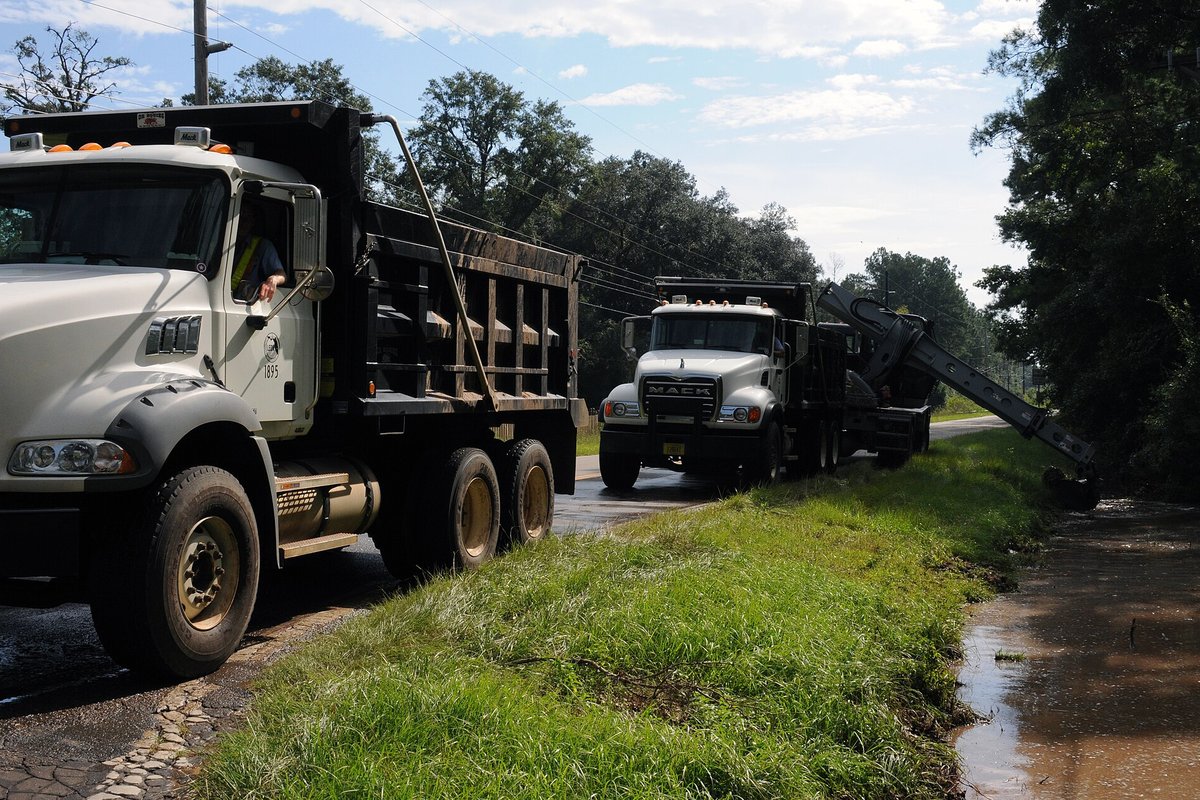
A flagger is the person holding public traffic while a crew works, a dump truck crosses a lane, or opposing drivers take turns using a single open lane. That job calls for more than knowing which side of a paddle says STOP. The flagger needs to see traffic early enough to act, communicate with the other control point, have somewhere safe to move if a driver fails to stop, and understand exactly which training credentials the road authority accepts.
Federal OSHA calls for compliant flagger signaling and hazard instruction, but does not issue or call for one universal nationwide flagger certification card. Several states and DOT contracts call for their own approved training, demonstrated skills, cards and renewal intervals. The rules differ by location and project.
What actually governs a flagger?
Four layers may apply simultaneously:
- Federal OSHA: 29 CFR 1926.201(a) requires flagger signaling, use and warning garments to conform to the specified Part 6 MUTCD. 1926.200(g) governs traffic-control devices used to protect workers. 1926.21(b)(2) requires instruction on hazards and applicable regulations.
- FHWA's current roadway standard: The current national publication is the 11th Edition with Revision 1, dated December 2025, effective March 5, 2026. Its Part 6 covers temporary traffic control (TTC); Chapter 6D addresses flagger control. For a current project, use the legal state adoption and supplement in force, not just a national PDF. FHWA current MUTCD.
- An important OSHA edition difference: OSHA's 1926.6(n)(1) expressly incorporates the 2009 MUTCD with Revisions 1 and 2, not the FHWA's 2025 revised edition. That older edition puts flagger control in Chapter 6E. Only its mandatory provisions are incorporated by OSHA under 1926.6(a). State and local laws may separately make newer provisions enforceable.
- Project-specific obligations: State OSHA rules, DOT manuals, road permits, contract specifications, approved TTC plans and federal-aid highway training requirements can be more specific. Under 23 CFR 630.1008(d), states must require job-appropriate training and periodic updates for personnel performing work-zone traffic-management functions on covered projects; the rule does not set a single course length or card expiration for flaggers.
In MUTCD language, a Standard generally uses shall, Guidance uses should, an Option uses may, and Support explains context. Treating a should sentence as an automatic OSHA citation under 1926.201(a) is a mistake; so is ignoring a state rule or a DOT contract that turns that practice into a requirement.
When is a flagger necessary?
Flagging is one way to control traffic, not the default solution to every roadside task. It is often appropriate when a lane is closed and opposite directions need to alternate through one lane; a work vehicle needs to cross or enter active public traffic; traffic needs to be held briefly for an operation; or signs and channelizing devices alone cannot control an unusual traffic conflict.
Plan the method by considering approach speed, stopping sight distance, grade, curves, traffic volumes, queues, turning traffic, intersections, driveways, cyclists, pedestrians, school routes, and access for emergency vehicles. A flagger cannot compensate for an inadequate warning approach or a traffic-control design that makes two opposing flows enter the same lane.
The MUTCD's one-lane, two-way operation provisions (Chapter 6E in the current 11th edition) call for coordinated traffic movements when both directions use one lane, subject to a narrow self-regulating exception for certain short, low-volume, mutually visible sections. Guidance generally calls for flaggers at both ends, with a possible single-flagger arrangement for a short section with full visibility. Do not assign one flagger to a long or blind one-lane closure on the assumption that one person can watch both ends. Current FHWA MUTCD, §§6E.01–6E.02.
For example, California 8 CCR 1599(a) expressly calls for flaggers where barricades and warning signs cannot control moving traffic. Washington WAC 296-155-305(2) calls for other reasonable control methods to be considered first. Those are state requirements, not extra sentences in 1926.201.
Position the station for a driver who might not stop
A flagger station needs an advance warning sequence, adequate sight distance for an approaching driver to stop at the intended point, and separation from the crew. In the current revised FHWA 11th-edition Part 6, §6D.06, paragraph 01 is a Standard requiring sufficient stopping distance (subject to the following engineering-judgment Option); paragraph 05 is a Standard requiring advance signs and nighttime station illumination except in emergencies. The position and escape-route advice in §6D.05 and §6D.06, paragraph 04, is Guidance. Apply the Standards as requirements wherever that edition governs, and distinguish the accompanying Guidance. Check the applicable adopted edition for the job. Current FHWA MUTCD, §§6D.05–6D.06.
Check stopping sight distance separately from sign spacing
The current December 2025 revised MUTCD Table 6B-2 gives these reference stopping-sight-distance values: 200 ft at 30 mph; 250 ft at 35 mph; 305 ft at 40 mph; 360 ft at 45 mph; and 425 ft at 50 mph. The table directs speed selection using the posted speed, pre-work off-peak 85th-percentile speed or anticipated operating speed. Under §6D.06, the distances may inform flagger station placement and can call for increases for downgrades or other conditions. Use these as stopping-sight-distance references. Sign spacing is a separate design question governed by the road authority’s standard and the site assessment. Current FHWA MUTCD, Table 6B-2 and §6D.06.
Consider a road nominally posted at 35 mph. Table 6B-2's 250 ft is a starting sight-distance reference, not an instruction to put the flagger 250 feet past the last warning sign. The supervisor needs to separately check the actual approaching vehicle's line of sight to the intended stopping point, a curve or crest, downgrade, truck braking behavior, space for a queue, and the advance warning-sign sequence. Table 6B-1 is about recommended spacing between warning signs; Table 6B-2 is about stopping sight distance. They cannot be interchanged. Where the layout cannot provide a safe stopping arrangement, request a changed plan or an engineered alternative; moving a flagger into the live lane is not a solution.
Choose a position where the flagger:
- Faces approaching traffic and is clearly visible before drivers reach the stopping point.
- Starts on the shoulder adjacent to the traffic being controlled, or in the closed lane. Enter an otherwise active lane only after traffic is stopped, following the applicable approved procedure.
- Stands alone, away from parked equipment, other workers, and an obstruction that prevents movement.
- Has a usable escape route identified before work starts. Keep that route free of parked trucks, material piles, excavation edges and steep embankments.
- Can alert the crew to an errant vehicle by the agreed horn, whistle, radio call or other warning method.
The specific stand-on-shoulder, stand-alone, and escape-route language cited above is Guidance in the current revised MUTCD §§6D.05–6D.06, while the adequate-stopping-distance and advance-sign requirements are Standards. An applicable state rule can add a separate legal duty. Washington, for example, expressly calls for a site orientation covering the on-foot escape route and protection from approaching traffic or equipment behind the flagger. Current FHWA MUTCD, Part 6; Washington WAC 296-155-305.
Do not select a station by placing a person exactly where a sign diagram happens to show a flagger icon. The drawings are typical applications; field geometry and the controlling traffic plan determine the actual location.
STOP/SLOW paddles, red flags and automated devices
The STOP/SLOW paddle is the normal, preferred way to convey stop and proceed instructions. The current MUTCD §6D.05(3) makes the following paddle signals Standards, not merely illustrations. They need to be taught and demonstrated using the edition actually applicable to the project:
- Stop: Face approaching road users. Hold the STOP face stationary toward them, with the paddle arm extended horizontally away from the body. Raise the free arm so its palm is above shoulder level and directed toward approaching traffic.
- Direct stopped traffic to proceed: Face road users with the SLOW face stationary toward them and the paddle arm extended horizontally away from the body. Motion with the free hand for traffic to proceed only after the designated coordinator has confirmed that the movement is safe. The clearance check is an operating procedure; the specified paddle position and hand signal are MUTCD requirements.
- Alert or slow approaching traffic: Face road users and hold the SLOW face stationary toward them with the paddle arm extended horizontally away from the body. As an additional Option, the flagger may move the free hand up and down with the palm facing down. The extra motion is not a universal binding maneuver.
In alternating one-lane traffic, hold the STOP display until release has been authorized. Never wave a motorist into opposing traffic, a turning truck, an uncontrolled driveway movement or a worker crossing. Current FHWA MUTCD, §§6D.02 and 6D.05.
The national 11th-edition rules identify a rigid-handle, octagonal paddle and call for retroreflectorization for nighttime use. The federal OSHA-incorporated 2009 MUTCD §6E.03 specifies no less than 18 inches across and letters no less than 6 inches high; state DOT plans may call for a larger paddle. The current December 2025 Revision 1 Figure 6D-1, which was itself revised, also shows an 18-inch minimum. For example, Maryland SHA's 2026 construction specification §104.15 calls for a 24 × 24-inch paddle, letters no less than 8 inches high, and mounting no less than 5 feet above ground on covered contracts. Before ordering paddles, check the applicable state standard and project specifications. FHWA 2009 §6E.03; Current FHWA 11th Rev. 1, Figure 6D-1; Maryland SHA §104.15.
The current MUTCD §6D.03(1) recommends (Guidance: should) limiting the use of flags for hand-signaling to emergencies; that is not a categorical nationwide prohibition of every other use. Under the current national Standard, a flag used for signaling needs to be red or fluorescent orange-red, no less than 24 inches square, securely fastened to a staff approximately 36 inches long, and retroreflectorized if used at night. A red flag is not an interchangeable routine replacement for a STOP/SLOW paddle. There can also be express state-specific uses: Washington WAC 296-155-305(3)(d) allows a red flag in the flagger's free hand to supplement the paddle in nonemergency situations; it does not authorize substituting the flag for the needed paddle. An ordinary flashlight cannot replace a needed lit flagger station. An emergency red-glow flashlight technique exists for an emergency at an unilluminated station and has its own signaling instructions. Avoid improvising gestures or pointing lights into drivers' eyes. Current FHWA MUTCD, §§6D.03–6D.05; Washington WAC 296-155-305(3).
An Automated Flagger Assistance Device (AFAD) may allow a flagger to stand farther from approaching traffic, but it is not a fully unattended traffic signal. The current revised 11th-edition §6L.02(11) calls for an AFAD to be operated only by a flagger trained on that device, and the controlling flagger may not leave it unattended while it is in use. The permitted configurations are an AFAD at both ends or an AFAD at one end with a human flagger at the other. Under §6L.02(13), two flaggers are normally needed for either configuration, not merely two generic equipment operators. Paragraph 14 provides a limited one-flagger Option: the person needs to have an unobstructed view both of the AFAD device or devices and of approaching traffic in both directions. One-lane-approach, crashworthiness, lighting, warning-sign and coordination restrictions still apply. Check state authorization and the actual device type before use. Current FHWA MUTCD, §6L.02.
Two flaggers need to have one clearance decision
The dangerous moment is the change of direction. A queue appears clear at one station while its last truck is still inside the single-lane section. On curves, bridges, long closures or roads with hidden entrances, eye contact will not prove the lane is empty.
Before release, decide who is the lead coordinator and use a radio or another approved communication method that both flaggers can repeat and confirm. A workable field protocol is:
- Identify station A and station B and test the radios before opening the closure.
- State the direction and the last vehicle released; if needed, use a distinguishing vehicle description.
- The receiving station confirms the last vehicle has completely cleared all conflict points, including accesses inside the closure.
- Only then does the coordinator authorize the opposite direction to proceed.
- On a missed call, dead radio, obscured sightline, or uncertain clearance: do not release any new vehicles from either end. If a platoon was already authorized into the one-lane segment, let it clear under the previously established safe traffic movement; do not suddenly direct it to stop mid-closure or release opposing traffic. Notify the crew to cease conflicting work, maintain the existing control points, and reestablish a positively verified empty segment before a new release. If safe containment cannot be maintained, activate the approved contingency plan and request the road authority's or supervisor's help.
This protocol is an example employer procedure, not a nationally prescribed set of radio words. Current MUTCD §6E.02 recommends voice, electronic, or unambiguous manual communications. Maryland's 2026 SHA specification §104.15 calls for two-way radios, field telephones or pilot vehicles when flaggers are out of sight of one another or when directed. Current FHWA MUTCD, §6E.02; MDOT SHA 2026 specifications.
Intersections, business driveways and emergency vehicles
A two-flagger radio exchange controls only the approaches those flaggers can hold. A side street, delivery driveway, driveway exit or haul-road crossing inside the one-lane section creates a third entry point. Before opening the lane, identify each such entry on the TTC plan and decide how it will be controlled. Options can include an additional qualified controller, an authorized temporary closure or an approved detour; which method is permissible depends on the road owner and layout. Never assume a business driver has heard a radio exchange between the two end stations.
- Side streets and signals: Check signal timing, turn lanes and queue spillback. Do not improvise an intersection closure, override a traffic signal, or leave a side approach uncontrolled. Contact the road authority where an altered traffic plan or traffic enforcement is needed.
- Property access: Confirm whether access needs to remain open under the permit. Tell the operator of any access control point exactly when a turning vehicle can enter and how its arrival will be reported to the lead flagger. Count that vehicle in the segment-clearance decision.
- Emergency vehicles: Include a prearranged route and a coordination method with dispatch or the responsible authority where needed. An emergency vehicle's arrival is not automatic permission to release conflicting traffic into the narrow lane. Stop new entries, establish which movements have cleared, then implement the approved priority movement safely.
- People walking, biking or using mobility devices: Maintain the approved accessible route, crossings and bicycle provision. Do not wave a pedestrian into equipment travel or assume a high-visibility vest substitutes for pedestrian separation. The MUTCD's TTC planning principles call for considering all road users, including people with disabilities. Current FHWA MUTCD, §§6A.01–6A.02.
The road authority’s approved method needs to account for each access point; the layout determines whether an additional flagger or another control is appropriate.
Night work, weather and moving equipment
Under current MUTCD §6D.06, a Standard has stations used at night illuminated, except in emergencies. Reflective fabric or a reflective paddle alone does not replace station lighting. Position lights so drivers can identify the flagger, sign and stopping point without disabling glare; inspect for shadows and the additional hazard of wires or generators in the escape path.
Current national MUTCD §6C.05 generally calls for applicable high-visibility apparel meeting ANSI/ISEA 107-2015 Performance Class 2 or 3 (or equivalent revisions) for workers within the TTC zone, with specified responder exceptions, and recommends Class 3 for nighttime flaggers. A person designated by the employer selects the appropriate garment class. The standard incorporated by federal OSHA is the specified 2009 manual, while states may refer to other editions. Check the actual garment label and controlling state rule, California and Washington have their own expressly referenced ANSI editions and night requirements. Current FHWA MUTCD, §6C.05; California §1599; Washington WAC.
Heavy rain, fog, sun glare, blowing dust, snow and cresting curves can shorten the recognition time. Recheck the stopping sight distance and the traffic queue, move the station or change the control method if necessary, and suspend flagging when the layout no longer provides an effective warning.
Separate public traffic control from the internal construction traffic route. A traffic flagger is not automatically the spotter for a reversing dump truck. Set delivery entry windows, equipment crossings and pedestrian exclusion areas; give each equipment operator a designated contact. If a truck must reverse with an obstructed rear view, applicable OSHA requirements under 1926.601(b)(4) and 1926.602(a)(9) still apply independently. For that separate issue, see HazComFast's struck-by and backover guide.
What training proves a person can flag safely?
National MUTCD §6D.01 lists abilities that a flagger should demonstrate: clear communication, quick movement to avoid an errant vehicle, effective device use, application of controls under pressure, and recognition of dangerous traffic situations in time to warn workers. Federal OSHA 1926.21(b)(2) independently requires employers to instruct employees in job hazards and avoidance.
The provisions do not create a single nationwide federal flagger exam, card, number of classroom hours, or three-/four-year recertification cycle. Current FHWA MUTCD, §6D.01; OSHA training standard.
At minimum, have a flagger demonstrate, not merely watch a video:
- Reading the TTC layout and identifying the station, approach signs, tapers and travel path.
- Wearing and inspecting the needed high-visibility gear; inspecting the paddle and communications equipment.
- Showing STOP, SLOW and release commands using the adopted manual's method.
- Identifying adequate approach visibility, a safe location and an accessible escape route.
- Coordinating one-lane alternating traffic and accounting for a last vehicle that is not yet clear.
- Handling emergency vehicles, turning traffic, pedestrians, cyclists, driveways and a noncompliant driver.
- Explaining the stop-work trigger for failed radios, queue spillback, vehicle intrusion, sudden darkness or changed geometry.
Use a qualified instructor acceptable to the controlling authority. A private online course or nationally marketed certificate may be valuable learning, but verify reciprocity before relying on it. Some states accept outside credentials, while Florida's FDOT program states that national and other-state TTC certifications are not recognized under its current program.
State flagger certification comparison
These entries are not a 50-state legal survey. Read the scope column before applying a DOT program to municipal work or a private site. Verify local road-owner conditions and current permit/contract terms before mobilization.
| State and applicability | Training or credential requirement | Validity / refresh | Manual or source status |
|---|---|---|---|
| Washington: construction flagging under WAC 296-155-305 | Flagger needs to carry a valid Washington card or qualifying reciprocal card (including Oregon, Idaho or Montana); training based on MUTCD. New-project or materially changed-site orientation needed. | Card expiration no more than 3 years after issue. Temporary emergency exception applies only until a certified flagger is available. | State adopted 11th MUTCD with Washington modifications, effective Oct. 27, 2025. State safety rule; adoption. |
| Oregon: Oregon OSHA flaggers; ODOT state-highway work | Oregon OSHA states flaggers need to be 18+ and formally trained/certified, accepting Oregon, WA, ID and MT certification. The ODOT 2026 TTC Handbook gives additional operational detail, specifically for public-road zones continuously in place for three days or less; longer-duration work needs its applicable plans and manuals. | Handbook §3.3 expressly says training repeated every 3 years; Oregon credential rules and job scope needs to also be checked. | 11th MUTCD Revision 1, Oregon supplement and 2026 TTC handbook adopted effective June 1, 2026. Oregon OSHA flagging; ODOT handbook; ODOT handbook scope; ODOT adoption. |
| Colorado: highway, road and street maintenance/construction flagging | 18+, training by CDOT-authorized entity, practical and written tests with 80% passing grade; CDOT recognizes certain ATSSA/NSC certifications subject to Colorado conditions. | Colorado flagger certification 2 years; recognized outside certifications count only for two years from issuance in Colorado. | Colorado adopted 11th MUTCD with state supplement for new work effective Jan. 18, 2026. CDOT program; CDOT adoption. |
| Virginia: flaggers on VDOT-controlled work zones | VDOT calls for certification via ATSSA flagger or VDOT Basic/Intermediate Work Zone program. Its former two-year VDOT-only flagger program stopped accepting new/renewal certifications after Dec. 31, 2024; cards correctly issued earlier run to their printed expiration. | Check expiration of the particular accepted credential, not a supposed uniform current two-year VDOT card. | Virginia MUTCD 11.0, adopted January 2026, and Virginia Work Area Protection Manual 11.0. As of November 13, 2026, VDOT states that adoption of federal Revision 1 is still in progress; do not assume it is already part of the state edition. Project transition exceptions may exist. VDOT rules; Virginia MUTCD status. |
| Florida: FDOT State Highway System right-of-way TTC program | Current CTQM Ch. 10 (effective Oct. 1, 2026) calls for a half-day flagger course, 9-question knowledge assessment and 6-part practical skill assessment; Intermediate/Advanced certificates can substitute. Utility self-certification exception is specified in program scope. | The chapter calls for requalification every 4 years for all program levels; after expiration, the full course may be necessary. FDOT says national/other-state certifications are not recognized. | FDOT CTQM Chapter 10; its program doesn't cover every Florida private road. |
| Maryland: MDOT State Highway Administration 2026 construction contracts | §104.15: flagger needs to have completed an Administration-approved course within the past four years; radios, field telephones or pilot vehicles needed if stations are out of sight or when directed. Contract paddles need to be 24 × 24 inches, with letters ≥8 inches high and mounting ≥5 feet above ground. | Effective four-year training lookback for covered SHA work; SHA's training page separately says flagger training is valid for four years. | 2026 SHA specification §104.15; SHA training. |
| California: Cal/OSHA construction; additionally Caltrans contracts | 8 CCR 1599(g)–(h): train before assignment, call for trainee demonstration and maintain training documentation. For Caltrans-approved providers, the traffic-control-flagger course is no less than 4 hours in person, with demonstrated skills and 80% written pass. | Do not misread the 3-year authorization of a Caltrans training provider as a universal 3-year validity for all employee flagger cards. Check the actual certificate, employer and contract. | CA MUTCD 2026 effective Jan. 18, 2026. Cal/OSHA §1599 retains its own incorporated manual/ANSI references. Cal/OSHA; Caltrans training; CA MUTCD. |
Reading the table: A DOT's training requirement may be a contract or right-of-way condition, a state occupational-safety regulation, or a statewide law. They are not interchangeable. Neither are flagger, traffic-control technician, and traffic-control supervisor credentials.
Do not confuse a course, a card, a provider authorization and a refresher rule
These are separate questions to ask before a worker takes a station:
- Training content: Does the jurisdiction call for a particular curriculum, a practical demonstration, an approved instructor, a test, or in-person instruction?
- Proof of qualification: Does the flagger have to physically carry a card, present a digital certificate, or simply have employer-maintained documentation? A contractor's internal competency check is not automatically a state-recognized credential.
- Validity: Is there a statutory expiration, a maximum card term, a contractual lookback, or a specified requalification interval? Oregon's three-year repeat-training statement, Maryland SHA's four-year recent-course condition and Washington's maximum three-year card term express different legal mechanisms.
- Reciprocity and geography: Does the issuing agency accept a credential from another state, a national association or a specific provider? Does acceptance apply to that road owner, construction activity and contract?
- Issuer versus holder: An authorization that allows a training company to teach for three years is not a blanket three-year lifetime for every student's certificate; the Caltrans-approved provider rule is the clearest example.
The supervisor should verify the actual card text, issuing entity and job-specific acceptance; a website's marketing claim that a class is “nationally valid” cannot answer those questions.
Supervisor responsibilities and the records worth keeping
Before a shift, the designated supervisor or traffic-control lead should confirm the approved plan and permit, the controlling state manual, the specific workers' credentials and the functional setup. Do not allow a flagger with an expired card where one is needed, or a failed skill demonstration, to take a station. Assign a relief flagger when breaks cannot be taken without leaving a control point unmanned.
An operational file can hold:
- Road owner, permit number, plan and revision, date, posted speed and traffic-control method.
- Names, station assignments, training provider, proof of demonstration and expiration where an actual card is needed.
- Pre-shift briefing record: conditions, hazard changes, communications check, emergency response, escape routes and supervisor.
- Traffic-control inspection at setup and after weather, visibility or staging changes; actions taken and time.
- Incident, near miss, driver intrusion and stop-work/restart decisions.
This is a useful recommended record set; federal OSHA prescribes no daily flagger log or set retention period. California 8 CCR 1599(g) specifically calls for training documentation under its IIPP rules. Washington calls for site orientation and, for flagger jobs lasting more than one day, a current site-specific traffic-control plan on site. Contract records can go further. California; Washington.
Pre-shift flagger briefing checklist
Use this as a field briefing, then record unresolved items and hold the start until corrected.
- Correct road authority, permit/contract, plan revision and traffic-control method identified.
- All needed flaggers and replacements present; applicable training cards verified for location and date.
- Each flagger demonstrates STOP, SLOW, release and safe response to a driver failing to stop.
- Advance signs, tapers, channelizing devices, warning equipment and station locations checked against the plan.
- Approach sight distance and stopping point checked for actual speed, grade, queue, glare and curve.
- Both flagger stations visible to approaching traffic; positions separated from crew, equipment and conflict points.
- Each station has a clear on-foot escape route; no parked equipment, trench, barrier or steep drop blocking it.
- High-visibility clothing, paddle/AFAD, radio and batteries inspected; night illumination verified if applicable.
- Lead coordinator named; positive clearance/release call established; failed-communications no-new-entry response tested.
- If a communications failure occurs after a platoon enters, no new vehicles are admitted; the authorized platoon is allowed to clear under the safe established movement, and opposing traffic remains stopped until clearance is verified.
- Work trucks, backing equipment, delivery routes and workers-on-foot separated; equipment crossing permission agreed.
- Side roads, business entrances, pedestrians, bicyclists and emergency-vehicle access assigned a control method.
- Errant-vehicle warning to crew tested; emergency contact and safe withdrawal area understood.
- Break and relief coverage assigned; no station left unstaffed while traffic control calls for a flagger.
- Supervisor notes plan changes, checks setup, and authorizes opening the controlled lane.
Printable pre-shift flagger briefing and qualification record
Suggested employer form; additional state and contract records may apply. Complete the fields for the actual shift and location.
| Site and assignment | Entry |
|---|---|
| Project / roadway / milepoint or nearest intersection | __________________________________________ |
| Road authority / permit or contract number | __________________________________________ |
| Date, briefing time and shift | __________________________________________ |
| TTC plan title, revision and approved date | __________________________________________ |
| Controlling state manual/supplement and special conditions | __________________________________________ |
| Planned lane closure hours / posted and observed approach speed | __________________________________________ |
| Weather, light conditions and last setup inspection time | __________________________________________ |
| Station A flagger / credential issuer / expires | __________________________________________ |
| Station B flagger / credential issuer / expires | __________________________________________ |
| Lead coordinator / relief flagger / supervisor | __________________________________________ |
| Radio channel / tested by A and B at / backup plan | __________________________________________ |
| Identified side-street/driveway access control point(s) | __________________________________________ |
| Station A / B escape directions and safe areas | __________________________________________ |
| Advance warnings, stopping point and sight-distance assessment | __________________________________________ |
| Equipment crossings, queue limit and emergency access procedure | __________________________________________ |
| Deficiency discovered / correction / responsible person / completion time | __________________________________________ |
| Briefed crew names or attendance sheet reference | __________________________________________ |
| Setup accepted by / authorization time / next review trigger | __________________________________________ |
Stop-and-correct rule for this form: If a needed credential is missing, an approach cannot be safely controlled, a needed warning sign is absent, the crew lacks a workable communications method or a needed escape route is blocked, do not check the item as acceptable. Record the deficiency, keep traffic control inactive or revert to the road owner's authorized contingency, correct it, and obtain the responsible supervisor's approval before beginning or resuming the affected work.
Training assessor's observation, pass / retrain / not applicable (recommended employer competency check; needed state certification needs to be obtained separately):
| Observed activity | Result and initials |
|---|---|
| Correct STOP and SLOW paddle positions and motion | __________________ |
| Placement, advance warning and stopping-sight-distance recognition | __________________ |
| Clear station identity and radio read-back | __________________ |
| Identifying last vehicle and confirming lane fully cleared | __________________ |
| Handling an uncontrolled access point or emerging queue | __________________ |
| Immediate response to a noncompliant driver and warning the crew | __________________ |
| Escape-route movement without stepping into traffic/equipment path | __________________ |
| Radio-failure contingency while an earlier platoon is in the lane | __________________ |
Assessor name / date / retraining action if needed: __________________________________________
For a record of changing task hazards, use the existing HazComFast Job Hazard Analysis Builder or Daily Pre-Task Card. Those are planning records, not substitutes for an approved TTC plan or needed flagger credentials.
Worked example: utility repair closes one lane of a two-lane road
Illustrative assumptions, not a permit-ready design: A daytime utility crew repairs a water main along a two-way road posted at 35 mph. One lane is closed, the remaining lane carries alternate-direction traffic, and there is a business driveway in the activity area. The road bends ahead of the eastern approach.
Planning decision: An authorized traffic-control designer or supervisor checks the road owner's typical application, actual speeds and traffic volumes, stopping sight distance around the bend, queue storage and the driveway. As a preliminary reference only, current FHWA Revision 1 Table 6B-2 lists 250 ft for 35 mph; it is not enough by itself to select the east station around a bend, and the controlling state adoption and road conditions still matter. Because drivers at one end cannot see through the entire closure, the team selects two qualified flaggers, one at each end, and a positive radio-clearance protocol. A driveway-controller assignment or an approved temporary driveway restriction is added to the plan as appropriate. They place stations and advance warning signs under the approved TTC plan; exact distances are determined from site geometry and the controlling adopted manual, not guessed from this example.
The first cycle: Both stations show STOP. The designated coordinator authorizes the westbound queue to move only after the opposite approach confirms its lane is held and the driveway entry is controlled. As the last westbound vehicle passes the driveway, the receiving flagger confirms it has cleared the entire conflict zone before eastbound traffic is released. A delivery truck entering the driveway is treated as a new conflict; it is not waved into the active stream merely because a flagger can see it.
If conditions change: The eastern station loses radio communication while a westbound platoon is already moving, and the waiting queue begins extending toward the curve. No additional vehicles are released from either approach. The platoon already inside is permitted to clear via its previously authorized movement while the opposite approach remains stopped. Crew members cease work that conflicts with the traffic movement. The supervisor implements the approved radio-loss and queue-warning contingency, establishes positive confirmation that the lane is empty, and re-evaluates station placement and queue protection. Normal alternating release resumes only after communications and safe traffic control are restored and any needed plan/permit change is approved.
Night shift variation: The supervisor would need an illuminated station, suitable high-visibility apparel and retroreflective paddles, plus a fresh check for glare and stopping sight distance. A hard hat light or vehicle headlights alone should not be assumed to satisfy the needed station illumination. Current FHWA MUTCD, §§6D.06, 6E.01–6E.02.
Primary sources and further reading
- OSHA: 29 CFR 1926.201, 1926.200(g), 1926.6(n), 1926.21(b)(2).
- FHWA: current 11th Edition + Revision 1, official December 2025 full PDF, including Part 6, 2009 §6E incorporated by OSHA, 23 CFR 630 work-zone rule.
- State authorities: linked directly in the seven-state comparison table above.
This article covers federal requirements and selected state/DOT examples. Local agencies, OSHA State Plans, specific projects and permits can impose different or additional conditions. The approved traffic-control plan governs the actual work zone.
Frequently Asked Questions
Does OSHA mandate a flagger certification card?
Not one nationwide OSHA card. Federal OSHA requires compliant flagging and employee hazard instruction under 29 CFR 1926.201(a) and 1926.21(b)(2). A state rule, DOT contract or permit may separately require a valid approved certificate.
How long is flagger certification valid?
There is no nationwide expiration in 29 CFR Part 1926. The requirements differ: Colorado uses two years, Washington cards cannot exceed three years, and the FDOT and Maryland SHA programs described here use four-year periods. Always use the applicable authority and the card's actual expiry.
Is an online flagger course acceptable?
It depends on the authority and job. Federal 29 CFR Part 1926 sets no course format. Caltrans-approved flagger provider courses call for no less than four hours in person, while Virginia accepts designated ATSSA and VDOT programs under its current rules. Check the credential and road owner's acceptance before assigning the worker.
Can one flagger control traffic in both directions?
Sometimes, on a short section with continuous visibility and an appropriate approved layout. Current MUTCD §6E.02 allows a single-flagger arrangement in limited circumstances. It is not a solution for a long blind closure where opposing flows cannot be positively coordinated.
Are red flags acceptable instead of a STOP/SLOW paddle?
The STOP/SLOW paddle is preferred. Current MUTCD §6D.03 guidance says red hand flags should generally be reserved for emergencies, not that every nonemergency use is nationally prohibited. For example, Washington permits a red flag in the free hand as a supplement to a paddle in nonemergencies. State or project rules may be more restrictive or otherwise specific. Do not replace a needed device with hand gestures alone.
What changes when flagging at night?
Except for emergencies, the current MUTCD calls for illumination of flagger stations used at night and retroreflective paddles. Appropriate high-visibility apparel and rechecked stopping sight distance are also essential. Follow any stricter state rule or contract specification. OSHA's 29 CFR 1926.201(a) points to Part 6 of the MUTCD.
Site-wide regulatory figures such as compliance dates and penalty amounts come from our regulatory source-of-truth modules, last checked against the eCFR, OSHA.gov, and the Federal Register on October 19, 2026. Last reviewed November 14, 2026.
About This Article
Published by: HazComFast
Published: November 14, 2026
Last Updated: November 14, 2026
- https://www.osha.gov/laws-regs/regulations/standardnumber/1926/1926.201
- https://www.osha.gov/laws-regs/regulations/standardnumber/1926/1926.200
- https://www.osha.gov/laws-regs/regulations/standardnumber/1926/1926.21
- https://mutcd.fhwa.dot.gov/kno_11th_Editionr1.htm
- https://www.osha.gov/laws-regs/regulations/standardnumber/1926/1926.6
- https://ops-dr.fhwa.dot.gov/wz/rule_guide/appa_2.htm
- https://mutcd.fhwa.dot.gov/pdfs/11th_Editionr1/mutcd11theditionr1hl.pdf
- https://www.dir.ca.gov/title8/1599.html
This content is for informational purposes only and does not constitute legal advice.