HazCom for Painting & Coatings Contractors
Painting is one of the most chemical-intensive construction trades: isocyanates, solvents, lead, and hexavalent chromium all show up on the same job. This page maps each chemical, its verified OSHA exposure limit, the standards that apply, and the path to a compliant program.
Reviewed against the eCFR and OSHA Table Z-1/Z-2 · last verified July 2026
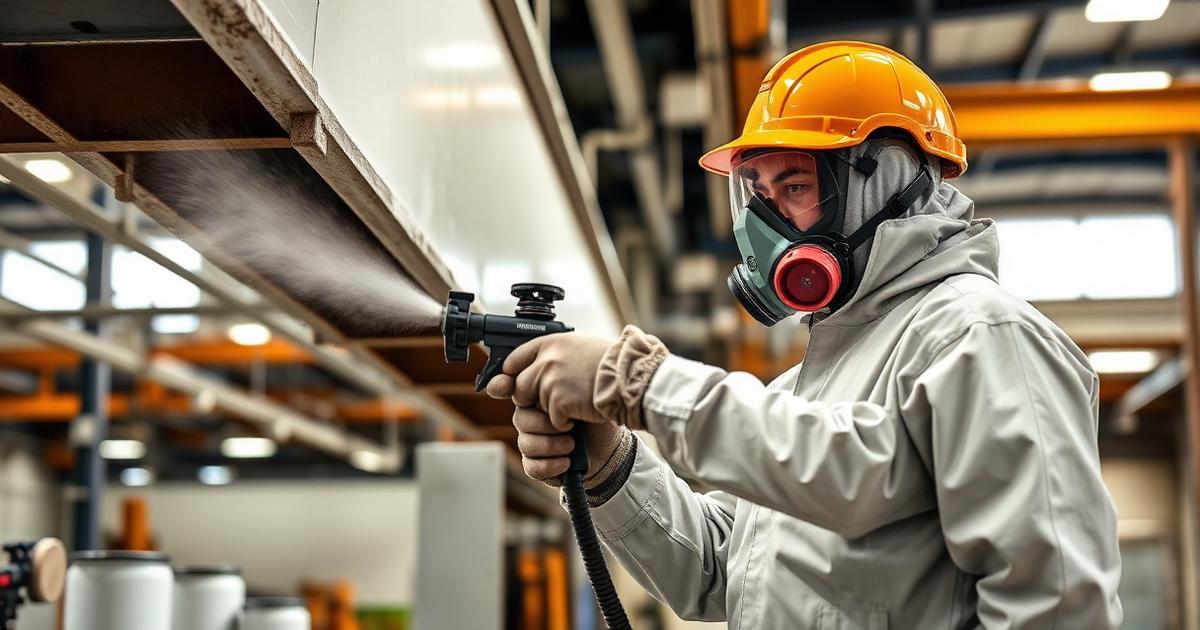
isocyanate (TDI/MDI) ceiling — a leading cause of occupational asthma (Table Z-1)
HazCom (1910.1200) is OSHA's 2nd most-cited standard (FY2025)
per serious HazCom violation (2026 federal maximum)
lead PEL when sanding or abating old paint (1926.62)
The most chemical-intensive trade on the site
No other construction trade sprays a respiratory sensitizer for a living. Isocyanate coatings cause occupational asthma at very low concentrations, solvent vapors build up in every enclosed space, and old paint hides lead and hexavalent chromium. HazCom (1910.1200) is OSHA's #2 most-cited standard, and painters draw more than their share of citations.
The through-line is exposure control: the right respirator, the right label, the right SDS at the mixing station. Below: the chemicals with their verified exposure limits, the standards that apply, and a six-step path to comply.
Chemicals on a painting job
The regulated substances painting crews meet most, with the OSHA permissible exposure limit for each — verified against OSHA's Table Z-1/Z-2 (lead and Cr(VI) against 29 CFR 1926).
| Chemical | Hazard | PEL (8-hr TWA) | Source |
|---|---|---|---|
| Isocyanates — TDI / MDI (2-part & urethane coatings) | Sensitizer; occupational asthma | (C) 0.02 ppm ceiling | 1910.1000 Z-1 |
| Toluene — thinners, solvents | CNS depressant; reproductive toxin | 200 ppm | 1910.1000 Z-2 |
| Xylene — solvents | CNS depressant; irritant | 100 ppm | 1910.1000 Z-1 |
| Methyl ethyl ketone (MEK) | Flammable; CNS; irritant | 200 ppm | 1910.1000 Z-1 |
| Lead — sanding/abating old paint | Neurotoxin; cumulative | 50 µg/m³ (AL 30) | 1926.62 |
| Hexavalent chromium — some primers | Carcinogen; allergic dermatitis | 5 µg/m³ (AL 2.5) | 1926.1126 |
Look up any product with the CAS chemical database or read the PEL/TLV guide.
A two-part urethane spray job, step by step
Spraying a two-part coating puts a respiratory sensitizer, flammable solvents, and sometimes lead on one job. Here is how the chemistry and the rules line up.
- 1
Mixing is when the clock starts
The moment the isocyanate hardener meets the resin, the sensitizer is live. TDI and MDI carry a ceiling limit of 0.02 ppm — there is no 'safe' whiff for a sensitized worker.
- 2
Spray on supplied air, not a cartridge
Air-purifying cartridges have no reliable end-of-service indicator for isocyanates, so spraying two-part coatings generally requires a supplied-air respirator under the 1910.134 program.
- 3
Cover skin, not just lungs
Isocyanates also sensitize through skin. Coveralls, gloves, and eye protection from SDS Section 8 — not just the respirator.
- 4
Ventilate and kill ignition for the solvents
Toluene (200 ppm), xylene (100 ppm), and MEK (200 ppm) build up in a booth or enclosed room and are flammable. Ventilate, ground and bond, and remove ignition sources.
- 5
Test the substrate before you sand
Sanding or stripping pre-1978 paint can release lead above 50 µg/m³ and, on industrial coatings, hexavalent chromium (5 µg/m³). Both trigger exposure assessment and controls.
- 6
Document it
SDS access, the respirator program, and training — the paper trail that answers an inspector.
The standards that apply to painting work
Painting sits under several health standards at once — here is what each requires.
Hazard Communication — 29 CFR 1910.1200
A written program, a chemical inventory, GHS labels on every decanted thinner or mixed coating, an accessible SDS for each product, and training — including on isocyanate sensitization.
Respiratory protection — 29 CFR 1910.134
Spray application, especially of isocyanate coatings, routinely exceeds a PEL. That triggers a full respirator program: hazard assessment, medical evaluation, fit testing, and training. Air-supplied respirators are common for isocyanate spraying.
Lead in construction — 29 CFR 1926.62
Sanding, scraping, or torching old paint can release lead well above the 50 µg/m³ PEL. That triggers exposure assessment, engineering controls, hygiene facilities, and — for renovation of pre-1978 housing — EPA RRP requirements.
Hexavalent chromium — 29 CFR 1926.1126
Some primers (zinc chromate, aircraft/industrial coatings) contain Cr(VI), a carcinogen with a PEL of 5 µg/m³. Spraying or sanding these needs monitoring, controls, and respiratory protection.
Flammable liquid storage — 29 CFR 1926.152
Solvents and solvent-based coatings are flammable. Store them in approved containers/cabinets, control ignition sources, and keep quantities and ventilation within the standard.
Your 6-step compliance roadmap
The order to stand up an OSHA-defensible HazCom program for a painting crew — each step linked to the free tool that does it.
- 1
Inventory every coating, thinner, and solvent
Two-part urethanes, epoxies, primers, thinners, strippers — list them and pull an SDS for each product actually on the truck.
Chemical Inventory Template - 2
Write your HazCom program
A written program per 1910.1200(e) that flags isocyanate sensitization, lead, and Cr(VI), plus training on spray hazards.
HazCom Program Generator - 3
Label every mixed and decanted container
Mixed two-part coatings and decanted thinners each need a GHS workplace label with product identifier and hazard pictograms.
GHS Label Generator - 4
Select the right respirator
Match cartridge or air-supplied respirators to the coating — isocyanate spraying usually needs supplied air, not a cartridge.
PPE Selector - 5
Make SDS reachable on site
A QR code on each container opens its SDS, and the jobsite's SDS load onto the crew's phones, so a painter checks the hazard before mixing or spraying.
SDS QR Code Generator - 6
Self-audit before OSHA does
Run a mock HazCom audit and price your exposure before an inspector arrives.
HazCom Audit Checklist
Key takeaways
- Painting is the most chemical-intensive construction trade — isocyanates, solvents, lead, and Cr(VI) can all appear on one job.
- Isocyanates (ceiling 0.02 ppm) cause occupational asthma; spraying them usually needs a supplied-air respirator, not a cartridge.
- Toluene (200 ppm), xylene (100 ppm), and MEK (200 ppm) are flammable CNS depressants — ventilate and control ignition.
- Sanding pre-1978 paint releases lead (50 µg/m³) — exposure assessment, controls, and EPA RRP for housing.
- Some primers carry hexavalent chromium (5 µg/m³), a carcinogen that needs monitoring and controls.
How HazComFast handles it
Built for the coating, the sprayer, and the abatement job.
Isocyanate & solvent tracking
Flag two-part urethanes and high-VOC coatings from the SDS, and surface the sensitization and respirator requirements automatically.
Respirator selection
The PPE Selector matches the coating to the right cartridge or supplied-air respirator, so spray crews aren't guessing.
SDS at the mixing station
QR codes on kits and containers — scan for the hazard before you mix or spray.
Lead & Cr(VI) readiness
Surface the lead and hexavalent-chromium tasks that need exposure assessment and controls before the work starts.
Crew-wide training records
Track HazCom and task-specific training for every painter, exportable for an inspector.
Inspection-ready program
Written program, labels, SDS access records, and training logs — all timestamped and in one place.
Go deeper
Standards & references
Sources & verification
Written and maintained by HazComFast. Every figure here is verified against the primary source — last verified July 2026:
- ·OSHA 1910.1000 Table Z-1/Z-2 — Air Contaminant Limits
- ·29 CFR 1926.62 — Lead in Construction
- ·29 CFR 1926.1126 — Hexavalent Chromium
- ·29 CFR 1910.1200 — Hazard Communication
General guidance, not legal advice. OSHA-approved State Plans may have requirements at least as effective as the federal standard — verify your state's rules.
Frequently Asked Questions
Isocyanates (TDI, MDI, HDI) in two-part urethane and polyurethane coatings are potent respiratory sensitizers — a leading cause of occupational asthma. OSHA sets a ceiling limit of 0.02 ppm for TDI and MDI (29 CFR 1910.1000, Table Z-1), and spray application usually requires a supplied-air respirator.
Toluene is 200 ppm (Table Z-2), xylene is 100 ppm, and MEK is 200 ppm (Table Z-1) as 8-hour TWAs. All are flammable CNS depressants, so spray booths and confined areas need ventilation and, where levels are high, respiratory protection.
Yes. Sanding, scraping, or heat-stripping paint on pre-1978 surfaces can release lead above the 50 µg/m³ PEL (29 CFR 1926.62). That triggers exposure assessment, controls, and hygiene facilities — and EPA RRP certification for renovation of pre-1978 housing and child-occupied facilities.
It depends on the coating and the exposure. Isocyanate spraying typically requires a supplied-air respirator, not a cartridge, because cartridges have no reliable end-of-service indicator for isocyanates. Any respirator use triggers the full 1910.134 program (medical evaluation, fit testing, training).
In some primers — zinc-chromate and certain industrial/aircraft coatings contain Cr(VI), a carcinogen with a 5 µg/m³ PEL (29 CFR 1926.1126). Spraying or sanding these requires exposure monitoring, controls, and respiratory protection.
Not reliably for spraying. Organic-vapor cartridges have no warning property or end-of-service-life indicator for isocyanates, so the wearer can't tell when breakthrough occurs. For spray application OSHA and NIOSH point to supplied-air (airline) respirators; cartridges may suit only limited brush/roll tasks after a hazard assessment.
Yes — and painting is one of the most chemical-intensive construction trades, so the program matters. It must cover the written plan, chemical inventory, labels, accessible SDSs, and training (29 CFR 1910.1200 / 1926.59).
In 2026 a serious violation is up to $16,550 and a willful or repeat violation up to $165,514 — unchanged from 2025. See OSHA penalties by state for local context.
Get the Binder in Order Before the Inspector Arrives. Are You Ready?
OSHA does not give advance notice of inspections (29 CFR 1903.6). Get the binder in order before the opening conference, not during it.
Serious Violation
$16,550
per violation (max)
HazComFast Pro
$199/mo
10 jobsites, unlimited chemicals, unlimited workers
New sign-ups are paused. The free tools below need no account, and customers can log in as usual.
Your account keeps working as usual. Cancel anytime.