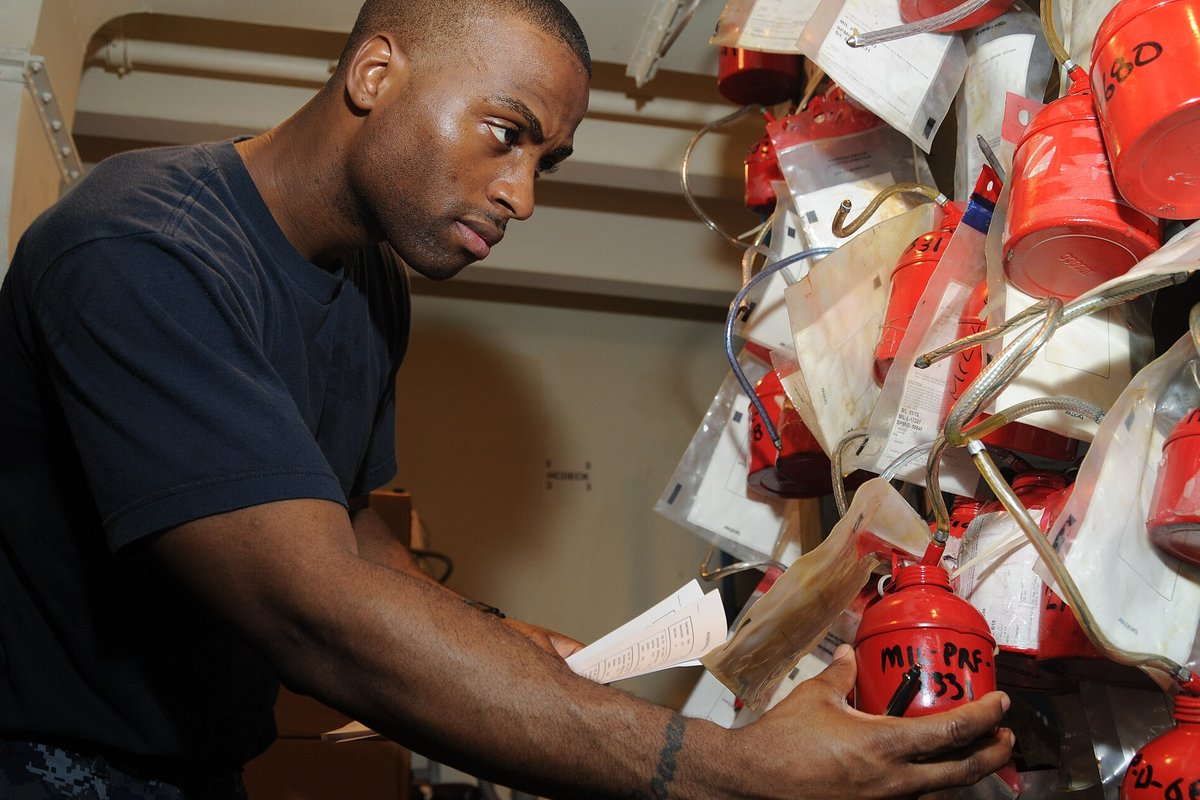
A product's hazard classification tells the supervisor what kinds of harm need to be considered. It does not establish how much material a worker will inhale, whether a particular glove is suitable, or whether the proposed storage and application arrangements are acceptable.
Use SDS Section 2 to build the questions that the task assessment needs to answer. Read the full classifications and hazard statements, then follow them into handling, exposure control, physical properties, reactivity, and emergency information. A pictogram is a quick warning, not a complete work instruction.
Download the Section 2 workplace review and decision checklist (Word). It includes a classification-to-task matrix, missing-information record, and pre-use review.
Record the hazard accurately before judging the task
Appendix D to 1910.1200 specifies Section 2 information: hazard classification, applicable label elements, hazards classified under paragraph (d)(1)(ii), identified hazards not otherwise classified, and the unknown-acute-toxicity statement in the circumstances described by the rule.
A class identifies the type of hazard; a category differentiates severity within that class. Category numbers are not a universal scale across unrelated hazards. A Category 2 flammable liquid and Category 2 eye irritant do not have the same consequences or require the same controls. 1910.1200(c) makes the within-class distinction explicit.
Physical hazards include such matters as flammability, oxidizing properties, pressure, and reactivity. Health hazards include acute toxicity, corrosion, sensitization, carcinogenicity, and target-organ effects. Read each listed endpoint. A familiar fire hazard can distract from a less visible inhalation or chronic-health hazard on the same sheet.
What a signal word or pictogram leaves out
“Danger” and “Warning” are prescribed label elements. Neither is an overall numerical risk rating for the employer's operation. Appendix C also contains precedence rules: for example, when “Danger” applies, “Warning” does not appear. The absence of an additional signal word does not mean the other classified hazards vanished.
One pictogram can represent several endpoints, while precedence rules can suppress a pictogram for a particular use. Read the hazard statements and classifications rather than trying to reconstruct the full hazard assessment from the symbols. Precautionary statements provide protective information, but a direction to use protective gloves still leaves the glove's performance and work conditions to be evaluated.
For label fundamentals, use the GHS labeling guide and the Section 2 glossary. The operational review needs to determine where and how each listed hazard could affect people at this workplace.
Turn each hazard into an assessment question
| Section 2 finding | Question about the proposed work | Evidence to obtain before accepting the arrangement |
|---|---|---|
| Flammability or pressure hazard | Can dispensing, application, heating, charging, or nearby work create an ignition or rupture condition? | Product properties; actual quantities and containers; ignition-source and equipment review; applicable storage and fire provisions |
| Skin corrosion or serious eye damage | Where can splashes, leaks, contaminated surfaces, or maintenance expose workers? | Handling configuration; splash protection; selected glove and clothing data; emergency washing assessment |
| Respiratory or skin sensitization | Can the task produce an inhalable form or repeated skin contact, including during cleanup? | Task and exposure review; engineering-control basis; appropriate PPE and any respiratory arrangements |
| Target-organ effects or carcinogenicity | Which routes and exposure patterns matter, and is there a substance-specific standard? | Ingredient and toxicology review; applicable standard; exposure-assessment basis and remaining program duties |
| Reactive hazards or identified reaction products | What will the product contact or become during the intended operation? | Sections 7, 9, and 10; supplier technical information; process and incompatibility review |
| Unknown toxicity or incomplete information | Is the missing information important to selecting controls or determining whether work can proceed? | A defined supplier question and a documented assessment of the uncertainty |
This matrix is a recommended review method. OSHA does not prescribe this particular form for every employer. The actual legal duties come from the applicable HazCom, exposure-control, PPE, process, and other standards.
Two manufacturer examples: the same signal word, different decisions
These examples use publicly available U.S. Fisher Scientific SDSs revised December 18, 2025. They identify what the sheets report and demonstrate a review approach. They do not establish actual workplace exposure or authorize the described tasks.
Acetone: evaluate vapor release and ignition together
The Fisher A18 acetone SDS lists flammable-liquid Category 2, eye-irritation Category 2, and single-exposure target-organ toxicity Category 3 involving the central nervous system. Its signal word is Danger.
For an illustrative small-container transfer, the supervisor needs more than the flame symbol. Review how the transfer occurs, what can release vapor, where ignition sources are located, and which workers can be affected. Sections 7 and 10 inform handling and incompatibilities; Section 9 informs the physical-property review; Section 8 informs exposure-control decisions. The employer needs to establish the applicable 1910.106 provisions rather than inferring every storage or electrical requirement from the classification alone.
A proposed increase from wiping to spray application changes the review. Aerosol generation and the application's release pattern need evaluation even though the container's Section 2 classification has not changed. Existing controls cannot be accepted solely because they were adequate for a different operation.
Solid sodium hydroxide: include preparation and splash exposure
The Fisher S318 sodium hydroxide SDS identifies skin-corrosion Category 1A, serious-eye-damage Category 1, and single-exposure target-organ toxicity Category 3 involving the respiratory system. It also uses Danger.
For an illustrative solution-preparation task, review solid handling, dust, transfer, mixing, splash exposure, container compatibility, and the product's handling and reactivity instructions. A glove choice must be supported for the relevant chemical and contact conditions. The workplace also needs suitable eye and face protection and the applicable emergency washing arrangements; 1910.151(c) addresses immediate drenching or flushing where eyes or body may be exposed to injurious corrosive materials.
A face shield or a general instruction to be careful does not establish an adequate handling system. The assessment should describe the selected equipment, how contact is prevented, and what workers will do if a release occurs. Follow the manufacturer's instructions for the identified product and preparation conditions.
The two examples carry the same signal word but need different engineering, contact, and emergency evaluations. Their classifications cannot be exchanged as if “Danger” were a specification for one universal PPE kit.
Read the less obvious Section 2 entries
Hazards not otherwise classified
An HNOC is a scientifically identified adverse effect that does not meet the specified criteria for the addressed physical or health hazard classes. It is not a catch-all label for any ordinary hazard below a classification cutoff or for a GHS category OSHA has not adopted. Section 2 must describe HNOCs identified during classification. Read that description and assess its relevance to the operation. 1910.1200(c) and Appendix D.
Unknown acute toxicity
The statement applies when an ingredient with unknown acute toxicity is present in a mixture at a concentration of 1% or more and the mixture is not classified using testing of the mixture as a whole. It identifies an information gap under the rule; it does not establish that the stated percentage is harmless, equally toxic, or a complete measure of every unknown hazard.
Do not turn the percentage into a task's exposure concentration. It describes mixture information, not the amount reaching a worker. When that uncertainty affects the assessment, ask the supplier a specific question and involve a qualified technical reviewer where needed. Appendix D, Section 2(e).
Reaction products under HCS 2024
Current 1910.1200(d)(1)(ii) addresses chemical reaction products associated with known or reasonably anticipated uses or applications. Appendix D places those hazards separately within Section 2. 1910.1200(f)(1) does not require HNOCs or hazards identified and classified under (d)(1)(ii) to appear on the shipped-container label.
That difference matters when a supervisor reads only the label. Review what the proposed work does to the product, including intended reactions, curing, or thermal conditions. Do not assume every possible decomposition hazard appears as a pictogram. Obtain supplier clarification where the information does not adequately describe the proposed application.
Connect Section 2 to the rest of the decision
Section 3 helps identify ingredients relevant to exposure assessment, but an ingredient list is not the complete mixture-classification calculation. Section 7 addresses handling and storage. Section 8 provides exposure limits and protective measures. Section 9 supplies relevant physical properties. Section 10 addresses reactivity and incompatibilities. Section 11 explains toxicological effects and routes.
Compare those sections for consistency. A claimed safe storage arrangement needs evidence about the products stored together and the conditions, not just their individual signal words. A proposed substitution needs assessment of its actual use, including changes in quantity, application, temperature, maintenance, waste, and worker exposure. A less severe classification for one endpoint can coexist with a new problem elsewhere.
For general-industry PPE, 1910.132(d) requires the relevant assessment, suitable selection, fit, communication, and training. Respirators have the separate requirements of 1910.134. An SDS recommendation does not discharge those duties.
Communicate what changes for workers
Under 1910.1200(h), covered employees receive effective information and training at initial assignment and whenever a new chemical hazard they have not previously been trained about is introduced into their work area. Training can address hazard categories or specific chemicals; product-specific information still needs to be available through labels and SDSs.
Explain the actual operation: the hazards, how a release may be recognized, the controls, the workplace labeling system, access to information, and the site's protective and emergency procedures. Confirm that affected workers can use the information. A signature shows that a record was signed; it does not by itself demonstrate understanding.
Construction adopts HazCom through 1926.59. Confirm the applicable State Plan and task standards. A recommended company approval form or review meeting is a company choice, and federal rules don't prescribe one.
Account for the current HCS transition
1910.1200(j) sets May 19, 2026 for suppliers evaluating substances and November 20, 2026 for the associated employer updates as necessary. For mixtures, the dates are November 19, 2027 and May 19, 2028. Transition provisions permit the specified earlier HCS version, the revised version, or both until the applicable dates.
Identify the product, SDS revision, and provisions being used before calling a difference an omission. An employer's continuing duties to communicate known hazards and protect workers do not wait for the mixture transition to finish.
Document the decision and its limits
The review should end with an accepted set of conditions, a held decision with defined missing evidence, or rejection of the proposed use. Record the product and SDS revision, covered task, hazards, supporting evidence, controls, remaining actions, and reviewer. Separate permission to obtain a sample or perform a controlled trial from permission for unrestricted routine use.
Before release, verify that selected controls are installed and usable, applicable training and program changes are complete, and workers have the necessary information. Reassess after a relevant change or evidence that the controls are inadequate. Where important hazards or exposure conditions remain unresolved, a completed checklist should show the hold rather than conceal it.
Frequently Asked Questions
Can a pictogram tell me which respirator to use?
No. Respirator selection needs the contaminant, physical form, exposure assessment, suitable NIOSH-approved equipment, and the applicable 1910.134 program arrangements. A Section 2 symbol does not provide those inputs or a cartridge change schedule.
Is Danger always more hazardous than Warning for every operation?
The signal word follows the applicable hazard classification and the label-precedence rules of Appendix C to 1910.1200. It is not a universal ranking of workplace risk across different products and tasks. Read the listed endpoints and assess how workers could be exposed.
Can reaction-product hazards appear on the SDS without appearing on the shipped label?
Yes. Current Appendix D includes hazards classified under 1910.1200(d)(1)(ii) in Section 2, while 1910.1200(f)(1) does not require those hazards on the shipped-container label. Review the SDS and actual application rather than relying only on the label.
Does unknown acute toxicity mean the entire mixture is unclassified?
No. The statement describes the specified missing acute-toxicity information under Appendix D to 1910.1200. Other hazards may already be classified, and the statement does not determine actual employee exposure or settle the workplace assessment.
Does OSHA mandate this particular chemical review checklist?
No. The checklist is a recommended way to organize employer decisions. Applicable HazCom (1910.1200), PPE (1910.132), respiratory (1910.134), exposure-control, and other requirements still govern the work; they should be distinguished from the employer's chosen administrative process.
When should the supervisor hold the proposed use?
Hold it when important product identity, hazard, incompatibility, exposure, control, or required training questions under 1910.1200(h) remain unresolved. Identify what evidence is missing and who will resolve it. The hold is a practical decision control, not a substitute for addressing an existing hazardous exposure.
Site-wide regulatory figures such as compliance dates and penalty amounts come from our regulatory source-of-truth modules, last checked against the eCFR, OSHA.gov, and the Federal Register on October 19, 2026. Last reviewed November 14, 2026.
About This Article
Published by: HazComFast
Published: November 14, 2026
Last Updated: November 14, 2026
- https://www.fishersci.com/store/msds?countryCode=US&language=en&partNumber=A184&productDescription=ACETONE+CERTIFIED+ACS+4L&vendorId=VN00033897
- https://www.fishersci.com/store/msds?countryCode=US&language=en&partNumber=S31850
- https://www.osha.gov/laws-regs/regulations/standardnumber/1910/1910.106
- https://www.osha.gov/laws-regs/regulations/standardnumber/1910/1910.1200
- https://www.osha.gov/laws-regs/regulations/standardnumber/1910/1910.1200AppC
- https://www.osha.gov/laws-regs/regulations/standardnumber/1910/1910.1200AppD
- https://www.osha.gov/laws-regs/regulations/standardnumber/1910/1910.132
- https://www.osha.gov/laws-regs/regulations/standardnumber/1910/1910.134
- https://www.osha.gov/laws-regs/regulations/standardnumber/1910/1910.151
- https://www.osha.gov/laws-regs/regulations/standardnumber/1926/1926.59
This content is for informational purposes only and does not constitute legal advice.