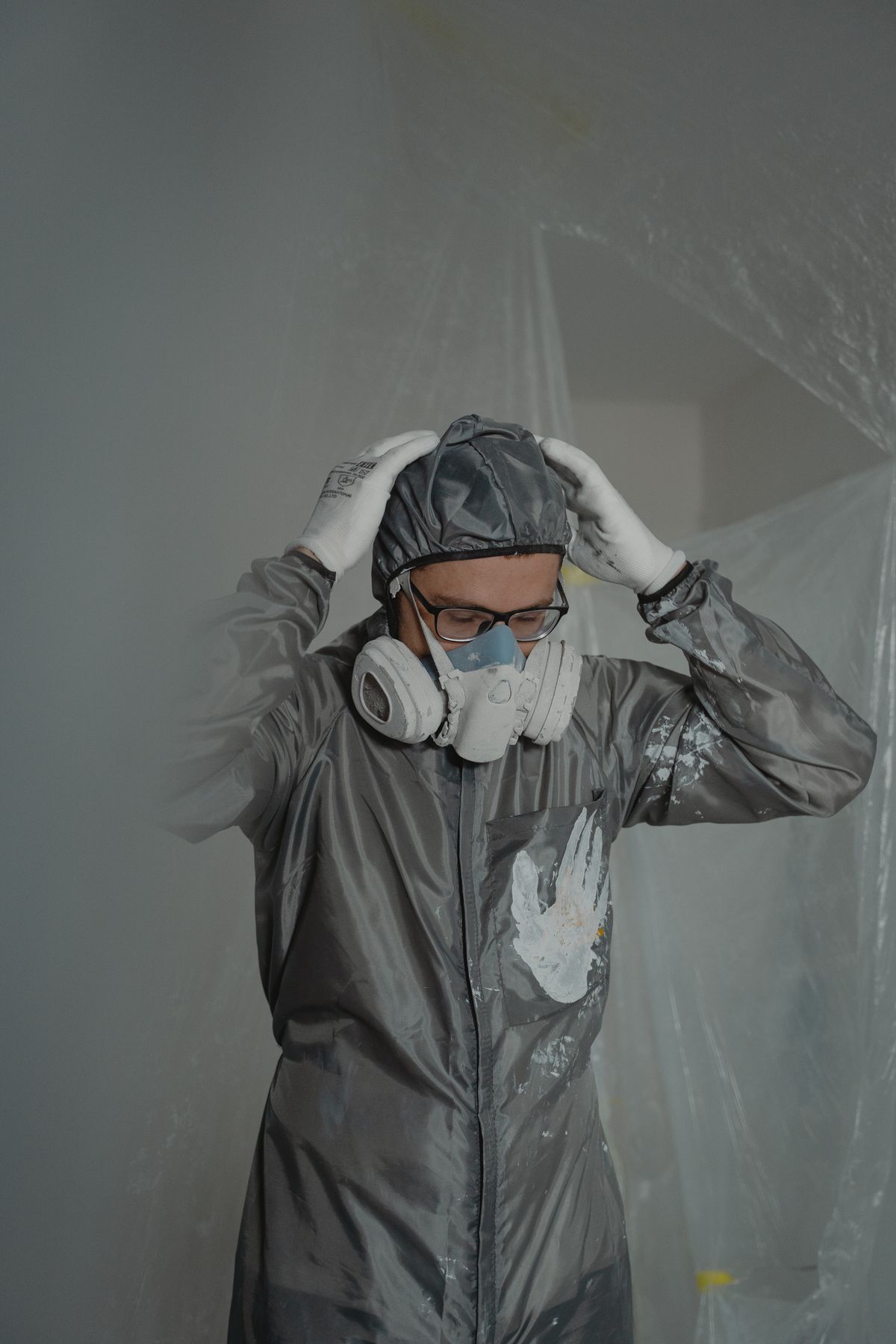
OSHA can write you a citation for exposing a worker to too much of a chemical — but only for fewer than 500 chemicals, and for most of them the "too much" line is a number a private committee picked in 1968. This is not a fringe complaint; it is OSHA's own published position. The permissible exposure limits (PELs) in Table Z of 29 CFR 1910.1000 are, in the agency's words, "outdated and inadequate for ensuring protection of worker health." This analysis lays out the data behind that admission — how the limits got frozen, how few have thawed, and why, for an EHS professional, "meeting the PEL" is the floor of the law and not the ceiling of safety.
At a glance: OSHA has PELs for fewer than 500 chemicals · most adopted in 1971 from 1968 ACGIH TLVs · a 1989 rule updating 376 of them was vacated in 1992 · only ~30 have been updated since 1971 · OSHA calls its own limits "outdated and inadequate." Sources: OSHA Annotated PELs; OSHA Chemical Management.
Key findings — the state of OSHA's exposure limits
- Fewer than 500 chemicals have a PEL. Out of the many thousands in commercial use — most workplace chemicals have no enforceable OSHA limit at all.
- Most PELs are 1968 science. OSHA adopted the 1968 ACGIH TLVs wholesale in 1971 and, for the bulk of the list, never changed them.
- The one big modernization was struck down. The 1989 rule updated 376 PELs; a federal court vacated all of it in 1992.
- Only about 30 have moved since 1971. Through slow, substance-by-substance rulemakings — roughly one every couple of years.
- Legal ≠ safe. OSHA publishes NIOSH and ACGIH limits beside its own precisely because its own numbers are often weaker.
How the limits got frozen: a 58-year timeline
The story is short and it explains almost everything about industrial-hygiene compliance today. When OSHA was created in 1971, it needed enforceable limits immediately, so it adopted existing national consensus standards — chiefly the ACGIH's 1968 Threshold Limit Values — as its PELs. That was a reasonable start. The problem is that it was never meaningfully finished. Most of those numbers still sit in Table Z-1 of 29 CFR 1910.1000, where an 8-hour time-weighted average may not be exceeded in any 8-hour shift of a 40-hour work week (29 CFR 1910.1000(a)(2)).
The PEL timeline, 1968–2026
One adoption, one failed modernization, and a very long freeze.
Sources: OSHA (adoption of 1968 TLVs in 1971); Air Contaminants final rule, Jan 19, 1989; AFL-CIO v. OSHA, 965 F.2d 962 (11th Cir. 1992); Respirable Crystalline Silica final rule, 2016.
The pivotal event is 1992. OSHA's one comprehensive attempt to modernize the list — the 1989 Air Contaminants rule, which lowered 212 existing PELs and created 164 new ones — was challenged from both sides (industry said too strict, labor said too lax on justification) and the Eleventh Circuit vacated the entire rule in AFL-CIO v. OSHA, 965 F.2d 962 (1992). The court's reasoning set a brutal precedent: OSHA had to justify each limit individually, with substance-specific feasibility analysis. That effectively made wholesale updating impossible and forced OSHA into a chemical-by-chemical process that moves at a crawl.
The stagnation, in one number
How slow is chemical-by-chemical? Since 1971, OSHA reports it has been able to establish or update PELs for only about 30 chemicals. Set that against a list of fewer than 500, and the picture is stark.
Updated vs. frozen since 1971
Of OSHA's fewer-than-500 PELs, only about 30 have been revisited in over half a century.
Source: OSHA (PELs for fewer than 500 chemicals; PELs established or updated for about 30 chemicals since 1971). Proportion is illustrative of the ~500 total.
The ~30 that did move are the chemicals dangerous and famous enough to earn their own substance-specific health standard (29 CFR 1910.1001–1910.1053): asbestos, lead (1978), benzene (1 ppm, 1987), formaldehyde, cadmium, hexavalent chromium (2006), and respirable crystalline silica (2016), among others. Each took years — sometimes decades — of litigation-hardened rulemaking. Silica is the clearest modern example: the 2016 rule set one PEL of 50 µg/m³ for construction and general industry (29 CFR 1926.1153(d)(1), 1910.1053(c)), about half the old general-industry formula limit, which was approximately equivalent to 100 µg/m³, and a fifth of the old construction limit, approximately equivalent to 250 µg/m³ (81 FR 16286). It is what a finished modernization looks like — and it is the exception, not the rule.
Each of these standards carries its own limit, set substance by substance:
| Substance | PEL, 8-hour TWA | Rule |
|---|---|---|
| Asbestos | 0.1 fiber per cubic centimeter | 29 CFR 1910.1001(c)(1) |
| Lead | 50 µg/m³ | 29 CFR 1910.1025(c)(1) |
| Chromium (VI) | 5 µg/m³ | 29 CFR 1910.1026(c) |
| Cadmium | 5 µg/m³ | 29 CFR 1910.1027(c) |
| Benzene | 1 ppm | 29 CFR 1910.1028(c)(1) |
| Formaldehyde | 0.75 ppm | 29 CFR 1910.1048(c)(1) |
| Respirable crystalline silica | 50 µg/m³ | 29 CFR 1910.1053(c) |
Why this matters on your worksite: legal is not the same as safe
For a compliance officer, the practical translation is uncomfortable: a documented exposure below the PEL can still be a documented exposure above what modern science considers safe. The gap is real and sometimes large. Carbon monoxide is the textbook case.
Carbon monoxide: legal vs. recommended
Source: OSHA Annotated Table Z-1 (OSHA PEL vs. ACGIH TLV). A worker at 40 ppm CO is legally compliant and simultaneously above the modern recommended limit.
The 50 ppm figure is the same in both rulebooks: Table Z-1 of 29 CFR 1910.1000 for general industry, and Table 1 to 29 CFR 1926.55 for construction.
This is exactly why OSHA created the Annotated PEL tables: they print the enforceable PEL next to the Cal/OSHA PEL, the NIOSH REL, and the ACGIH TLV, so an employer can see how far its legal floor sits below current science. It is an unusual thing for a regulator to do — effectively publishing a map of where its own rules fall short — and it is a direct instruction to build your program to the more protective number. For the mechanics of how these limits are defined and measured, see our PEL vs. TLV exposure-limits guide.
The two escape hatches OSHA still uses
If most PELs are frozen and most chemicals have none at all, how does OSHA regulate modern chemical hazards? Two ways, and both matter to your program:
- The General Duty Clause, Section 5(a)(1) (29 U.S.C. 654(a)(1)). When a chemical has no PEL (or an inadequate one), OSHA cites the employer for failing to protect against a recognized hazard — and it treats a NIOSH REL or ACGIH TLV as the recognized benchmark. A chemical without a PEL is not a chemical without a duty.
- Hazard Communication. 1910.1200 forces the exposure information downstream regardless of whether a PEL exists: the safety data sheet's Section 8 must list applicable exposure limits and recommended controls, and Section 2 must classify the health hazard (29 CFR 1910.1200(g)(2)(viii) and (ii)). HazCom is how a worker learns a chemical is dangerous even when the Z-tables are silent.
The takeaway for an industrial-hygiene program is to invert the usual logic: don't ask "what's the PEL?" first. Ask "what does current science (REL/TLV) say, what does the SDS recommend, and can I engineer the exposure down regardless of the legal minimum?" Meeting the PEL keeps you off a citation for that line item; controlling to modern guidance keeps your people healthy and keeps you off a General Duty Clause citation for everything the Z-tables missed. Where a PEL does apply, the rule already sets the order of controls: engineering or administrative controls first whenever feasible, protective equipment only for what they cannot reach (29 CFR 1910.1000(e); 29 CFR 1926.55(b)), and respirators only when effective engineering controls are not feasible or while they are being put in place (29 CFR 1910.134(a)(1)).
Build your chemical program to modern science, not 1971
Meeting a frozen PEL is the legal floor. HazComFast helps you find the real hazard: a live chemical inventory, safety data sheets your crews can reach, and exposure information pulled straight from Section 8 — so you control to the protective limit, not just the enforceable one.
Methodology and limits
- Sources. The regulatory history and figures are from OSHA's own materials: the Annotated PELs pages and Chemical Management program (fewer than 500 PELs; PELs "outdated and inadequate"; ~30 updated since 1971), the 1989 Air Contaminants final rule (212 lowered + 164 new = 376), and the court record of AFL-CIO v. OSHA, 965 F.2d 962 (11th Cir. 1992).
- "About 30" and "~470 frozen" are OSHA's framing. OSHA states it has updated PELs for about 30 chemicals since 1971; the 94%/6% split applies that against the fewer-than-500 total and is illustrative, not a line-item audit.
- The CO comparison is verified. OSHA PEL 50 ppm vs ACGIH TLV 25 ppm from OSHA's Annotated Table Z-1. ACGIH TLVs are copyrighted; only OSHA's published annotations are cited here, and NIOSH RELs (public domain) are OSHA's other annotated reference.
- We deliberately avoid citing vacated numbers. Some older NIOSH/OSHA web pages still show 1988–1989 "PEL Project" values that were struck down in 1992; only current Table Z and clearly-current recommendations are used here.
Use the newer limits OSHA prints beside its own
The exposure-limit system an American worker relies on is, for the most part, a snapshot of 1968 chemistry that a court froze in place in 1992. OSHA knows it — it says so in print and hands you the better numbers alongside its own. The professional response is not cynicism; it is to stop treating the PEL as the definition of "safe." Fewer than 500 chemicals have a limit, most of those limits are older than the people they protect, and the General Duty Clause plus a well-run HazCom program are what fill the gap. Build to the science. The law is the floor.
Related data studies
- Chemical exposure & fatalities: What 5,070 Workplace Deaths in 2024 Reveal (CFOI) · PEL vs. TLV: The Exposure-Limits Guide
- The chemicals that got their own standard: Silica Compliance (2016 Rule) · Lead Exposure Standards · Hexavalent Chromium
- HazCom & the SDS: Hazard Communication 1910.1200 · How to Read an SDS
Sources & verification (verified 2026-07-13): OSHA has PELs for fewer than 500 chemicals; most were adopted in 1971 from the 1968 ACGIH TLVs and OSHA describes them as "outdated and inadequate for ensuring protection of worker health" (OSHA Annotated PELs; OSHA Chemical Management). The 1989 Air Contaminants final rule (published Jan 19, 1989) lowered 212 existing PELs and set 164 new ones (376 total); it was vacated July 7, 1992 by the Eleventh Circuit in AFL-CIO v. OSHA, 965 F.2d 962. OSHA reports establishing or updating PELs for only about 30 chemicals since 1971 (OSHA, Chemical Management and Permissible Exposure Limits, request for information, October 10, 2014: "Approximately 30 have been adopted by OSHA as a part of a comprehensive standard"; OSHA has exposure limits "for only about 470 substances"; substance-specific standards at 29 CFR 1910.1001–1910.1053), including lead (1978), benzene 1 ppm (1987), hexavalent chromium (2006), and respirable crystalline silica 50 µg/m³ (2016). Carbon monoxide comparison (OSHA PEL 50 ppm vs. ACGIH TLV 25 ppm) from OSHA Annotated Table Z-1; ACGIH TLVs are copyrighted and cited only via OSHA's published annotation. Vacated 1988–89 "PEL Project" values are deliberately excluded. Not legal advice.
Frequently Asked Questions
Why are OSHA's permissible exposure limits (PELs) considered outdated?
Because most of them have not changed since 1971. When OSHA opened in 1971 it adopted, wholesale, the 1968 Threshold Limit Values (TLVs) of the ACGIH as its enforceable PELs. OSHA itself now states that many of these limits are 'outdated and inadequate for ensuring protection of worker health.' A 1989 rule that would have modernized 376 of them was vacated by a federal appeals court in 1992, and the vast majority have carried their 1968-vintage numbers ever since. The general-industry limits are Tables Z-1 to Z-3 of 29 CFR 1910.1000; construction has its own Table 1 and Table 2 in 29 CFR 1926.55.
How many chemicals does OSHA have an exposure limit for?
Fewer than 500. OSHA has permissible exposure limits for fewer than 500 substances, out of the many thousands of chemicals in commercial use. Most chemicals a worker can encounter have no OSHA PEL at all — which is why OSHA points employers to the more current, more protective limits published by NIOSH (RELs) and ACGIH (TLVs) in its own annotated Z-tables. The enforceable limits sit in Tables Z-1, Z-2, and Z-3 of 29 CFR 1910.1000 and in the substance-specific standards, 29 CFR 1910.1001 to 1910.1053.
What happened to OSHA's 1989 update of the PELs?
OSHA published the Air Contaminants rule on January 19, 1989, lowering 212 existing PELs and setting new PELs for 164 previously unregulated substances — 376 in total. On July 7, 1992, the Eleventh Circuit Court of Appeals vacated the entire rule in AFL-CIO v. OSHA (965 F.2d 962), holding that OSHA had not adequately justified each individual limit. OSHA reverted to the 1971 values and has never successfully replaced them en masse. The limits it enforces today are the ones in Table Z-1 of 29 CFR 1910.1000, plus the substance-specific standards adopted since.
Does meeting the OSHA PEL mean an exposure is safe?
No. Meeting the PEL means you are legally compliant, not that the exposure is safe. Because most PELs date to 1968–1971 science, many are far weaker than current recommendations. Carbon monoxide is a plain example: OSHA's PEL is 50 ppm (Table Z-1, 29 CFR 1910.1000), while the ACGIH TLV is 25 ppm — half of OSHA's number. A defensible program controls to the most protective applicable limit (PEL, REL, or TLV), not just the legal minimum. Where a PEL applies, engineering or administrative controls come first whenever feasible, and protective equipment covers only what they cannot reach (29 CFR 1910.1000(e)).
If there's no PEL for a chemical, is the employer off the hook?
No. OSHA can still cite an uncontrolled hazard under the General Duty Clause, Section 5(a)(1) of the OSH Act (29 U.S.C. 654(a)(1)), when a recognized hazard exists and a feasible control is available — and it routinely uses NIOSH RELs and ACGIH TLVs as the 'recognized' benchmark. So a chemical with no PEL is not unregulated; it is governed by the general duty to provide a workplace free of recognized hazards, measured against current science. The safety data sheet still has to carry the exposure information in Section 8, Exposure controls/personal protection (29 CFR 1910.1200(g)(2)(viii)).
OSHA figures and citations here come from our regulatory source-of-truth modules, last checked against the eCFR, OSHA.gov, and the Federal Register on October 5, 2026. Last reviewed October 6, 2026.
About This Article
Published by: HazComFast
Published: July 13, 2026
Last Updated: October 6, 2026
This content is for informational purposes only and does not constitute legal advice.