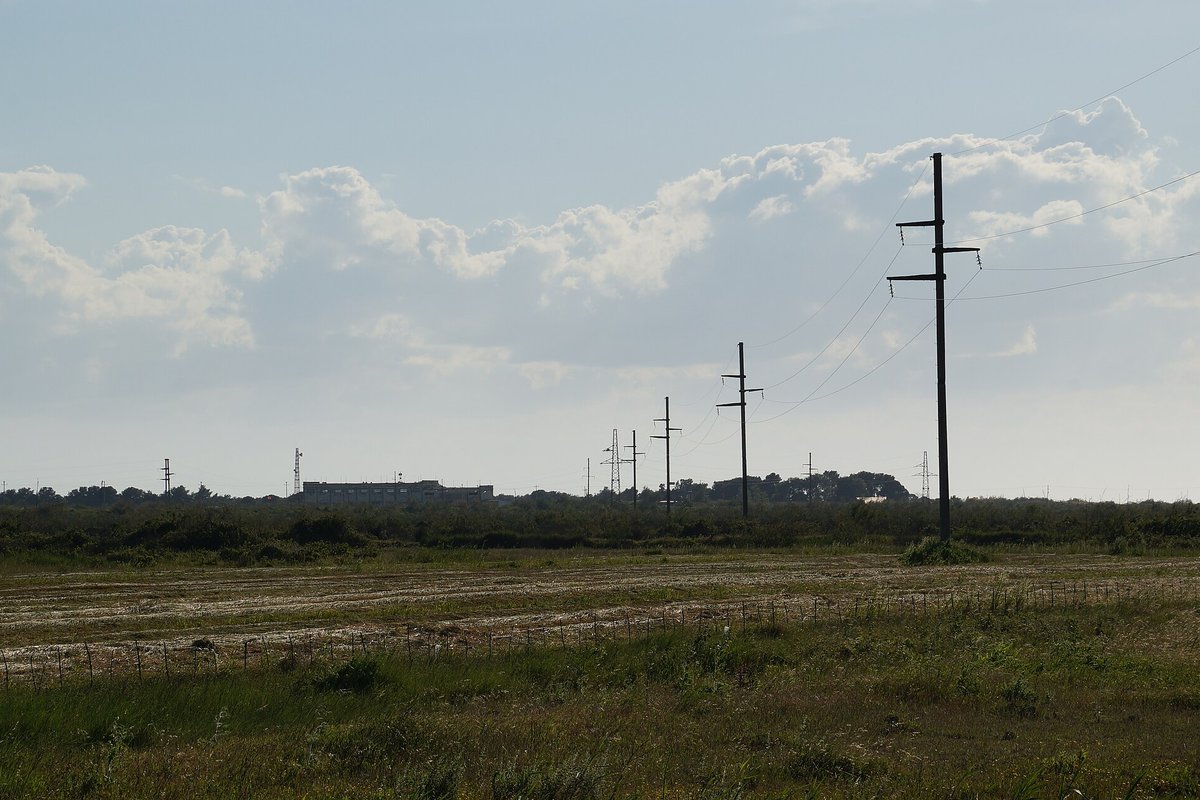
A maintenance technician arrives at an unmanned pump station. The job is limited to reading gauges, but cell reception disappears inside the building. The nearest coworker is at another facility. Nobody has been assigned to respond if the technician misses the scheduled return time.
A lone worker safety program starts by deciding whether a specific task may be performed alone, not by picking a check-in app or a fixed calling interval. The employer then needs to control the hazards, confirm the worker's condition, recognize missed contact, and arrange safe assistance.
Federal OSHA has no general lone-worker standard mandating a buddy for every job or a universal 15-, 30-, or 60-minute check-in. Some activities do have binding staffing, attendant, fire-watch, rescue, or worker-accountability requirements. Those rules come before the company's voluntary monitoring procedure.
Downloadable policy and forms
Editable lone worker policy and forms (Word). Complete the site details and approve the policy before use.
What counts as working alone?
NIOSH describes lone work as a situation in which an individual cannot be seen or heard by another worker and help is not readily available. This is a useful operational description, not a universal definition in the federal OSHA regulations. NIOSH lone-worker overview.
| Setting | Example of functional isolation |
|---|---|
| Construction | Inspecting a storage area beyond the main crew's sight and hearing |
| Maintenance | Servicing equipment after production staff have left |
| Utilities | Reading gauges at an unmanned pump or electrical facility |
| Warehousing | Working in a separated area of a large building |
| Field service | Visiting a customer location without immediately available assistance |
| Building operations | Entering a locked mechanical room after hours |
| Remote work | Being separated by terrain, weather, distance, or communication failure |
Even two workers can be functionally isolated if neither would detect an emergency involving the other. Physical separation matters because a fall, electrical injury, entrapment, hazardous atmosphere, or sudden illness could prevent a worker from using a phone.
Does OSHA allow someone to work alone?
Often yes, when the employer meets the standards actually applicable to the work and addresses recognized hazards. OSHA's working-alone FAQ does not establish a universal two-person or technology requirement. The employer needs to distinguish:
- Binding rules: Applicable provisions requiring an attendant, second person, worker-accounting method, specific rescue measures, or other protection.
- General Duty Clause: OSH Act §5(a)(1) applies to recognized serious hazards when the legal criteria for its application are met; it does not automatically prescribe GPS tracking or a written lone-worker program. OSH Act §5.
- Company policy: Employer-selected restrictions, check-in times, escalation triggers, and documentation that supplement, not replace, applicable standards.
First check the employer's OSHA jurisdiction
Public utilities and municipal employers need a jurisdiction check. Federal OSHA generally covers private-sector employers, but does not directly cover state and local government employees. Those workers receive occupational safety and health protections under OSHA-approved State Plans covering public employees, where such plans exist; other state or local public-employer requirements may also apply. Some State Plans cover both public and private employees, while others cover public employees only. Federal agency workers have a distinct coverage framework.
Before applying a federal citation to a municipal water, wastewater, or electric utility, identify the worker's actual employer, the applicable occupational safety authority, and the standards adopted or enforced in that jurisdiction. A private contractor at a publicly owned facility does not automatically have the same jurisdiction as the facility's public employees. Official guidance: OSHA, Am I covered?, State Plans, and State Plan FAQ.
Federal rules that can restrict lone assignments
| Work | Federal provision | Why solo work may be restricted |
|---|---|---|
| General-industry permit-space entry | 1910.146(d)(6) | Attendant required during standard permit-entry operations |
| Construction permit-space entry | 1926.1204(f) | Attendant during standard permit entry |
| Covered IDLH respirator operations | 1910.134(g)(3) | Personnel outside, communications, and rescue provisions |
| Interior structural firefighting | 1910.134(g)(4) | Specific inside/outside staffing provisions |
| Hazardous-substance emergency response | 1910.120(q)(3) and 1926.65(q) | Buddy-system and standby arrangements in covered circumstances |
| Specified electric-power work | 1910.269(l)(2); 1926.960(b)(3) | Two employees, with narrowly defined exceptions |
| Electric manholes, vaults, and enclosed spaces | 1910.269(e), (t)(3); 1926.953; 1926.965(d) | Surface personnel, reliable communications, atmospheric and rescue safeguards, subject to specific scope rules |
| Personal fall arrest systems | 1910.140(c)(21); 1926.502(d)(20) | Prompt rescue, or the applicable construction self-rescue alternative |
| Confined-space welding | 1910.252(b)(4)(iv); 1926.353(b)(2)–(3) | Outside personnel and emergency arrangements when stated conditions apply |
| Hot work with fire-watch conditions | 1910.252(a)(2)(iii); 1926.352(e) | Required fire monitoring/guarding personnel |
| Grain-bin and silo entry | 1910.272(g) | Observer, engulfment precautions, and rescue equipment for covered entries |
| Certain utility line-clearance trimming | 1910.269(r)(1)(ii) | Second trimmer within normal, unassisted voice communication under specific conditions and scope |
| Covered logging | 1910.266(d)(6) | Visual or audible contact and end-of-shift accounting |
| Covered shipyard employment | 1915.84 | Job-appropriate sight/verbal accountability, subject to a specified exception |
This table is a screening aid, not an exhaustive inventory of OSHA standards. A phone, GPS location, or periodic call does not replace legally needed personnel or rescue equipment.
Confined spaces: identify the correct entry regime
Standard permit-required confined-space entry under 1910.146(d)(6) in general industry, and under 1926.1204(f) in construction, calls for an attendant outside. A supervisor calling from another building does not become that attendant merely by making periodic calls.
Some entries may use specific alternate procedures or reclassification when their criteria are actually met: 1910.146(c)(5)/(c)(7) or 1926.1203(e)/(g). These are not blanket permissions for solo work. Construction Subpart AA also has scope exclusions, including certain excavation, underground construction, and diving work. Check 1926.1201(b).
HazComFast related guide: Confined Spaces in Construction vs. 1910.146.
Electricians and utilities: which standard applies?
The worker's job title does not decide applicability. Section 1910.269(a)(1) covers specified electric-power generation, transmission, and distribution operations and equivalent industrial installations. Ordinary building electrical work may instead be governed by 1910 Subpart S. Covered construction electric-power work uses 1926 Subpart V subject to its scope rules.
Sections 1910.269(l)(2) and 1926.960(b)(3) call for two employees for identified high-hazard operations, with narrow exceptions for certain switching, live-line-tool operations, and emergency repairs. Each exception needs to be assessed against the exact text. Sections 1910.269(c)(5) and 1926.952(e) call for planning of a lone employee's task as if a job briefing were needed, though no self-briefing is needed.
Covered electric-power rules also call for regular supervision and at-least-annual inspections of employees' safety-related work practices under 1910.269(a)(2)(iv) and 1926.950(b)(3). These are not universal annual audits of every lone-worker policy.
Electrical manholes and vaults
For covered work in manholes/vaults containing energized electrical equipment, 1910.269(t)(3) and 1926.965(d) generally call for first-aid-trained surface assistance. Specific subsections allow brief solo entry for inspection, housekeeping, taking readings, or similar tasks only if the employer demonstrates protection from all electrical hazards. These rules also impose reliable-communication duties among involved employees.
The electric-power enclosed-space provisions, 1910.269(e) and 1926.953, contain testing, atmospheric, outside-attendant, and rescue-equipment obligations under their scope and conditions. In particular, 1910.269(e)(3) and 1926.953(d) address rescue equipment; 1910.269(e)(7) and 1926.953(h) address a first-aid-trained attendant when traffic around the opening creates the specified hazard. Hazardous atmospheres call for the applicable permit-space entry approach.
Vented-vault scope exception: 1910.269(e) and 1926.953(a) exclude vented vaults from those particular enclosed-space provisions if the employer determines before entry that the ventilation system operates to protect employees. Merely labeling a vault as ventilated is insufficient. The exclusion does not automatically waive 1910.269(t), 1926.965, other electrical rules, or other applicable safeguards.
| Proposed underground work | Solo-assignment decision |
|---|---|
| Brief reading near energized equipment | Verify exact exception, protection from all electrical hazards, and independent entry safeguards |
| Cable repair or manipulation | Do not rely on the brief-inspection exception |
| Vented vault, protective ventilation verified | Assess the limited enclosed-space scope exclusion; check other rules separately |
| Vented vault, ventilation unverified or failed | Do not assume the exclusion |
| Hazardous atmosphere, traffic-triggered attendant, or missing needed rescue equipment | Apply binding protections; do not authorize the unsupported entry |
| Needed reliable communication unavailable | Correct the failure before the covered work proceeds |
Line-clearance tree trimming near energized lines
Check both the scope of the operation and the worker classification before applying the tree-trimming provision.
First, 1910.269(a)(1)(i)(E) addresses line-clearance tree trimming to clear space around generation, transmission, or distribution equipment on behalf of an organization that operates those lines/equipment or controls their operating procedures. The standard specifies which provisions apply to qualified employees versus line-clearance tree trimmers who are not qualified employees.
Second, 1910.269(r)(1) expressly does not apply to qualified employees as defined for the standard. For workers to whom (r)(1) applies, (r)(1)(ii) calls for a second line-clearance tree trimmer within normal, unassisted voice communication if the stated electrical proximity or roping conditions exist. These include an approach closer than 10 feet to certain equipment energized above 750 volts, certain falling branches/limbs near energized lines, and roping needed to remove limbs from such conductors or apparatus.
This is neither a universal two-person rule for all tree work nor an automatic permission for qualified employees to work alone. Qualified employees remain subject to other applicable electrical, staffing, fall-protection, and safety requirements. See 1910.269(a)(1)(i)(E) and 1910.269(r)(1).
Grain bins and silos: an observer is only part of the protection
In covered grain-handling facilities under 1910.272, entry into bins, silos, tanks, or other grain structures calls for a particular entry assessment and safeguards. Section 1910.272(g) distinguishes those entries from certain flat-storage entries covered by (h).
1910.272(g)(2) calls for a body harness with lifeline or a qualifying boatswain's chair when entry is from a level at or above stored grain, or the worker walks or stands on/in grain deep enough to present an engulfment hazard. The lifeline needs to prevent sinking beyond waist depth. If the employer demonstrates that this measure is infeasible or creates a greater hazard, an alternative needs to still be demonstrated to prevent sinking beyond waist depth. The provision also includes a note concerning surfaces demonstrated to be free of engulfment hazards.
The requirements are cumulative where applicable: (g)(3) calls for an outside observer equipped to assist and maintained visual, voice, or signal-line communication; (g)(4) calls for structure-suited rescue equipment; (g)(5) calls for observer rescue-procedure training; (g)(6) prohibits entry beneath bridging conditions or potentially collapsing grain accumulations. Other paragraphs impose authorization, energy-control, and atmospheric safeguards.
A grain-bin entrant should not be approved for ordinary solo work merely because an outside observer has a phone. The observer, engulfment protection, equipment, and entry rules need to be evaluated as a package. Flat-storage work calls for its own (h) screening.
Logging has a separate worker-contact rule
For covered logging operations, 1910.266(d)(6)(iii) calls for employees at a logging worksite to work within visual or audible contact of another employee, and (d)(6)(iv) calls for end-of-shift employee accounting. These are logging-specific provisions, not universal rules for remote construction or utility work. OSHA logging standard.
Fall arrest: rescue cannot be an afterthought
Under 1926.502(d)(20), covered construction personal fall arrest work requires prompt rescue after a fall or assurance that the employee can rescue themselves. General-industry 1910.140(c)(21) requires provision for prompt rescue where it applies. Neither sets a universal safe suspension duration.
Before a person works alone using fall arrest, determine how a fall would be detected, whether the worker could be incapacitated, whether self-rescue is realistic, and whether suitable rescue access, trained personnel, equipment, and protection of rescuers are available. Calling 911 without verifying access and capabilities may be insufficient for the actual hazards.
Hypothetical example: A roofer using fall arrest cannot be approved for a solo assignment if nobody can promptly detect and rescue a suspended worker and no adequate self-rescue alternative is established.
Confined-space welding and fire watches
Under 1910.252(b)(4)(iv), general-industry welding through a small confined-space opening has an outside attendant and emergency-removal arrangement requirement. Construction 1926.353(b)(2) addresses outside assistance and specified airline respirators under particular ventilation/access circumstances; 1926.353(b)(3) separately calls for an outside attendant and preplanned emergency removal for specified small-opening confined-space welding. These provisions may not be collapsed into a universal two-person welding rule.
Fire watches also have different regulatory conditions:
| General industry | Construction | |
|---|---|---|
| Provision | 1910.252(a)(2)(iii) | 1926.352(e) |
| Trigger | Specified welding/cutting conditions posing more than a minor fire hazard | Normal fire precautions insufficient |
| After-work duration | At least 30 minutes after covered welding/cutting | Sufficient period afterward to ensure no possibility of fire exists under the rule |
The general-industry 30-minute minimum under (a)(2)(iii)(B) is not the exact text of the construction provision. Other applicable permits or fire rules may impose additional duties.
Lockout/tagout and after-hours maintenance
General-industry 1910.147 does not universally demand two employees for every covered servicing task. Some work may be appropriate for one authorized employee after correct hazardous-energy controls and a separate residual-risk assessment. It does not automatically govern construction work outside its scope.
If an approved visual inspection becomes jam clearing, guard removal, or electrical troubleshooting, stop. The original authorization no longer covers the task. Apply the relevant energy controls and reassess whether the work can be done alone. See HazComFast Lockout/Tagout.
First aid, responders, and location information
29 CFR 1910.151(b) requires adequate first-aid supplies to be readily available. If an infirmary, clinic or hospital used to treat injured employees is not in near proximity, adequately trained first-aid personnel must also be available. Construction 1926.50 covers prompt medical arrangements, first aid, and emergency communication. Under 1926.50(f)(2), a communications system used to reach 911 must be effective; when required automatic location information is not provided, (f)(2)(ii)(A) requires conspicuous posting of coordinates or other effective site-location information, subject to the stated landline exception in (B).
Covered electric-power work has specific first-aid rules in 1910.269(b)(1) and 1926.951(b). The four-minute trained-responder provision for certain fixed work locations is not a universal rescue-time limit for lone workers. A worker's own first-aid training does not guarantee that an incapacitated person can receive help.
Six-step lone-worker risk assessment
- Define the assignment. Record the person, employer, work order, precise location, safe access point, authorized task, excluded work, start/finish, and maximum authorized duration.
- Screen applicable law and policy. Identify needed attendants, two-person rules, permit spaces, fire watches, qualified-person requirements, atmospheric restrictions, and rescue obligations. Check the employer's jurisdiction first.
- Identify credible incapacitation. Consider falls, crushing, electricity, toxic/oxygen-deficient atmospheres, heat, chemical release, traffic, violence, and medical events; assess whether the worker could still communicate.
- Control the hazard. Eliminate unnecessary entry, isolate energy, improve access/lighting/traffic separation, use remote readings, reschedule to staffed hours, or add qualified personnel. Don't use monitoring to excuse uncontrolled hazards.
- Evaluate detection and assistance. Include the time from a possible incident to the next missed check, recognition, attempted contact, escalation, safe access, and appropriate aid. Identify whether specialized rescue is necessary.
- Record a decision supported by evidence. Capture tests, site access confirmation, staffing, relevant rescue provisions, unresolved conditions, the approving person, and the conditions that invalidate approval.
Company risk-classification matrix (not an OSHA standard)
| Class | Residual conditions after controls | Default decision |
|---|---|---|
| A, Lower | Routine work; limited hazards; reliable contact; practical assistance | May approve after verification |
| B, Moderate | Manageable hazards but meaningful isolation or access constraints | Written supervisor approval with conditions |
| C, Raised | Potential severe incapacitation, difficult rescue, or unverified critical controls | Redesign/reduce risk and reassess; no solo authorization as proposed |
| D, Restricted | Legal additional-personnel requirement, uncontrolled serious hazard, or unavailable essential response | Solo work prohibited |
Moving from B to A calls for evidence of actual risk reduction, not just a working radio or a shorter check-in interval.
Choose check-ins for the task and response capability
The monitoring interval follows the hazards; it does not justify the task. The full sequence is incident → next expected check → missed-contact detection → escalation → safe access → assistance. A check every 10 minutes is not a guaranteed 10-minute rescue. Some assignments need immediate standby or continuous attendance rather than scheduled calls.
At check-in, the worker identifies location, welfare, task status, changed hazards, and next contact; the monitor acknowledges and records the reply. At checkout, the monitor confirms the employee is accounted for and closes the assignment. A sent but unacknowledged message is not necessarily a verified welfare check. Where a specific standard dictates a method, such as sight or verbal communication under 1915.84, follow that standard.
Communication methods and failure modes
| Method | Principal limitation to verify |
|---|---|
| Cellular voice/text | Actual work-area reception, battery, delays, acknowledgment |
| Two-way radio | Range, repeater coverage, building/terrain interference, staffed channel |
| Satellite device | Sky visibility, indoor limitations, device/service configuration |
| Personal alarm or wearable | Manufacturer-verified features, alert delivery, human response |
| Fixed-site telephone | Whether an injured or immobilized person could reach it |
| Physical welfare check | Safe access and travel time for the person performing the check |
Test the full alert path from the actual work position to a named monitor. GPS coordinates can be stale or inaccurate indoors and never prove the worker is well. Confirm any fall-detection, location or dispatch functions against the actual device and service configuration.
Where reliable cell service is unavailable, choose an independently verified alternative or accompanied work. If essential communications fail during an assignment, stop affected work and withdraw safely when possible; use the preplanned emergency procedure if withdrawal is unsafe.
Missed-contact escalation flow
Overdue check or distress alert → Ask whether serious injury or imminent danger is credibly suspected. If yes, activate emergency services immediately under the site's emergency action plan. Otherwise attempt the primary method promptly, then the approved backup, notify the supervisor, evaluate task/location/hazards, and activate the task-specific emergency trigger without administrative delay. Arrange a physical welfare check only if it can be performed safely; never send untrained personnel into an energized, confined, oxygen-deficient, or otherwise uncontrolled hazard to improvise a rescue. Record the verified outcome and corrective actions.
One monitor needs to be assigned for the entire active task, with a named backup and affirmative handover if responsibility changes. Emergency location information needs to identify the actual gate, building/room/equipment, known hazards, and practical responder access, not merely an ambiguous street address.
Worked example: after-hours conveyor inspection: authorization pending
This is a hypothetical instructional scenario. It does not supply verified conditions at a real plant and does not establish an OSHA interval or response time.
A maintenance employee is scheduled to visually inspect conveyor C-4 from a guarded, ground-level walkway between 6:00 and 6:40 p.m. No guard removal, jam clearing, exposed electrical work, machinery servicing, or work at height is in the scope.
| Item | Hypothetical assessment |
|---|---|
| Hazards | Slips/trips; lower staffing; possible undetected injury |
| Controls proposed | Guarded equipment, lighted clear walkway, fixed route, no servicing |
| Primary communication | Radio to staffed control desk; test at every inspection position needed |
| Backup communication | Cellular method proposed; work-position test needed |
| Fixed phone at exit | Supplemental for a mobile worker; not a backup for an immobilized worker |
| Welfare-check access | Route and access authority need physical verification |
| Credible incapacitation | Slip/fall leaving employee unable to move or use communication |
| Initial risk category | B because of after-hours isolation |
| Proposed check-in | At 6:00, 6:10, 6:20, 6:30, checkout 6:40 (company illustration only) |
| Final authorization | PENDING, SOLO WORK NOT APPROVED |
Why pending? The proposed preventive controls do not prove that an incapacitated worker could be detected and reached sufficiently quickly. An incident at 6:11 could remain undiscovered until the 6:20 missed check, then call for contact attempts, escalation, safe access, and assistance. No verified response resources or evidence supporting the adequacy of that complete delay have been supplied.
Before approval, the supervisor needs to document actual work-position communication tests, an accessible route, monitor and backup availability, a safe welfare-check capability, the circumstances triggering immediate emergency services, and a reasoned determination that detection/assistance is adequate for the residual hazards. If that cannot be demonstrated, perform the task during a staffed shift, assign another appropriately qualified person, or redesign the work.
A simulated drill can test the procedure but cannot validate the medical adequacy of a response time for every serious injury. A test result should be recorded as evidence, not as a guarantee of rescue.
Stop-work and restart
A task change, new hazard, missing attendant, unavailable rescue equipment, failed communication, unreachable monitor, or blocked access invalidates the affected authorization. Suspend the task; withdraw safely when possible; identify/correct the issue; retest critical safeguards; reassess; and obtain new supervisor approval. Inform the worker and monitor. The steps are a recommended company workflow, not a regulation universally named “lone-worker restart authorization.”
Training, subcontractors, privacy, and program review
Workers should demonstrate the actual contact process and know which tasks are excluded, what triggers stop-work, and how to signal an emergency. Monitors should practice missed-check escalation and handover. This company training never replaces task-specific legal training under electrical, confined-space, fall-protection, or hazardous-energy rules.
At multi-employer worksites, name the parties responsible for hazard assessment, permitting, active monitoring, backup, rescue notifications, access, and checkout. OSHA's temporary worker guidance explains shared host/staffing-agency duties, and particular standards impose coordination obligations. Contracts do not automatically waive employer obligations.
Where location tracking is used, establish safety purposes, authorized access, hours, retention, vendor roles, and data security; check applicable state privacy and employment law. An automated alert or absent GPS signal is a reason to verify safety, not proof of misconduct.
Review unauthorized assignments, failed contact tests, overdue checks, delayed escalation, drill findings, worker concerns, and overdue corrective actions. A company-chosen review cadence is not a universal OSHA annual policy-review requirement; separately applicable regulatory training, inspections, and review rules still apply.
Selected state examples
California Title 8 §3395 includes high-heat observation/communication arrangements for specified outdoor industries, including regular communication with a sole employee as one method under its conditions; this is not a universal lone-worker interval. Oregon OAR 437-001-0760(1)(a) explains that its instruction/supervision rule does not prohibit working alone. These are examples, not a verified 50-state survey.
Pre-assignment decision checklist
- Confirm actual employer and federal/state/public-sector jurisdiction.
- Define task and explicitly excluded activities.
- Screen work-specific additional-personnel, permit, rescue, and training rules.
- Assess credible incapacitation and preventive controls.
- Verify needed rescue personnel/equipment and safe site access.
- Test primary and backup contacts at the work position.
- Assign active monitor and affirmative backup handover.
- Establish risk-based detection and escalation procedures.
- Document why the remaining risks and assistance arrangement are adequate.
- Withhold authorization if critical evidence is missing.
- Call for checkout and reassessment when essential conditions change.
Frequently Asked Questions
Does OSHA mandate a written lone-worker policy?
Not universally. Some operations have binding program, entry, rescue, or accountability requirements, such as the permit-space attendant of 1910.146(d)(6). A written company policy can coordinate those requirements and specify additional safeguards without mislabeling them as federal mandates.
How often should lone workers check in?
There is no universal federal 15-, 30-, or 60-minute interval. The company needs to determine an appropriate method from hazards and response capabilities. Covered shipyard employment has specific sight/verbal accountability requirements under 1915.84.
Can an employee do lockout/tagout work alone?
Some properly controlled general-industry servicing tasks may be performed by a lone authorized employee. 1910.147 is not a universal two-person rule; other work-specific hazards and requirements still govern.
Can a utility employee inspect an energized vault alone?
Only where the precise brief-entry exception of 1910.269(t)(3) or 1926.965(d) applies and the employer demonstrates protection from all electrical hazards, while meeting other independent entry, atmospheric, communication, and rescue provisions.
Is a cell phone or GPS enough?
Not necessarily. It cannot replace a legally needed person, such as the attendant of 1910.146(d)(6), or specialized rescue. Coverage, alert delivery, a named receiver, worker incapacitation, access, and the device's verified capabilities matter.
What should happen after a missed check-in?
Follow the task-specific escalation plan and, where one applies, the emergency action plan of 29 CFR 1910.38. Attempt contact when appropriate, notify the responsible person, and activate emergency services immediately when serious injury or imminent danger is credibly suspected. Do not improvise hazardous rescue.
Site-wide regulatory figures such as compliance dates and penalty amounts come from our regulatory source-of-truth modules, last checked against the eCFR, OSHA.gov, and the Federal Register on October 19, 2026. Last reviewed November 14, 2026.
About This Article
Published by: HazComFast
Published: November 14, 2026
Last Updated: November 14, 2026
- https://www.cdc.gov/niosh/bulletin/2024/lone-workers.html
- https://www.osha.gov/faq
- https://www.osha.gov/laws-regs/oshact/section_5
- https://www.osha.gov/node/57285
- https://www.osha.gov/stateplans
- https://www.osha.gov/stateplans/faqs
- https://www.osha.gov/laws-regs/regulations/standardnumber/1910/1910.146
- https://www.osha.gov/laws-regs/regulations/standardnumber/1926/1926.1204
This content is for informational purposes only and does not constitute legal advice.