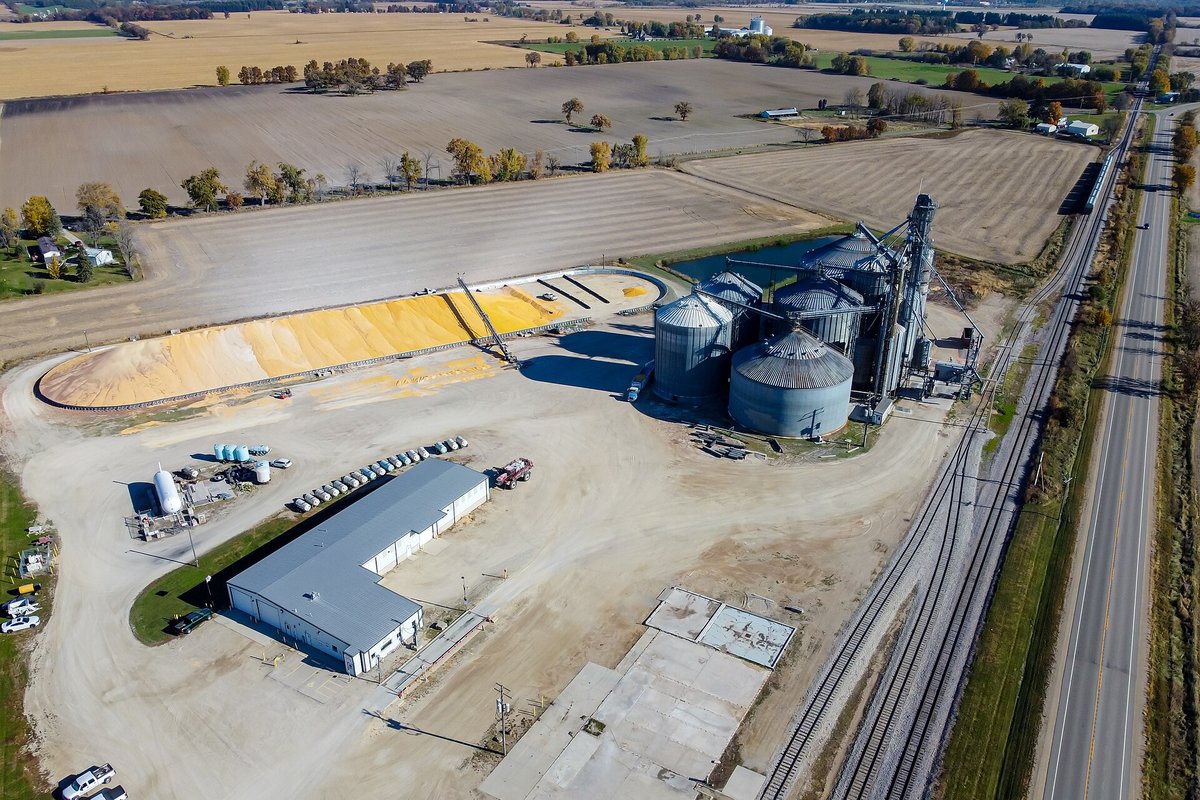
A facility can have a combustible dust hazard without an obvious dust cloud. Particles generated by milling, sanding, conveying, screening, grinding, or packaging can accumulate inside machinery and on structural surfaces. A disturbance can disperse that material into an ignitable cloud. An initial fire or deflagration may then disturb deposits elsewhere in the building, giving a second event far more fuel.
Controlling that sequence calls for more than sweeping the floor. A practical program identifies which materials can burn as dust, where particles are generated, whether equipment or rooms can support a dust deflagration, how ignition sources are controlled, and whether protective systems prevent an incident from spreading.
Regulatory distinction: Federal OSHA has no single comprehensive combustible dust standard that applies to all industries. Several OSHA standards impose specific duties where their scopes are met; the Occupational Safety and Health Act's General Duty Clause may apply to recognized serious hazards not addressed by an applicable specific standard. The 2025 edition of NFPA 660, Standard for Combustible Dusts and Particulate Solids, is a consolidated consensus standard, not, by itself, a federal OSHA regulation. OSHA standards · OSHA consensus standards · NFPA 660 development page
What makes a dust combustible?
OSHA's Hazard Communication Standard defines combustible dust as finely divided solid particles of a substance or mixture that present a flash-fire or explosion hazard when dispersed in air or another oxidizing medium. The defining question is the behavior of the material in the particulate form actually generated or handled, not whether its bulk form is labeled flammable. 29 CFR 1910.1200(c)
Size reduction increases exposed surface area, and a dispersed cloud allows oxygen to contact many particles rapidly. But material chemistry, particle-size distribution, moisture, shape, concentration, and process conditions all affect ignitability and severity. The same named substance can behave differently when processed into a finer or drier powder. Metal stock that is difficult to ignite in bulk can present a serious hazard as fine metal powder. OSHA combustible dust overview · OSHA technical manual, combustible dusts
Examples worth assessing, not a declaration that every sample will explode, include:
| Material group | Common generating or handling operations | Particular assessment concern |
|---|---|---|
| Wood dust | Sawing, routing, sanding, woodworking dust extraction | Fine dust escaping from tools, ducts or collectors and depositing on raised surfaces |
| Grain and feed dust | Receiving, conveying, milling, bucket elevators, dryers | Fugitive dust, frictional heating, plugged equipment, and specific grain-handling rules |
| Sugar and flour | Grinding, pneumatic conveying, transfer, bagging | Dust clouds inside enclosed transfer equipment and deposits around packing lines |
| Combustible metal powders | Grinding, polishing, additive manufacturing, powder transfer | Potentially easy ignition, specialized collection and cleaning compatibility, and material-specific reaction hazards |
| Plastics, rubber, coal and other organics | Granulating, mixing, pulverizing, conveying | Properties of the actual fine fraction and confinement within process equipment |
Do not assume that a safety data sheet for a coarse product characterizes the dust produced after grinding or sanding. The SDS, supplier information, existing test records, and the conditions of use need to be reconciled. Where essential information is absent or not representative, a qualified specialist should arrange suitable testing rather than assign a generic explosibility value from a substance name.
The dust explosion pentagon: and the flash-fire distinction
The conventional dust explosion pentagon contains five elements:
- Fuel: combustible particulate material.
- Oxidizer: ordinarily oxygen in air.
- Ignition: a sufficiently capable source, such as a hot bearing, electrical fault, flame, mechanical friction, or electrostatic discharge.
- Dispersion: dust suspended in an ignitable concentration.
- Confinement: a vessel, duct, collector, room, or building volume in which pressure can develop.
Remove any one of these conditions and that explosion pathway is interrupted. However, the absence of substantial confinement does not mean that burning dispersed dust is harmless: an unconfined cloud may cause a dangerous flash fire. A settled layer may also burn without first producing a dust-cloud explosion. OSHA technical manual, combustible dusts
Primary and secondary explosions
A primary deflagration starts in the first location where an ignitable dust cloud encounters an ignition source, commonly inside a collector, mill, bucket elevator, conveyor or other enclosed process. A secondary event can occur when pressure, flame or mechanical disturbance from that first event disperses dust already deposited elsewhere and ignites it. Secondary events can involve much larger areas and fuel inventories than the initiating enclosure.
The distinction explains why the facility's ceiling beams and inaccessible ledges matter as much as its visible floors. It also explains why protecting a collector against internal pressure, without addressing flame propagation through connected ductwork and accumulated dust in the building, may leave an important failure path uncorrected.
Documented incident, Imperial Sugar, 2008. The U.S. Chemical Safety and Hazard Investigation Board (CSB) determined that the initiating sugar-dust explosion began inside the enclosed steel conveyor beneath the storage silos at the Port Wentworth, Georgia refinery; it dispersed deposited dust, leading to extensive secondary explosions and fires. Fourteen workers died in the February 7, 2008 incident. The investigation documented serious deficiencies in equipment design, maintenance, containment and housekeeping. CSB incident summary · CSB final investigation report
Where dust is generated, released, and stored
Walk the material's entire route rather than inspecting only its main production machine:
- Generation: cutters, grinders, mills, screens, mixers, transfer and discharge points.
- Containment: worn seals, open hatches, loose connections, leaking flexible joints, poorly fitted covers.
- Transport: chutes, pneumatic lines, conveyors, bucket elevators, and process recirculation loops.
- Collection: hoods, ductwork, cyclones, filter collectors, discharge valves and collection bins.
- Accumulation: equipment tops, lighting, cable trays, duct exteriors, joists, rafters, false ceilings and concealed voids.
- Intervention: emptying bins, changing filters, clearing blockages, opening enclosures, cleaning, maintenance and hot work.
Treat a persistent layer as evidence to investigate why dust is escaping. Cleaning more often may be necessary, but may be insufficient if a collection hood has inadequate capture, a process enclosure leaks, or a collector is malfunctioning. The OSHA technical manual specifically identifies poor process containment as a contributor to outside-equipment accumulation. OSHA technical manual, Section IV, Chapter 6
Housekeeping: control the source, then the residue
A site-specific housekeeping plan should identify responsible personnel, cleaning methods, inspection locations, cleaning triggers, safe access to high surfaces, and records of recurring defects. Its effectiveness should be tested against observed reaccumulation, not merely against signed cleaning sheets.
Select cleaning methods for the actual dust and location. Industrial vacuum collection can limit airborne dispersal when the vacuum, hoses, attachments, electrical components and collection method are suitable for the material and any hazardous electrical classification. HEPA filtration addresses particle capture, not ignition prevention. Certain combustible metal dusts need specialized collection equipment and can react with water, so wet cleaning calls for a material-specific assessment.
Cleaning procedures should explicitly control the following actions:
- Blowing settled dust from ledges or equipment with compressed air.
- Aggressive dry sweeping, uncontrolled brushing or high-pressure sprays that can raise an ignitable cloud.
- Opening a running collector or attempting to clear a blockage around moving, energized equipment.
- Dislodging overhead deposits so they fall onto operating equipment, ignition sources or workers below.
For covered grain-handling operations, 29 CFR 1910.272(j)(3) permits compressed-air cleaning only when machinery presenting an ignition source in the area is shut down and all other known potential ignition sources are removed or controlled. That conditional legal provision is not an endorsement of compressed-air cleaning as the preferred method. In other processes, evaluate the hazard and applicable requirements before authorizing a technique. 29 CFR 1910.272(j) · OSHA technical manual
Is there an OSHA dust-layer limit?
There is no universally applicable federal OSHA dust-layer thickness that makes all facilities safe below it or noncompliant above it. The revised 2023 Combustible Dust National Emphasis Program (NEP) tells inspectors to evaluate accumulation extent, thickness, material characteristics and the underlying hazard. Its referenced April 21, 2015 memorandum discusses bulk density and methods drawn from older NFPA guidance. These documents inform inspections but do not establish a universal safe dust depth; housekeeping triggers need to reflect the actual material, distribution and process conditions. 2023 OSHA NEP · 2015 OSHA accumulation memorandum
Specific grain rule: At grain elevators, 29 CFR 1910.272(j)(2) addresses designated priority housekeeping areas, including specified floors around inside bucket elevators and enclosed grinding and drying areas. When fugitive grain dust exceeds ⅛ inch in those areas, the employer needs to remove it immediately under the housekeeping program or demonstrate and assure equivalent protection through that program. This requirement does not establish a general ⅛-inch rule for wood shops, sugar packing plants or metal finishing operations. Other grain-handling facilities covered by the standard needs to still follow the applicable written-housekeeping provisions. 29 CFR 1910.272(j)(1)–(3)
Ventilation and dust collection: capture is only the first control
Local exhaust ventilation should capture emissions near the generating point while limiting escape into occupied space. NIOSH's engineering-control research on table saws illustrates the importance of hood placement rather than relying solely on extraction beneath the machine. NIOSH: Control of Wood Dust for Table Saws
Once material enters the collection system, the risk moves into ducts, filters and bins. Review whether:
- Hoods and conveyance are designed for the actual operation and dust loading; visible release, falling airflow or accumulating ducts prompt investigation.
- The collector location and arrangement limit worker exposure to a possible fire or deflagration.
- An appropriate explosion prevention/protection strategy has been engineered for the specific dust and equipment.
- Flame and pressure cannot propagate through unprotected connecting ductwork into occupied areas or other equipment.
- Filters, pressure-drop indicators, discharge valves and collection bins are inspected and maintained.
- Air returned to the building, if any, is evaluated for both contamination and fire/explosion propagation hazards.
- The system can be shut down and isolated safely for cleaning, troubleshooting and maintenance.
An ordinary dust collector can capture respirable particles while still presenting an internal deflagration hazard. Design review therefore needs to address the collector and its connected equipment as a fire/explosion system. Collectors handling combustible metals call for additional material-specific attention, including chemical incompatibilities.
Enforceable grain-collector requirements. In covered grain-handling facilities, 1910.272(l)(1) calls for a pressure-drop monitoring device on fabric dust filter collectors that form part of a pneumatic dust collection system. Under 1910.272(l)(2), filter collectors installed after March 30, 1988 needs to meet one of the specified location/protection alternatives: outside placement, an inside area protected by an explosion suppression system, or the particular fire-rated separation and exterior-wall vent arrangement described in the regulation. These are specific regulatory options, not a universal instruction to fit one type of explosion vent to all collectors. The actual installation needs to be evaluated against the full applicable paragraph. 29 CFR 1910.272(l)
Identify and control ignition sources
Inspect the sources that are credible for each process rather than relying on a generic no-smoking sign:
| Ignition mechanism | Examples to investigate | Practical verification |
|---|---|---|
| Mechanical heat/friction | Misaligned conveyor belts, failing bearings, overloaded mills, rubbing components | Inspection history, alarms, maintenance response, abnormal-heat investigation |
| Electrical equipment | Motors, lighting, switches, vacuums and wiring in potentially classified dusty areas | Documented area classification and equipment suitability for the dust group and location |
| Electrostatic discharge | Pneumatic conveying, flexible hoses, transfer into bins, isolated conductive parts | Bonding/grounding design and continuity verification where relevant; assessment of nonconductive components |
| Flames and hot work | Welding, cutting, grinding, smoking, portable heaters | Work authorization, removal/control of dust deposits, fire prevention arrangements |
| Process upsets | Metal strikes, tramp material, overheated product, dryer failures | Separation/monitoring devices, operating limits, alarms, shutdown tests |
Where a hazardous Class II location exists, electrical installations are subject to 29 CFR 1910.307. Equipment needs to be appropriate for the location and properties of the particular dust; a generic assertion that a motor is “explosion-proof” is not an adequate suitability check. Keep area-classification documentation where needed and involve qualified electrical personnel. 29 CFR 1910.307
Hot-work and hazardous-energy procedures should reflect fugitive dust, concealed deposits, dust-collector connections, and conditions after shutdown. For general-industry servicing that falls within its scope, OSHA's 29 CFR 1910.147 addresses unexpected energization and stored energy; see HazComFast's lockout/tagout guide. A lockout procedure by itself does not prove the dust atmosphere is safe for hot work.
Combustible-dust hazard analysis: a workable process
A dust hazard analysis (DHA) is a structured assessment of fire, flash-fire and deflagration scenarios across material handling, processing, collection, maintenance and occupancy. NFPA 660 (2025) is the current consolidated NFPA combustible-dust reference; it incorporates material previously addressed in NFPA 61, 484, 652, 654, 655 and 664. A DHA is an important consensus-standard process, but OSHA does not impose a universal standalone DHA-document mandate on every combustible-dust employer. OSHA's technical manual emphasizes hazardous conditions rather than the mere existence of a DHA document. NFPA overview · OSHA technical manual, Section IV, Chapter 6
NFPA describes the structure of its consolidated 2025 edition as fundamental chapters 1–10 plus industry- or commodity-specific chapters 20–25. A wood-processing or combustible-metal operation should not stop after reviewing general principles: the corresponding industry chapter may alter or add material-specific provisions. Consult the official edition and the locally adopted version, if any, before making compliance or engineering claims. NFPA's explanation of the consolidated structure
The assessment needs two complementary views: a material basis (what could burn or explode under relevant conditions) and a scenario basis (what could actually happen in this equipment, through connected paths, during routine and nonroutine work). The absence of a prior incident is not evidence that a deflagration is impossible. Hazard identification is not completed by ordering a laboratory test without evaluating where dust is present.
Interpreting explosibility and ignition test data
Dust properties answer different engineering questions. A numerical result has meaning only with its test method, sample origin, particle-size distribution, preparation, moisture, and other conditions. The table identifies typical uses; it does not specify design criteria or acceptable values.
| Property | Conventional unit | What it helps assess | What it does not establish |
|---|---|---|---|
| Kst, dust deflagration index | bar·m/s | Relative maximum pressure-rise severity measured under prescribed conditions; an input to applicable protection design | A probability of ignition, a universal material constant, or a safe vent size by itself |
| Pmax, maximum explosion pressure | bar or equivalent pressure unit | Pressure that may develop in a prescribed test; a parameter in engineering evaluations | Pressure in every real enclosure regardless of geometry, venting or operating conditions |
| MEC, minimum explosible concentration | g/m³ | Lower concentration boundary for flame propagation in a specified dust test | Permission to operate near a measured concentration, or a substitute for control of deposits |
| MIE, minimum ignition energy | mJ | Susceptibility of a tested dust cloud to ignition by an electrical discharge | A guarantee that a particular machine or static source cannot ignite the actual process dust |
| MIT, minimum ignition temperature | °C (specify cloud or layer test) | Thermal ignition sensitivity under the relevant cloud or layer procedure | One interchangeable ignition temperature for all layers, deposits, hot surfaces or cloud conditions |
| LOC, limiting oxygen concentration | Volume-percent oxygen, with test conditions | Oxygen concentration below which a tested mixture does not support a specified deflagration; relevant to engineered inerting | A generic oxygen setpoint that can be used without considering gas, dust, monitoring and credible upsets |
These concepts are described in OSHA's combustible-dust technical material and OSHA's expert-forum documentation. Do not use workplace occupational-exposure sampling results to infer MEC or dust explosibility: industrial-hygiene measurements serve a different purpose and may not represent transient process clouds. Likewise, a report of a nonexplosible test sample does not automatically clear another fraction, coating, hybrid mixture, dried by-product, or future operating condition.
For testing, first identify representative worst-credible process materials: fines captured in filters, newly milled product, dust from dried process conditions, and relevant blends or contamination where credible. Record who collected the sample, where and when, collection and preparation methods, laboratory method, and why the tested material represents the design case. If these facts are missing, mark the protection-design data unverified and seek competent interpretation; do not fill gaps with supplier catalog numbers.
Six steps for a dust hazard analysis
An effective assessment proceeds as follows:
- Define the boundary. Identify materials, particle-forming operations, buildings, connected process systems, occupied areas, contractors and nonroutine tasks.
- Gather representative material data. Confirm SDS and supplier information against actual particulate forms and operating states. Identify testing needs and data uncertainties, including the properties above; never substitute an unrelated sample's result.
- Map credible scenarios. Consider normal operation, startup, shutdown, cleaning, blocked chutes, filter failures, maintenance, misfeeds and foreseeable malfunctions. Examine both equipment-contained deflagrations and building-wide secondary events.
- Assess existing prevention and mitigation. Distinguish dust containment and ignition control from deflagration mitigation and flame-propagation isolation. Determine whether safeguards are installed, compatible, maintained and functionally verified, not merely shown on a design drawing. Include foreseeable single-device failures, bypasses and maintenance states.
- Assign actions and interim controls. State the deficiency, affected equipment, responsible person, evidence needed, target date and conditions for safe continuation or shutdown.
- Review changes and maintain the assessment. Reassess after material substitution, increased throughput, new collection equipment, process enclosure, changed particle size or moisture, a fire/near miss, or a significant maintenance finding. Establish the formal review calendar from applicable adopted codes, permits and insurance requirements, recording the edition and provision used. Federal OSHA does not prescribe a universal DHA-review interval for every dusty workplace; verify any NFPA 660 timing requirement against the applicable edition.
An experienced combustible-dust specialist should lead or validate complex testing, equipment protection design and DHA conclusions, with input from operators and maintenance staff who know actual failure modes. Obtain process-flow diagrams, general arrangements, dust-collector and duct drawings, electrical-area classification, operating envelopes, upset and maintenance histories, dust-test reports, prevention/protection design basis, inspection records, and applicable code-adoption documents. A qualitative checklist can identify gaps but cannot size an explosion vent or validate an isolation device. OSHA Hazard Communication Guidance for Combustible Dusts
Practical hazard-assessment table
The following entries are illustrative assessment prompts, not findings at a real facility. Replace each entry with site observations and evidence.
| Location / task | Credible scenario to evaluate | Evidence to request | Controls and decision to document |
|---|---|---|---|
| Bagging or filling line | Fine product escaping at filling heads and accumulating overhead | Product/dust identification, deposit observations, enclosure condition, cleaning logs | Improve capture/seals; verify reaccumulation and safe high-level cleaning |
| Sawmill or sanding station | Fine wood dust released at tool and transported to collector | Hood performance, duct condition, collector design, NIOSH control references | Capture at source; evaluate collector protection and connected ductwork |
| Bucket elevator or conveyor | Hot bearing or belt rub ignites dispersed dust inside casing | Equipment inspection, upset history, sensor and interlock tests | Correct mechanical defects; verify protective/isolation strategy and applicable grain rules |
| Filter collector | Internal deflagration propagates back to occupied production | Dust test data, collector drawings, protection calculations, isolation device documentation | Engineering review of vent/suppression/isolation and safe discharge/maintenance |
| Metal-powder grinding | Low-energy ignition or incompatible collection/cleaning method | Actual powder composition, physical form, test evidence, collector and cleaning specifications | Engage metal-dust-qualified specialist; verify method-specific compatibility |
| Warehouse or mezzanine | Settled dust becomes airborne during a pressure event | Dust extent including inaccessible surfaces, structural access, traffic routes | Source correction, safe cleaning, secondary-explosion scenario assessment |
| Maintenance / hot work | Sparks reach a dusty conveyor, filter or concealed cavity | Permit, cleaning verification, equipment isolation, fire monitoring procedure | Separate and control ignition sources; enforce stop-work criteria and authorization |
Minimum documentation record: equipment ID, material and sample basis, affected area, hazard scenario, applicable legal requirement (if any), consensus/good-practice reference, existing safeguards, verification method, action owner, due date, closeout evidence and review trigger. Close an action only after the relevant safeguard has been checked in service or through an appropriate functional test.
Equipment protection: prevent ignition, limit pressure, stop propagation
Combustible-dust risk reduction calls for choosing a protection function, not simply purchasing a component labeled "explosion protected." A device installed on a collector may manage pressure in that vessel while leaving upstream ductwork and operators exposed. The following categories are not interchangeable:
| Function | Representative measures | Engineering question and verification evidence |
|---|---|---|
| Prevent release and ignition | Enclosures, source capture, ignition-source controls, foreign-material separation, maintenance and temperature/motion monitoring | Are foreseeable releases and ignition sources controlled through startup, shutdown and upset conditions? Confirm inspections, alarm/setpoint basis and response tests. |
| Prevent an explosible atmosphere | Process-compatible inerting or oxygen control where warranted | Is oxygen concentration measured and reliably maintained under foreseeable air ingress and instrument failure? Confirm material-specific test basis, system design and alarm/shutdown response. Inerting can create asphyxiation hazards. |
| Relieve deflagration pressure | Engineered explosion venting, where suitable | Where do pressure, flame and vented material discharge? Confirm enclosure strength, material test basis, vent calculations, location and personnel exposure. |
| Suppress an incipient deflagration | Detection and rapidly actuated suppression equipment | Does the engineered combination of sensors, suppressant, delivery components and protected volume meet the intended response? Verify commissioning, inspection and maintenance. |
| Contain pressure | Equipment designed for the applicable pressure load | Is the actual connected configuration within its documented strength and process limits? Examine fabrication, modifications, openings and maintenance. |
| Isolate propagation | Purpose-designed active or passive isolation between connected components | Does the selected device prevent relevant flame/pressure transmission for this dust, flow direction, duct arrangement and scenario? Verify suitability, installation and function, not just that a valve exists. |
| Reduce harm to people | Collector siting, discharge routing, building separation, evacuation and emergency plans | Are occupied workstations, exits, adjacent vessels and external exposures protected from vented flames and pressure? Confirm site layout and response drills. |
Design cautions: An explosion vent is not automatically safe merely because it opens outdoors; discharge paths and exposures of people and adjacent equipment matter. A rotary valve, backdraft damper or ordinary nonreturn device is not automatically a qualified deflagration-isolation system. A pressure relief arrangement alone is not isolation, and suppression is not a substitute for housekeeping or leak prevention. For combustible metals, evaluate material-specific reactivity and the suitability of any extinguishing, suppression, inerting or wet-collection approach. Equipment protection needs to be assessed as a connected system with representative dust characteristics, applicable consensus provisions, competent engineering review, documented design assumptions, and manufacturer limitations. OSHA technical manual: collectors, protection and isolation
Management-of-change example (hypothetical): A facility replaces an outdoor filter collector with a larger indoor unit and adds a return-air line. The previous design review cannot simply be inherited. Reassess new collector volume and location, connected duct lengths, possible return-air propagation, vent discharge consequences, explosion-isolation locations, and occupancy. Capture efficiency does not resolve the changed deflagration consequences.
Worker training, hazard communication, and response
Workers should be able to identify their facility's dust-generating tasks, recognize collector or conveyor upsets, use approved cleaning equipment, report reaccumulation, avoid ignition sources, and follow alarm, isolation and evacuation procedures. Train maintenance and contractors on hazards that may not be visible during normal operation: internal deposits, smoldering dust, connected ductwork and accumulated material above ceilings.
Under 29 CFR 1910.1200, covered employers must communicate combustible-dust hazards through the applicable hazard communication program, labels, SDSs and training. The current standard treats combustible dust distinctly; under Appendix C.4.31, the dust-specific label element uses a Warning signal word and an appropriate combustible-dust hazard statement, with no pictogram prescribed for that hazard alone. Additional hazards may require other label elements. Dust created by downstream processing may trigger different manufacturer-labeling provisions from material shipped already in dust form. Employers still follow applicable workplace-labeling duties. 29 CFR 1910.1200 · Appendix C.4.31
HCS 2024 transition: which deadlines apply?
The revised 2024 Hazard Communication Standard took effect in 2024, but its compliance deadlines are phased, as extended by OSHA in January 2026. The dates depend on whether the chemical is a substance or mixture and on the regulated party's role:
| Regulated party and material | Federal HCS 2024 compliance date |
|---|---|
| Chemical manufacturers, importers and distributors evaluating substances | May 19, 2026 |
| Employers updating, as necessary, workplace alternative labels, HazCom programs and training for newly identified hazards of substances | November 20, 2026 |
| Chemical manufacturers, importers and distributors evaluating mixtures | November 19, 2027 |
| Employers making the corresponding necessary workplace updates for mixtures | May 19, 2028 |
Until the applicable deadline, 29 CFR 1910.1200(j)(4) permits compliance with the previous Hazard Communication Standard, the revised standard, or both. The Appendix C.4.31 description above identifies the revised label elements; it does not imply that every employer had to complete every HCS 2024 transition step before its applicable deadline. Existing hazard-communication obligations continue to apply throughout the transition. OSHA HCS transition provision, 1910.1200(j) · OSHA's January 2026 extension notice
The Hazard Communication Standard does not itself set a universal annual refresher interval; it calls for training at initial assignment and when a new chemical hazard is introduced. In contrast, employees covered by 1910.272(e) need to receive training no less than once a year and upon assignment changes exposing them to new hazards, subject to that standard's scope. Maintain evidence of task-specific understanding, not attendance records alone. 29 CFR 1910.272(e)
If workers observe an active dust cloud from failed equipment, evidence of smoldering in a collector, a fire, abnormal overheating or a suspected imminent deflagration hazard, they should follow the established stop-work, alarm and evacuation procedure. Do not encourage workers to open collector doors, disturb deposits or attempt improvised suppression. Pre-plan response with the local fire service, and assess any special extinguishing and water-reactivity issues associated with combustible metals. Routine respiratory protection or flame-resistant clothing is not a substitute for preventing a dust explosion.
For adjacent topics, see HazComFast's resources on SDS management, manufacturing HazCom, and the combustible dust glossary definition.
How OSHA can enforce combustible-dust hazards
| Authority | What it can require or support | Scope limit |
|---|---|---|
| 29 CFR 1910.22(a) | Clean and orderly work areas; OSHA's 2023 NEP discusses citations for hazardous accumulations at relevant locations | Does not impose a universal dust-layer number |
| 29 CFR 1910.176(c) | Storage areas kept free of hazardous accumulations involving fire or explosion | Applies to covered storage operations |
| 29 CFR 1910.272 | Written grain-dust housekeeping, specified grain-elevator priority areas, cleaning restrictions, training, relevant collectors/maintenance and other controls | Applies only to operations and subsections within its stated grain-handling scope |
| 29 CFR 1910.307 | Electrical equipment and installations appropriate for documented hazardous (classified) locations | Requires a proper classification and application to the installation |
| 29 CFR 1910.1200 | Hazard identification/communication, SDSs, labels and worker training | Subject to HCS coverage, exclusions and transitional provisions |
| Other particular OSHA rules | Examples: applicable ventilation (1910.94), hazardous-energy control (1910.147), welding/hot work (1910.252), emergency planning and fire protection | Apply only when their independent triggers and requirements are met |
| OSH Act §5(a)(1) | May support a citation for a recognized serious dust fire/flash-fire/deflagration/explosion hazard where no specific OSHA standard addresses that hazard and feasible abatement exists | OSHA must establish the elements of a General Duty Clause violation; citing an NFPA recommendation alone is insufficient |
| NFPA 660 (2025) | Current consolidated consensus guidance for assessing and reducing combustible-dust hazards | Not a blanket federal OSHA rule; may acquire legal force through specific adoption, incorporation or other applicable authority |
OSHA's Revised Combustible Dust National Emphasis Program, CPL 03-00-008 (January 30, 2023) directs inspections; it is not itself a citable dust standard. Citations need to rest on applicable OSHA standards, regulations or the OSH Act. A non-incorporated consensus standard may help establish hazard recognition or a feasible means of abatement, but it does not independently create a federal violation. State Plan requirements and locally adopted fire or building codes need a separate applicability check. 2023 NEP · OSHA standards and State Plans
Grain-facility provisions call for additional attention. For operations within its stated scope, 1910.272 establishes requirements that go beyond generic housekeeping guidance:
| Provision | Specific duty to verify | Applicability limit |
|---|---|---|
| 1910.272(f)(1)–(2) | Hot-work authorization/permit with specified exceptions; certification of applicable 1910.252(a) precautions when a permit is required | Grain-handling operations covered by 1910.272; apply the listed exceptions rather than assuming every weld needs the same document |
| 1910.272(j)(1)–(3) | Written program, designated priority areas at grain elevators, immediate removal/equivalent protection for the specified ⅛-inch condition, and restricted compressed-air cleaning | The priority-area threshold concerns grain elevators, while other housekeeping subsections have the scope stated in the regulation |
| 1910.272(l)(1)–(2) | Pressure-drop monitoring for covered fabric collectors and defined placement/protection alternatives for covered collectors installed after March 30, 1988 | Fabric collectors within the paragraph's specified dust-collection scope |
| 1910.272(m)(1)–(3) | Preventive maintenance and inspection records; prompt correction of malfunctioning or underperforming dust collection systems; prompt correction or removal from service of overheated bearings and slipping/misaligned belts associated with inside bucket elevators | Covered equipment and grain-handling facilities; retain inspection certification records described in the rule |
The operative 29 CFR 1910.272 governs these specific obligations. A woodworking, plastics or metal-powder operation calls for its own applicability assessment.
PSM distinction: The presence of a combustible dust hazard by itself does not establish that a process is covered by OSHA's 1910.119 Process Safety Management standard. Evaluate PSM separately against its own covered-process and chemical criteria. Do not relabel a voluntary/consensus DHA as a federally needed PSM process hazard analysis unless the separate PSM applicability determination supports it.
Facility inspection checklist: combustible-dust prevention
Use: Mark each item P (pass), D (deficiency), NA (not applicable with reason), or NV (not verified). Enter evidence and assign a responsible action owner for D or NV. “Not Verified” is not a pass. The checklist is a screening and management tool, not an engineering design certificate or a statement that every item is mandated by federal OSHA in every facility. If conditions indicate immediate danger, use established shutdown and evacuation procedures before routine inspection or cleaning.
For reproducibility, use the same record structure for each item:
| Field | Record requirement |
|---|---|
| Item / location | Checklist ID, equipment tag, area, task and inspected surface or system |
| Status and basis | P / D / NA / NV; short explanation, especially for NA or NV |
| Evidence | Safely obtained photographs, test/report ID, inspection log, equipment drawing, worker demonstration or applicable regulation; identify unavailable evidence explicitly |
| Immediate condition | Whether work can safely continue, needed isolation, shutdown or evacuation under the site's procedures; do not defer an immediate danger into the normal work-order queue |
| Correction | Specific interim measure and permanent action, responsible person, due date and resources needed |
| Closeout | Who verified effectiveness, what was tested or inspected, completion date and recheck trigger |
A. Material identification and hazard assessment
- A1. Current inventory lists dust-producing raw materials, intermediates, by-products and collected fines.
- A2. Each process has an identified actual particulate form, including changing size and moisture conditions.
- A3. SDSs, supplier information and existing test reports have been reviewed for dust-related hazards.
- A4. Unknown or unrepresentative explosion properties are flagged for competent assessment; no generic Kst or MEC has been assumed.
- A5. Equipment, ducts, connected collectors, rooms and occupied exposure areas are included in the hazard review.
- A6. Primary-event and secondary-event pathways have been considered.
- A7. Formal assessment findings, interim controls, owners and change-review triggers are documented.
- A8. Sample provenance, test methods and limitations are recorded where explosibility data support equipment design.
B. Generation, containment, and accumulation
- B1. Visible emission at filling, transfer, grinding, cutting and discharge points is investigated.
- B2. Covers, seals, flexible connectors, doors and joints are maintained.
- B3. Surfaces above eye level, on top of equipment and in accessible hidden voids are included in inspections.
- B4. Dust accumulation locations, thickness/extent where relevant, and recurrence are recorded safely.
- B5. The housekeeping schedule and cleaning triggers reflect actual reaccumulation rates and hazard assessment.
- B6. Staff use dust- and area-compatible cleaning equipment; vacuums are not approved solely on HEPA filtration.
- B7. Compressed air, aggressive dry sweeping and high-pressure spray methods are controlled to prevent cloud creation.
- B8. Any metal-dust cleaning method is reviewed for material compatibility, including potential water reactivity.
- B9. Cleaning overhead areas is planned to prevent hazardous dispersal and unsafe access.
- B10. Inspection routes include difficult-to-see ledges and structural areas, with safe access or alternative remote inspection methods.
- B11. Repeated dust deposits lead to investigation of the leak or release source, not only more frequent cleaning.
C. Dust collection and process equipment
- C1. Capture hoods and ductwork are inspected for leaks, blockage and loss of performance.
- C2. Collector pressure-drop/airflow monitoring and alarms are functional where installed or needed.
- C3. Collector location, vent/suppression arrangements and protected discharge paths have been reviewed.
- C4. Connected ductwork is evaluated for explosion propagation and appropriate engineered isolation.
- C5. Explosion vents, suppression systems and isolation devices have current design and maintenance records.
- C6. Collection bins, filters and discharge devices can be emptied or serviced safely under authorized procedures.
- C7. Return-air arrangements are evaluated for contamination and fire/explosion consequences.
- C8. Tramp-material separation, bearings, belts, dryers and overtemperature protection are inspected as relevant.
- C9. Any applicable grain-collector provisions of 1910.272(l) are specifically checked, not assumed for other industries.
- C10. Dust-collector protection is checked as a connected system; pressure relief and propagation isolation are not assumed equivalent.
- C11. Protective-device manuals, commissioning evidence, bypass restrictions and maintenance/functional tests are retrievable.
- C12. Collector siting and vented discharge do not expose occupied areas, exits, adjacent equipment or air intakes without engineering evaluation.
D. Ignition, electrical, and maintenance controls
- D1. The site has identified credible electrical, thermal, electrostatic, mechanical and hot-work ignition sources.
- D2. Hazardous (classified) electrical locations and equipment suitability are assessed and documented where needed.
- D3. Bonding and grounding arrangements are inspected where necessary for the specific transfer process.
- D4. Abnormal bearing temperatures, belt slip, rubbing and equipment alarms trigger a defined response.
- D5. Hot-work permits/authorizations address dust, nearby ductwork and concealed deposits.
- D6. Servicing and jam-clearing procedures address hazardous energy and unexpected startup.
- D7. Changes to dust type, production rate, collection layout or equipment trigger an appropriate re-evaluation.
- D8. Suspected ignition, overheating or smoldering in ductwork/collectors triggers controlled response, without unauthorized opening or disturbance.
E. People, response, and regulatory scope
- E1. Applicable federal OSHA standards, State Plan rules and local adopted codes have been identified.
- E2. HCS labels/SDSs/training address combustible dust where the HCS applies.
- E3. Grain-handling operations, if present, have been checked against the relevant portions of 1910.272.
- E4. Workers and contractors know dust release, collector upset and overheating warning signs.
- E5. Authorized cleaning equipment, methods and stop-work criteria are understood in practice.
- E6. Alarm, safe shutdown, evacuation, emergency response and fire-service coordination are established.
- E7. Corrective actions are closed with observable evidence; recurring defects are not hidden by repeated cleanup.
- E8. Maintenance, contractor work and nonroutine interventions have task-specific isolation, cleaning and hazard communication arrangements.
Inspection closeout record: Date / inspector / process or area / dust identity / finding / photograph or measurement reference / legal or engineering basis / interim action / owner / due date / verification of correction / date closed. When a concern depends on a code provision, record its jurisdiction and adopted edition; do not silently convert a consensus recommendation into a federal OSHA requirement.
Operational examples: four decision points
The following situations are hypothetical illustrations, not reported facility incidents.
1. Flour-transfer line with dust on overhead cable trays. The line team routinely cleans floors, but a transfer point releases dust above head height. The immediate task is to safely evaluate the deposit and release, not simply increase floor sweeping. The assessment should examine transfer sealing, capture, overhead access, secondary-event potential and the connection between the transfer and downstream collector.
2. Woodworking shop with a new high-flow collector. A replacement collector improves airborne visibility, but it is indoors, connected to several machines, and its explosion protection and isolation documentation is missing. The issue is not resolved by a better filter. Determine whether the collector and ducts can support a deflagration and whether the installed protection is suitable and maintained. NIOSH's wood-dust source-capture work helps address emission control; it does not substitute for explosion-protection engineering.
3. Aluminum finishing area using a general-purpose vacuum. Fine powder is collected with equipment selected for ordinary shop debris. Stop treating the vacuum as presumptively safe. A specialist should assess the exact alloy and dust form, electrical/ignition suitability, collection design, cleaning method and any material-specific incompatibility before normal cleaning resumes.
4. Grain elevator with recurring bearing alarms. The employer has a written housekeeping program, yet an inside bucket elevator reports abnormal temperature and adjacent priority areas show accumulating grain dust. Under 1910.272(m)(2), overheated bearings and slipping or misaligned belts associated with inside bucket elevators need to be promptly corrected or removed from service, while deficient dust-collection systems need to be promptly corrected. The employer needs to also address the applicable housekeeping provisions and retain the inspection records needed by 1910.272(m)(3). A completed cleaning sheet does not close an unresolved overheating defect.
Frequently Asked Questions
Does OSHA have a combustible dust standard?
There is no single comprehensive federal OSHA combustible-dust standard for all industries. OSHA can apply specific standards such as 1910.22, 1910.176(c), 1910.272, 1910.307 and 1910.1200 within their scopes. Where an applicable specific standard does not cover a recognized serious hazard, the General Duty Clause may apply if its legal elements are established.
Is 1/32 inch of dust an OSHA limit?
No universal rule makes every workplace safe below 1/32 inch or automatically citable above it. Historical enforcement guidance and OSHA's 2015 memorandum discuss accumulation evaluation, including material bulk density and affected surface area. The 2023 NEP calls for evidence of hazardous accumulation, not a single across-industry safe thickness. The separate ⅛-inch provision in 1910.272(j)(2)(ii) applies to specified grain-elevator priority housekeeping areas and includes an equivalent-protection alternative.
Can workers use compressed air to clean combustible dust?
It can disperse a hazardous dust cloud, so it is generally a poor default cleaning method. In covered grain-handling operations, 1910.272(j)(3) restricts its use to circumstances in which machinery presenting an ignition source is shut down and other known potential ignition sources are removed or controlled. Other operations call for their own hazard and legal assessment; permission under the grain rule is not a universal safe-cleaning approval.
Does every dust collector need an explosion vent?
No single design is appropriate for every collector. The need for and choice among prevention, venting, suppression, pressure-resistant equipment and explosion isolation depend on the dust properties, configuration, occupancy, applicable rules and engineered hazard assessment. Where 1910.272(l) applies to grain-handling filter collectors, its specific provisions need to be checked directly.
Is a dust hazard analysis mandated by OSHA?
Federal OSHA does not impose a universal standalone DHA requirement on every employer handling combustible dust. NFPA 660 (2025) provides consensus-standard guidance, while OSHA evaluates hazardous conditions and applicable statutory and regulatory duties, including 29 U.S.C. 654(a)(1). Other legally adopted codes, permits or separate OSHA rules can introduce additional requirements; determine applicability before treating an assessment as a legal duty.
Can an SDS identify whether a powder can explode?
An SDS is an important starting point, but it may not describe the particle size, moisture content or process-generated fines found at the facility. Compare SDS Sections 2, 5, 7 and 9 (1910.1200(g)(2)) and supporting supplier information with actual operations. Where necessary, obtain representative material testing and professional interpretation; do not infer a site-specific Kst, MEC or MIE from a generic product category.
Site-wide regulatory figures such as compliance dates and penalty amounts come from our regulatory source-of-truth modules, last checked against the eCFR, OSHA.gov, and the Federal Register on October 19, 2026. Last reviewed November 14, 2026.
About This Article
Published by: HazComFast
Published: November 14, 2026
Last Updated: November 14, 2026
- https://www.osha.gov/combustible-dust/standards
- https://www.osha.gov/combustible-dust/consensus-standards
- https://www.nfpa.org/codes-and-standards/nfpa-660-standard-development/660
- https://www.ecfr.gov/current/title-29/part-1910/section-1910.1200
- https://www.osha.gov/combustible-dust
- https://www.osha.gov/sites/default/files/otm_secIV_chap6.pdf
- https://www.csb.gov/imperial-sugar-company-dust-explosion-and-fire/
- https://www.csb.gov/userfiles/file/imperial%20sugar%20report%20final%20updated.pdf
This content is for informational purposes only and does not constitute legal advice.