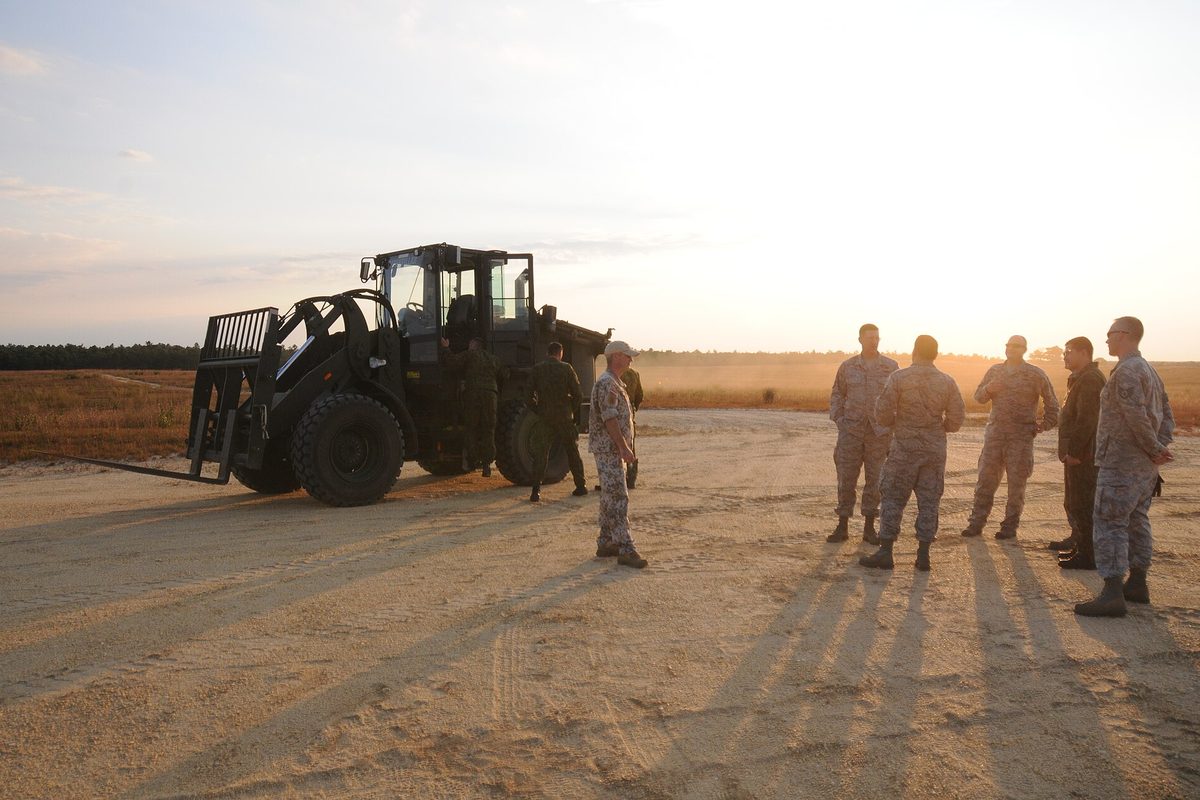
The staffing agency sends a worker with a forklift card. The supervisor needs a trailer unloaded before the next delivery. Nobody has yet watched the worker use this truck, or explained the blind corner between receiving and the pedestrian entrance.
A temporary operator's previous training can count under 29 CFR 1910.178(l)(5). The host still needs to establish that the training fits its trucks and working conditions and that the operator can perform the assigned work safely.
Before releasing the assignment, establish what the operator has learned, what the host needs to add and who will evaluate performance. Keep the resulting certification available to the responsible supervisors. The broader injury-log allocation question is covered in temporary and leased workers: who records and trains.
Ask about the assignment before accepting the paperwork
Start with the proposed work. Identify the truck, attachments, load characteristics and route. Include the shift, expected congestion and any loading dock or trailer work. These details connect the staffing request to the truck-related and workplace-related topics in 1910.178(l)(3).
An assignment described only as “forklift operator” leaves the agency guessing. An experienced counterbalanced-truck operator may have little practice with a reach truck. Someone accustomed to palletized cartons may need additional instruction for unusually long loads. The relevant question under 1910.178(l)(5) is whether earlier training is appropriate to the actual equipment and conditions.
Send that assignment description to the agency before dispatch. Ask the worker about previous equipment and tasks as well. OSHA's February 16, 1999 interpretation letter identifies equipment type, amount and recency of experience, and previous working environment as useful considerations. The letter explains the regulation; it does not prescribe an additional federal questionnaire.
Separate evidence of attendance from evidence of competence
A training card may identify a provider and date. A detailed course record may show covered subjects. Either can be useful, but neither necessarily describes the host's loading dock, pedestrian crossings or truck controls. Review the evidence against 1910.178(l)(3), then identify what remains to be taught or evaluated.
The regulation allows credit for appropriate earlier training. It does not require every arriving temporary employee to repeat every topic. Under 1910.178(l)(5), avoiding duplicate instruction depends on the suitability of the previous instruction and an evaluation finding the operator competent to operate safely.
Ask the worker to explain the equipment previously used and demonstrate relevant skills in a controlled setting. Resolve gaps before assigning unsupervised work. Training under 1910.178(l)(2)(ii) combines formal instruction, practical training and evaluation of performance in the workplace. A multiple-choice course result cannot substitute for that entire process.
Put names against the work
Use this suggested matrix to assign the work between the host and agency. Those arrangements do not transfer either employer's legal responsibilities.
| Activity | Practical lead | Evidence to obtain |
|---|---|---|
| Describe the truck and assignment | Host supervisor | Equipment identity, loads, routes and operating conditions |
| Supply available prior-training information | Agency, with the operator | Provider, dates and covered equipment or topics |
| Decide what prior instruction applies | Host's qualified training/evaluation personnel | Topics credited and reasons for any additional instruction |
| Teach host-specific hazards | Person familiar with the host's operation | Site and task topics actually covered |
| Evaluate performance | Person meeting 1910.178(l)(2)(iii) | Observation on relevant equipment and conditions |
| Complete certification | Responsible employer, through its designated process | Elements required by 1910.178(l)(6) |
| Share an incident that affects the placement | Host and agency contacts | Factual description and follow-up responsibilities |
The trainer and evaluator must possess the knowledge, training and experience required by 1910.178(l)(2)(iii). A purchasing contact or staffing coordinator can collect documents without being qualified to judge the operator's performance.
Write the coordination arrangements into the placement process. Identify who can authorize the assignment and who covers an absent evaluator. OSHA's 1999 interpretation letter says some instruction on the new workplace's specific factors is likely always necessary. The host should have a way to deliver it when the worker arrives.
Use a work-area walk-through to expose training gaps
Take the operator through the actual route before assigning production work. Discuss surface conditions, ramps, pedestrian traffic and restricted spaces. These are explicit workplace-related subjects in 1910.178(l)(3)(ii), when applicable to safe operation.
Walk the route together. Explain where pedestrians enter, how trailer movement is controlled and which areas the assignment does not include. Check the operator's understanding by asking how a particular movement will be handled. These checks are recommended training practices, not an OSHA-mandated script.
Include the equipment's operating instructions and limitations. Forks, attachments, capacity and stability appear among the truck-related topics in 1910.178(l)(3)(i). An orientation that discusses traffic while ignoring an unfamiliar attachment leaves a separate gap.
The worker's language and vocabulary matter too. Instruction that the worker cannot understand cannot perform its intended function. Arrange suitable instruction before the worker is exposed to the relevant operating hazards. The forklift training guide explains the formal, practical and evaluation components in more detail.
A worked handoff for a short placement
For example, a temporary operator arrives for a two-week receiving assignment. Prior records show training on a counterbalanced electric truck. The host uses a similar truck, but the assignment includes a sloped dock approach and mixed pedestrian traffic.
The evaluator reviews the prior training, asks about recent experience and observes the operator on the assigned equipment. Existing knowledge of basic controls may be credited under 1910.178(l)(5). The host provides instruction on its routes, dock controls and pedestrian interactions under 1910.178(l)(3)(ii).
During evaluation, the operator demonstrates safe performance on the relevant movements. The certification identifies the worker and the people performing the instruction or evaluation, with both dates, as required by 1910.178(l)(6). The host also records which truck and receiving work the evaluation covered. That scope note is a management choice.
If the host later proposes a different truck type, the original plan no longer describes the whole assignment. Check the change against 1910.178(l)(4)(ii)(D). A placement extension or production request should not silently expand the operator's scope.
Assign the incident response before work starts
An agency supervisor may hear about an incident hours after the host supervisor has dealt with it. Set up a named contact path before work starts. Include who receives a near-miss report, who arranges instruction and who confirms completion before the next relevant assignment.
Under 1910.178(l)(4)(ii), unsafe operation, an accident or near miss, an evaluation revealing unsafe operation, a different truck type and changed workplace conditions can trigger refresher training. OSHA's February 16, 1999 letter applies the incident-related requirement specifically to temporary operators working at a warehouse host.
The host should also examine the operation itself. A damaged dock, obstructed view or conflicting traffic route will not be corrected by having the operator repeat a training video. Those conditions need their own corrective action. Keep the equipment decision separate from the training decision, including removal of an unsafe truck from service under 1910.178(p)(1).
Keep a usable record at the host
1910.178(l)(6) requires certification containing four elements: operator name, training date, evaluation date and identity of the people conducting training or evaluation. The text does not specify a wallet-card format. Additional detail can help establish the assignment's scope without being described as a federal certification field.
Keep the record where the responsible host personnel can retrieve it. Agree how the agency receives relevant information and how either employer corrects an inaccurate record. A worker should not be sent between offices because each assumes the other has the evaluation.
Use the forklift operator certification tool to organize the required fields. Record what actually happened. A certificate generated before observation has occurred cannot establish the evaluation required by 1910.178(l)(2)(ii).
Recheck a placement when its conditions change
The performance evaluation interval in 1910.178(l)(4)(iii) is at least once every three years. Event-based refresher requirements can apply sooner. Renewing the staffing contract does not postpone those duties. Review what has changed in the assignment.
At a change of shift, assignment or equipment, ask what has changed in the truck or workplace topics identified by 1910.178(l)(3). Document the resulting decision in ordinary language: additional route training completed, different-truck instruction scheduled, or assignment held pending evaluation. Avoid an unexplained “approved” status that hides the work still outstanding.
For construction employers, the note to 1926.602(d) makes operator-training requirements identical to 1910.178(l). That cross-reference concerns training. Check the construction equipment rules separately; do not import every general-industry provision merely because the training paragraphs are shared.
Check one completed handoff before the next operator arrives. The supervisor should be able to retrieve the certification and identify the work it covered. Resolve a missing evaluation with the agency before the worker is dispatched to the assignment.
Frequently Asked Questions
Can the host accept an agency forklift training card?
A card can help assess prior training. Under 1910.178(l)(5), previously covered topics can be credited when appropriate to the truck and working conditions and the operator has been evaluated as competent. The card alone does not establish those facts.
Who needs to address the host site's forklift hazards?
The host needs to address its equipment and working conditions. OSHA's February 16, 1999 interpretation letter explains that a warehouse employer supervising temporary operators is responsible for safe powered industrial truck operations.
What goes on the operator certification?
1910.178(l)(6) lists the operator's name, training date, evaluation date and identity of the people performing training or evaluation. An agency can help maintain documentation without relieving the employer of its responsibilities.
Does this training framework apply to construction?
Yes. The note to 1926.602(d) makes construction operator-training requirements identical to 1910.178(l). Equipment requirements must still be checked under the applicable construction provisions.
Site-wide regulatory figures such as compliance dates and penalty amounts come from our regulatory source-of-truth modules, last checked against the eCFR, OSHA.gov, and the Federal Register on October 19, 2026. Last reviewed November 15, 2026.
About This Article
Published by: HazComFast
Published: November 15, 2026
Last Updated: November 15, 2026
This content is for informational purposes only and does not constitute legal advice.