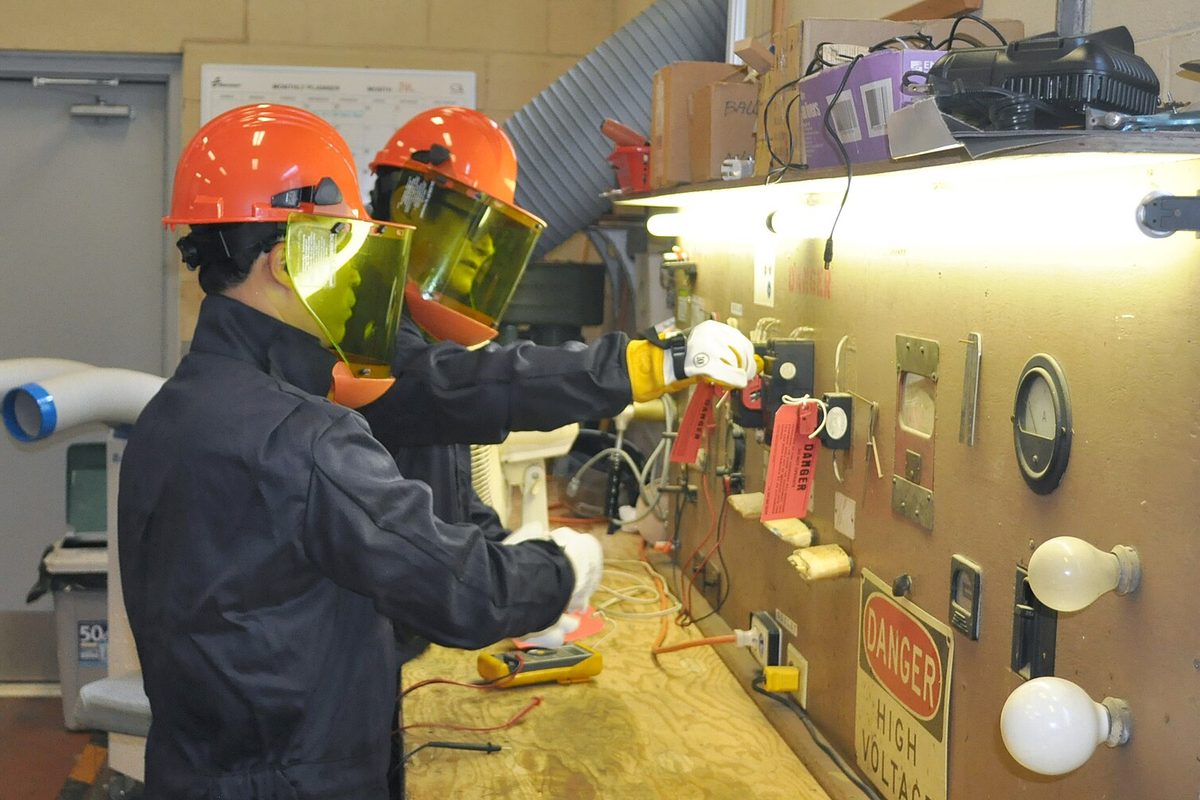
California's minor-servicing exception exists, but an employer needs to establish its conditions for the particular activity. Six selected Appeals Board decisions show defenses failing on the task or the protective measures. They do not establish that the exception is unavailable.
A conveyor stops several times a shift. Operators have a familiar way to clear it, and production calls the interruption “minor.” That description reaches the incident report before anyone has reviewed the actual reach into the machine, the stored energy, or the protective measure used during the intervention.
California's 8 CCR §3314 is the starting point. Its minor-servicing exception contains conditions about the activity and alternative measures providing effective protection. Calling an intervention a quick adjustment does not establish those conditions. The decisions below examine what workers did and whether the employer established the exception for that activity.
What this review covers
The six selected Decisions After Reconsideration below were published by the California Occupational Safety and Health Appeals Board. They were identified in a review of published Board material, and each addresses an employer's minor-servicing argument. The decisions span 2020 through 2025.
This is a case comparison, not a statistical sample of every California inspection or every use of the exception. All six selected decisions rejected the defense. That result cannot establish the percentage of defenses that succeed statewide, the outcome of unreported matters, or that a properly supported exception is impossible.
Read each full decision before applying it to another operation. The findings, evidence, and particular citation matter. Under 8 CCR §3314, a different task and a different protective arrangement can present a different case. A short summary should direct the review, not replace it.
The exception calls for a complete factual showing
The minor-servicing language in §3314 concerns minor tool changes, adjustments, and other minor servicing during normal production that is routine, repetitive, and integral to the equipment's production use, with alternative measures that provide effective protection. The requirements operate together.
The Anheuser-Busch decision explains the conjunctive character of the defense: failure to establish all its elements defeats it. The FedEx decision addresses the employer's burden of raising and proving an exception. Those points explain why documenting only the frequency or short duration of a task leaves much of the analysis unfinished.
For federal general industry, the related language is in the Note to 29 CFR 1910.147(a)(2)(ii). Use it as a comparison only. California's §3314 has its own structure and scope, including application addressed in construction decisions. For work in California, read the §3314 exception against the observed task before relying on a federal policy sheet.
Six decisions and the gap in the defense
| Decision | Filed | Relevant result | Review question for EHS |
|---|---|---|---|
| FedEx Ground, Inspection 1199473 | April 20, 2020 | The unjamming operation was not established as minor servicing; the proposed alternative did not provide effective protection | What exactly is the worker doing to clear the obstruction? |
| Golden State Boring & Pipe Jacking, Inspection 1308948 | July 24, 2020 | Effective alternative measures were not demonstrated | What physical protection exists throughout the intervention? |
| Sierra Forest Products, Inspection 1291481 | February 6, 2024 | The employer did not establish that its alternative method was used only during minor servicing | What prevents the method from being used for a broader, different task? |
| Anheuser-Busch, Inspection 1398352 | July 25, 2024 | The employer failed to establish all elements of the exception | Which element is supported by which evidence? |
| A. Teichert and Son, Inspection 1431672 | July 10, 2025 | Failure to prove an element defeated the exception | Has the review left any needed condition assumed? |
| Drill Tech Drilling & Shoring, Inspection 1420923 | August 7, 2025 | The defense did not establish the minor-servicing exception | Does the factual argument actually satisfy the state exception? |
The table is a reading aid. The primary decisions linked in the source list contain the Board's findings and reasoning. Avoid converting a short phrase from one decision into a rule about all conveyors, all cleaning, or all drilling equipment.
FedEx and Golden State: identify the protection during the act
In FedEx Ground, the Board rejected the characterization of the unjamming operation as minor servicing and rejected the claimed protective alternative. The practical lesson is to document the worker's intervention, including the position of the body relative to the hazard, rather than reviewing only the machine's normal operating cycle.
Golden State Boring & Pipe Jacking likewise turned attention to effective alternative measures. The Board found that such measures had not been shown. A task description that says “operator trained” or “takes only a moment” does not describe an engineered protective arrangement or establish why exposure cannot occur.
Those are lessons from the decisions, not permission to design an alternative informally. Evaluate the machine and its hazardous energy with qualified technical support. Under §3314, the proposed measure has to provide effective protection during the actual task. An administrative instruction needs to be evaluated for what it achieves, not for how often it appears in a written procedure.
Sierra Forest: define the limits of the alternate method
Sierra Forest Products highlights a different failure. The employer did not establish that the alternate method was limited to a minor-servicing activity. An instruction that works for one narrow adjustment can be stretched in practice to a deeper intervention involving different exposure.
When considering the §3314 exception, identify both the permitted task and the stopping point. What change in the obstruction, tool, access, or operating condition moves the work outside the reviewed activity? Who recognizes that change and initiates the normal energy-control procedure?
“Clearing jams” can describe several different acts. Observe them separately: pulling loose material from outside the guard is a different intervention from reaching into a stopped machine. Establish the facts for each activity before relying on a shared assessment. Consult the general LOTO guide for the broader energy-control process, then return to the exact California exception for the particular intervention.
Anheuser-Busch: repeated cleaning does not settle the question
The Anheuser-Busch decision concerns a pallet-stacker cleaning incident in which an employee reached into the machine to remove a wood fragment and a pneumatic lift moved unexpectedly. The Board addressed alleged violations involving energy control and machine-specific procedures, as well as the employer's defenses.
For the minor-servicing argument, the decision's value lies in its element-by-element review. A task may be familiar and connected to production while the employer still fails to establish the complete defense under §3314. Describe which condition each item of evidence supports rather than using the word routine as the entire analysis.
Read the decision's treatment of the evidence, including the relevant equipment and work practice. Do not use the outcome to claim that every removal of a small fragment has the same legal classification. The regulation and the facts remain the basis for the next assessment.
Teichert and Drill Tech: check the state rule on construction work
Both A. Teichert and Son and Drill Tech Drilling & Shoring are useful reminders for construction employers reviewing hazardous-energy obligations in California. The federal exclusion of construction from 1910.147 does not by itself decide the reach of California's §3314.
Drill Tech expressly addressed application of §3314 to the drill rig in that case. Teichert also involved a §3314 citation and a failed minor-servicing argument. Establish the applicable California orders and the machine operation before borrowing a federal general-industry exclusion.
Our construction LOTO applicability article explains the federal boundary. Keep that distinction visible in training materials. A construction employee should not be told the employer has no hazardous-energy duties simply because 1910.147 has an exclusion.
Build a review file around a single intervention
For an internal review, start with an observed task and its machine identification. Record the production state, the energy sources, stored energy, access points, and the employee's actions. Use photographs or diagrams of the task where appropriate. These are recommended evidence practices, not a new form mandated by §3314.
Then address each condition of the minor-servicing exception separately. Identify what makes the activity minor, how it occurs during normal production, and the factual basis for the routine, repetitive, and integral conditions. Explain the alternative measure and how it protects during every part of the intervention.
Keep the normal energy-control procedure available for work outside the reviewed conditions. The LOTO procedure generator can organize a draft, but the task, isolation points, and technical review need to be supplied for the actual machine. A completed template does not establish an exception.
Review how supervisors recognize departures from the approved task. A missing guard, changed tooling, damaged device, or different obstruction can change the protective arrangement. Treat those as reasons to reassess the operation before continuing under the previous analysis.
Keep the federal comparison in its proper column
The six decisions interpret California requirements. They do not decide federal citations under 29 CFR 1910.147. When a company operates in several jurisdictions, its reviewer can use a crosswalk to find the corresponding federal question, then read the applicable state provision separately. These references identify subjects for review and do not declare the two rules identical.
| Review subject | Federal general-industry reference | California question to examine |
|---|---|---|
| Normal production and servicing | 29 CFR 1910.147(a)(2)(ii) | How does §3314 describe the operation and its exceptions? |
| Minor servicing | Note to 29 CFR 1910.147(a)(2)(ii) | Can the facts establish every condition of the §3314 exception? |
| Cord-and-plug work | 29 CFR 1910.147(a)(2)(iii)(A) | What is the scope of California's separate cord-and-plug exception? |
| Hot taps | 29 CFR 1910.147(a)(2)(iii)(B) | §3314 does not contain a matching hot-tap exception; identify the applicable California requirements. |
| Documented procedures | 29 CFR 1910.147(c)(4)(i) | Apply §3314(g), including its own writing and machine-step provisions. |
| Procedure content | 29 CFR 1910.147(c)(4)(ii) | Identify the actual steps and California content requirements. |
| Employee instruction | 29 CFR 1910.147(c)(7) | Check §3314's instruction requirements against the assigned duties. |
| Construction boundary | 29 CFR 1910.147(a)(1)(ii)(A) | Determine California applicability instead of assuming the federal exclusion controls. |
This crosswalk is a reference aid. An employer cannot establish a California defense by demonstrating that a superficially similar task fits one sentence from 29 CFR 1910.147. Preserve the jurisdiction, the governing text, and the factual basis together in the review file.
Check the procedure against work on the floor
During the next observation, ask the operator to describe the permitted intervention and the point at which normal energy control is needed. Compare the answer with the actual work and the written review. Resolve differences through the program before another production stoppage makes the informal method attractive.
Use the machine-guarding guide when reviewing the surrounding safeguards. Preserve the applicable §3314 text and the relevant decision pages with the assessment. A later reviewer should be able to trace each claimed condition to an observation, procedure or other item of evidence. If the worker's description differs from the assessment, resolve that difference before relying on the exception again.
Frequently Asked Questions
Does California recognize a minor-servicing exception?
Yes. The exception in 8 CCR §3314 addresses qualifying minor servicing during normal production with effective alternative protection. Every needed condition needs to be established.
Do these six cases show that the exception never succeeds?
No. They are six selected published decisions concerning 8 CCR §3314. Their outcomes do not establish a universal success rate or erase the exception.
Does a task qualify because it takes only a few seconds?
A short duration alone does not establish the conditions in 8 CCR §3314. Review the actual activity, its relation to production, and effective alternative protection.
Can we use the federal exception as our California procedure?
Apply the California text in 8 CCR §3314. The federal Note to 29 CFR 1910.147(a)(2)(ii) is a useful comparison but does not replace the state rule.
Site-wide regulatory figures such as compliance dates and penalty amounts come from our regulatory source-of-truth modules, last checked against the eCFR, OSHA.gov, and the Federal Register on October 19, 2026. Last reviewed November 15, 2026.
About This Article
Published by: HazComFast
Published: November 15, 2026
Last Updated: November 15, 2026
- https://www.dir.ca.gov/title8/3314.html
- https://www.dir.ca.gov/oshab/Decisions/DAR/1199473-FedEx-Ground.pdf
- https://www.dir.ca.gov/oshab/Decisions/DAR/1308948-Golden-State-Boring.pdf
- https://www.dir.ca.gov/oshab/Decisions/DAR/1291481-Sierra-Forest-Products.pdf
- https://www.dir.ca.gov/oshab/Decisions/DAR/1398352-Anheuser-Busch.pdf
- https://www.dir.ca.gov/oshab/Decisions/DAR/1431672-A-Teichert-and-Son.pdf
- https://www.dir.ca.gov/oshab/Decisions/DAR/1420923-Drill-Tech-Drilling-Shoring.pdf
This content is for informational purposes only and does not constitute legal advice.