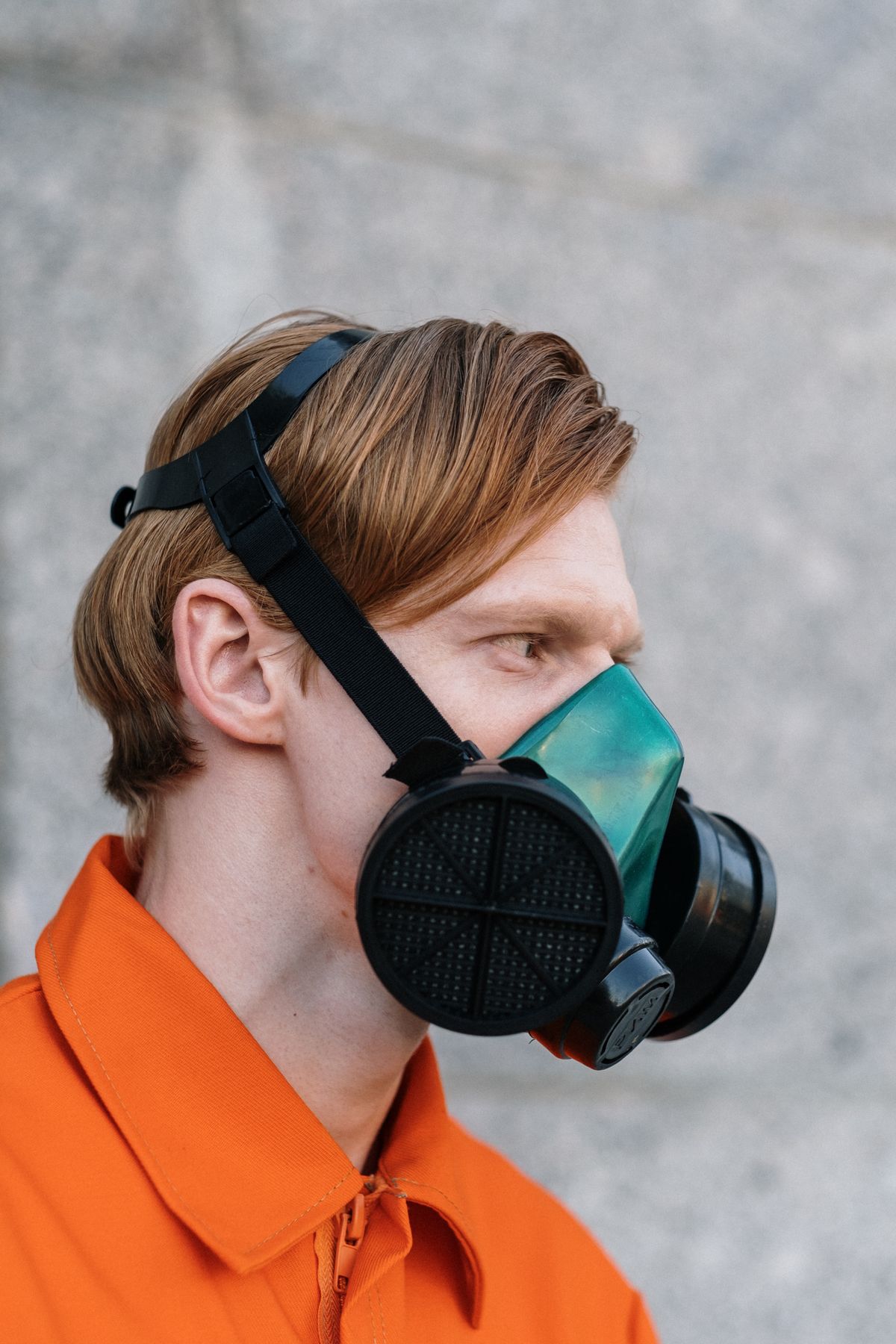
Why Silica Compliance Matters
Respirable crystalline silica causes fatal and disabling lung disease. Inhaling tiny silica particles — generated by cutting, grinding, drilling, or crushing stone, concrete, brick, and mortar — causes:
- Silicosis — Incurable, progressive lung disease
- Lung cancer — IARC Group 1 carcinogen (confirmed in humans)
- Chronic obstructive pulmonary disease (COPD)
- Kidney disease
OSHA's 2016 silica rule (81 FR 16286) estimated that 2.3 million workers would be affected, 2 million of them in construction, and that the rule would prevent 642 fatalities and 918 moderate-to-severe silicosis cases a year once fully effective. The construction standard is 29 CFR 1926.1153; general industry and maritime work falls under 29 CFR 1910.1053.
The Standard: 29 CFR 1926.1153
| Requirement | Detail |
|---|---|
| PEL | 50 µg/m³ (8-hour TWA) |
| Action Level | 25 µg/m³ (8-hour TWA) |
| Compliance Options | Table 1 (specified controls) OR air monitoring + control plan |
| Medical Surveillance | Required for 30+ days/year of respirator use |
| Written Exposure Control Plan | Required for every employer covered by 1926.1153(a) |
| Recordkeeping | Exposure records retained 30 years |
The Table 1 Advantage
For a task on the list, Table 1 is the simpler compliance path. By following the specified controls exactly, you:
✅ Skip the exposure assessment for that task (29 CFR 1926.1153(c)(1)), so there is no air sampling to schedule ✅ Get clear requirements: the control, the work practice and the respirator are all written in the table ✅ Have a fixed standard to inspect against on site
Two compliance paths under 1926.1153
- Follow the specified controls for your task exactly
- Use the listed water/dust control + respirator
- → No exposure assessment for that task
- Task not on Table 1, or you deviate from it
- Exposure assessment, by objective data or monitoring, against the 50 µg/m³ PEL (1926.1153(d))
- → Written control plan + assessment
Either path: written exposure control plan, medical surveillance for 30+ respirator-days/yr, and 30-year exposure records. PEL 50 µg/m³ · action level 25 µg/m³ (8-hr TWA).
Complete Table 1: All 18 Entries
Table 1 in 29 CFR 1926.1153(c)(1) has 18 entries, (i) to (xviii). Each names the engineering control and work practice, then the respirator required at four hours or less per shift and at more than four hours, sometimes with a different answer indoors or in an enclosed area. "None" means no respirator is required when the control is fully and properly implemented.
| Entry | Task | Specified control (summary) | Outdoors ≤4 h / >4 h | Indoors or enclosed ≤4 h / >4 h |
|---|---|---|---|---|
| (i) | Stationary masonry saws | Integrated water delivery feeding the blade | None / None | None / None |
| (ii) | Handheld power saws (any blade diameter) | Integrated water delivery feeding the blade | None / APF 10 | APF 10 / APF 10 |
| (iii) | Handheld power saws for fiber-cement board (blade ≤8 in), outdoors only | Outdoors only: saw equipped with a commercially available dust collection system, 99%+ efficiency filter | None / None | No Table 1 path |
| (iv) | Walk-behind saws | Integrated water delivery feeding the blade | None / None | APF 10 / APF 10 |
| (v) | Drivable saws, outdoors only | Integrated water delivery feeding the blade | None / None | No Table 1 path |
| (vi) | Rig-mounted core saws or drills | Integrated water delivery to the cutting surface | None / None | None / None |
| (vii) | Handheld and stand-mounted drills, incl. impact and rotary hammer drills | Shroud or cowling with dust collection, 99%+ filter, filter cleaning; HEPA vacuum to clean holes | None / None | None / None |
| (viii) | Dowel drilling rigs for concrete, outdoors only | Shroud with dust collection, 99%+ filter, filter cleaning; HEPA vacuum to clean holes | APF 10 / APF 10 | No Table 1 path |
| (ix) | Vehicle-mounted drilling rigs for rock and concrete | Close-capture hood or shroud with a low-flow water spray at the collector discharge, or an enclosed cab with water on the bit | None / None | None / None |
| (x) | Jackhammers and handheld powered chipping tools | Continuous water at the point of impact, or a shroud with dust collection | None / APF 10 | APF 10 / APF 10 |
| (xi) | Handheld grinders for mortar removal (tuckpointing) | Shroud with dust collection, 25 cfm per inch of wheel or more, 99%+ filter | APF 10 / APF 25 | APF 10 / APF 25 |
| (xii) | Handheld grinders for other uses | Integrated water, or a shroud with dust collection (25 cfm per inch of wheel) | None / None | None / APF 10 |
| (xiii) | Walk-behind milling machines and floor grinders | Integrated water, or dust collection with a HEPA vacuum between passes | None / None | None / None |
| (xiv) | Small drivable milling machines (less than half-lane) | Supplemental water sprays combined with a surfactant | None / None | None / None |
| (xv) | Large drivable milling machines (half-lane and larger) | Exhaust ventilation on the drum enclosure plus supplemental water sprays (any depth on asphalt); for cuts of 4 in or less on any substrate, that or water spray with a surfactant | None / None | None / None |
| (xvi) | Crushing machines | Water spray or mist at the crusher and other dust points, plus a ventilated booth or a remote control station | None / None | None / None |
| (xvii) | Heavy equipment and utility vehicles that abrade or fracture silica materials, or demolish | Enclosed cab; water or dust suppressants when others work outside the cab | None / None | None / None |
| (xviii) | Heavy equipment and utility vehicles for grading and excavating | Water or dust suppressants, or an enclosed cab when the operator is the only employee in the task | None / None | None / None |
Read these cells carefully
- Indoors changes the answer for saws and jackhammers. A handheld power saw (ii) or a walk-behind saw (iv) used indoors or in an enclosed area needs an APF 10 respirator even for a short task. Jackhammers (x) follow the same pattern: no respirator outdoors for four hours or less, APF 10 beyond that and anywhere indoors.
- Outdoors-only entries have no indoor path. Fiber-cement board saws (iii), drivable saws (v) and dowel drilling rigs (viii) are listed for outdoor work only. Indoors, the task is not covered by Table 1, and the exposure must be assessed and controlled under 29 CFR 1926.1153(d).
- Tuckpointing is the only entry that reaches APF 25. Entry (xi) needs APF 10 even at four hours or less, and APF 25 beyond; it is also the only handheld-grinder entry that requires a respirator at four hours or less.
- Half-lane belongs to the large milling machines. A half-lane machine run under entry (xiv)'s control, water alone, is missing the drum-enclosure exhaust that (xv) requires.
- Sweeping is not a Table 1 task. Some guides list an 18th task for "indoor sweeping"; the real entries (xvii) and (xviii) are heavy equipment. Dry sweeping and dry brushing are prohibited under 29 CFR 1926.1153(f)(1) where wet sweeping, HEPA-filtered vacuuming or another method that minimizes exposure is feasible, and compressed air for cleaning is restricted by 1926.1153(f)(2).
Respirator APF Guide
| APF | Respirator class (29 CFR 1910.134(d)(3)(i)(A), Table 1) |
|---|---|
| 10 | Air-purifying half mask, including N95 filtering facepieces |
| 25 | Powered air-purifying respirator (PAPR) with a loose-fitting facepiece |
| 50 | Air-purifying full facepiece |
Fit testing: tight-fitting respirators are fit-tested before first use and at least every 12 months (29 CFR 1910.134(f)(2)), and 1926.1153(e)(1) applies 29 CFR 1910.134 to every respirator the silica standard requires.
Written Exposure Control Plan
Every employer covered by 1926.1153(a) must establish and implement a written plan containing at least (29 CFR 1926.1153(g)(1)):
- A description of the tasks that involve exposure to respirable crystalline silica
- The engineering controls, work practices and respiratory protection used for each task
- The housekeeping measures used to limit exposure
- The procedures used to restrict access to work areas, when necessary, including exposures generated by other employers
The employer also designates a competent person to make frequent and regular inspections of job sites, materials and equipment to implement the plan (1926.1153(g)(4)), reviews the plan at least annually (g)(2), and makes it readily available to covered employees and their representatives on request (g)(3).
→ Generate a HazCom program with silica controls: HazCom Program Generator
Medical Surveillance Requirements
| Requirement | Detail |
|---|---|
| Who | Employees required to use a respirator under the standard for 30 or more days a year (1926.1153(h)(1)(i)) |
| Initial | Within 30 days of initial assignment, unless a qualifying exam was done in the last three years (h)(2) |
| Periodic | At least every three years, or more often if the PLHCP recommends (h)(3) |
| Components | Medical and work history, physical exam, chest X-ray read by a NIOSH-certified B Reader, pulmonary function test; latent TB test at the initial exam only |
| Cost | No cost to the employee (h)(1)(i) |
| Records | Kept under 29 CFR 1910.1020 (1926.1153(j)(3)(iii)): employment plus 30 years |
Penalties
OSHA does not publish penalty ranges by silica violation. Each serious violation can carry up to $16,550, and a willful or repeated one up to $165,514 (29 CFR 1903.15(d)); the amount for a given citation follows the gravity-based method in OSHA's Field Operations Manual.
→ Calculate your fine exposure: OSHA Fine Calculator
Training Requirements
Silica goes into your HazCom program (29 CFR 1926.1153(i)(1)), and each employee covered by the standard, not only those above the action level, must be able to demonstrate knowledge and understanding of (1926.1153(i)(2)(i)):
- The health hazards of respirable crystalline silica
- The specific tasks in the workplace that could result in exposure
- The specific measures the employer uses: engineering controls, work practices and respirators
- The contents of 29 CFR 1926.1153
- The identity of the designated competent person
- The purpose and a description of the medical surveillance program
→ Create training materials: Toolbox Talk Generator → Document training: HazCom Training Record
Generic Templates Miss What Changes
Generic silica plans fail because conditions change:
- Indoors vs. outdoors
- Different tools for the same task
- Duration changes
- Different crews rotating through
If the plan doesn't match reality, it doesn't protect you in an inspection. Build task-specific, site-specific plans.
Conclusion
Silica compliance protects workers from fatal diseases. Table 1 provides a clear, actionable path that replaces the exposure assessment for each listed task. Identify your silica tasks, implement Table 1 controls exactly, provide proper respiratory protection, offer medical surveillance, and document everything.
The standard, tools & related reading
- The hub: Silica — OSHA 1926.1153 (the interactive Table 1 checker + the two compliance paths, medical surveillance, and the engineered-stone crisis)
- The standard: Respirable Crystalline Silica — 29 CFR 1926.1153
- Silica deep dives: Silica Compliance in Construction 2026 · Silica Medical Surveillance & the 30-Day Respirator Trigger · The silicosis comeback: engineered stone · Respiratory Protection Program
- On the job: Silica Table 1 Control Selector · Silica Exposure Calculator · PPE Selector · Toolbox Talk Generator
- 2026 OSHA penalty schedule · penalties by state
Frequently Asked Questions
What is OSHA's silica PEL for construction?
The permissible exposure limit (PEL) for respirable crystalline silica in construction is 50 micrograms per cubic meter of air (50 µg/m³) as an 8-hour time-weighted average (TWA). This standard is found at 29 CFR 1926.1153.
What is Table 1 in the OSHA silica standard?
Table 1 is a simplified compliance option under 29 CFR 1926.1153(c). It lists 18 common construction tasks and specifies the exact engineering controls, work practices, and respiratory protection required for each. Employers who follow Table 1 requirements are not required to perform air monitoring.
Do I need air monitoring if I follow Table 1?
No, for a listed task. An employer that fully and properly implements the Table 1 controls, work practices and respiratory protection for a task does not assess exposure for it (29 CFR 1926.1153(c)(1)); the exposure assessment in 1926.1153(d)(2) applies to tasks not on Table 1 or not done to it.
Who needs silica medical surveillance?
Each employee who will be required to use a respirator under the standard for 30 or more days per year (29 CFR 1926.1153(h)(1)(i)). The initial exam is made available within 30 days after initial assignment, unless a qualifying exam was done in the last three years, and includes a medical and work history, a physical exam, a chest X-ray read by a NIOSH-certified B Reader, a pulmonary function test and a latent tuberculosis test (h)(2). Periodic exams, without the TB test, follow at least every three years (h)(3).
What is the most common source of silica exposure in construction?
Table 1 in 29 CFR 1926.1153(c)(1) lists the construction tasks that generate it: sawing, drilling, jackhammering and chipping, grinding (including tuckpointing), milling, crushing, and heavy equipment that abrades, fractures or demolishes silica-containing materials such as concrete, brick, block and stone.
Can I use a dust mask instead of a respirator for silica?
Only if it is a NIOSH-approved respirator with the assigned protection factor Table 1 calls for. Where Table 1 requires one, it is APF 10 (an N95 filtering facepiece or other half mask meets it) or, for tuckpointing over four hours a shift, APF 25. Many Table 1 tasks require no respirator when the controls are used. Respirators must meet 29 CFR 1910.134, including fit testing for tight-fitting ones (1926.1153(e)(1)).
OSHA figures and citations here come from our regulatory source-of-truth modules, last checked against the eCFR, OSHA.gov, and the Federal Register on October 5, 2026. Last reviewed October 5, 2026.
About This Article
Published by: HazComFast
Published: January 31, 2026
Last Updated: October 5, 2026
This content is for informational purposes only and does not constitute legal advice.