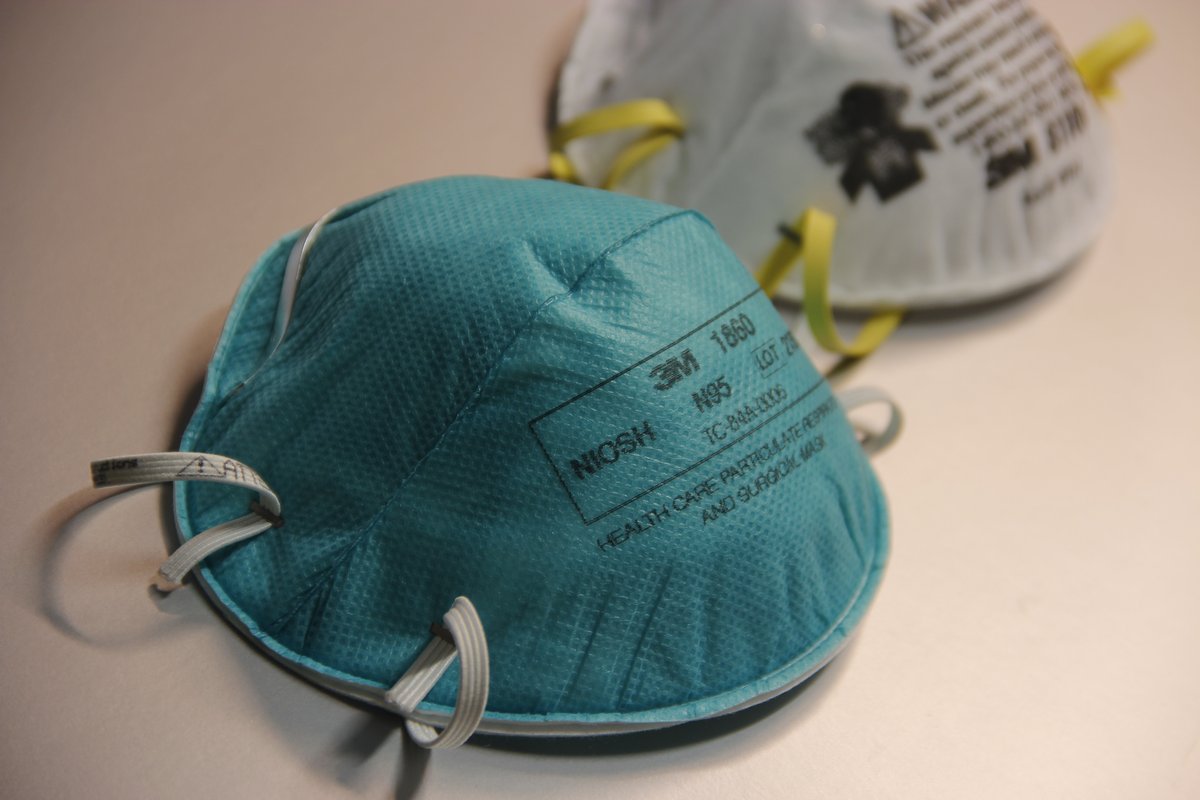
For OSHA-required respirator use, select a suitable respirator approved by NIOSH, the National Institute for Occupational Safety and Health, and use it through the required respiratory protection program under 1910.134(c)(1). A KN95 marking identifies a different standards framework and, by itself, does not establish NIOSH approval.
N95 and KN95 are particulate-respirator classifications. Selection also depends on the contaminant, exposure level, individual fit and conditions of use.
What is the difference between N95 and KN95?
N95 is a NIOSH filter classification with a minimum 95% efficiency under its approval test. The N series is for non-oil particles. NIOSH's filtering facepiece guidance explains the filter classes and approval system.
KN95 is a classification under China's GB 2626 standard for non-oil particulate respirators, with a minimum 95% filtration efficiency under that standard's test. China's National Institute of Occupational Health and Poison Control describes the classification. The test and conformity framework are distinct from NIOSH approval.
| Question | N95 | KN95 |
|---|---|---|
| Classification framework | NIOSH, under 42 CFR Part 84. | China's GB 2626 standard. |
| Contaminant type | Non-oil particles. | Non-oil particles. |
| Basis for required OSHA use | Verify NIOSH approval of the model, suitability for the exposure and program requirements. | A KN95 claim alone leaves the NIOSH-approval requirement unmet. |
| Fit on an employee | Verify the selected make, model, style and size through the fit testing required by 1910.134(f)(2). | The designation alone gives no individual fit result. |
| Gas, vapor or oxygen-deficiency protection | Requires a different respirator selection for those hazards. | Requires a different respirator selection for those hazards. |
A filtration percentage describes test performance. Exposure reduction during work also depends on air leaking around the face seal and the way the respirator is used.
Start with the respiratory hazard
Under 1910.134(d)(1), the employer identifies and evaluates respiratory hazards, including a reasonable exposure estimate and the contaminant's physical form. Selection must provide the protection needed for that exposure.
Identify what generates the dust, mist, fume, gas or vapor. Review the process, exposure data and controls. Where the employer cannot identify or reasonably estimate exposure, 1910.134(d)(1)(iii) requires treating the atmosphere as immediately dangerous to life or health.
For an N95 filtering facepiece, Table 1 in 1910.134(d)(3)(i)(A) assigns a protection factor of 10 when the required respiratory protection program is effective. This assigned protection factor is used in exposure-based selection; it is separate from the filter's 95% laboratory efficiency. Check the exposure limit and any substance-specific respirator requirements before selecting that level of protection.
Use engineering controls to prevent contamination where feasible. NIOSH's selection guidance connects respirator selection to the hazard and the complete protection program.
Verify NIOSH approval before purchasing
Use the NIOSH Certified Equipment List to match the approval holder, model or part number, TC approval number and approved configuration. Compare the entry with the markings and product supplied.
NIOSH's approved-respirator resources explain identification and approval markings. Resolve a missing number, mismatched model or questionable listing with the approval holder before issuing the product.
Country of manufacture is separate from approval. Respirators manufactured outside the United States can hold NIOSH approval. Verify the model rather than making the decision from its origin or appearance.
Fit testing and seal checks
For required use of a tight-fitting respirator, 1910.134(f)(2) requires a fit test:
- Before initial use.
- When a different make, model, style or size is used.
- At least annually thereafter.
1910.134(f)(3) also requires additional testing when physical changes could affect fit. Arrange the medical evaluation required by paragraph (e) before fit testing or required use.
A user seal check is performed each time the tight-fitting respirator is put on, following Appendix B-1 or an equally effective manufacturer procedure. It checks the donning and seal at that moment; the fit test evaluates the specific facepiece on the individual using a prescribed protocol.
Facial hair or another condition interfering with the sealing surface is incompatible with tight-fitting use under (g)(1). Check the selected model's instructions and fit-test result rather than relying on strap style alone.
The fit-test method selector helps organize method selection. Keep the result with the employee's respiratory protection program records.
Replacement during use
Leave the contaminated area under the site's procedure before removing a respirator for replacement. Replace a disposable respirator that is damaged, soiled or causes noticeably increased breathing resistance. OSHA's respiratory protection FAQ explains these replacement conditions.
Follow the model's instructions and any task-specific replacement rules. Keep the selected make, model and size available: changing the facepiece calls for the fit-testing checks described above.
When an N95 is the wrong type of protection
An N95 filters particles. It removes neither solvent vapor nor other gases and supplies no oxygen. A different particulate rating cannot correct that mismatch.
For solvent work, evaluate the vapor and select controls and respiratory protection for that contaminant. For oil aerosols, evaluate a filter series suitable for the conditions. For an oxygen-deficient or IDLH atmosphere, follow the dedicated selection requirements in 1910.134(d)(2).
The N95 and P100 guide explains particulate filter designations. Some respirator assemblies combine particle filters and chemical cartridges; use the approved configuration selected for the exposure.
Required use and voluntary use under 1910.134
When respiratory protection is required by OSHA or by the employer, the applicable required-use program applies. That includes selection, a written program under 1910.134(c)(1), a qualified administrator and the required employee evaluations, instruction and equipment procedures.
For voluntary use where respiratory protection is unnecessary, 1910.134(c)(2) requires the employer to determine that use creates no hazard and provide the information in Appendix D.
Employees whose only respirator use is voluntary use of filtering facepieces are excepted from the written-program requirement. Other voluntary respirator use requires the program elements specified in 1910.134(c)(2)(ii). Determine the actual use arrangement before applying that exception.
Public use, surgical masks and workplace purchasing
CDC/NIOSH's comparison of respirator and mask types describes international respirators, filtering facepieces and masks. Public-use guidance answers a different question from whether a model meets OSHA's required-use selection provisions in 1910.134(d).
A loose-fitting surgical mask and a NIOSH-approved respirator have different functions. Healthcare tasks can also introduce fluid-resistance, infection-control or other selection needs. Identify those needs for the procedure.
For current purchasing, use current approval information. An old pandemic emergency-use list or a historical test report describes a particular product and period; check the model's present status.
Respirator purchasing checklist
- Contaminants and exposure conditions are identified.
- Engineering controls and remaining respiratory protection needs are assessed.
- The selected respirator provides the required protection.
- The approval holder, model, TC number and configuration match official information.
- The supplier and delivered product can be traced.
- Employees can obtain the tested model and size.
- Required medical evaluation and fit testing under 1910.134(e) and (f) are arranged.
- Employees receive use instructions and required training.
- Storage, replacement and defect reporting are established.
Frequently Asked Questions
Is N95 better than KN95?
For required OSHA use, NIOSH approval is a selection requirement under 1910.134(d)(1). Verify a suitable approved model, then fit and use it through the program. For public or voluntary use, evaluate the product, fit and relevant guidance for that setting.
Does a higher filtration number mean better protection for the task?
Only when the complete selection suits the hazard. A higher particle-filter efficiency cannot compensate for an inadequate face seal, gas exposure or insufficient oxygen. Keep the exposure assessment and approved model information with the selection so later orders preserve the intended protection.
Site-wide regulatory figures such as compliance dates and penalty amounts come from our regulatory source-of-truth modules, last checked against the eCFR, OSHA.gov, and the Federal Register on October 19, 2026. Last reviewed November 16, 2026.
About This Article
Published by: HazComFast
Published: November 16, 2026
Last Updated: November 16, 2026
- https://www.cdc.gov/niosh/ppe/respirators/ffr.html
- https://niohp.chinacdc.cn/kpdw/202206/t20220613_259636.htm
- https://www.osha.gov/laws-regs/regulations/standardnumber/1910/1910.134
- https://www.cdc.gov/niosh/ppe/respirators/selection.html
- https://wwwn.cdc.gov/niosh-cel/
- https://www.cdc.gov/niosh/ppe/niosh-approved-respirators/
- https://www.osha.gov/training/library/respiratory-protection/faq
- https://www.osha.gov/laws-regs/regulations/standardnumber/1910/1910.134AppD
- https://www.cdc.gov/niosh/ppe/php/community-respirators-masks/types-of-respirators-and-masks.html
This content is for informational purposes only and does not constitute legal advice.