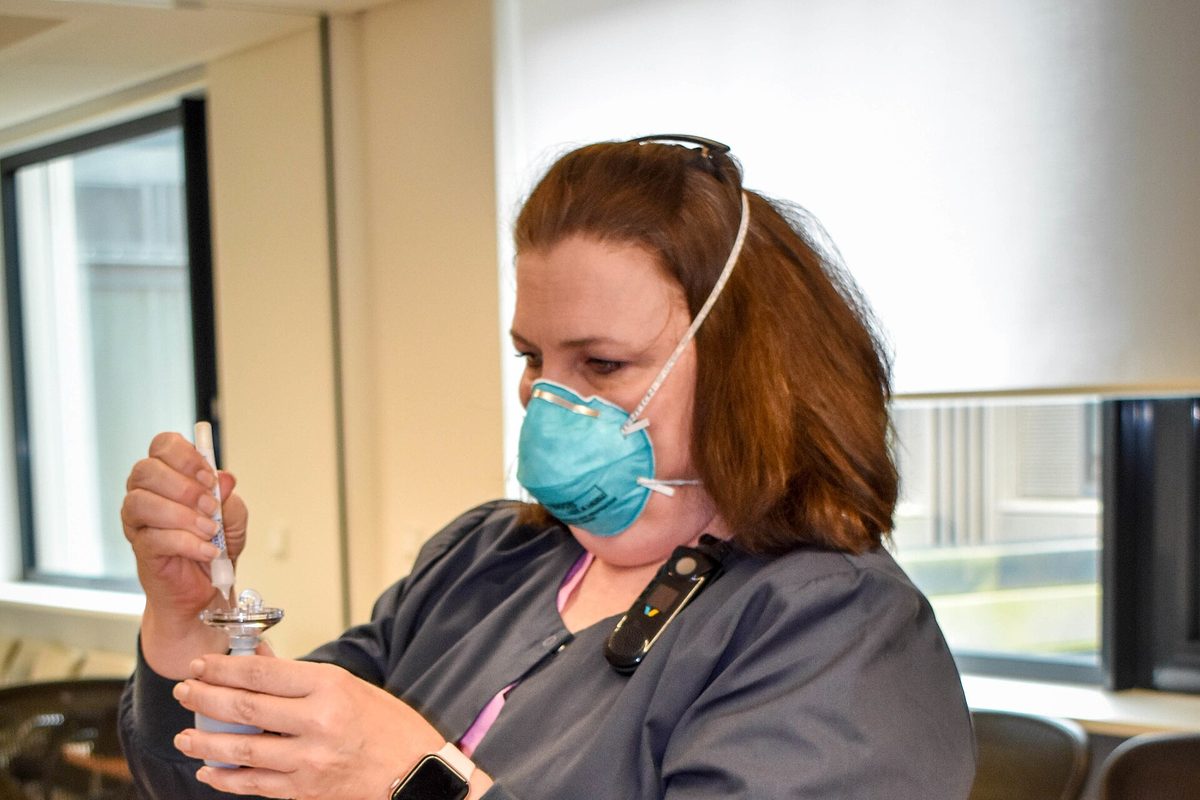
The fit-test contractor arrives with a hood, a smoke tube and a stack of N95s. Before the first worker sits down, check which protocol will be used. OSHA's accepted methods have different filter requirements and screening procedures. Check the equipment against the method the contractor plans to use.
A qualitative respirator fit test needs to use an applicable OSHA-accepted protocol. Isoamyl acetate calls for organic-vapor protection, saccharin and Bitrex use their specified aerosol protocols, and irritant smoke calls for HEPA or P100 filters. The filter and test agent need to be checked together.
29 CFR 1910.134(f)(5) directs employers to the accepted protocols in Appendix A. Use this review to question a provider's method choice. The administrator needs the full protocol and the skills to perform it; the table below is not a substitute for either.
First decide whether a qualitative method is suitable
The employer's exposure and respirator selection decision comes before choosing a convenient test kit. Under 29 CFR 1910.134(d), the respirator has to be appropriate for the hazard and required protection. A qualitative result is a pass or fail based on the wearer's response to the challenge; it does not measure a numerical fit factor.
29 CFR 1910.134(f)(6) limits QLFT for negative-pressure air-purifying respirators to those requiring a fit factor of 100 or less. That limitation matters when a full-facepiece respirator will be relied on for protection above the scope supported by QLFT. Ask a provider who uses one kit for every mask to explain how each configuration meets the protocol.
The QLFT and QNFT comparison addresses the broader choice. Once QLFT is appropriate, the next question is whether the agent, respirator configuration and worker satisfy the selected protocol.
Use the filter requirement in the actual protocol
Appendix A to 29 CFR 1910.134 contains four accepted qualitative methods. Its common requirements apply in addition to each method's own instructions.
| Method | What the review should establish | Important limitation |
|---|---|---|
| Isoamyl acetate | The test configuration provides the specified organic-vapor protection and the worker can detect the odor during screening | A particulate-only configuration does not capture the vapor challenge |
| Saccharin aerosol | The specified aerosol method, appropriate particulate filtration and threshold screening are used | An inability to detect the screening challenge prevents a valid result with that method |
| Bitrex aerosol | The correct threshold and fit-test solutions are used through their separate procedures | Treating screening and fit-test solutions as interchangeable changes the protocol |
| Irritant smoke | The respirator has HEPA or P100 series filters and the prescribed smoke protocol is followed | An N95 filtering facepiece does not satisfy the protocol's filter requirement |
This table does not authorize modifications to a respirator. Check the manufacturer's supported test configuration and restore any permitted test changes before use. Under 29 CFR 1910.134(d)(1)(ii), the selected respirator needs to be NIOSH-certified and used within its certification conditions.
Isoamyl acetate needs organic-vapor protection
The isoamyl acetate method uses an odor challenge. Appendix A, Part I.B.2, specifies the screening and fitting procedures, including the protection supplied by the test respirator. A particulate filter can remove particles without capturing the vapor used by this method. That is a test-configuration mismatch, not evidence that the facepiece seal leaks.
Before testing, verify what is installed on the facepiece and why it is appropriate for the protocol. For an elastomeric model, ask for the supported cartridge or adapter arrangement rather than accepting an unmarked component from another manufacturer's kit. Record the exact make, model, style and size being evaluated, as required for the respirator covered by 29 CFR 1910.134(f).
Odor screening also matters. If the person cannot identify the screening solution under the protocol's conditions, absence of an odor response during the fit test does not establish a pass. Use another appropriate accepted approach. Do not coach the person toward the expected answer or turn failure to detect the challenge into a statement about their fitness for the job.
Keep saccharin and Bitrex screening separate from the fit test
The saccharin and Bitrex methods use the person's ability to taste an aerosol. Each protocol starts with a threshold-screening procedure without the respirator. The screening result establishes whether the person can detect the agent and informs the challenge used during the actual fit test.
An EHS reviewer should be able to distinguish the screening solution, fit-test solution and equipment assigned to each. Check labeling and handling against the protocol and kit instructions. Appendix A to 29 CFR 1910.134 specifies the preparations and delivery procedures. The administrator needs to follow the full protocol when preparing and using the kit.
The worker's instructions need to be understandable. Explain how to report detection, demonstrate the exercises and confirm that the worker can participate in the screening. Avoid signaling that a pass is expected because the schedule is full. A test depends on the employee reporting a response that the administrator cannot feel on the employee's behalf.
If the worker detects the test agent during the fit test, follow the failed-test procedure. Do not record a pass because most exercises were completed. Under 29 CFR 1910.134(f)(1), the employee must pass an appropriate test with the respirator being used. Trying another acceptable facepiece may be part of resolving the failure.
Irritant smoke has a specific filter requirement
Appendix A, Part I.B.5(a)(1), calls for HEPA or P100 series filters for the irritant-smoke method. If a provider proposes irritant smoke for an N95 filtering facepiece, raise the filter mismatch before the test starts. It does not become an accepted N95 test because the tube is sold as a fit-test product.
The protocol also specifies stannic chloride smoke tubes, prohibits a test enclosure or hood for this method, and calls for precautions to minimize exposure. Adequate ventilation protects the administrator as well as the person being tested. The common hood used for taste-aerosol methods should not be carried into the smoke procedure by habit.
Use a method the administrator is prepared to perform safely and correctly. Under Appendix A to 29 CFR 1910.134, QLFT administrators need to be able to prepare the solutions, calibrate equipment and recognize invalid tests. Experience with one kit does not establish competence with all four methods.
Do not shorten a protocol by dropping exercises
Qualitative testing follows the applicable exercise requirements in Appendix A. A brief sensitivity check or an informal head movement is not the completed fit test. A worker seal check is another separate activity: 29 CFR 1910.134(g)(1)(iii) requires it each time a tight-fitting respirator is put on, and it does not replace fit testing.
OSHA's modified quantitative CNC protocols are different accepted protocols with their own scope and exercises. Their existence does not permit an administrator to shorten a qualitative test. When a service provider offers a faster appointment, ask for the protocol name and the corresponding Appendix A provision.
Observe a representative test during vendor qualification. Watch the solution identification, sensitivity screening, exercise sequence and response to a suspected leak. Compare a certificate with the procedure you observed. Under 29 CFR 1910.134(f)(5), the test itself must follow the accepted protocol; completing the certificate cannot repair an omitted step.
Keep the workplace filter decision separate
The cartridge or filter used for fit testing may differ from the one selected for a particular workplace contaminant. A permissible test arrangement does not establish that the worker has the right protection for welding fumes, a solvent vapor or an oxygen-deficient atmosphere.
Under 29 CFR 1910.134(d)(3)(ii), selection needs to address the contaminant's chemical state and physical form. Vapor protection has additional service-life requirements under (d)(3)(iii). The respiratory protection program guide places those decisions alongside medical evaluation, training and program administration.
For a hypothetical paint-removal task, the EHS review might identify particulate and vapor hazards that need separate selection attention. A worker's successful saccharin test does not determine the necessary workplace cartridge. It establishes the fit result under the test conditions for the identified facepiece. Preserve both records so that one is not mistaken for the other.
Specify what the test record needs to tell you
29 CFR 1910.134(m)(2) calls for the employee's identification, type of fit test, the respirator's make, model, style and size, the test date and the relevant result. For QLFT, retain the pass/fail result. Keep the needed record until the next fit test is administered; other applicable record or litigation requirements may need separate treatment.
For internal quality control, also ask the provider to identify the agent and protocol used. That additional detail is an employer review choice, not an extra field expressly listed in (m)(2). It helps resolve a later question about whether the result was obtained with the correct filter arrangement.
Use the Respirator Fit Test Log to organize the record after the test. An administrator's entry cannot validate a test that did not follow Appendix A. The facial-hair article covers another condition that needs to be addressed before assigning a tight-fitting respirator.
Review the provider before the testing day
Send the provider the facepiece models and intended protection needs early enough to resolve method limitations. Ask which accepted protocol will be used, how sensitivity failures are handled and which equipment supports the selected configuration. Discuss workers who need instructions in another language and the range of alternative models or sizes available.
Check these answers against 29 CFR 1910.134(f) and Appendix A. Select a few records from the completed session and compare them with the observed procedure and actual facepieces issued. If a mismatch is found, investigate the affected tests instead of assuming every certificate from the session is usable.
Keep the provider's method and equipment confirmation with the respiratory program. Resolve a mismatch before the crew arrives, when another kit or test method can still be arranged.
Frequently Asked Questions
Can an N95 filtering facepiece be fit tested with irritant smoke?
The irritant smoke protocol in 29 CFR 1910.134 Appendix A, Part I.B.5(a)(1), calls for HEPA or P100 series filters. An N95 filtering facepiece does not meet that filter requirement. Select an applicable accepted protocol and follow the respirator manufacturer's test instructions.
Does Bitrex use the same solution for screening and fit testing?
No. 29 CFR 1910.134 Appendix A, Part I.B.4, specifies separate threshold-screening and fit-test solution preparations and procedures. Keep the supplied solutions and nebulizers identified and follow the complete protocol.
Can isoamyl acetate test a particulate-only respirator?
29 CFR 1910.134 Appendix A, Part I.B.2, calls for organic-vapor protection for the isoamyl acetate fit test. A particulate-only configuration does not provide that test protection. Any test configuration also needs to follow the respirator manufacturer's applicable instructions.
Does passing a taste test establish the respirator's workplace protection factor?
No. 29 CFR 1910.134(f)(6) limits QLFT for negative-pressure air-purifying respirators to those needing a fit factor of 100 or less. Workplace selection also requires the exposure assessment, APF and other conditions in 1910.134(d).
Site-wide regulatory figures such as compliance dates and penalty amounts come from our regulatory source-of-truth modules, last checked against the eCFR, OSHA.gov, and the Federal Register on October 19, 2026. Last reviewed November 15, 2026.
About This Article
Published by: HazComFast
Published: November 15, 2026
Last Updated: November 15, 2026
This content is for informational purposes only and does not constitute legal advice.