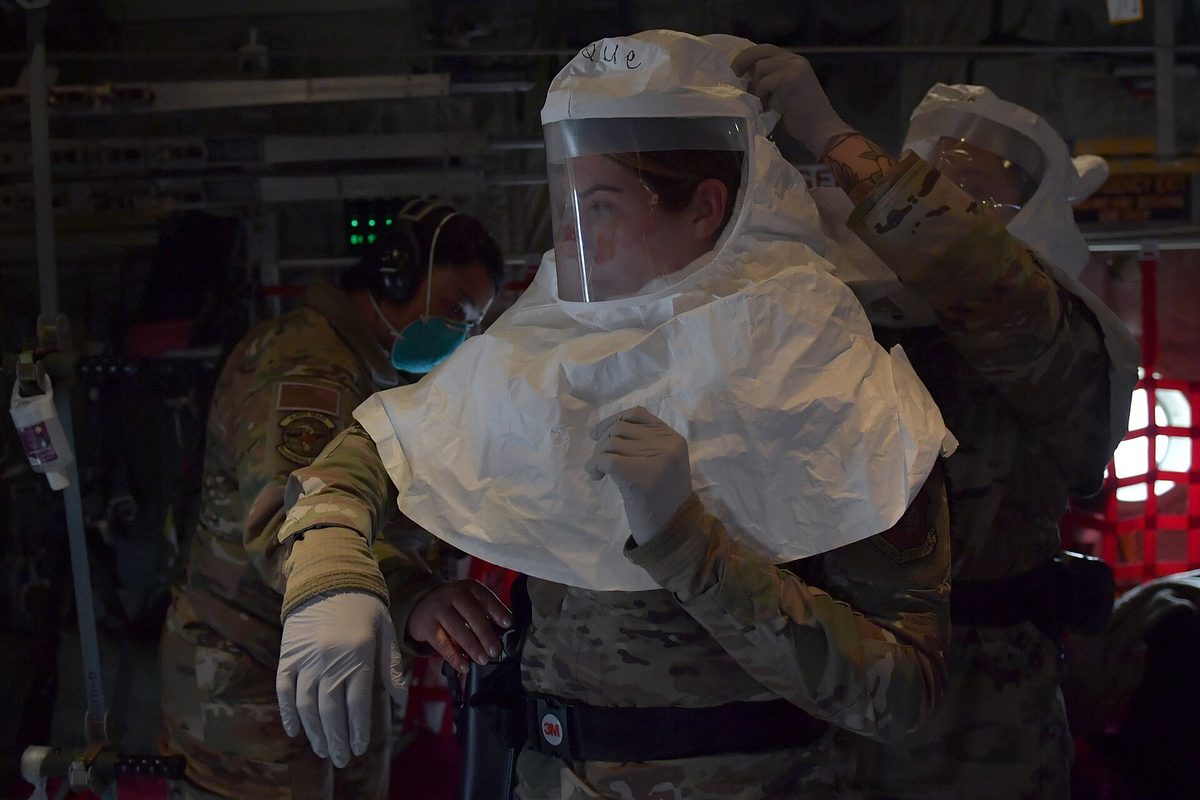
A supervisor requests a PAPR for a worker who cannot obtain an acceptable seal with the available disposable respirators. Purchasing returns with two options: a blower connected to a tight-fitting full-face mask, and a blower connected to a loose-fitting hood. Both are PAPRs. Their fit-test requirements differ.
A tight-fitting powered air-purifying respirator requires fit testing under 29 CFR 1910.134(f). A loose-fitting hood or helmet does not use the same face seal and is outside that tight-facepiece fit-test requirement. Medical evaluation, training and other applicable program duties still need to be addressed.
Begin with the exact NIOSH-approved assembly and the manufacturer's description of its facepiece. Record which headpiece is being issued; a purchasing line that says only PAPR leaves the fit-test decision unresolved.
Classify the actual facepiece
29 CFR 1910.134(b) defines the relevant respirator terms. A tight-fitting facepiece forms a complete seal with the face. A loose-fitting facepiece forms a partial seal. Hoods and helmets have their own definitions. Use those distinctions with the manufacturer's configuration information, rather than classifying the equipment by appearance alone.
A clear visor does not establish whether a complete face seal exists. Nor does the presence of a neck covering establish the protection category by itself. Identify the model, headpiece, breathing tube, blower, filters and other components in the approved assembly.
Under 29 CFR 1910.134(d)(1)(ii), a selected respirator needs to be NIOSH-certified and used within the certification conditions. Components that physically connect do not automatically form an approved combination. Ask the supplier for the assembly information needed to verify selection, use and maintenance.
| Configuration being considered | Fit-test decision | Next review |
|---|---|---|
| Tight-fitting half-mask PAPR | Fit testing applies | Appropriate accepted method and negative-pressure test configuration |
| Tight-fitting full-facepiece PAPR | Fit testing applies | Supported test arrangement and method suitable for the intended use |
| Loose-fitting hood or helmet PAPR | The tight-facepiece fit-test requirement does not apply | Actual approved headpiece, protection needed and all other program conditions |
| Configuration not clearly identified | Decision remains unresolved | Manufacturer's model and approved-assembly documentation |
The table is a screening aid. It is not a substitute for selecting equipment for the actual exposure under 29 CFR 1910.134(d).
Arrange a fit test for the tight-fitting facepiece
Paragraph (f) of 29 CFR 1910.134 covers both negative- and positive-pressure tight-fitting facepieces. Powered airflow during work does not remove the fit-test requirement. The test needs to correspond to the make, model, style and size that the employee will use.
29 CFR 1910.134(f)(2) requires testing before initial use, when a different facepiece is used and at least annually thereafter. Paragraph (f)(3) adds testing when reported or observed physical changes could affect fit. A test from the previous calendar year should therefore be checked against the actual date and facepiece, not treated as evidence that any PAPR is covered.
In the opening example, replacing an N95 with a tight-fitting PAPR mask creates a facepiece-specific fit-test decision. The worker's difficulty with the N95 may suggest trying another model, but it does not establish the result for the PAPR. The fit-testing comparison explains the general qualitative and quantitative methods.
Use negative-pressure mode for the test
29 CFR 1910.134(f)(8) specifies the testing approach for tight-fitting PAPRs. They are fit tested in negative-pressure mode, regardless of the operating mode used for protection. The provision allows the specified qualitative or quantitative arrangements.
For a qualitative test, (f)(8)(i) describes converting the actual facepiece with appropriate filters or using an identical negative-pressure facepiece with the same sealing surfaces as a surrogate. For a quantitative test, (f)(8)(ii) describes sampling within the facepiece using the prescribed probe or adapter arrangement.
Obtain the manufacturer's supported test setup. Do not instruct workers to improvise a conversion, disconnect a hose arbitrarily or seal an opening with tape. A test administrator needs to know that the selected arrangement corresponds to the facepiece and method. The accepted procedures remain in Appendix A to 29 CFR 1910.134.
Once testing is complete, (f)(8)(iii) calls for removal of the test modifications and restoration of the NIOSH-approved configuration before workplace use. Include this in the equipment handoff so a test adapter does not remain attached when the worker leaves the testing area.
Choose a method without confusing fit factor and APF
The fit factor is a result or criterion associated with the fit test. The assigned protection factor is used in selection under the respiratory standard. They are different values. A quantitative score should not be entered into an exposure calculation as though it were the respirator's assigned workplace protection.
29 CFR 1910.134(f)(7) states quantitative passing thresholds for tight-fitting half and full facepieces. Paragraph (f)(8) addresses tight-fitting PAPR test arrangements. Check the complete method and any applicable substance-specific requirements before directing a provider to use a particular test. Do not transfer a simplified negative-pressure air-purifying-respirator rule to every powered configuration.
For selection, use the APF table and conditions in 29 CFR 1910.134(d)(3)(i). Some protection assignments depend on manufacturer performance evidence, and maximum-use decisions have additional limits. A powered respirator is not a universal solution for an unknown atmosphere. Under (d), air-purifying equipment cannot be selected for conditions requiring atmosphere-supplying protection merely because it has a blower.
Check the loose-fitting headpiece and its use conditions
A genuinely loose-fitting hood or helmet does not depend on the complete face seal evaluated by the tight-facepiece fit test. The scope in 29 CFR 1910.134(f)(1) is the foundation for that distinction. Record the specific headpiece and the basis for identifying it as loose fitting.
The worker still needs a correctly assembled and adjusted respirator. Check the manufacturer's limits on fit, coverings, head movement and use with other equipment. Airflow, filter selection and power supply need attention. Omitting a face-seal fit test does not establish that an incorrectly assembled hood is acceptable.
Facial hair also requires configuration-specific judgment. The prohibition in 29 CFR 1910.134(g)(1)(i) addresses hair between a tight-fitting facepiece's sealing surface and the face or interfering with valve function. A loose-fitting alternative may avoid that seal problem, but it still must be selected and used correctly. The facial-hair guide develops that separate question.
Keep the medical decision with the reviewing clinician
Required respirator use needs the medical evaluation described by 29 CFR 1910.134(e) before fit testing or required use. A claim that a PAPR feels easier to breathe through does not replace that evaluation. Provide the clinician with the information required by the standard about the respirator and the conditions of use.
Paragraph (e)(6)(ii) specifically addresses an employee whom the clinician finds at increased risk using a negative-pressure respirator. It provides for a PAPR when the clinician's medical evaluation finds that the employee can use one. This is a medical recommendation pathway, not a supervisor's independent determination that powered equipment resolves every restriction.
Protect the employee's responses. The employer receives the permitted written recommendation under 29 CFR 1910.134(e)(6), rather than reviewing the worker's medical questionnaire to choose equipment. The medical questionnaire tool can help assemble the packet; its delivery and review need to follow the confidentiality requirements.
Train for the equipment the employee will use
Under 29 CFR 1910.134(k), training must be understandable and address why the respirator is needed, its limitations, use, inspection, maintenance and relevant emergency conditions. A worker switching from a disposable mask needs instruction on the actual powered assembly, not a replay of a generic mask video.
Have the worker demonstrate the manufacturer-prescribed assembly and pre-use checks. Address what to do if airflow becomes inadequate, a battery warning appears or the respirator malfunctions. Explain the route out of the exposure area and the arrangements for replacement equipment. These examples need to be developed from the selected equipment's instructions and the workplace assessment.
Make supervision consistent with the procedure. A worker should not be told to continue a hazardous task while troubleshooting a warning because production is behind schedule. Under 29 CFR 1910.134(g), continuing effectiveness and conditions requiring departure from the respirator-use area are part of the employer's program.
Keep the issued assembly and its records together
The respiratory program guide describes the broader written-program obligations. For a PAPR issue or change, keep a record identifying the assembly, selection basis, medical recommendation status and training performed. For a tight-fitting configuration, connect the needed fit-test record to the facepiece issued.
29 CFR 1910.134(m)(2) specifies the fit-test record elements and retention until the next fit test. If the issued headpiece is loose fitting, record that configuration and the reason the tight-facepiece test does not apply. If a database insists on a passing result, correct the record design instead of entering a test that never occurred.
Before the worker leaves for the task, inspect the issued assembly against the approved model information and the training record. Confirm who will maintain it and where replacement batteries and filters will come from. Keep those arrangements with the equipment record so another supervisor can support the same assignment on the next shift.
Frequently Asked Questions
Does a tight-fitting PAPR need a fit test?
Yes. 29 CFR 1910.134(f) covers negative- and positive-pressure tight-fitting facepieces. Paragraph (f)(8) requires tight-fitting PAPR fit testing in negative-pressure mode using the specified qualitative or quantitative test arrangements.
Does a loose-fitting PAPR hood need the same fit test?
The fit-test requirement in 29 CFR 1910.134(f)(1) applies to tight-fitting facepieces. A genuinely loose-fitting hood or helmet is outside that face-seal fit-test requirement. Identify the actual configuration and keep the other applicable respiratory-program duties in place.
Can the blower remain on for the tight-fitting PAPR fit test?
29 CFR 1910.134(f)(8) requires testing in negative-pressure mode, regardless of the protective operating mode. Use the appropriate actual or surrogate facepiece and manufacturer-supported test setup. Restore the approved configuration before workplace use under (f)(8)(iii).
Does choosing a PAPR remove medical evaluation and training duties?
No. Required respirator use remains subject to medical evaluation under 29 CFR 1910.134(e), understandable training under (k), and the applicable written-program requirements in (c). The facepiece determines fit testing; it does not cancel those obligations.
Site-wide regulatory figures such as compliance dates and penalty amounts come from our regulatory source-of-truth modules, last checked against the eCFR, OSHA.gov, and the Federal Register on October 19, 2026. Last reviewed November 15, 2026.
About This Article
Published by: HazComFast
Published: November 15, 2026
Last Updated: November 15, 2026
This content is for informational purposes only and does not constitute legal advice.