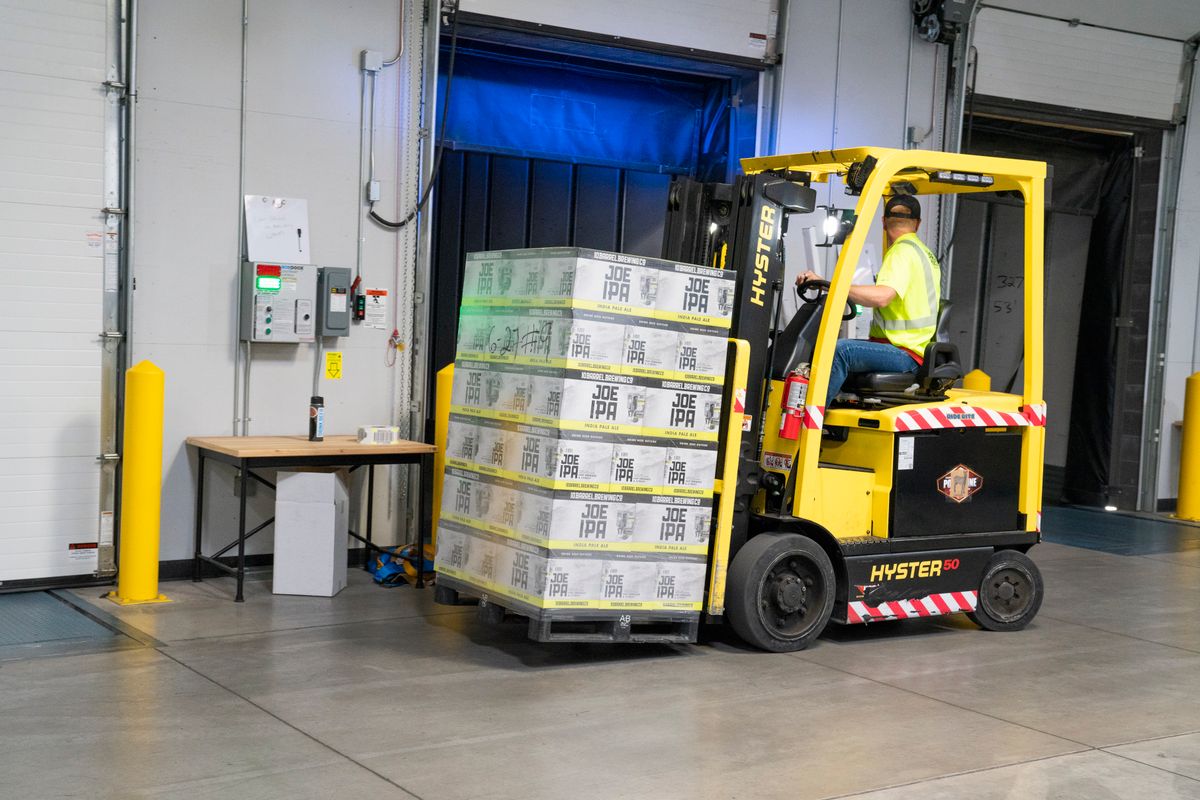
Of OSHA's three struck-by categories, the deadliest is the one people barely plan for: being struck by a vehicle. Falling objects get hard hats and toeboards; swinging loads get riggers and fall zones. But a worker on foot, struck by a backing dump truck or pinned against a wall by a loader, is behind much of the struck-by toll — and about 75% of all struck-by fatalities involve heavy equipment such as trucks or cranes. OSHA notes that one in four "struck-by-vehicle" deaths involves a construction worker — more than any other occupation (OSHA construction struck-by eTool).
This is the hazard the Struck-By Safety hub points to but the equipment-inspection articles don't cover: not the machine's condition, but its movement around people. This guide covers what OSHA actually requires, and the controls that work.
On construction sites, OSHA requires any vehicle or earthmoving machine with an obstructed rear view to have a reverse-signal alarm audible above the surrounding noise or to back up only when an observer signals it is safe, under 29 CFR 1926.601(b)(4) and 1926.602(a)(9), and flaggers in work zones must follow Part 6 of the MUTCD under 1926.201(a).
The reverse-alarm rule (1926.601(b)(4)) is the minimum
The OSHA rule most contractors know is the backup alarm. Under 29 CFR 1926.601(b)(4), "No employer shall use any motor vehicle equipment having an obstructed view to the rear unless: (i) The vehicle has a reverse signal alarm audible above the surrounding noise level or: (ii) The vehicle is backed up only when an observer signals that it is safe to do so."
For earthmoving and compacting equipment, the parallel rule is 1926.602(a)(9)(ii): an operator may not use such equipment in reverse with an obstructed rear view unless it has a working "reverse signal alarm distinguishable from the surrounding noise level or an employee signals that it is safe to do so." And bidirectional machines — rollers, compactors, front-end loaders, bulldozers — must have a horn distinguishable from the surrounding noise level operated as needed in either direction (1926.602(a)(9)(i)).
Read those carefully and notice the "or." OSHA gives you two ways to comply: an alarm, or a spotter. Many sites install the alarm and stop there, which leaves the more effective layers undone. A reverse alarm on a jobsite with a dozen beeping machines becomes background noise within an hour; workers on foot tune it out; and the alarm does nothing for a worker who hears it but can't move clear in time. The alarm satisfies the letter of 1926.601(b)(4). It does not, on its own, prevent the death.
The controls that actually stop a backover
Backovers respond to the same hierarchy of controls as any other hazard — and the alarm sits near the bottom.
Backover controls, most effective first
The alarm is the OSHA minimum (1926.601(b)(4)); the top three are what keep workers alive.
- Eliminate the backing. The most reliable control is to design the site so trucks rarely reverse: drive-through material drops, turnaround bulbs, and one-way haul loops. A vehicle that doesn't back up can't back over anyone.
- Separate people from equipment (the ITCP). An internal traffic control plan coordinates the movement of vehicles, equipment, and workers on foot inside the work space — travel routes, access points, exclusion zones, and where spotters stand. It is a NIOSH/FHWA recommended practice, not a codified OSHA rule, but it attacks the hazard at its source, and the General Duty Clause can reach a recognized backover hazard left uncontrolled.
- Use a spotter when backing is unavoidable — the standard's second option. A spotter is a defined role, not "someone nearby": trained, in agreed signals, in the operator's view at all times, and never positioned between the vehicle and a fixed object (the spotter-crush hazard). If the operator loses sight of the spotter, the vehicle stops.
- Then the warning layer. The reverse alarm and high-visibility apparel are the last line — necessary, required, but the least reliable on their own.
Work zones: flaggers and high-visibility apparel (1926.201)
On roadway and highway construction, the vehicle striking the worker is often public traffic, and a second set of rules applies. Under 29 CFR 1926.201(a), "signaling by flaggers and the use of flaggers, including warning garments worn by flaggers, shall conform to Part 6 of the MUTCD" — the Manual on Uniform Traffic Control Devices, incorporated by reference. Part 6 is what specifies the temporary-traffic-control zone, the advance-warning area, the flagger stations, and the ANSI/ISEA 107 high-visibility garments flaggers must wear.
There is no stand-alone OSHA high-visibility apparel standard for general construction — but that does not make hi-vis optional. Wherever workers on foot are exposed to traffic or moving equipment, 1926.28(a) requires appropriate PPE, and the competent-person inspections of 1926.20(b)(2) are where the gap gets caught, and for work zones the MUTCD requirement is enforced through 1926.201 and, where a specific provision doesn't reach, the General Duty Clause. In practice: flaggers and workers exposed to public traffic wear ANSI/ISEA 107 Class 2 or Class 3 garments, and the work zone is set up to MUTCD Part 6.
Where struck-by-vehicle sits in the enforcement record
This is the uncomfortable part, and the reason this hazard is so easy to under-manage: it barely shows up in OSHA citations. The motor-vehicle standard (1926.601) and earthmoving standard (1926.602) are nowhere near OSHA's most-cited construction standards, which are dominated by fall protection, ladders, scaffolds, and PPE. A struck-by-vehicle hazard is dynamic — it exists in the seconds a machine is moving — so a walkaround inspection rarely catches it, and the citation record makes the danger look smaller than the fatality record says it is. (The full analysis is in The Struck-By Paradox.)
The practical consequence: you can pass an OSHA inspection with a clean sheet and still run an unmanaged backover risk every day. The citation Top 10 won't warn you. The site layout — where people walk and where machines back up — will tell you the truth.
The pre-shift check that ties in
The one struck-by-vehicle control that does leave a paper trail is the equipment inspection. Every construction vehicle is checked at the beginning of each shift for the parts that affect safe operation: brakes, tires, horn, steering, coupling devices, seat belts, operating controls, and safety devices, with every defect corrected before the vehicle is placed in service (1926.601(b)(14)). A reverse-signal alarm relied on under 1926.601(b)(4) belongs on that check. A dead backup alarm caught on the morning check, tagged out, and logged is both a compliance record and a real control. The Equipment & Scaffold Inspection tool logs that check with the tag-out and a photo.
What to do next
- Map your traffic. Draw where vehicles travel and where workers walk. Every place the two cross is a backover risk — fix the layout first.
- Write an internal traffic control plan that minimizes backing, separates people from equipment, and names spotter positions. Standardize the hazards and controls with a Job Hazard Analysis.
- Make the spotter a real role — trained, agreed signals, always visible, never in the path. Brief it with a Toolbox Talk.
- Check the alarm and require hi-vis — the warning layer, on the pre-shift equipment inspection, with ANSI/ISEA 107 garments around traffic and equipment.
- For roadway work, set the zone to MUTCD Part 6 and put flaggers in the required garments (1926.201).
For the full struck-by picture across forklifts, cranes, scaffolds, and falling objects, start at the Struck-By Safety hub.
Sources & verification (read on the eCFR and osha.gov, October 6, 2026): reverse-signal-alarm rules 29 CFR 1926.601(b)(4) and 1926.602(a)(9)(i)/(ii) quoted verbatim; flaggers and warning garments per 1926.201(a) (MUTCD Part 6); the pre-shift vehicle check per 1926.601(b)(14); struck-by fatality framing ("another leading cause of construction-related deaths," "~75% heavy equipment," "one in four struck-by-vehicle deaths") from OSHA's construction struck-by eTool, read October 6, 2026; 2024 construction/extraction fatality total from the BLS Census of Fatal Occupational Injuries (released February 2026). The internal traffic control plan is a NIOSH/FHWA recommended practice, not a codified OSHA standard. Penalty and enforcement context per 29 CFR 1903. General guidance, not legal advice; State Plans may impose additional requirements.
Frequently Asked Questions
What OSHA rule requires a backup alarm on a construction vehicle?
29 CFR 1926.601(b)(4): no employer may use a motor vehicle with an obstructed view to the rear unless the vehicle has a reverse-signal alarm audible above the surrounding noise level, OR it is backed up only when an observer signals that it is safe to do so. For earthmoving and compacting equipment, the parallel rule is 1926.602(a)(9)(ii); bidirectional machines like rollers, loaders, and dozers must also have a horn distinguishable from the noise level (1926.602(a)(9)(i)).
Is a backup alarm alone enough to prevent backovers?
No. An alarm is one acceptable option under 1926.601(b)(4), but backup alarms are routinely tuned out on a noisy site and don't help a worker who can't hear or can't move in time. The reliable defenses sit higher in the hierarchy of controls: design the site so vehicles rarely back up (drive-through routing, turnarounds), separate people from equipment with an internal traffic control plan, and use a trained spotter when backing is unavoidable — the second option the standard actually gives you.
Does OSHA require high-visibility clothing on a construction site?
There is no stand-alone OSHA high-visibility apparel standard for general construction; the duty flows from 29 CFR 1926.28(a), which makes the employer require appropriate PPE wherever workers are exposed to hazardous conditions, such as traffic or mobile equipment. For flaggers and roadway work zones, high-visibility warning garments are required because 29 CFR 1926.201(a) makes flagger signaling and apparel conform to Part 6 of the MUTCD, which specifies ANSI/ISEA 107 garments. A missing-hi-vis exposure can be cited under 1926.201, 1926.28(a), or the General Duty Clause, as applicable.
What is an internal traffic control plan (ITCP)?
An internal traffic control plan coordinates the movement of construction vehicles, equipment, and workers on foot INSIDE the work space — as opposed to the external traffic control (the MUTCD temporary-traffic-control zone) that manages public traffic around it. The ITCP separates people from equipment, minimizes backing, and defines travel routes, access points, and spotter locations. It is a NIOSH/FHWA recommended practice, not a codified OSHA standard: 29 CFR 1926.601(b)(4) and 1926.602(a)(9) cover only alarms and observers. It is one of the most effective ways to prevent worker backovers because it removes people from the backing path.
Are struck-by-vehicle incidents the leading struck-by hazard?
OSHA's construction struck-by eTool calls struck-by 'another leading cause of construction-related deaths,' says about 75% of struck-by fatalities involve heavy equipment such as trucks or cranes, and notes that one in four 'struck-by-vehicle' deaths involves a construction worker, more than any other occupation. The OSHA rules aimed squarely at it are the backing rules of 29 CFR 1926.601(b)(4) and 1926.602(a)(9). In 2024, U.S. construction and extraction work recorded 1,032 fatal injuries (BLS Census of Fatal Occupational Injuries).
OSHA figures and citations here come from our regulatory source-of-truth modules, last checked against the eCFR, OSHA.gov, and the Federal Register on October 5, 2026. Last reviewed October 6, 2026.
About This Article
Published by: HazComFast
Published: July 23, 2026
Last Updated: October 6, 2026
This content is for informational purposes only and does not constitute legal advice.