Urgent: Nov 20, 2026 — HCS 2024 Final Rule: Labels & Training Update DeadlineHCS 2024 Deadline. Get ready →
Safety data sheet
Great Stuff Gaps & Cracks Insulating Foam Sealant SDS
The maker's sheet for Great Stuff Gaps & Cracks Insulating Foam Sealant lists nine hazard classes, among them flammable aerosols, Category 2, so it is a hazardous chemical as 29 CFR 1910.1200(c) defines it. The HazCom program, label, sheet and training paragraphs follow ((e)(1), (f)(6), (g)(8) and (h)(1)), unless a scope paragraph of (b) takes the product out.
Product as the sheet names it
GREAT STUFF™ Gaps & Cracks Insulating Foam Sealant 12oz HC ES SASTW 12ct
Maker
DDP Specialty Electronic Materials US 9, LLC
Product number
The sheet prints none
Revision date as read on Oct 21, 2026
Mar 14, 2024 (the sheet calls it "Issue date")
Great Stuff Gaps & Cracks Insulating Foam Sealant, 12 oz can. The Pro, Big Gap Filler and other products have their own sheets.
Read in the maker's sheet on October 21, 2026: no product number printed, Issue date Mar 14, 2024, 26 pages. The maker's version is the one that counts.
GREAT STUFF™ Gaps & Cracks Insulating Foam Sealant 12oz HC ES SASTW 12ct: facts read in the safety data sheet, by section
Section 2, hazards
Section 2 lists flammable aerosols Category 2, gases under pressure (liquefied gas), acute toxicity by inhalation, skin and eye irritation, respiratory and skin sensitization, effects on lactation, and target organ toxicity.
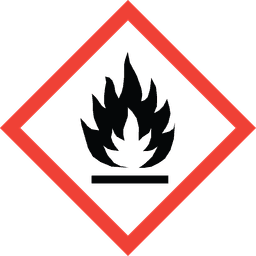
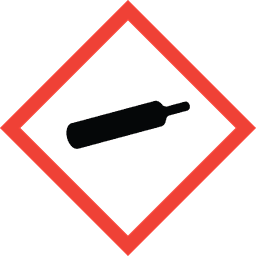
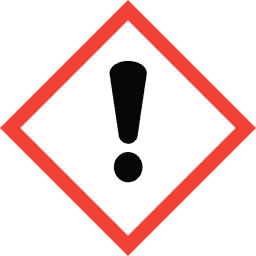
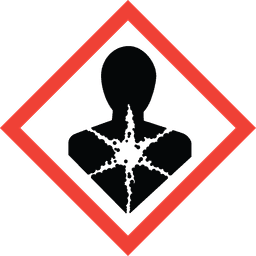
Signal word: Danger. Pictograms: Flame (GHS02), Gas Cylinder (GHS04), Exclamation Mark (GHS07), Health Hazard (GHS08).
Hazard statements: H223, H280, H315, H319, H317, H332, H334, H335, H362, H373. Their text, in English and Spanish, is on the label below.
Section 3, ingredients
Four isocyanate ingredients at 10 to 30 % each: diphenylmethane diisocyanate, isomers and homologues (CAS 9016-87-9), 4,4'-methylenediphenyl diisocyanate (CAS 101-68-8, an MDI isomer that is part of 9016-87-9), and two polymeric isocyanates (CAS 57029-46-6 and 53862-89-8).
Isobutane (CAS 75-28-5) at 7 to 13 %, chlorinated paraffin and hydrocarbon waxes (CAS 63449-39-8) and tris(1-chloro-2-propyl) phosphate (CAS 13674-84-5) at 5 to 10 % each, and methyl ether (CAS 115-10-6) and propane (CAS 74-98-6) at 1 to 5 % each.
Section 4, first aid
Inhaled: move to fresh air. Give artificial respiration if not breathing, and oxygen from qualified personnel if breathing is difficult. Call a physician or go to a medical facility.
Skin: wash at once with soap and plenty of water and remove contaminated clothing and shoes. After MDI exposure a polyglycol-based skin cleanser or corn oil may work better than soap and water. Seek medical attention if irritation persists.
Eyes: flush at once with water, remove contact lenses after the first 5 minutes, keep flushing for at least 15 minutes, and get medical attention without delay, preferably from an ophthalmologist.
Swallowed: seek medical attention and do not induce vomiting unless medical personnel direct it.
The sheet says a suitable emergency eye wash and safety shower should be available in the work area, and that people with significant exposure should be observed for 24 to 48 hours for signs of respiratory distress.
Section 5, fire fighting
Use water fog or fine spray, dry chemical, carbon dioxide or foam, with alcohol-resistant foam preferred. Do not use a direct water stream.
Aerosol cans exposed to fire can rupture and become flaming projectiles, and propellant release may result in a fireball. Vapors are heavier than air and can travel a long distance and collect in low areas.
Combustion products can include nitrogen oxides, isocyanates, hydrogen chloride, carbon monoxide, carbon dioxide and hydrogen cyanide, and burning gives dense smoke.
Section 7, handling and storage
Keep away from heat, sparks and flame; no smoking, open flames or sources of ignition in handling and storage areas.
The contents are under pressure: do not puncture or incinerate the container, even when empty, and never use air pressure to transfer the product.
Vapors are heavier than air and may travel a long distance and accumulate in low areas, where ignition and flash back may occur.
Section 8, exposure limits
OSHA PEL for 4,4'-methylenediphenyl diisocyanate (MDI): 0.02 ppm (0.2 mg/m3) (ceiling)
OSHA PEL for propane: 1000 ppm (TWA)
Section 8, protection
Respiratory protection: When atmospheric levels may exceed the exposure guideline, use an approved air-purifying respirator with an organic vapor sorbent and a particle filter; a positive-pressure device where that is not effective.
Safety glasses with side shields.
Gloves chemically resistant to the material.
The sheet does not name eyewash equipment.
Section 9, flash point
closed cup -155 °F (-104 °C)
Section 9, other properties
Yellow foam with a mild odor. PH not applicable. Not explosive.
Relative density 1.06 (estimated). Insoluble in water. Vapor pressure 1,151 hPa at 55 °C (131 °F), with the container under pressure.
Section 10, what to avoid
Avoid temperatures above 50 °C. High temperatures can make the container vent or rupture.
Avoid contact with acids, alcohols, amines, ammonia, bases, metal compounds and strong oxidizers. Products based on diisocyanates such as MDI react with many materials and release heat, and the reaction can become violent.
Section 14, transport
UN1950, Aerosols, hazard class 2.1.
What this product triggers under OSHA
Section 8 mentions a respirator: the employer provides one when necessary to protect health and keeps a respiratory protection program. (29 CFR 1910.134(a)(2); 1926.103)
Section 8 lists OSHA PELs for 4,4'-methylenediphenyl diisocyanate (MDI) and propane; the tables are 1910.1000 and, in construction, Table 1 of 1926.55. (29 CFR 1910.1000; 1926.55)
A classified product brings a written program with its chemical list, training, an accessible sheet and workplace labels. (29 CFR 1910.1200(c), (e)(1), (f)(6), (g)(8), (h)(1); 1926.59)
Container label from this SDS
For a container of Great Stuff Gaps & Cracks Insulating Foam Sealant you fill at work (29 CFR 1910.1200(f)(6)).
GREAT STUFF™ Gaps & Cracks Insulating Foam Sealant 12oz HC ES SASTW 12ct
Danger / Peligro
Flame / Llama
Gas Cylinder / Cilindro de gas
Exclamation Mark / Signo de exclamación
Health Hazard / Peligro para la salud
Hazard statements in English and Spanish
Code
English (as the sheet prints it)
Español (official European text)
H223
Flammable aerosol.
Aerosol inflamable.
H280
Contains gas under pressure; may explode if heated.
Contiene gas a presión; peligro de explosión en caso de calentamiento.
May cause allergy or asthma symptoms or breathing difficulties if inhaled.
Puede provocar síntomas de alergia o asma o dificultades respiratorias en caso de inhalación.
H335
May cause respiratory irritation.
Puede irritar las vías respiratorias.
H362
May cause harm to breast-fed children.
Puede perjudicar a los niños alimentados con leche materna.
H373
May cause damage to organs (Respiratory Tract) through prolonged or repeated exposure if inhaled.
English only
The label carries 9 precautionary statements (P201, P210, P211, P251, P260, P264, P270, P271, P272, P280, P284, P302, P352, P304, P340, P312, P305, P351, P338, P308, P313, P333, P337, P362, P403, P233, P405, P410, P412, P501), and the PDF prints their full text. 11 of its 18 lines have official Spanish; a line marked English only has none that says the same.
Finding the Great Stuff Gaps & Cracks Insulating Foam Sealant sheet is the easy part
Keeping every sheet read, current and ready for an inspector is the work that never ends. HazComFast does it with your crew: the AI extracts each sheet, and every reading leaves a proof.
Extraction: the AI reads every sheet
Scanned, long or in Spanish, it reads
Drop in the Great Stuff Gaps & Cracks Insulating Foam Sealant sheet, scanned or not, in English or Spanish. HazComFast reads every page, with progress shown page by page, so a 32-page sheet gets read to the last page.
Every section a foreman needs
Composition, spill response, storage, physical properties, stability and toxicology land on the product page with their source, so the sections a foreman actually needs aren't buried in a PDF.
The AI proposes, a person signs off
Each hazard shows where it came from: extracted from the sheet, or confirmed by a named person on a date. Confidence is measured against the text of the sheet, and below a floor every field is checked by hand before it saves.
A pictogram is never guessed
A pictogram only goes on your label if it's actually on the sheet or follows from its H-codes. H225 on the sheet means GHS02 and DANGER on the label, derived from OSHA's Appendix C.
Checked against 200 real sheets
Every change to the AI is checked against a reference set of 200 real SDSs before it ships. A field it isn't sure about is highlighted for you to check, and the inventory flags products whose extraction hasn't been validated yet.
Proof of reading, without the chasing
Nobody has to remember to ask
Add a hazardous product to a site and every worker there gets one notice with a 7-day due date. A reminder follows at day 3 and an escalation at day 7.
“I read it” can't be a reflex tap
The confirm button stays grey until the worker has scrolled through first aid or to the last page of the PDF and has spent 15 seconds there. The record keeps how long and how far.
A proof of reading the worker keeps
The worker ticks an attestation, and the record keeps which SDS version they read, the server time and the device. They can download their own PDF of it.
A new sheet means a new reading
When a manufacturer updates a sheet and the hazards change, everyone who confirmed the old one is asked to read the new one. Each confirmation keeps which version they read, for which jobsite.
Who read what, in one console
See who hasn't read what, nudge everyone overdue in one click, and export last month's confirmations for one jobsite, each with the SDS version they read.
The reading joins the training file
Each confirmed reading also lands in the worker's training file as a HazCom reading record, so your training records and your SDS records tell the same story.
From the sheet to the label
A label that can't go out empty
A label with five pictograms keeps all five, because the format switches. A label with no hazard information won't print. When the sheet changes, you get a relabeling task with its six-month deadline.
English and Spanish, side by side
Hazard and precautionary statements show in English and Spanish on every product page. A Spanish sheet that says PELIGRO is recorded as DANGER, and the original file stays attached as you received it.
Every print on record
Every print run is logged with exactly what went on the labels. When a hazard changes, the relabel task can only be closed by a print made after the change.
In the field, on the phone
Scan the drum
Scan the QR code on a drum and the page shows the maker and the CAS number under the title, so you know you hold the right one. A drum taken out of inventory still opens its SDS, marked as removed.
Search inside the sheet
Type “eye contact” and you land on first aid. Pinch to zoom on the small print.
Still there with no signal
Offline, the worker opens the sheet itself, with first aid and what to do in a spill. “Available offline” only shows when the PDF is on the phone.
When the inspector asks
The binder, in one click
One click gives you the jobsite's SDS binder, with Great Stuff Gaps & Cracks Insulating Foam Sealant in it, as a ZIP with a CSV index, and a dated CSV or PDF of who confirmed reading what. That is what you hand an inspector or a GC.
No expired-sheet myth
HazComFast never tells you a sheet has expired, because OSHA doesn't set an expiration date. You choose your own review interval, and the app labels it as your internal policy.
The chemical list behind it
Bring your spreadsheet
Imported products get the same pictograms as ones entered by hand, and importing the same file twice doesn't duplicate anything.
Each product, at every site
Each product page shows every site it's stored at with quantities, and warns you if something incompatible is stored at the same site.
A program that stays true
The chemical list in your HazCom program is built from each jobsite's inventory. Remove a product and the program tells you the list is out of date, with a button to rebuild it.
Start with the free SDS Binder Kit. It works with nothing but a printer.
Questions about Great Stuff Gaps & Cracks Insulating Foam Sealant
Where do I get the SDS for Great Stuff Gaps & Cracks Insulating Foam Sealant?
From DDP Specialty Electronic Materials US 9, LLC. The button at the top of this page opens its own copy (no product number printed, Issue date Mar 14, 2024). It covers Great Stuff Gaps & Cracks Insulating Foam Sealant, 12 oz can. The Pro, Big Gap Filler and other products have their own sheets.
Is Great Stuff Gaps & Cracks Insulating Foam Sealant a hazardous chemical under OSHA?
Yes: Section 2 lists nine hazard classes, among them flammable aerosols, Category 2 (29 CFR 1910.1200(c)).
 Flame / Llama
 Gas Cylinder / Cilindro de gas
 Exclamation Mark / Signo de exclamación
 Health Hazard / Peligro para la salud