Three completely independent datasets — how construction workers die, what OSHA cites, and where the penalty dollars go — all point at the same hazard. Falls are #1 in each. That convergence is not a coincidence, and it is not bureaucratic inertia. It is the clearest evidence that OSHA enforcement tracks the body count: the agency cites hardest, and penalizes most, exactly where workers are actually being killed. This analysis lays the three datasets side by side, shows how tightly they align, and asks the harder question — why, after decades as the most-regulated hazard in construction, do falls still lead the death toll?
The convergence, FY2025 / 2024: Falls are about 38% of construction deaths (389 of 1,034) · the #1 most-cited construction standard (6,772 citations) · and 41% of all penalty dollars in one standard, 47% across the fall family. Deaths, citations, and dollars, all first.
Falls caused about 38% of the 1,034 construction-industry deaths in 2024; fall protection (29 CFR 1926.501) drew 6,772 federal construction citations in FY2025, the most of any standard; and the fall-protection family accounted for about 47% of construction penalty dollars.
Three datasets, one hazard
Take the three measures one at a time — each built from different data, by different parts of the government, for different purposes — and watch them land on the same answer.
Falls rank #1 across three independent measures
Sources: BLS Census of Fatal Occupational Injuries (2024); OSHA Frequently Cited Standards, construction NAICS 23 (FY2025). Three datasets, one hazard.
The fatality data comes from death certificates and workplace investigations compiled by the Bureau of Labor Statistics. The citation and penalty data come from OSHA compliance officers writing up worksites. Nobody coordinated these numbers — and yet the standard OSHA cites most (1926.501) addresses the mechanism that kills most (falls), and absorbs the most penalty dollars. Enforcement is a mirror of the morgue.
The fall family: 36% of citations, 47% of dollars
Fall protection is not one rule but a family of three, and taken together the concentration sharpens. OSHA cites the duty to provide protection (1926.501), the training to use it (1926.503), and the systems criteria for the gear itself (1926.502).
The fall-protection family's share of FY2025 construction enforcement
1926.501 + 1926.503 + 1926.502, against all construction citations and dollars
Falls are 36–38% of construction deaths depending on the cut — 38% of the 1,034 deaths in the construction industry (NAICS 23), 36% of the 1,032 deaths among construction occupations — and the fall family is 36% of citations. However you slice the mortality, the enforcement share lands within a point or two of it. Penalty dollars run higher still (47%), because fall violations are frequently classified serious or willful.
The convergence is the analytical heart of this piece, and it holds however you measure it. Falls lead construction death on every cut of the data — 38% of the 1,034 deaths in the construction industry (NAICS 23), and 36% of the 1,032 deaths among construction occupations — while the fall-protection family draws 36% of construction citations. Whichever mortality figure you use, it lands within a point or two of the enforcement share. OSHA's effort on falls is proportioned almost exactly to how lethal falls are, no matter how you slice the numbers. The penalty dollars run higher still (47%) because fall exposures are so often rated high-severity — a fall from height is, by definition, a potentially fatal event, which pushes it toward the top of the gravity-based penalty matrix.
The physics behind the six-foot line
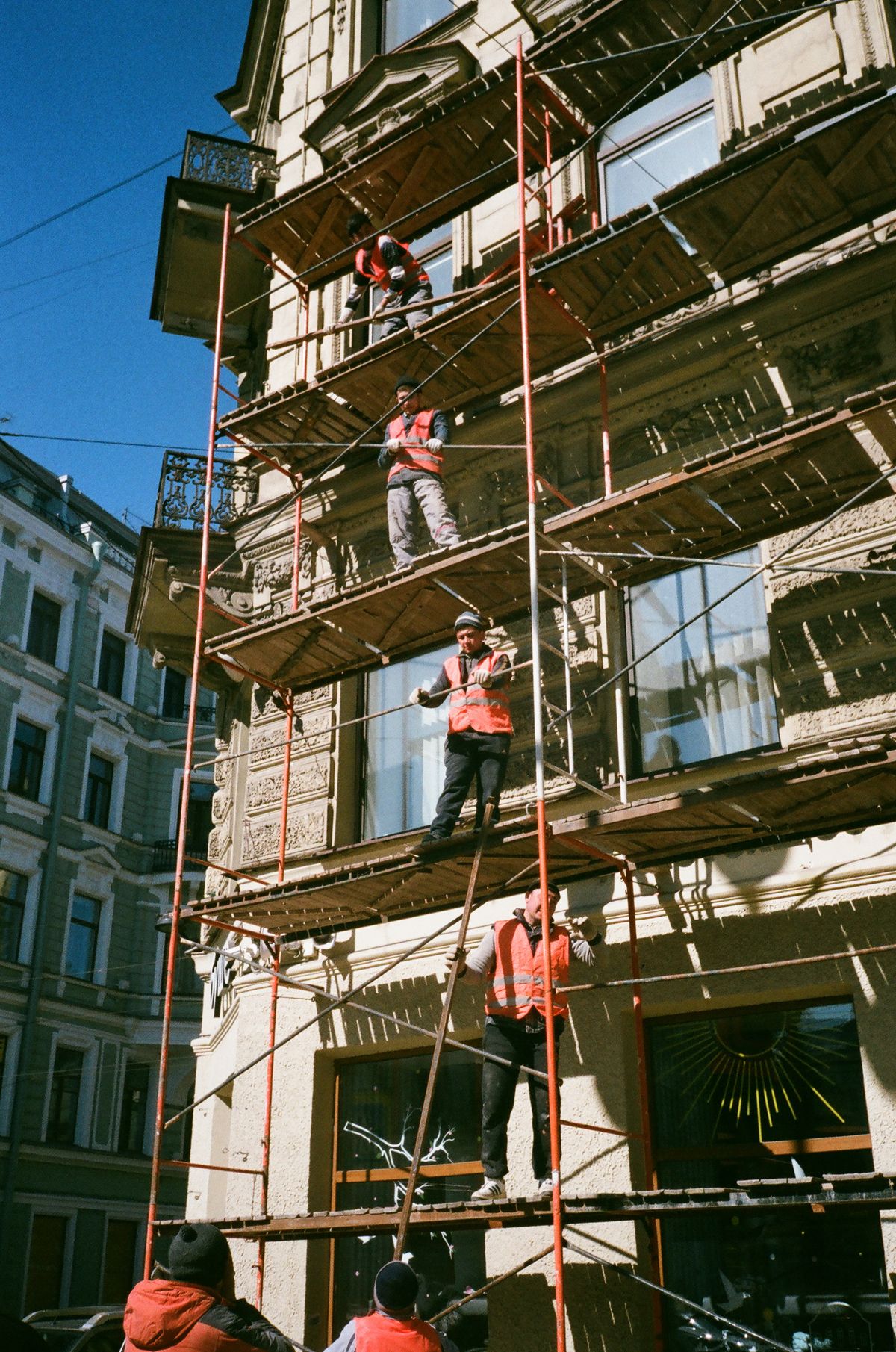
Why does construction's fall-protection trigger sit at 6 feet (1926.501), lower than the 10-foot scaffold trigger but higher than general industry's 4 feet? Because the data on fatal falls made the line necessary. Falls from the 6-to-30-foot range — a second story, a low roof, a mezzanine, the top of a truck — are routinely fatal; a head-first fall from even one story can kill or cause permanent brain injury. The six-foot rule is not arbitrary caution; it marks the height at which an ordinary construction fall becomes a life-threatening one. A worker does not have to be on a high-rise to be in the deadliest category — most construction fall deaths happen well below it.
The paragraphs that set the lines: 6 feet at unprotected sides and edges in construction (29 CFR 1926.501(b)(1)), more than 10 feet on a scaffold (29 CFR 1926.451(g)(1)), 4 feet in general industry (29 CFR 1910.28(b)(1)(i)), and, once a personal fall arrest system is in use, a free fall of no more than 6 feet with no contact with a lower level (29 CFR 1926.502(d)(16)(iii)).
That is also why the training standard (1926.503) is the third most-cited construction standard on its own. Equipment that isn't understood isn't protection. A harness clipped to the wrong anchor, a lifeline with too much slack, a worker who doesn't know the difference between fall restraint and fall arrest — each is a fatal gap that a signed, competent training record is meant to close. That record is itself a rule: a written certification with the employee's name, the training dates, and the signature of the trainer or the employer (29 CFR 1926.503(b)(1)).
Why the most-regulated hazard is still the deadliest
Here is the uncomfortable finding: 29 CFR 1926.501 topped OSHA's list of most-cited standards for FY2025, and falls are still the leading cause of construction death. Regulation has not solved the problem. Why?
- The hazard is constant, the exposure is brief. Fall protection must be re-established at every edge, every roof, every scaffold, every shift. A single unprotected minute is enough. Unlike a chemical exposure that builds over time, a fall is instantaneous and unforgiving.
- The shortcut is always available. The harness is in the truck; tying off takes time; the job is "just five minutes." The most-cited willful fall cases share this fact pattern — protection was available and not used.
- Small employers dominate the risk. Residential roofing and small framing crews, where safety programs are thinnest, account for a large share of fall deaths. The regulation applies equally; the safety infrastructure does not.
Real enforcement shows the pattern in dollars: a Texas roofing contractor cited $223,341 after a 21-year-old fell 30 feet through a skylight — a repeat within a month of a prior citation; an Ohio Severe Violator at $730,000 for unprotected fall exposure, one of a long string of citations; a Pennsylvania employer at $328,143 for repeatedly exposing workers to unprotected falls. None are exotic. They are the ordinary shape of the 6,772 fall citations, sized up. (Verified OSHA news releases.)
What the convergence means for a contractor
- If you fix one thing, fix falls. The data is unambiguous: falls are where workers die and where OSHA concentrates. A program that verifiably controls leading-edge work, roof work, ladders, and scaffolds removes most of both the mortality and the enforcement risk. See the Fall Protection hub and the fall protection construction guide.
- Document the training. 1926.503 is the third most-cited standard alone — a perfectly equipped worksite still draws a citation without training records. See what a training record should hold.
- Treat 6 feet as a red line, not a guideline. The height exists because that is where ordinary falls turn fatal. There is no "low enough to skip it" in the deadly range.
- The fine is the smallest cost. A $45-million enforcement total across the industry is dwarfed by the human and financial cost of 389 deaths. See the true ROI of safety.
Deaths, citations and dollars all point to falls
When three independent datasets — deaths, citations, and dollars — all rank the same hazard first, that is not statistical noise; it is signal. Falls kill the most construction workers, draw the most OSHA citations, and absorb the most penalty dollars, and the share of enforcement effort tracks the share of deaths almost to the percentage point. The regulation is not the failure — the lapse is. For a contractor, the convergence is the clearest instruction the data can give: put the money, the training, and the attention where the workers are actually dying.
If you fix one thing, fix falls
The data is unambiguous — falls are where workers die and where OSHA concentrates. Build a verifiable fall-protection program and document the training that a citation checks for.
Related: Fall Protection hub · FY2025 Construction Enforcement Data · How OSHA Prices a Violation · Fall Protection in Construction (OSHA 2026) · Fall Protection Standard 1926.501
Sources & verification (federal counts extracted August 15, 2026; re-checked September 26, 2026): Fatality data from the U.S. Bureau of Labor Statistics Census of Fatal Occupational Injuries (2024): 1,034 construction-industry deaths (NAICS 23), 389 from falls, slips, and trips (about 38%). BLS also reports a construction-occupation cut (SOC): 1,032 deaths, 370 falls/slips/trips (about 36%). Both are correct; this analysis uses the industry cut to match its NAICS-23 enforcement data, and the fall share of deaths (36–38%) tracks the fall-family citation share (36%) on either cut. Enforcement data from OSHA's Frequently Cited Standards tool, construction (NAICS 23), federal jurisdiction, FY2025: 1926.501 = 6,772 citations / $44,891,816; fall family (1926.501 + 1926.503 + 1926.502) = 9,608 citations / $51,587,893; totals 26,559 citations / $108,975,539. All-industry #1 rank for FY2025 from osha.gov/top10citedstandards, which shows the current fiscal year only. The 6-foot construction trigger is 29 CFR 1926.501(b). Enforcement cases from OSHA news releases (primary source). Percentages are arithmetic on the published counts; penalties are OSHA's current amounts, not the amounts first proposed. Not legal advice.
Frequently Asked Questions
Why is fall protection OSHA's most-cited construction standard?
Because it addresses the leading cause of construction death and its violations are highly visible. Falls, slips, and trips killed 389 of the 1,034 workers who died in the construction industry in 2024 — about 38%. In FY2025, fall protection (29 CFR 1926.501) drew 6,772 federal construction citations and roughly $44.9 million in penalties, both the most of any construction standard. An inspector can see an unprotected leading edge or an untied worker from the ground, so the citations are easy to write and the hazard is deadly serious.
At what height does OSHA require fall protection in construction?
Six feet. Under 29 CFR 1926.501, construction employers must provide fall protection for workers exposed to falls of 6 feet or more to a lower level (the general-industry trigger is 4 feet, and scaffolds use 10 feet). Falls from even the 6-foot trigger height are routinely fatal — many construction fall deaths occur in the 6-to-30-foot range — which is why the standard sets the line where it does.
How much of OSHA construction enforcement is about falls?
A striking share. In FY2025 the fall-protection family — the duty to provide it (1926.501), the training requirement (1926.503), and the systems criteria (1926.502) — accounted for 9,608 citations, about 36% of all 26,559 construction citations, and roughly $51.6 million, about 47% of the $109.0 million in penalties (current amounts). Falls dominate every measure of construction enforcement.
If falls are so regulated, why do they still kill so many workers?
Because the hazard is constant, the exposure is brief, and the shortcut is tempting. Fall protection has to be re-established at every edge, every roof, every scaffold, every shift — a single unprotected moment is enough. The most common failures are familiar: no anchor point, a harness left in the truck 'to save time,' a leading edge worked without a guardrail, or a ladder used instead of proper access. The regulation is clear; the lapse is human. The rule attaches to every exposure, not to the job as a whole: each employee at an unprotected side or edge 6 feet or more above a lower level must be protected (29 CFR 1926.501(b)(1)) and trained by a competent person (29 CFR 1926.503(a)(1)-(2)).
Where do these numbers come from?
Fatality figures are from the U.S. Bureau of Labor Statistics Census of Fatal Occupational Injuries (2024): 1,034 construction-industry deaths, 389 of them falls, slips, or trips. Enforcement figures are from OSHA's Frequently Cited Standards tool for construction (NAICS 23), federal jurisdiction, FY2025. Every percentage is arithmetic on those published counts. The 6-foot trigger itself is 29 CFR 1926.501(b)(1).
OSHA figures and citations here come from our regulatory source-of-truth modules, last checked against the eCFR, OSHA.gov, and the Federal Register on October 5, 2026. Last reviewed October 6, 2026.
About This Article
Published by: HazComFast
Published: July 8, 2026
Last Updated: October 6, 2026
This content is for informational purposes only and does not constitute legal advice.