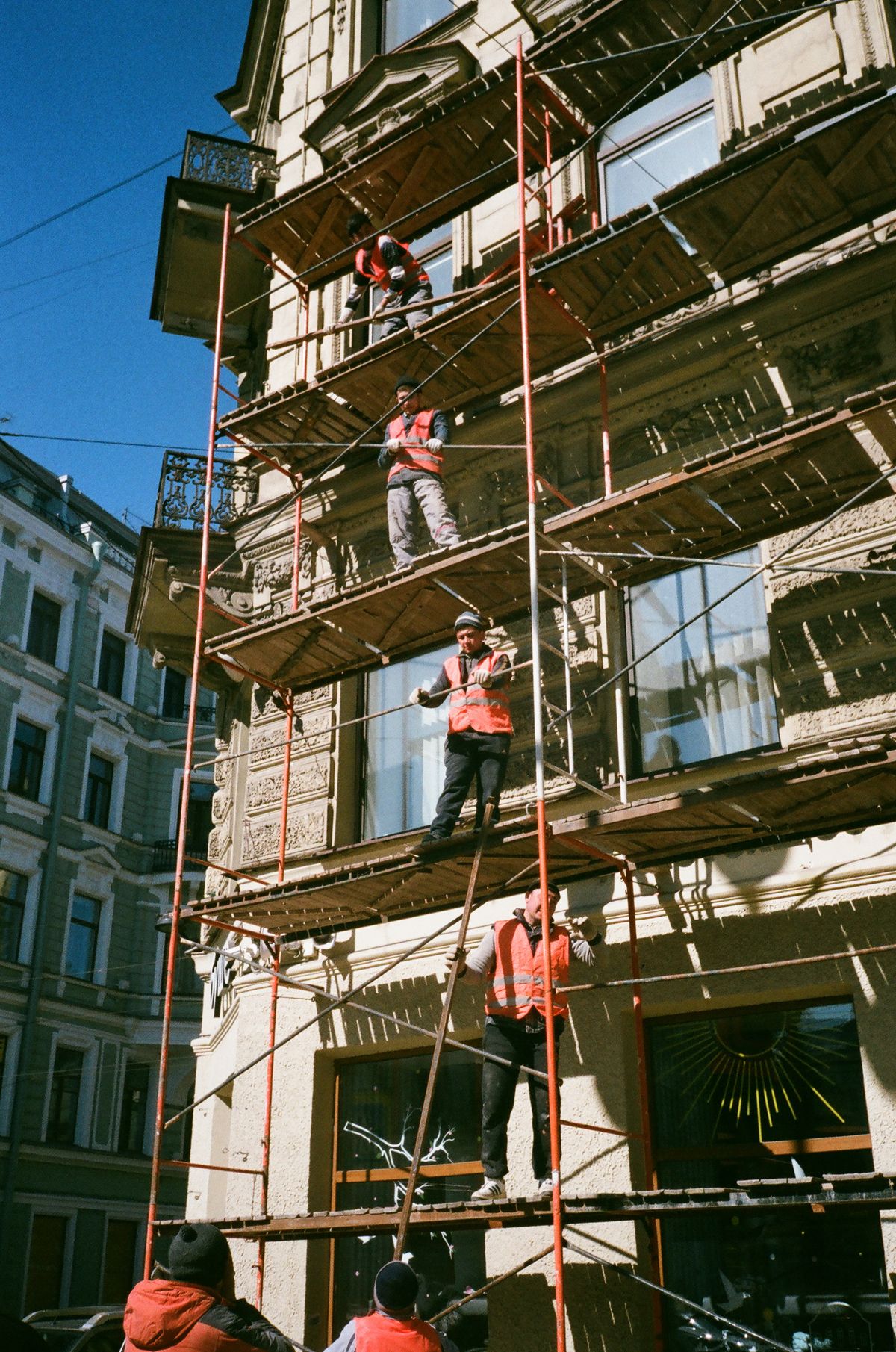
In construction, fall protection is required whenever an employee works 6 feet or more above a lower level (29 CFR 1926.501(b)(1)). You meet that duty with one of three systems - a guardrail, a safety net, or a personal fall arrest system (PFAS) - and you must designate a competent person to find hazards and pull bad equipment out of service. 29 CFR 1926.501 is first in OSHA's Top 10 most-cited standards for fiscal year 2025, and falls are the leading cause of death in construction. This is the one standard every superintendent, foreman, and safety pro must know cold.
The numbers: why fall protection is non-negotiable
Falls are the leading cause of death in construction: in 2024, 389 of the 1,034 construction deaths were falls to a lower level (BLS data, as OSHA reports it on its Stop Falls campaign page). OSHA's fall protection standard, 29 CFR 1926.501 (Subpart M), is first in the agency's Top 10 most frequently cited standards for fiscal year 2025, and four of that Top 10 are fall-related: fall protection (1926.501), ladders (1926.1053), scaffolding (1926.451) and fall protection training (1926.503).
The financial exposure is just as real. Under 29 CFR 1903.15(d), the 2026 maximum penalty is $16,550 for a serious violation and $165,514 for a willful or repeated violation. (These 2026 maximums are unchanged from 2025 - there was no inflation adjustment - so do not present 2026 as an "increase.") A single uncontrolled edge can generate multiple serious citations across a crew. Estimate your own exposure with the OSHA Fine Calculator, and the true cost of an actual fall - lost workdays, premium spikes, indirect costs - with the Safety Pays Calculator.
The 6-foot trigger: when protection is required
The basic rule
Under 29 CFR 1926.501(b)(1), employers must provide fall protection for employees on unprotected sides and edges at 6 feet or more above a lower level. Six feet is the construction trigger; general industry uses 4 feet (29 CFR 1910.28). Knowing which trigger applies is the difference between a clean inspection and a citation.
Trigger heights by activity
Subpart M sets the 6-foot rule for most construction work, but a few high-hazard activities are governed by their own subparts with different triggers. Steel erection and scaffolding are the two that trip people up most.
| Situation | Trigger height | Governing CFR |
|---|---|---|
| Unprotected sides and edges | 6 feet | 29 CFR 1926.501(b)(1) |
| Leading edges | 6 feet | 29 CFR 1926.501(b)(2) |
| Hoist areas | 6 feet | 29 CFR 1926.501(b)(3) |
| Holes (incl. skylights) | Any height on a walking/working surface | 29 CFR 1926.501(b)(4) |
| Formwork and reinforcing steel | 6 feet | 29 CFR 1926.501(b)(5) |
| Ramps, runways, walkways | 6 feet | 29 CFR 1926.501(b)(6) |
| Excavations (edges, wells, pits) | 6 feet | 29 CFR 1926.501(b)(7) |
| Roofing - low-slope (≤4:12) | 6 feet | 29 CFR 1926.501(b)(10) |
| Roofing - steep-slope (>4:12) | 6 feet | 29 CFR 1926.501(b)(11) |
| Precast concrete erection | 6 feet | 29 CFR 1926.501(b)(12) |
| Residential construction | 6 feet (with plan option) | 29 CFR 1926.501(b)(13) |
| Wall openings | 6 feet | 29 CFR 1926.501(b)(14) |
| Steel erection | 15 feet | 29 CFR 1926.760 (Subpart R) |
| Scaffolds | 10 feet | 29 CFR 1926.451(g)(1) (Subpart L) |
| Ladders | "Fall protection" not generally required on portable ladders, but see | 29 CFR 1926 Subpart X |
Key point on holes: there is no minimum height for a hole. Any opening in a walking/working surface big enough to step or fall through - including a skylight - must be guarded or covered, even at grade level. Skylight falls are a recurring source of construction fatalities.
Fall protection systems: your three options
OSHA recognizes three primary systems plus several conditional ones. Choose based on the work, the structure, and what the standard actually allows for that activity.
1. Guardrail systems (passive protection)
The preferred method, because it protects everyone with no worker action required.
Requirements - 29 CFR 1926.502(b):
- Top rail: 42 inches (±3 inches) above the walking/working surface.
- Mid-rail: midway between the top rail and the surface (about 21 inches) when there is no wall or parapet at least 21 inches high.
- Top rail must withstand 200 lbf applied outward or downward within 2 inches of the top edge, in any direction.
- Mid-rail/intermediate members must withstand 150 lbf.
- Toe boards required where tools or materials could fall on workers below.
- After the force test, the top rail must not deflect below 39 inches.
2. Safety net systems
Used mainly in bridge work and high steel where guardrails and PFAS are impractical.
Requirements - 29 CFR 1926.502(c):
- Installed no more than 30 feet below the working surface.
- Must extend outward from the edge by 8 to 13 feet, scaled to the vertical distance from the work surface to the net.
- Mesh openings no larger than 36 in², no side longer than 6 inches.
- Drop-tested after installation, after major repair, and at least every 6 months, or certified by a designated competent person.
- Defective nets removed from service immediately.
3. Personal fall arrest systems (PFAS)
The most common system in construction, and the one with the most failure modes.
Components:
- Full-body harness - body belts have been prohibited for fall arrest since January 1, 1998.
- Connecting device - shock-absorbing lanyard or self-retracting lifeline (SRL).
- Anchorage - must support 5,000 lbf per attached worker, or be designed, installed, and used under a qualified person's supervision with a safety factor of at least 2 (29 CFR 1926.502(d)(15)).
Critical performance limits - 29 CFR 1926.502(d):
| Parameter | Limit | CFR |
|---|---|---|
| Maximum arresting force on the body (harness) | 1,800 lbf | 1926.502(d)(16)(ii) |
| Maximum free-fall distance | 6 feet (and never contact a lower level) | 1926.502(d)(16)(iii) |
| Maximum deceleration distance | 3.5 feet | 1926.502(d)(16)(iv) |
| Snap hooks / D-rings | Locking type; sized to prevent roll-out | 1926.502(d)(5)-(6) |
| Attachment point on body | Center of back, near shoulder level (dorsal D-ring) | 1926.502(d)(17) |
| After a fall | Remove entire system from service | 1926.502(d)(19) |
Worked example: will the harness actually save the worker?
A PFAS that fails to stop a worker before they hit the ground is worse than useless - it gives false confidence. Before you tie off, do the fall-clearance math. Here is the calculation that every competent person should be able to run on the spot.
Scenario: A worker on a flat roof edge wears a harness whose dorsal D-ring sits 5 feet above the deck, and ties off with a 6-foot shock-absorbing lanyard.
First, the anchor at foot level (the common mistake). Free fall is the lanyard plus the distance from the anchor up to the D-ring: 6 ft + 5 ft = 11 ft. 29 CFR 1926.502(d)(16)(iii) caps free fall at 6 feet, so this rig breaks the rule before clearance even comes up, and the shock absorber's 3.5 ft rated deceleration assumes a fall within that cap. A 6-foot lanyard cannot be tied off at foot level.
Now the anchor at D-ring height (5 feet up a column or beam). Free fall is 6 ft, at the limit. How far below the deck must the lower level be?
Free fall ...................... 6.0 ft   (6 ft lanyard, anchor level with the D-ring; cap 1926.502(d)(16)(iii))
+ Deceleration (shock pack) .... 3.5 ft   (max per 1926.502(d)(16)(iv))
+ Harness stretch / D-ring shift 1.0 ft   (manufacturer value)
+ Safety margin ................ 3.0 ft   (manufacturer practice)
  ----------------------------------------
  Clearance needed ............ 13.5 ft  below the walking surface
Measured from the anchorage, as most manufacturer charts do, the same rig needs 18.5 ft (13.5 ft plus the 5 ft anchor height). These are the defaults of the Fall Clearance Calculator; enter your own D-ring height, anchor height and the figures on your equipment label.
Fall-clearance stack: 13.5 ft needed below the walking surface
6-foot shock-absorbing lanyard, anchor level with a D-ring 5 ft above the deck. At foot level the same lanyard free-falls 11 ft and is out of bounds.
If the lower level is closer than 13.5 feet below the deck, this rig will NOT stop the fall in time, and a worker "tied off" at foot level is outside the rule before the fall starts.
The fixes:
- Raise the anchor. Every foot the anchor sits above the D-ring takes a foot off the free fall: anchored at 8 feet, the same lanyard free-falls 3 feet.
- Shorten the connection. A shorter lanyard cuts free fall and total clearance.
- Use a self-retracting lifeline (SRL) the right way. Anchored at or above the D-ring, an SRL locks after a short payout. A standard SRL is not rated for an anchor below the D-ring; for a foot-level anchor, use only an SRL rated for it (a leading-edge SRL, SRL-LE) and take its free fall and arrest distance from its label.
Rule of thumb: never tie a lanyard off below your D-ring without a device rated for it, and run the numbers for each tie-off before work starts. Build the full plan - systems, anchorages, rescue - with the Fall Protection Plan Builder.
The competent person requirement
Competent vs. qualified - they are not the same
OSHA uses two distinct terms, and contractors routinely conflate them:
| Role | Definition | Where it matters |
|---|---|---|
| Competent person | Capable of identifying existing and predictable hazards and authorized to take prompt corrective action (29 CFR 1926.32(f)) | Inspections, daily oversight, supervising fall protection plans, monitoring controlled access zones |
| Qualified person | By degree, certificate, or extensive experience, has successfully demonstrated the ability to solve the problem (29 CFR 1926.32(m)) | Designing a non-5,000-lbf anchorage (the safety-factor-of-2 option), engineering certified anchor systems |
Competent-person duties for fall protection
- Identify existing and predictable fall hazards before work starts.
- Evaluate and approve anchorage points for adequacy.
- Oversee inspection of PFAS components and remove damaged gear from service.
- Supervise residential and leading-edge fall protection plans (29 CFR 1926.502(k)).
- Monitor controlled access zones and safety monitoring systems where used.
- Trigger retraining when conditions or equipment change.
10 fall protection citation traps
Each of these is a citable violation of the paragraph named, and each is preventable.
1. No fall protection at 6 feet - 29 CFR 1926.501(b)(1) and (b)(13)
Workers on unprotected edges with no guardrail, net, or PFAS. In residential work the paragraph is (b)(13): in fiscal year 2025 federal OSHA cited it 5,142 times in construction, against 619 for (b)(1) (HazComFast count from Department of Labor enforcement data).
2. Improper anchorage - 29 CFR 1926.502(d)(15)
Tying off to conduit, PVC, light-gauge studs, scaffold guardrails, or anything not rated for 5,000 lbf (or engineered with a 2x safety factor).
3. No fall protection training - 29 CFR 1926.503
Workers using PFAS without documented training in use, inspection, and limitations.
4. Damaged equipment still in use - 29 CFR 1926.502(d)(21)
Harnesses or lanyards with cuts, fraying, burns, or a deployed shock pack not pulled from service.
5. Unprotected holes and skylights - 29 CFR 1926.501(b)(4)
Floor holes, skylights, and openings not covered or guarded. No minimum height applies - skylight falls are frequently fatal.
6. Inadequate guardrails - 29 CFR 1926.502(b)
Missing mid-rails, wrong height, or rails that cannot take the 200-lbf / 150-lbf loads.
7. No rescue plan - 29 CFR 1926.502(d)(20)
Employers must provide for prompt rescue or enable workers to rescue themselves. "Call 911" is not a plan - suspension trauma can become dangerous quickly.
8. Excessive free fall - 29 CFR 1926.502(d)(16)
Connecting above a foot-level anchor, or using a 6-foot lanyard where clearance is inadequate, allowing more than 6 feet of free fall.
9. Body belts used for fall arrest - 29 CFR 1926.502(d)(16)
Banned in construction since 1998; only full-body harnesses are permitted for arrest.
10. No pre-use inspection
PFAS used without a before-each-use inspection by the user under competent-person oversight.
These overlap heavily with OSHA's broader enforcement picture - see the OSHA Top 10 Most-Cited Violations 2026, where fall protection, ladders, and scaffolds dominate.
Residential construction: it is an option, not an exemption
OSHA allows an alternative for residential construction under 29 CFR 1926.501(b)(13). Where conventional fall protection (guardrails, nets, PFAS) is infeasible or creates a greater hazard, the employer may implement a written fall protection plan meeting 29 CFR 1926.502(k) instead.
This is not a blanket exemption. The plan must:
- Be site-specific and in writing.
- Be prepared by a qualified person and kept current.
- Document why conventional methods are infeasible or more hazardous.
- Describe the alternative measures taken to reduce or eliminate the hazard.
- Be implemented under a competent person's supervision.
OSHA's 2010 rescission of the old residential directive (STD 03-11-002) ended the era of casual exemptions. Many residential citations stem from contractors claiming this option without the documentation to back it up.
Equipment inspection checklist
Full-body harness - before every use
- Webbing: no cuts, burns, fraying, chemical or UV damage, or excessive wear.
- Stitching: intact; no pulled, cut, or burned threads.
- D-rings: no cracks, distortion, corrosion, or rough edges.
- Buckles and hardware: operate correctly, no deformation.
- Labels: legible (manufacturer, model, date of manufacture).
- Impact indicator: not deployed; harness never previously subjected to a fall.
Lanyard / SRL - before every use
- Snap hooks: self-locking, no gate damage or distortion.
- Webbing or cable: no cuts, kinks, broken strands, or corrosion.
- Shock absorber: deployment indicator not triggered.
- SRL: retracts and locks smoothly; housing undamaged.
- SRL service interval current per the manufacturer.
Training requirements - 29 CFR 1926.503
Who must be trained
Every employee who might be exposed to fall hazards.
What training must cover
- The nature of fall hazards in the work area.
- Correct procedures for erecting, maintaining, disassembling, and inspecting fall protection systems.
- Use and operation of guardrails, nets, PFAS, warning lines, safety monitoring, and controlled access zones.
- Each employee's role in any safety monitoring system.
- Limitations on mechanical equipment during low-slope roofing work.
- Correct procedures for equipment handling and storage.
- The requirements of Subpart M.
Retraining is required when
- Workplace changes make prior training obsolete.
- Equipment or systems change.
- An employee shows inadequate understanding or use.
Documentation - written certification
Keep a written record with the employee name, date(s) of training, and the trainer's signature (29 CFR 1926.503(b)). A fast way to capture this on site is a Toolbox Talk with a sign-in sheet, backed by a documented Job Hazard Analysis for the elevated task.
Where fall protection meets HazCom and PPE
Fall protection rarely stands alone. The same crew at height is usually also exposed to chemical and respiratory hazards, and the wrong PPE can make a fall more likely:
- Chemicals at elevation - applying coatings, sealants, or adhesives on a roof or platform requires both fall protection and the right respiratory/skin PPE selected from the SDS. See the PPE Selector and the PPE in Construction guide.
- Slip risk - spilled solvents or curing compounds on elevated decks raise fall risk; manage them through your HazCom program.
- Competing PPE - a respirator's straps and a harness's straps must not interfere; plan the donning sequence.
For the interactive requirement checker, the three systems, anchorage, and rescue in one place, see the Fall Protection hub. For the standard text, see 29 CFR 1926.501 - Fall Protection, and for the activity-specific triggers, 29 CFR 1926.451 - Scaffolding.
What to do next
- Walk every edge and opening at 6 feet or higher and confirm a guardrail, net, or PFAS is in place - covers and guards on all holes, including skylights.
- Run the clearance math for each PFAS tie-off before work starts; never tie a lanyard off at foot level, and anchor overhead or use an SRL rated for foot-level anchorage (SRL-LE) where the anchor has to be low.
- Verify anchorages are rated for 5,000 lbf or engineered by a qualified person.
- Confirm a competent person is designated, present, and authorized to stop work.
- Document training and rescue plans - written certification per 1926.503, and a real rescue plan per 1926.502(d)(20).
- Price the risk both ways - potential OSHA fines vs. the total cost of a fall - then build the program with the Fall Protection Plan Builder.
Key takeaways
- 6 feet = fall protection required in construction (with steel erection at 15 ft and scaffolds at 10 ft as the notable exceptions).
- Full-body harness only - body belts banned since 1998.
- Do the clearance math - a tied-off worker can still hit the ground.
- Designate a competent person - and know the difference from a qualified person.
- Train, document, and plan rescue - paper saves you in an inspection and saves a life on site.
- Holes have no minimum height - guard or cover them all.
Related reading: OSHA Ladder Safety - Subpart X & the 4-Foot Rule · Scaffold Safety: OSHA Requirements 2026 · Trenching & Excavation Safety 2026. For your trade: Roofing contractors — HazCom, falls & heat.
Note: This is general guidance, not legal advice. OSHA-approved State Plans may adopt requirements at least as effective as the federal standard - verify your state's fall protection rules.
Sources & verification: 29 CFR 1926 Subpart M (1926.500-.503), 29 CFR 1926.451(g)(1) (scaffolds), 29 CFR 1926.760 (steel erection), 29 CFR 1926.32 (competent/qualified person definitions), penalty maximums per 29 CFR 1903.15(d) (2026, unchanged from 2025), and OSHA's Top 10 Most Frequently Cited Standards for fiscal year 2025 (osha.gov, updated April 15, 2026, read October 2, 2026). The 2024 fall deaths are BLS figures as OSHA reports them on its Stop Falls page (read October 2, 2026). Paragraph counts for 1926.501: HazComFast count from Department of Labor enforcement data (inspection and violation tables, extracted September 26, 2026; federal inspections of construction employers, citations issued October 1, 2024 to September 30, 2025, deleted citations excluded). Figures verified against the HazComFast regulatory source of truth (standardsCitations.fallProtectionConstruction, oshaPenalties), last verified 2026-06-26. Not legal advice.
Frequently Asked Questions
At what height is fall protection required in construction?
In construction, fall protection is required at 6 feet or more above a lower level under 29 CFR 1926.501. That is lower than the general-industry threshold of 4 feet (29 CFR 1910.28). Different triggers apply to steel erection (15 feet, 29 CFR 1926.760) and scaffolds (10 feet, 29 CFR 1926.451(g)(1)).
What are the three main types of fall protection systems?
Guardrail systems, safety net systems, and personal fall arrest systems (PFAS). In specific situations OSHA also allows positioning device systems, warning line systems, controlled access zones, and safety monitoring systems, but those are limited to the conditions named in 29 CFR 1926.502.
Who is the competent person for fall protection?
A competent person (defined in 29 CFR 1926.32(f)) is someone capable of identifying existing and predictable fall hazards and authorized to take prompt corrective action. They inspect equipment, evaluate anchorages, and supervise fall protection plans. 'Competent' is a higher bar than merely 'trained.'
How often must fall protection equipment be inspected?
Personal fall arrest components must be inspected before each use by the user, and the program must include competent-person oversight. After any fall event, the entire system must be removed from service and not reused until inspected by a competent person or returned to the manufacturer (29 CFR 1926.502(d)(19)-(21)).
What is the most-cited fall protection paragraph?
29 CFR 1926.501(b)(13), residential construction. In fiscal year 2025, federal OSHA cited it 5,142 times in construction, against 619 for 1926.501(b)(1), unprotected sides and edges (HazComFast count from Department of Labor enforcement data, extracted September 26, 2026). The standard as a whole, 29 CFR 1926.501, is first in OSHA's Top 10 most-cited standards for fiscal year 2025.
Can I use a body belt instead of a full-body harness?
No. Since January 1, 1998, body belts have been prohibited as part of a personal fall arrest system in construction (29 CFR 1926.502(d)(16)). Only a full-body harness with a dorsal (back) D-ring may be used for fall arrest.
What penalty can OSHA assess for a fall protection violation?
A serious violation carries a maximum of $16,550 per violation in 2026, and a willful or repeated violation up to $165,514 (29 CFR 1903.15(d)). The 2026 maximums are unchanged from 2025 - there was no inflation increase.
OSHA figures and citations here come from our regulatory source-of-truth modules, last checked against the eCFR, OSHA.gov, and the Federal Register on October 5, 2026. Last reviewed October 2, 2026.
About This Article
Published by: HazComFast
Published: March 7, 2026
Last Updated: October 2, 2026
This content is for informational purposes only and does not constitute legal advice.