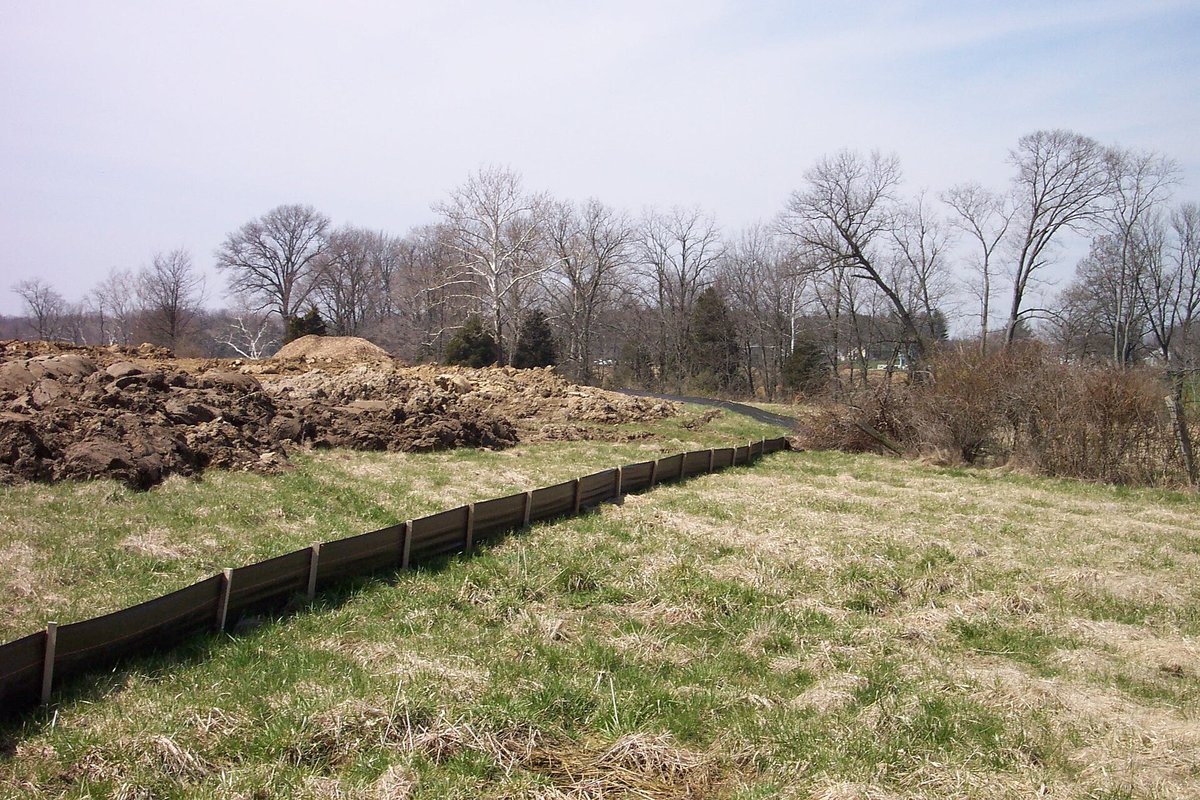
Construction operators generally need stormwater permit coverage and a site-specific Stormwater Pollution Prevention Plan (SWPPP) when their project will disturb one acre or more, or when a smaller disturbed area is part of a common plan of development or sale involving one or more acre of disturbance, and regulated construction stormwater discharges occur. An agency may also designate smaller activities for coverage. An eligible waiver, a genuine absence of a regulated discharge or a separate permit can change the result. A SWPPP is the project's pollution-control plan; it is not the permit. 40 CFR § 122.26; EPA CGP Parts 1 and 7.
The inspection interval is not universally seven days. The ordinary EPA CGP permits either inspections no less than every seven calendar days or inspections every 14 calendar days plus inspections after qualifying rainfall or snowmelt. Certain receiving waters, dewatering discharges, stabilization conditions and state permits change that rule. The applicable permit, not a generic inspection calendar, controls. EPA CGP Parts 4.2–4.4.
Quick answers before you mobilize
| Contractor's first question | Working answer | What changes the answer |
|---|---|---|
| Do I need a construction stormwater permit? | Usually, if regulated construction runoff is associated with one or more acre of disturbed soil, including qualifying smaller portions of a larger common plan. | State designations, receiving-water connections, permit eligibility and properly obtained waivers; New York has specified sub-acreage triggers. |
| Is writing a SWPPP enough? | No. Under EPA's CGP, prepare the SWPPP before submitting the NOI, and wait for coverage to become effective before regulated disturbance. | State authorization documents and waiting periods differ; New York uses an LOA with the controlling authorization date. |
| How often do I inspect? | EPA's ordinary CGP choice is every seven days, or every 14 days plus qualifying rain/snowmelt inspections. | Sensitive waters, dewatering, conditional reductions and state-specific rules, California and New York use different schedules. |
| When can I close the permit? | Only after the permit's actual termination criteria are met and its termination procedure is completed. | EPA's complete NOT, California's NOT approval, and New York's Letter of Termination have different effects. |
This is a screening summary, not a nationwide permit determination. Identify the project's actual permitting authority before using the detailed checklist below.
Jump to the relevant task:
- Before work: Permit applicability · EPA versus state permits · Planning and authorization · [SWPPP templates](#what-a-construction-swppp-needs to-contain)
- During work: [Inspection schedules](#how-often-needs to-a-construction-swppp-be-inspected) · Field checklist · Dewatering · Corrective action and stabilization
- At closeout: Record retention · Final checklist
Who needs a construction SWPPP?
Construction SWPPP decision tree
- Will the work disturb soil through clearing, grading, excavation or similar construction activity?
- No: The construction stormwater program generally is not triggered by that work. Other permits may still apply.
- Yes: Continue to question 2.
- Could construction stormwater or another authorized construction discharge reach a regulated receiving water, directly or through a storm drain or MS4?
- No: Determine whether an applicable agency-recognized no-discharge or non-applicability process is needed. Do not simply write “no discharge” on an internal worksheet and assume exemption.
- Yes, or uncertain: Evaluate the discharge pathway and continue to question 3.
- Will the activity disturb one or more acre, disturb a smaller area within a common plan of one or more acre, or fall under a permitting-authority designation?
- No: The ordinary federal acreage trigger is not met; check the state's rules and local ordinances.
- Yes: Continue to question 4.
- Does the business control plans/specifications or have day-to-day operational control needed to meet permit conditions?
- No: Follow the controlling operator's SWPPP and reevaluate if responsibilities change.
- Yes: Check the governing permit, eligibility and any applicable waiver; prepare and certify the site-specific SWPPP, submit the needed application, and obtain effective coverage before commencing regulated construction.
The decision tree screens for the construction stormwater program only. It is not a determination about wetlands, grading permits, municipal drainage rules or other environmental approvals. Runoff entering a municipal separate storm sewer system (MS4) can still be regulated; a direct discharge from the jobsite into a creek is not the only relevant pathway. A proposed drainage basin or sediment fence does not, by itself, prove the site has no regulated discharge. State-specific non-applicability matters: Under California's 2022 CGP, a Notice of Non-Applicability (NONA) for a site with no hydrologic connection to waters of the United States relies on a No Discharge Technical Report prepared and signed by a California-licensed professional engineer or geologist with hydrological expertise. Follow California's formal process; do not apply it automatically to other states. California State Water Board, CGP FAQ.
Count disturbance across the common plan
Disturbance includes clearing, grading, excavating and comparable construction activities. Count the actual area expected to be disturbed, not the property's gross area or just the soil open on a particular day. Include project phases and qualifying construction support areas. Under the federal rules, one to fewer than five acres is classified as small construction activity, while five or more acres falls into the larger construction category; both categories generally call for coverage when the other regulatory conditions are met. Five acres is not the normal point at which permitting begins. 40 CFR § 122.26(b)(14)(x) and (b)(15).
Hypothetical examples
| Project | General federal screening result |
|---|---|
| A standalone 0.6-acre site improvement with no larger common plan | Below the ordinary one-acre acreage trigger, subject to designation and other rules. |
| A 0.6-acre home lot in an eight-acre subdivision | Potentially regulated as part of the larger common plan even though the lot is under one acre. |
| A 2.4-acre warehouse grading project | Ordinarily calls for coverage if regulated construction stormwater discharges occur. |
| Interior painting without soil disturbance | Not ordinarily construction stormwater activity; other environmental and safety duties may apply. |
| A six-acre development graded in successive two-acre phases | Generally calls for coverage for the overall common plan; the phasing may separately affect stabilization deadlines. |
Do not fragment a project into contracts or phases to make its regulated disturbance disappear. Conversely, do not count unchanged, undisturbed acreage as soil disturbance merely because it is within the property boundary.
Waivers and work below one acre
Under federal regulations, certain small construction activities disturbing fewer than five acres may qualify for a waiver, including an appropriately documented low rainfall erosivity waiver when the construction-period R-factor is below 5. Other limited water-quality-related waiver provisions exist. The applicable agency procedure needs to be completed; the site superintendent cannot declare the project exempt based only on a forecast or an informal calculation. A permitting authority can also call for coverage for otherwise smaller discharges. 40 CFR § 122.26(b)(15); EPA construction waivers.
New York has explicit sub-acreage triggers that a federal-only checklist can miss. Under the 2025 New York SPDES construction permit, designated construction activities may call for permit coverage even when they disturb less than one acre:
- New York City watershed east of the Hudson River: no less than 5,000 square feet, but less than one acre, of soil disturbance.
- Within New York City municipal boundaries: no less than 20,000 square feet, but less than one acre, of soil disturbance; a smaller piece of a common development plan that will ultimately disturb 20,000 square feet to less than one acre; or construction that creates 5,000 square feet or more of impervious area.
These are NYSDEC permit-specific designations, not nationwide EPA thresholds. Confirm the site's exact location, permit eligibility, applicable exemptions and any NYCDEP/MS4 acceptance requirements before deciding that a smaller project needs no coverage. NYSDEC GP-0-25-001, Part I.A.1.c; NYSDEC applicability summary.
EPA permit, state permit or another authorization?
Most contractors work under state-issued NPDES construction stormwater permits, not directly under EPA's CGP. EPA administers the program in certain areas, including specific tribal lands, territories and other federal-jurisdiction locations. EPA's 2022 CGP, as modified in 2025, expires February 16, 2027. A proposed 2027 replacement is not an operative permit until finalized and effective. Determine jurisdiction with the EPA coverage-area appendix and NPDES state authorization directory. Even an EPA-permitted project may have additional geographic conditions in CGP Part 9.
| Jurisdiction / permit | Inspection and administration differences contractors need to check |
|---|---|
| EPA 2022 CGP, modified 2025 | The ordinary 7-day or 14-day-plus-event choice is subject to Parts 4.3, 4.4 and Part 9; EPA NeT handles the ordinary NOI and NOT. |
| Texas TXR150000 (2023) | Ordinarily inspect no less than every 14 calendar days plus qualifying 0.5-inch rain events, or elect the 7-day alternative. The SWP3 needs to reflect the selected schedule; changes to the schedule are restricted by the permit. The Texas permit expires March 5, 2028. |
| California Order WQ 2022-0057-DWQ | Calls for weekly visual inspections and applicable pre-, during- and post-qualifying-precipitation-event inspections. A qualifying precipitation event involves a forecast of no less than 50% probability of 0.5 inch or more over 24 hours; specific inspection/sampling exceptions apply. Uses QSD/QSP roles and the state's SMARTS system; qualifying operators also submit annual reports. This statewide permit does not govern the Lake Tahoe Hydrologic Unit. |
| New York GP-0-25-001 | SPDES permit effective January 29, 2025, expiring January 28, 2030. Certain sub-acreage projects qualify. Calls for an eNOI and a Letter of Authorization (LOA) before starting. Qualified-inspector intervals are generally seven calendar days, with specified twice-weekly cases and exceptions; a trained contractor separately checks active work-area controls daily. New York also has its own stabilization deadline measured from cessation of soil disturbance, not from EPA's stabilization-start date. |
Sources: Texas TCEQ, California Order and FAQ, NYSDEC, EPA CGP.
State agencies, MS4 operators and watershed districts may call for additional approvals or notifications. Record each approval separately, including its effective date and any conditions that affect the construction sequence.
New York: the actual 2025 SPDES workflow
New York's GP-0-25-001 is not an EPA CGP with a different application portal. A site manager should make these permit-specific checks before releasing grading crews:
- Confirm eligibility and the SWPPP scope. Apply the state's acreage and designated sub-acreage screening, including the NYC and NYC watershed conditions described above. New York's Appendix B Tables 1 and 2 distinguish projects that call for erosion/sediment controls from those that also call for post-construction stormwater management practices (SMPs). Complete the SWPPP before submitting the electronic Notice of Intent (eNOI). NYSDEC GP-0-25-001, Parts I.A, I.D.2 and III.C.
- Obtain the actual signature and MS4 forms. The electronic submission calls for the signed SWPPP Preparer Certification (Appendix F) and Owner/Operator Certification (Appendix J). Where the specified traditional land-use-control MS4 review provisions apply, also obtain the appropriate MS4 SWPPP Acceptance (Appendix G), NYCDEP Acceptance/Approval (Appendix H) or MS4 No Jurisdiction (Appendix I) form. These forms are not interchangeable and do not apply identically to every parcel. Part I.D.2.
- Wait for the LOA's authorization date. The controlling date for starting covered construction is the one stated in NYSDEC's Letter of Authorization, not automatically the day the eNOI is transmitted. Under specified circumstances, including a SWPPP that departs from the listed technical standards while demonstrating equivalence, or work outside an MS4's relevant review authority, the LOA date is 60 business days after eNOI submission. This is a conditional clock, not a universal waiting period. Where the MS4 has applicable review authority, transmit the LOA to it no more than five business days after receipt. Parts I.D.3.b–c.
- Separate daily maintenance checks from qualified-inspector inspections. Under Part IV.B, a trained contractor checks erosion, sediment and pollution controls in the active work area daily while soil disturbance is ongoing. Under Part IV.C, for projects subject to the qualified-inspector requirement, the usual interval during active disturbance is no less than once every seven calendar days. It becomes twice every seven days, separated by no less than two full calendar days, where the site has the specified authorization to disturb more than five acres simultaneously, or where a project disturbing one or more acre has the specified Appendix C watershed or Appendix D directly discharged-to impaired-segment condition. Qualified-inspector exceptions appear in Part IV.C.1 for certain small residential, agricultural and sub-acre NYC-watershed projects; the trained-contractor duty remains separate. A properly stabilized temporary shutdown may qualify for one qualified inspection every 30 days, with advance notification under Part IV.C.2.c. Never copy EPA's 14-day-plus-storm option into this permit. Parts IV.B–C.
- Use New York's stabilization clock, not EPA's. Under Part II.B.1.b, where soil disturbance has permanently or temporarily ceased, initiate soil stabilization measures by the end of the next business day. Ordinarily, complete those measures no more than 14 calendar days from the date disturbance ceased. The completion deadline is seven calendar days from cessation, with the same next-business-day initiation duty, at sites that directly discharge to a 303(d) segment listed in Appendix D, lie within a watershed in Appendix C, or are authorized to disturb more than five acres under Part I.E.5.a.viii. These are permit-specific conditions: assess the actual drainage, watershed and disturbance authorization; do not apply the accelerated deadline to every five-acre project. The start of the completion clock is the cessation date, whereas the ordinary EPA CGP rule discussed below measures completion after stabilization has been initiated. NYSDEC GP-0-25-001, Part II.B.1.b.
- Close findings and terminate through the state's process. For qualifying inspector findings, notify the operator and relevant contractor no more than one business day after inspection; ordinary non-engineering corrections generally need to begin in one business day or less and finish in five business days or less; engineering corrections have a distinct design-and-completion schedule. Signed qualified-inspector reports stay with the SWPPP on site, including needed dated photos. After satisfying Part V, submit the eNOT and track the Letter of Termination (LOT): the termination date is the one in that letter, not merely the day the eNOT was sent. Parts IV.C.4–6 and V.A.5.
Archive consequence: New York Part VI.A calls for the documents specified in Part I.E.3, together with the LOT, to be retained for no less than five years after NYSDEC accepts the complete NOT. During active coverage, Part I.E.4 separately calls for keeping the applicable inspection and contractor documentation on site. Do not replace these state rules with EPA's three-year inspection-report formula. NYSDEC GP-0-25-001, Parts I.E.3–4 and VI.A.
From site planning to notice of termination
1. Identify the operator and every discharge pathway
Under EPA's CGP, a company is an operator when it controls construction plans and specifications, or has day-to-day operational control over activities necessary to meet permit conditions. A developer, owner or general contractor can qualify depending on the actual arrangement; an ordinary trade subcontractor does not become a separate operator merely by working on the job. Where multiple companies independently qualify, each needs its applicable coverage. A shared SWPPP can coordinate their controls, but it does not eliminate each operator's responsibility. EPA CGP Parts 1.1.1 and 7.1.
Walk the property before deciding the site does not discharge. Identify overland flow, drainage ditches, outfalls, nearby storm drain inlets, downstream receiving waters and connections to an MS4. Check impaired waters and higher-quality designations: they can change inspections, stabilization and monitoring.
2. Develop the SWPPP before filing the NOI
EPA's CGP calls for the SWPPP before the NOI is submitted. The plan needs to reflect the actual jobsite, drainage, construction sequence, control designs, pollutant sources, inspection procedures and team responsibilities. Complete applicable endangered-species and historic-properties eligibility reviews. The SWPPP needs to be certified by the needed signatory, kept accessible and updated as the job changes. EPA CGP Parts 7.1–7.3.
Keep the plan locatable when the site is unattended. Under EPA CGP Part 7.3, if an on-site location is unavailable for keeping the SWPPP when personnel are absent, post a notice near the main entrance identifying where the plan is kept. This is a conditional requirement in addition to keeping the current SWPPP immediately accessible to authorized inspectors; it is not an instruction to post the entire plan at the gate. EPA CGP Part 7.3.
3. Submit the NOI and wait for coverage
For an ordinary new site under EPA's current CGP, submit a complete NOI through EPA's NPDES eReporting Tool no less than 14 calendar days before starting construction activities. Authorization ordinarily begins 14 calendar days after EPA notifies the operator it received a complete NOI, unless authorization is delayed or denied. Filing an NOI is not immediate authorization. Transfers, emergency-related projects and state permits can use different procedures. Keep the submitted NOI, acknowledgement, NPDES identifier and correspondence. EPA CGP Part 1.4, Table 1.
For EPA coverage, post the needed notice in a safe, publicly accessible location visible from the nearest public road to the active construction area. Part 1.5 specifies the NPDES ID and public NOI lookup information, a site contact, a way to obtain the SWPPP, and instructions for reporting indicators of pollution to EPA. A company logo and permit number alone are not a complete substitute for the needed sign. EPA CGP Part 1.5.
4. Install controls before the related disturbance
EPA CGP Part 2.1.3 calls for downgradient controls protecting a construction phase, such as perimeter controls, inlet protection, buffers and construction exit controls, to be installed and operational by the time earth disturbance in that phase begins. Later controls need to be operational before the activities whose discharges they address. Design and maintain controls using site-specific soils, runoff, flow velocity, drainage, storm patterns and applicable engineering specifications. EPA CGP Parts 2.1–2.4.
5. Inspect, repair and stabilize as work progresses
The inspector follows the permit-specific schedule, records findings, identifies failures, and distinguishes routine maintenance from formal corrective actions. The operator updates the SWPPP and map when needed. Soil that will remain inactive long enough to trigger stabilization cannot be left exposed merely because the next trade has not mobilized.
6. Prove final stabilization and terminate lawfully
Under EPA's CGP, a contractor cannot terminate merely because a certificate of occupancy has been issued. The operator needs to satisfy Part 8, for example, completed covered activities, needed final stabilization, removal of construction-related pollutants and temporary controls as specified, or a qualifying transfer to an already permitted operator or alternative NPDES authorization. Generally, final vegetative stabilization calls for uniform perennial vegetation providing no less than 70% of the vegetative cover native to local undisturbed areas, or effective permanent nonvegetative cover, with stated exceptions. Completion-based NOTs call for before-and-after photographs with the permit's needed details. Submit a qualifying NOT no more than 30 calendar days after the termination condition occurs; under EPA's CGP, a complete NOT ends coverage at midnight on its submission date. EPA CGP Parts 2.2.14 and 8.
Do not carry the EPA termination rule into California. Under California's 2022 CGP, the discharger needs to certify and submit an NOT package through SMARTS. For a qualifying completion-based termination, the package includes:
- A completed Notice of Termination.
- A QSP-prepared final NOT inspection, identifying the QSP and their valid certification number.
- A final site map showing drainage, discharges, permanent measures and the locations and orientation of final-condition photos.
- Photos documenting final stabilization and installation of applicable post-construction BMPs or low-impact-development features; where such features are implemented, a long-term maintenance plan designed for no less than five years.
California's Order III.H.7 provides for automatic approval 30 calendar days after submission only if the Regional Water Board has not notified the discharger within that period that the NOT was denied, returned or accepted for review. Permit duties continue until NOT approval; merely filing the form or finishing construction does not end coverage. The LRP or properly designated DAR certifies the submission, not the QSP simply by virtue of preparing the final inspection. Check outstanding reporting and fee issues separately. California 2022 CGP, Sections III.H and V.B; California SMARTS NOT guide.
What a construction SWPPP needs to contain
This is a preparation and quality-control checklist for the EPA CGP. Complete the corresponding sections of the actual permit rather than assuming these bullets alone establish compliance. Needed particulars are chiefly in Part 7.2.
SWPPP preparation checklist
- Project and permit basis: property location, project description, operators and control areas, permit version, estimated total disturbance and maximum simultaneous disturbance, including applicable support areas.
- Construction sequence and demolition history: grading and demolition phases; the age or renovation dates of any structures undergoing demolition; estimated start/stop/stabilization sequence, exit locations and site business hours.
- Stormwater team: named responsible people, defined duties, needed preconstruction understanding and evidence of the inspection qualifications in Part 6.3.
- Discharge and eligibility: receiving waters, MS4 pathways, impaired/high-quality waters, special federal/tribal conditions, endangered-species and historic-property eligibility documentation.
- Drainage and site map: boundaries; disturbance and demolition phases; approximate pre/post grading slopes; stockpiles; road exits; eventual impervious structures; site-support areas; natural buffers; flow paths and outfalls.
- Downstream waters: identify waters on-site and within one mile downstream of the discharge points, their applicable classifications and federally designated critical habitat.
- Pollutant sources: list construction activities and materials that can reach stormwater, with an inventory of associated pollutants; address fuels, oils, paint, solvents, concrete washout, waste, vehicle washing, dewatering and any known hazardous or toxic materials disturbed by the work, including asbestos or PCBs where relevant.
- Every stormwater control: its location, specific method, applicable design specification, installation schedule and maintenance specification; justify deviations from cited design guidance.
- Water buffers: document the selected Part 2.2.1/Appendix F compliance alternative, exceptions, buffer width and any documented sediment-reduction equivalency.
- Chemical storage and spill procedures: address the different EPA rules for containers under 55 gallons and 55 gallons or larger, including applicable setbacks and cover/containment. Specify procedures to stop, contain and clean spills; identify responsible positions and the means to notify site personnel, emergency services and regulatory agencies. Post emergency contact details where employees can readily find them.
- Stabilization: exact schedule for inactive areas, erosion-control method, applicable 7- or 14-day completion deadline and documented exceptions.
- Inspections and records: selected Part 4 inspection schedule, gauge or representative station, field forms, corrective-action procedures and record access.
- Dewatering and chemical treatment: discharge controls and applicable turbidity procedures; any use of cationic or other treatment chemicals, approvals, dosage, related SDS information and trained handlers.
- Additional eligibility and controls: any subsurface infiltration devices implicating Class V Underground Injection Control requirements, as described in Part 7.2.9.
- Certification and attachments: sign and date SWPPP through the appropriate operator signatory; after authorization add the NOI, EPA acknowledgement and permit copy.
- Document control: keep a dated revision log, current site map, change authorizations and notification to other affected operators where needed.
Download the actual EPA forms before building your own
EPA provides a construction SWPPP template for its 2022 CGP (Word), as well as separate site-inspection, dewatering-inspection and corrective-action-log forms. They are listed in EPA's Construction General Permit Resources, Tools, and Templates, along with a small-residential-lot SWPPP template and maintenance-versus-corrective-action guidance.
Use these forms for EPA CGP projects and check them against the current permit. California, New York and Texas have their own requirements. For every template, replace generic control descriptions with the site’s drainage, construction sequence, design specifications and responsible people.
Pre-NOI SWPPP intake worksheet
Collect the following information before developing the SWPPP. Record the basis for any non-applicable item. This intake sheet supports preparation of the full plan; it does not replace the needed permit-specific contents.
| Field to complete | Project-specific evidence to enter |
|---|---|
| Permit and responsible operator(s) | Governing permit, permit version, each operator's legal name, responsibilities, signatory and environmental contact. |
| Land disturbance | Total disturbance, maximum simultaneous disturbance, phased areas and applicable common-plan or supporting-activity calculations. |
| Eligibility record | Receiving-water pathway, MS4 connection, impaired/sensitive water determination, needed endangered-species/historic-property checks and any formal waiver or no-discharge determination. |
| Existing site and work sequence | Existing vegetation/slopes, soils, drainage, demolition history, activity start/end dates, areas expected to remain inactive and stabilization schedule. |
| Drainage drawing | Dated map revision showing existing/proposed contours, disturbed areas, buffers, flow arrows, inlets, outfalls, downstream receiving waters, stockpiles, storage and discharge points. |
| BMP register | For each control: unique map ID, control type, design reference, why selected, installation phase, maintenance requirement, inspection point and responsible position. |
| Materials and waste inventory | Fuels, oils, paints, concrete washout, sanitary waste, chemical containers, exposed materials, spill kit locations and disposal arrangements. |
| Field inspection method | Correct permit-specific schedule, qualified-inspector evidence, rainfall source, report form, signature authority and emergency/unsafe-access procedure. |
| Dewatering and treatment | Whether pumping may occur, discharge destination, treatment method, discharge-day inspection procedure, sampling determination and applicable authorization for treatment chemicals. |
| Maintenance/corrective-action trail | Observation identifier, inspection date, person notified, routine-versus-formal determination, needed response deadline, work proof and follow-up inspection. |
| Documentation and signoff | Current SWPPP revision, actual operator certification, NOI/authorization evidence, training, agency correspondence, attachment index and on-site access method. |
| Closure and archive plan | Applicable stabilization test, final-condition evidence, final inspection, NOT/agency acknowledgement, needed record categories and independently calculated retention start dates. |
Operational test before the first earthmoving shift: Can a replacement superintendent find the current site map, point to every active control, identify the next inspection deadline, explain what to do when muddy water leaves the site, and locate the permit's authorized start date? If not, the document is not yet a useful field plan even if every heading is present. EPA CGP Parts 6–7; EPA SWPPP resources.
A 50-foot buffer is a compliance decision, not a generic setback
For discharges to receiving waters located within 50 feet of earth disturbance, EPA CGP Part 2.2.1 ordinarily calls for one of the following:
| Compliance route | What the SWPPP needs to show |
|---|---|
| Preserve a 50-foot undisturbed natural buffer | Buffer limits and how the area will remain protected. |
| Preserve a smaller natural buffer plus additional controls | Buffer width, controls, and support for sediment reduction equivalent to a 50-foot natural buffer. |
| Where any undisturbed natural buffer is infeasible, use equivalent sediment controls | Why no natural buffer is feasible and how the selected controls provide equivalent reduction. |
Do not apply the rule mechanically without checking exceptions. EPA Appendix F addresses, among other circumstances, permitted Section 404 work, certain water-dependent structures or access areas, an absence of stormwater discharge through the intervening area, and preexisting developed areas. The appendix also has special provisions for qualifying small residential lots and linear projects. Keep the selection and supporting analysis with the SWPPP. EPA CGP Part 2.2.1; Appendix F.
Different 50-foot requirement: Under EPA CGP Part 2.3.3, chemical containers with storage capacity of 55 gallons or more generally needs to be no less than 50 feet from receiving waters, drainage features and storm drain inlets. If site constraints make that infeasible, the operator needs to put them as far away as practicable and document the reasons and location in the SWPPP. The permit separately specifies cover/containment and spill-kit measures, and has different rules for smaller containers. Do not confuse this storage requirement with the natural-buffer rule above. EPA CGP Part 2.3.3c.
Reportable spills: cleanup and notification are separate duties
Under the EPA CGP, promptly stopping and cleaning a spill does not necessarily satisfy the reporting obligation. Part 2.3.6 addresses releases of oil or hazardous substances at or above quantities reportable under 40 CFR Parts 110, 117 or 302 over a 24-hour period. When the federal reporting condition is met, the operator needs to notify the National Response Center at 800-424-8802 as soon as it knows of the release and provide the release description, circumstances and date needed by the CGP no more than seven calendar days after learning of the release. Additional state, tribal or local notifications may apply. EPA CGP Part 2.3.6.
Do not invent a universal “gallons spilled” test. For oil discharged to covered waters, 40 CFR Part 110 includes harmful-quantity conditions such as a visible film or sheen, discoloration, or deposited sludge or emulsion. Other hazardous substances have their own reportable quantities and rules. An operator should determine the applicable reporting threshold immediately, not wait until an inspection cycle or a laboratory result. See EPA's oil-discharge reporting guidance.
The SWPPP needs to identify who detects and responds to spills, how to stop and contain them, whom to notify, and where employees can find emergency contact information. A separate Spill Prevention, Control, and Countermeasure (SPCC) plan, if one applies to the site, can be referenced for these procedures only under the conditions stated in EPA CGP Part 7.2.6; it does not replace the SWPPP or permit coverage. EPA CGP Part 7.2.6.
Hypothetical field response: A loader ruptures a hydraulic line beside a site drainage inlet. The foreman stops the source if safe, isolates the drainage path, starts containment and cleanup, and immediately escalates the incident to the designated spill-response lead. That person determines whether an NRC or other agency notification is needed, documents the basis, preserves any notification confirmation and evaluates whether corrective action or a SWPPP revision is needed. This example does not presume that every hydraulic leak is automatically federally reportable.
Special condition: demolition draining to PCB-impaired waters
A narrow but important EPA CGP provision applies when both of these conditions exist:
- Stormwater from the site discharges to a receiving water identified as impaired for polychlorinated biphenyls (PCBs); and
- The operator is demolishing a structure with no less than 10,000 square feet of floor space that was built or renovated before January 1, 1980.
EPA CGP Part 3.2 then calls for controls to minimize precipitation and stormwater exposure of potentially PCB-containing building materials, including relevant paint, caulk and older fluorescent lighting fixtures, and disposal consistent with applicable law. Record the age or renovation dates of demolished structures and known toxic or hazardous materials in the SWPPP's construction and pollutant-source descriptions under Part 7.2.3. This is a conditional permit requirement, not a blanket finding that every pre-1980 building contains PCBs. EPA CGP Parts 3.2 and 7.2.3.
Controls that commonly need project-specific specifications
An effective SWPPP is more than a list of best management practices (BMPs). It describes where, when and how each control works. For example:
- Perimeter controls: placement on the drainage contour, tie-ins/upturned ends, sediment removal and response to bypass.
- Construction exits: stabilized access routes, sediment removal practices and cleanup of tracked soil without washing it into drainage.
- Inlet protection: identify drainage connections and maintain sediment-removal devices where the permit calls for them.
- Stockpiles: siting, downslope barriers, cover and temporary stabilization for idle piles.
- Temporary sediment basins: where used under EPA CGP Part 2.2.12, document a design storage volume based on the 2-year, 24-hour storm runoff or 3,600 cubic feet per acre drained, and address outlet and sediment-maintenance provisions.
- Fueling and equipment areas: protect against oil, hydraulic fluid and cleaning-product discharge; provide prompt dry spill cleanup.
- Concrete, paint and stucco washout: use contained designated areas and keep washwater from inlets and receiving waters.
- Dewatering: route pumped water through a suitable control, prevent visible pollutant discharges and use stabilized discharge locations.
Each measure remains subject to the specific wording, exceptions and additional state/local requirements in the permit. EPA CGP Parts 2.2–2.4; 40 CFR § 450.21.
The HazComFast Construction Safety Hub covers separate OSHA worker-protection requirements. Its Job Hazard Analysis Builder can help document how employees will perform excavation, dewatering and installation tasks safely. Neither resource constitutes an NPDES SWPPP, permit application or stormwater inspection qualification.
How often does a construction SWPPP need to be inspected?
The following table describes EPA's 2022 CGP as modified in 2025, before considering any more specific Part 9 conditions. It does not replace the schedule in an individual state permit.
| Site / discharge situation | EPA CGP inspection frequency | Permit basis |
|---|---|---|
| Ordinary site, option A | No less than every seven calendar days. Under this ordinary option alone, there is no additional inspection triggered by each qualifying rainfall event. | Part 4.2.1 |
| Ordinary site, option B | Every 14 calendar days AND no more than 24 hours after a storm yielding no less than 0.25 inch of rain in a 24-hour period, or a qualifying snowmelt discharge from a storm yielding no less than 3.25 inches of snow in 24 hours. | Parts 4.2.2–4.2.3 |
| Affected portions discharging to sediment- or nutrient-impaired waters, Tier 2/2.5/3 waters, or waters within Lands of Exclusive Federal Jurisdiction | Every seven calendar days AND no more than 24 hours after the specified precipitation/snowmelt trigger. | Part 4.3.1 |
| Dewatering discharge | Inspect the dewatering discharge once each day it occurs. Other portions of the site follow their own applicable frequency. | Parts 4.3.2 and 4.6.3 |
| Portions where needed stabilization steps have been completed | Conditional reduction to twice during the first month, no more than 14 calendar days apart, and monthly afterward, subject to the conditions and special linear-site procedure. | Part 4.4.1 |
| Qualifying arid/seasonally dry/drought conditions | Conditional monthly plus qualifying-event schedule with dates and justification documented in the SWPPP. | Part 4.4.2 |
| Specified frozen conditions | Conditional monthly inspections or suspension, depending on ongoing activity, stabilized ground and likelihood of discharge; routine frequency needs to resume when conditions change. | Part 4.4.3 |
What does the 24-hour rain clock mean?
For EPA's rain-triggered schedules, separate small storms can combine to meet the 0.25-inch/24-hour threshold. A qualifying event calls for an inspection no more than 24 hours after that threshold is met, subject to the permit's special rule for multiday qualifying storms. Rainfall data need to come from a properly maintained site gauge or a representative weather station. The permit also includes a different trigger for qualifying snowmelt discharge. EPA CGP Parts 4.2.2–4.2.3.
EPA calls for inspections only during normal site working hours. The 24 hours are elapsed time, not 24 working hours. When the entire 24-hour window falls outside normal hours, conduct the inspection by the end of the next business day. Record the weather information relied upon, the reason the inspection was due, and the actual inspection time. EPA CGP Part 4.2, footnotes 67–68.
Texas comparison: Texas's 2023 TXR150000 ordinarily uses 0.5 inch, not EPA's 0.25 inch, with the 14-day-plus-event schedule. A seven-day alternative exists, and a permitted schedule change needs to comply with Part III.F.8(c)vi; the SWP3 needs to state the current schedule. Texas CGP Part III.F.8.
California: the actual pre-, during- and post-storm inspection clock
For traditional construction at Risk Levels 1–3, California's Order WQ 2022-0057-DWQ, Attachment D calls for weekly visual inspections, plus applicable inspections tied to a Qualifying Precipitation Event (QPE). Linear underground/overhead projects follow Attachment E, including its risk-type-specific exceptions. Apply the permit’s working-hour, unsafe-condition and sampling exceptions where their conditions are met. A QPE starts when a forecast shows no less than a 50% probability of 0.5 inch or more of rain in a 24-hour period; it continues through subsequent 24-hour periods for which 0.25 inch or more is forecast. This is a forecast-based California definition, not EPA's observed 0.25-inch inspection trigger.
| California inspection point | What to schedule under the 2022 permit |
|---|---|
| Before a QPE | Inspect no more than 72 hours before the forecast event. If extended forecast data covering more than three days is available, the pre-QPE inspection may be performed up to 120 hours before the event. |
| During a QPE | Inspect no less than once during each 24-hour QPE period, including subsequent forecast periods meeting the continuation criterion. |
| After a QPE | Inspect no more than 96 hours after a QPE that actually accumulates no less than 0.5 inch. Where the event ends with less than 0.5 inch accumulated, that post-QPE inspection is not needed on the precipitation trigger alone. |
The separate QSP monthly site-visit and pre-QPE responsibilities are not satisfied simply by assigning an untrained person to the weekly checklist. Trained delegates may conduct assigned field visual inspections only after QSP-provided site-specific inspection training. Record the site's rain-gauge totals at every visual inspection, including a dry inspection, and check whether the project's risk level, pollutant evidence, treatment system or dewatering program adds sampling and reporting duties. California State Water Board, 2022 CGP FAQ, Visual Inspections and Monitoring; California QPE guidance.
Worked comparison: one rain event, four inspection decisions
Worked example: A forecast gives a 70% probability of 0.6 inch of rain in 24 hours, but the site gauge records 0.31 inch. Compare an actively disturbed site under each permit, with no special receiving-water, dewatering or seasonal conditions.
| Governing permit | Does this event itself call for an additional storm-related inspection? | What still applies? |
|---|---|---|
| EPA 2022 CGP, ordinary 14-day-plus-event option | Yes. The observed 0.31 inch exceeds the 0.25-inch/24-hour event threshold; inspect within the applicable 24-hour window. | The scheduled 14-day inspection and all other duties remain. |
| Texas TXR150000, ordinary 14-day-plus-event option | Not on these facts alone. An observed 0.31 inch is below Texas's 0.5-inch event trigger. | The scheduled 14-day inspections still apply; a site using Texas's seven-day alternative follows that schedule instead. |
| California 2022 CGP | Yes, before and during the QPE. The forecast meets the state's QPE definition. If the QPE ends with only 0.31 inch actually accumulated, the QPE-based post-event inspection is not triggered. | Weekly visual inspections, QSP duties and any applicable sampling or other risk-based requirements remain. |
| New York GP-0-25-001 | The permit does not substitute EPA's or Texas's rainfall trigger for its qualified-inspector schedule. | Daily trained-contractor checks in active work areas; applicable seven-day or more frequent qualified-inspector inspections, subject to the permit's exceptions. |
The decisive distinction is between measured rainfall (the example's EPA/Texas trigger) and forecast precipitation (California's QPE definition). Do not use a nearby airport's forecast as a substitute for an on-site measurement the permit calls for, or assume that a forecasted QPE erases regular inspections if little rain falls. EPA CGP Part 4.2; Texas TXR150000 Part III.F.8; California 2022 CGP FAQ; New York GP-0-25-001 Part IV.
Who may perform and sign the inspection?
EPA's CGP allows qualified staff or a qualified third party to inspect. The operator, however, needs to ensure that the inspector satisfies Part 6.3. For projects receiving coverage on or after February 17, 2023, the inspector generally needs to either complete EPA's construction inspection course and pass its exam, or hold a current valid inspection certification/license that meets the permit's content criteria. Earlier-covered projects have a distinct knowledge-and-skills provision. California has a separate Qualified SWPPP Practitioner (QSP) and Qualified SWPPP Developer (QSD) framework; check the role of each. EPA CGP Parts 4.1 and 6.3; California QSD/QSP.
The person who conducts an inspection is not necessarily the person legally permitted to sign the inspection report. EPA CGP Part 4.7.2 calls for the operator's report signatory to meet Appendix G.11. Retain appropriate written delegated authority where that is used. Do not treat an OSHA construction “competent person” designation as a substitute for the CGP's stormwater qualifications.
California separates preparation, field oversight and legal certification. The discharger remains accountable for the work of these specialists; assigning a consultant does not transfer permit responsibility.
| California role | What the 2022 CGP actually calls for |
|---|---|
| Qualified SWPPP Developer (QSD) | Develops the site-specific SWPPP and necessary amendments, assesses erosion and discharge risks, and completes the QSD site visits needed by Section V.C. The discharger needs to retain a QSD from project start through NOT approval and upload SWPPP amendments to SMARTS in 30 calendar days or less. A properly qualified QSD may also perform QSP work. |
| Qualified SWPPP Practitioner (QSP) | Oversees and verifies implementation of BMPs, reviews the work of trained delegates, performs the QSP visits specified in Section V.D, including no less than once each calendar month and before an NOT, and prepares the final NOT inspection. Trained delegates may perform assigned tasks, but they do not replace the QSP's needed oversight and visits. |
| Legally Responsible Person (LRP) / Duly Authorized Representative (DAR) | Has authority to electronically sign, certify and submit permit documents and reports for the discharger under Section V.B; a DAR needs to be properly designated. Neither the QSD nor QSP automatically acquires this signatory authority because of a technical certification. |
The California requirements above are additional to, not replacements for, the weekly and event-based field inspection provisions of the applicable permit attachments. California 2022 CGP, Sections IV.O and V.A–V.D; California QSD/QSP program.
Field inspection checklist
An inspection tests the physical site against both the permit and the current SWPPP. Under EPA CGP Part 4.6, inspect accessible areas where construction activity, materials, drainage and stormwater controls may affect a discharge. Document problems requiring maintenance or corrective action, and observe discharge quality when discharges occur.
| Checkpoint | Record the actual observation |
|---|---|
| Disturbed ground and slopes | Fresh rills, gullies, bare soil, erosion or delayed stabilization. |
| Natural buffers and exclusion zones | Encroachment, damaged protection, changed flow paths or inadequate equivalent controls. |
| Perimeter controls | Missing sections, bypasses, undermining, collapsed controls and accumulated sediment. |
| Construction exits and public pavement | Tracked sediment, swept material, unauthorized washdown or altered access points. |
| Stockpiles and drainage channels | Missing cover/barriers, concentrated flow, channel scour or piles in prohibited locations. |
| Storm drain inlets and outfalls | Protection, accumulated sediment, visible pollutant discharge and nearby receiving-water effects. |
| Concrete and other washout areas | Remaining containment capacity, leaks, overflow and proximity to drainage. |
| Fuels, oils, chemical containers and wastes | Container condition, size-related storage controls, spill evidence, cover/containment and cleanup supplies. |
| Equipment washing, maintenance and fueling | Leaks, detergents, runoff pathways and appropriate disposal practices. |
| Dewatering operations | Discharge-day findings, sediment controls, visual indicators, needed photographs and any applicable turbidity sampling. |
| Stabilized portions | Whether measures are complete, remain effective or have been disturbed again. |
| Site changes and inaccessible areas | New activities, controls needing map revisions, and specific areas unsafe to enter. |
Do not enter an unsafe area solely to complete an inspection. EPA permits omission of an unsafe portion when the report identifies the location and explains the unsafe condition. EPA CGP Parts 4.5–4.7.
Worked inspection record
The following hypothetical record illustrates an EPA-administered site using the permitted 14-day-plus-rain schedule. It assumes no Part 4.3 or Part 9 frequency override and no dewatering discharge. An actual report calls for verified observations and the operator’s authorized certification.
| Field | Hypothetical record |
|---|---|
| Project / operator | Example Logistics Pad / Example Siteworks LLC |
| Permit ID | Sample only, replace with actual NPDES tracking number |
| Current SWPPP | Revision 4, including inspection option and rain-gauge location |
| Location / schedule | Hypothetical eligible EPA CGP site; Part 4.2.2: 14-day plus qualifying events |
| Inspection | October 12, 2026, 1:30–2:15 p.m. during normal working hours |
| Qualified inspector | Jordan Lee, Environmental Field Inspector; Part 6.3 qualification evidence kept with plan |
| Weather evidence | On-site gauge log RG-12 shows 0.31 inch in 24 hours; 0.25-inch threshold reached at 8:10 a.m. on October 12 |
| Reason due | Qualifying rainfall inspection; performed within the applicable 24-hour window |
| Locations examined | Disturbance zones A/B; controls SF-1 to SF-4; exit EX-1; inlets IN-1/IN-2; drainage and outfall points |
| Findings | SF-1 through SF-4 intact; EX-1 has tracked sediment; inlet devices functional; no discharge observed during inspection |
| Maintenance determination | EX-1 tracking calls for routine removal of deposited material; inspection record identifies location and next-business-day deadline |
| Corrective-action triggers | None observed in this hypothetical inspection; reevaluate if a control repeatedly fails |
| Unsafe areas | None identified |
| Evidence | Photos PH-17 to PH-20, rain log RG-12, follow-up work order MA-08 |
| Report prepared | October 12, 2026, 3:05 p.m. |
| Operator report certification | Intentionally blank. The actual authorized signatory needs to review and sign the report under EPA CGP Appendix G.11; this illustration is not a valid inspection report. |
Follow-up entry, hypothetical: The foreman removes tracked sediment by an appropriate dry method on October 13, 2026, at 10:00 a.m.; work order MA-08 records completion, responsible person and a photograph. The operator checks whether the condition is only routine maintenance or whether repeated or more serious failure calls for the formal corrective-action process.
At a real EPA site, complete each non-dewatering inspection report no more than 24 hours after finishing the inspection, include the findings and needed precipitation data, have it properly signed, and make it immediately accessible. Keep reports for no less than three years after coverage expires or is terminated. The Part 4.7 requirements are the controlling checklist, not the hypothetical form alone. EPA CGP Part 4.7.
Dewatering inspections and turbidity monitoring
Water pumped from an excavation can carry suspended sediment, oil or other pollutants. Under EPA's CGP, the operator needs to route authorized dewatering through appropriate treatment controls, keep discharges from causing visible pollutant problems and inspect on each day dewatering discharge occurs. This obligation applies even if the rest of the site is on a seven-day or 14-day schedule. EPA CGP Parts 2.4, 4.3.2 and 4.6.3.
Dewatering inspection record: separate field sheet
EPA Part 4.6.3 calls for an inspection report in 24 hours or less that includes:
| Field | Needed operational information |
|---|---|
| Inspection date; inspector name and title | Identify who observed the discharge. |
| Discharge start and stop | Record approximate times; identify a continuous discharge when applicable. |
| Flow | Estimate the discharge volume/rate in gallons per day for that day. |
| Observable water conditions | Record sediment plume, solids, unusual color, odor, clarity, foam, sheen or oily deposits at specified locations. |
| Needed images | Photograph water before treatment, treated final discharge, the control equipment, and the discharge point into relevant waters/conveyances. |
| Findings and response | Identify defects, maintenance, corrective actions and changes to the SWPPP map. |
| Report authorization | Sign as needed by Part 4.7.2 / Appendix G.11 and make the record readily accessible. |
Separate monitoring can apply. For EPA CGP dewatering discharges to sediment-impaired waters, Tier 2/2.5/3 waters, or receiving waters in Lands of Exclusive Federal Jurisdiction, Part 3.3 calls for one or more turbidity sample per discharge point per discharge day. Samples are taken after treatment and before the specified receiving point; use an appropriate NTU meter and its needed calibration verification. The default 50-NTU value is a weekly-average corrective-action benchmark, not a universal maximum effluent limit violated by every single reading above 50. Weekly averages are calculated Monday through Sunday, and covered operators submit needed results quarterly no more than 30 days after the monitoring quarter ends. Site-specific Part 9, state and water-quality conditions can add obligations. EPA CGP Parts 3.3 and 5.2.2.
Hypothetical example: On a Monday, a dewatering pump discharges through a filter bag for part of the day. The inspector records approximate operating hours, an estimated daily flow, observed water appearance and the prescribed photographs. If Part 3.3 monitoring applies, the operator also takes a sample at each needed point using the proper method. One number written on a generic weekly site checklist does not replace the separate discharge-day report or, where needed, sampling record.
Routine maintenance, corrective action and SWPPP revisions
The EPA CGP uses different clocks for different kinds of problems. A damaged control should never wait for the next routine inspection solely because the paperwork is not yet due.
| Condition | Needed EPA CGP response | Provision |
|---|---|---|
| Minor upkeep or repair to keep an effective control functioning | Initiate immediately; ordinarily complete by the close of the next business day. If infeasible, document why it remains routine maintenance and complete no more than seven calendar days from discovery. | Part 2.1.4 |
| Significant repair, a missing/incorrectly installed control, water-quality failure, prohibited discharge, or qualifying repeated failure | Start reasonable response immediately and use Part 5 corrective-action procedures. | Part 5.1 |
| Formal corrective action needing no significant replacement/repair | Complete by the close of the next business day. | Part 5.2.1 |
| Formal corrective action needing significant repair or new/replacement control | Make the repair or control operational no more than seven calendar days from discovery, unless infeasible; document the reason and earliest practicable schedule. | Part 5.2.1 |
| Formal corrective-action log | Record the condition and discovery date/time no more than 24 hours after identification; document completion no more than 24 hours after completing the action. Obtain the needed signatory certification. | Part 5.4 |
| SWPPP changes caused by completed corrective work | Update the SWPPP no more than seven calendar days after completing that work when controls/procedures changed. Other Part 7.4 changes have their own seven-day triggers. | Parts 5.2.1, 7.4 |
Three or more of the same routine maintenance fix to the same control at the same location generally trigger the Part 5 procedure unless the operator documents in the inspection report why that specific recurrence still qualifies as routine maintenance. An operator cannot evade corrective-action requirements by repeatedly relabeling the same failed control as “minor.” EPA CGP Parts 2.1.4, 5 and 7.4.
For dewatering-specific corrective-action triggers, including the applicable turbidity benchmark or visual indicators, follow Part 5.2.2 rather than applying the construction-control seven-day repair rule mechanically. A severe observed discharge may call for promptly stopping pumping while assessing the problem, subject to safety considerations.
Stabilization is a separate deadline
Under EPA CGP Part 2.2.14, start stabilization immediately in exposed-soil portions where construction has permanently stopped or will remain inactive for 14 or more calendar days. Here, the permit explains “immediately” as as soon as practicable and by the close of the next business day after the relevant cessation. The ordinary completion deadlines are:
| Maximum land disturbed simultaneously | EPA CGP ordinary completion deadline |
|---|---|
| Five acres or less | As soon as practicable, ordinarily within 14 calendar days after stabilization is initiated. |
| More than five acres | As soon as practicable, ordinarily within seven calendar days after stabilization is initiated. |
A project may disturb more than five acres over its entire life while staying within five acres of simultaneous disturbance through effective phasing and stabilization. Sensitive receiving waters or special federal-jurisdiction conditions generally call for faster stabilization, and arid/drought, frozen or unforeseen circumstances call for review of the precise exceptions. EPA CGP Part 2.2.14, Table 2.
Important state contrast: Do not import these EPA timing rules into New York's 2025 SPDES permit. Under GP-0-25-001 Part II.B.1.b, New York's ordinary 14-day and heightened seven-day completion deadlines run from the date soil disturbance ceased, while stabilization needs to begin by the end of the following business day. The specific New York conditions are explained in the New York workflow. NYSDEC permit.
Which SWPPP records should contractors retain?
Maintain a current working set on site or readily accessible to the inspector, plus an orderly archive that preserves original evidence. Do not use one “three years after the job” rule for every document or every state.
| Record category | Why it matters | EPA CGP duty or recommended practice |
|---|---|---|
| Current SWPPP, site maps, certified revisions, team and training documentation | Demonstrates control selections and who was responsible when site conditions changed. | Keep current and accessible during coverage under Parts 6–7; retaining older revisions after closeout is recommended where no separate period is specified. |
| NOI, coverage acknowledgement, NPDES ID, agency correspondence and applicable permit | Demonstrates eligibility and dates of authorization. | Add needed documents to SWPPP after coverage under Part 7.2.11; Appendix G.10.2 calls for monitoring information, needed reports and application data to be kept for no less than three years from permit expiration or termination of authorization, subject to EPA extension. |
| Signed general and dewatering inspection reports; storm-event data in reports | Shows the actual observations, dates, qualified inspectors and needed rain/snow evidence. | No less than 3 years after coverage expires or terminates under Part 4.7.4. |
| Signed corrective-action log | Shows when defects were discovered, action taken and proper certification. | No less than 3 years after coverage expires or terminates under Part 5.4.4. |
| Needed turbidity monitoring, measurements, meter/calibration information and submissions | Documents needed sampling and response to results where Part 3.3 applies. | No less than 3 years from permit expiration or authorization termination under applicable monitoring and Appendix G terms; longer if extended. |
| NOT, stabilization photos, final site map and any transfer/alternative-permit evidence | Supports the lawful basis and timing of termination. | Keep in the permanent project closeout index as a recommendation, plus any applicable legal, contract or permit-specific duty. |
| Spill response and reportable-release documentation, including NRC confirmation where applicable | Shows notification decisions, containment, cleanup and agency contacts. | Record retention is governed by the applicable reporting and permit rules; link these records to the project's SWPPP and corrective-action archive as a recommended practice, without assuming Part 4.7's three-year inspection-report period automatically applies. |
The EPA permit permits electronic inspection and corrective-action records if they are legible, legally dependable and as immediately accessible as an equivalent on-site paper record. Preserve the signature history and avoid later overwriting of original observations. EPA CGP Parts 4.7, 5.4, 7 and Appendix G.10.
State retention examples: Texas, California and New York are different
Texas TXR150000, Part VII: generally calls for specified records to be retained no less than three years from the date the NOT is submitted under the identified termination provisions. Where no NOT is needed, it measures the period from when the operator terminates coverage under Part II.F.3. Included records encompass the SWP3, needed reports/actions, specified NOI application data and certain form-submission records. The permit says NOT, not NOI. TCEQ 2023 CGP Part VII.
California Order WQ 2022-0057-DWQ, Section VI.F.1: generally calls for copies of needed records/reports for three years after the date generated or submitted, whichever is later. Individual report categories may have additional requirements; apply any longer governing obligation, agency extension or litigation/enforcement preservation requirement. California 2022 CGP Order.
New York GP-0-25-001, Part VI.A: retain the documents listed in Part I.E.3 and the Letter of Termination for no less than five years from the date NYSDEC accepts a complete NOT. The SWPPP, eligibility evidence, signed certification forms, eNOI and LOA are among the Part I.E.3 documents. Part I.E.4 separately governs which qualified-inspector reports and related documents need to remain on site until the applicable closeout conditions are satisfied. Do not interpret the five-year clause as permission to discard a different category of records earlier than other laws, contracts or holds allow. NYSDEC 2025 CGP, Parts I.E.3–4 and VI.A.
California reporting is a separate calendar obligation, not merely an archive rule. Operators enrolled under NOI coverage for no less than 90 days during the July 1–June 30 reporting period needs to generally certify and submit a project Annual Report through SMARTS by September 1. The rule can apply even when actual construction lasted fewer than 90 days. A Small Construction Rainfall Erosivity Waiver or Notice of Non-Applicability does not carry that annual-report requirement. Where field sampling results need to be submitted, California's FAQ specifies submission no more than 30 days after the precipitation event, shortened to 10 days when the results demonstrate an exceedance of a numeric action level or numeric effluent limitation. Follow the actual permit's risk-level, sampling and reporting provisions; not every site has identical sampling duties. California State Water Board, 2022 CGP FAQ, Reporting.
Practical filing method: Assign every inspection or action an immutable ID; retain the signed report, source weather data, time-stamped photographs and proof of repair as one linked record. Maintain a chronological revision history and an explicit archive-destruction date calculated only after confirming the applicable permit and termination event.
Typical compliance failures: and the rule behind each
Use these findings to test whether the plan and field controls match the governing permit.
| Failure observed in a hypothetical audit | The actual compliance issue | Correct field response |
|---|---|---|
| Earthwork begins while downhill BMPs remain uninstalled | EPA CGP 2.1.3 calls for controls protecting that phase to be operational when disturbance begins. | Make phase-specific control installation a mobilization hold point. |
| A nearby stream has no buffer analysis | 2.2.1 and Appendix F can call for a 50-foot natural buffer or equivalent controls. | Map the water, test applicability/exceptions and document the selected alternative. |
| A 55-gallon fuel/chemical container sits beside an inlet without a documented exception | 2.3.3c contains size-dependent storage and setback duties. | Relocate it or document a genuine site-constraint exception, plus needed cover/containment. |
| The site map omits the connected receiving water downstream | 7.2.4 specifies mapped receiving waters, including waters within one mile downstream. | Update the source map and check impairment/designations. |
| Inspector checks weekly only because a template says so | Actual schedules vary under 4.2–4.4, Part 9 and state permits. | Record the issued permit, selected schedule and event triggers. |
| A rain-triggered inspection has no recorded weather evidence | 4.2.3 and 4.7 call for the relevant rainfall measurements/records. | Preserve representative station or site gauge and threshold time. |
| The report is initialed by a field employee with no signatory authority | 4.7.2 calls for an authorized operator signatory under Appendix G.11. | Separate qualified-inspector identity from authorized certification. |
| The same control fails repeatedly, but every repair is treated as housekeeping | 2.1.4 and Part 5 can call for formal corrective action. | Track control history and make a lasting fix. |
| Pumps run daily, but only weekly site inspection sheets exist | 4.3.2 and 4.6.3 call for daily discharge-day dewatering inspections and specific records. | Use a separate discharge-day report and sampling record where applicable. |
| The contractor submits an NOT at substantial completion without stabilization | Part 8 calls for an actual qualifying termination condition and supporting evidence. | Document stabilization, remove applicable pollutants/temporary controls and submit complete NOT. |
| A reportable spill is cleaned up but never reported | 2.3.6 and 7.2.6 impose notification and response-plan duties in the circumstances stated in the CGP. | Assess reportability promptly, make needed NRC/other notifications and document the response. |
| A qualifying pre-1980 demolition discharges toward PCB-impaired water with no special controls | 3.2 and 7.2.3 apply to the specified PCB-impaired-water and demolition combination. | Confirm receiving-water impairment and building history; add appropriate controls and compliant disposal procedures. |
Final construction stormwater compliance checklist
- Identify the actual EPA, state or tribal permit, every responsible operator and every regulated discharge pathway, including MS4 connections.
- Verify acreage and common-plan calculations, state-designated sub-acreage projects, waiver eligibility and any needed formal non-applicability determination.
- Prepare the site-specific SWPPP, including eligibility evidence, downstream receiving waters, current map, construction phasing and applicable Part 9/state conditions.
- Resolve buffer alternatives, chemical storage, spills and notifications, dewatering/treatment, and any qualifying PCB-related demolition controls.
- Complete proper SWPPP certification and NOI/authorization; confirm effective coverage, post the needed notice, and install phase-specific controls before disturbance.
- Document the permit-specific inspection schedule, rainfall data source, inspector qualifications, report form and legal signatory.
- California: schedule weekly and applicable QPE inspections; preserve forecasts and gauge readings. Assign distinct QSD, QSP and LRP/DAR responsibilities.
- New York: obtain the LOA and any applicable MS4/NYCDEP documents; distinguish daily trained-contractor checks from qualified inspections; meet the cessation-based stabilization deadlines.
- Keep signed site and discharge-day dewatering inspection reports, weather evidence, photographs, corrective-action logs and records of potentially reportable spills; close defects and update the SWPPP on time.
- Initiate and finish stabilization within the governing permit's actual deadline; document the qualifying termination basis before filing the NOT or eNOT.
- California closeout: collect the QSP's final inspection, annotated map, photographs, any needed long-term maintenance plan and evidence of SMARTS NOT approval. New York closeout: obtain the LOT.
- Calculate record-retention periods from each permit's specified event, and calendar needed sampling and annual reporting, including California's annual report when applicable.
Frequently Asked Questions
Is a SWPPP mandated for construction under one acre?
Not always. A standalone project below one acre ordinarily falls below the federal acreage threshold of 40 CFR 122.26(b)(15), but a smaller part of a common plan of one or more acre can call for coverage. New York separately designates certain sub-acreage work, including specified 5,000-square-foot watershed, 20,000-square-foot NYC, and 5,000-square-foot NYC impervious-area triggers. Check the actual permit.
Can a developer's NOI cover the general contractor?
Not automatically. Under EPA's CGP, a permit issued under 33 U.S.C. 1342, each company that independently qualifies as an operator needs to obtain its applicable coverage. Multiple operators may use a coordinated SWPPP, but each remains responsible for complying with the permit.
Does EPA mandate a SWPPP inspection every seven days?
No. EPA's ordinary options are no less than every seven days, or every 14 days plus qualifying rain/snowmelt events. Special receiving waters, dewatering, conditional reductions and state permits under 33 U.S.C. 1342 change the calculation.
Does 0.25 inch of rain trigger an inspection at every construction site?
No. That trigger applies to specified EPA CGP schedules under 33 U.S.C. 1342. Texas's corresponding event-triggered option uses 0.5 inch; California uses forecast-based qualifying precipitation event rules.
When should a California SWPPP be inspected around a rain event?
The 2022 California permit, an NPDES permit under 33 U.S.C. 1342, generally calls for weekly visual inspections plus applicable QPE inspections: no more than 72 hours before the event (up to 120 with qualifying extended forecast data), no less than once per 24 hours during, and in 96 hours or less afterward if actual QPE rainfall reaches 0.5 inch. The event's initial forecast trigger is no less than 50% probability of 0.5 inch in 24 hours; continuation rules and site-specific conditions also apply.
Does New York use EPA's inspection and stabilization deadlines?
No. Under NYSDEC GP-0-25-001, a SPDES permit under 33 U.S.C. 1342, a trained contractor checks active-work-area controls daily; qualifying inspector duties are ordinarily every seven days, with specified heightened frequencies and exceptions. New York also calls for stabilization to start by the end of the next business day after soil work ceases, and ordinarily to finish no more than 14 calendar days from cessation (seven days for specified sites). Those completion clocks do not start when stabilization begins.
Can a superintendent inspect and sign the SWPPP report?
Only if the person's inspection qualifications and signature authority both meet the applicable permit. Under EPA's CGP, Part 6.3 governs qualified inspectors, while Part 4.7.2 and Appendix G.11 govern report certification under the signatory rule of 40 CFR 122.22. These are separate checks.
How long are SWPPP inspection records kept?
Under EPA's CGP, inspection reports and corrective-action logs need to be retained for no less than three years after permit coverage expires or is terminated, in line with 40 CFR 122.41(j)(2). Texas and California use different starting points for specified records. New York specifies no less than five years from NYSDEC's acceptance of a complete NOT for the documents identified in its Part VI.A. Follow the actual permit and document category.
Site-wide regulatory figures such as compliance dates and penalty amounts come from our regulatory source-of-truth modules, last checked against the eCFR, OSHA.gov, and the Federal Register on October 19, 2026. Last reviewed November 14, 2026.
About This Article
Published by: HazComFast
Published: November 14, 2026
Last Updated: November 14, 2026
- https://www.ecfr.gov/current/title-40/chapter-I/subchapter-D/part-122/subpart-B/section-122.26
- https://www.epa.gov/system/files/documents/2025-04/2022-cgp-permit-as-modified.pdf
- https://www.waterboards.ca.gov/water_issues/programs/stormwater/construction/cgp-faq.html
- https://www.epa.gov/npdes/getting-coverage-under-epas-construction-general-permit-waivers
- https://dec.ny.gov/sites/default/files/2025-01/permit_swdischargesfromconst.pdf
- https://dec.ny.gov/environmental-protection/water/water-quality/stormwater/construction-activity-permit
- https://www.epa.gov/system/files/documents/2025-04/appendix-b-areas-of-permit-coverage.pdf
- https://www.epa.gov/npdes/authorization-status-epas-construction-and-industrial-stormwater-programs
This content is for informational purposes only and does not constitute legal advice.