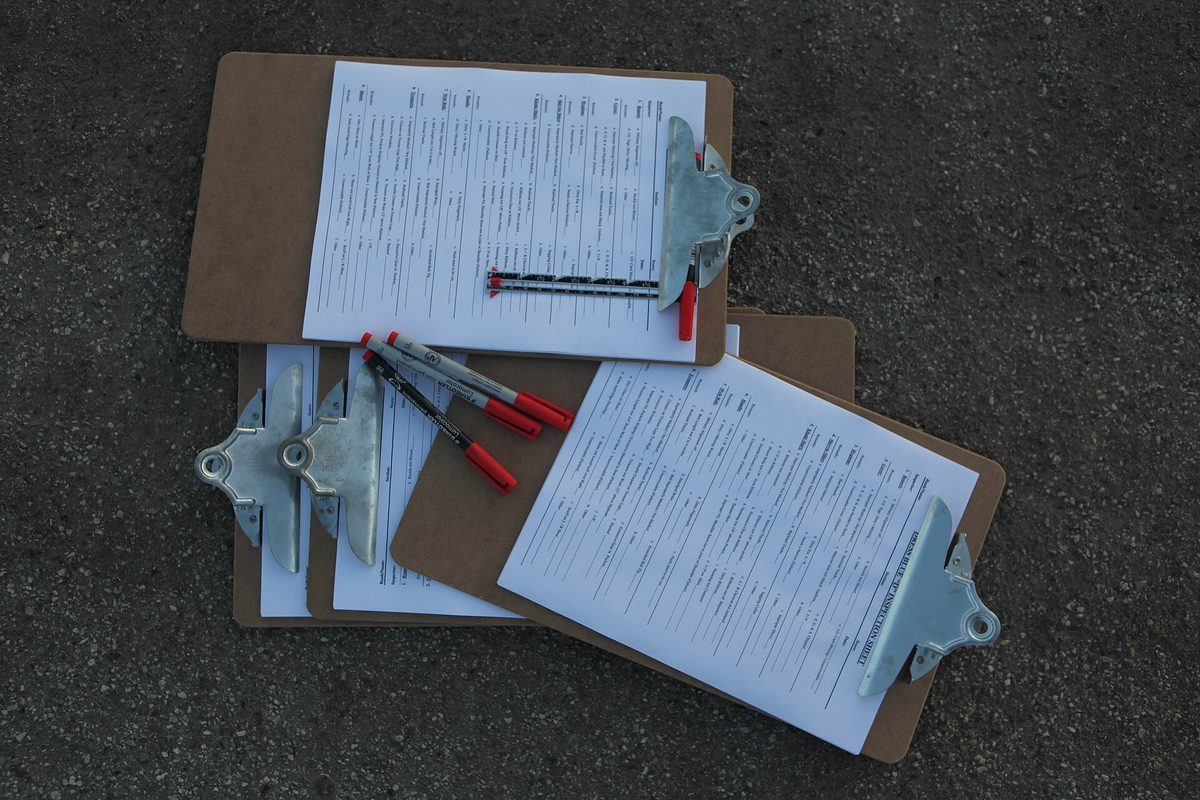
An inspection PDF has already gone to the general contractor when the supervisor notices that it names the wrong scaffold. Correcting the source record is necessary. Sending a second file with the same name, without explaining the change, leaves two recipients holding apparently identical records with different facts.
Before regenerating a safety PDF, identify the error, determine the record-specific correction duty and preserve the relationship between the issued file and its replacement. A new export time may not be presented as the time the inspection or training occurred.
Use the following document-control process for the administrative correction. The person responsible for the activity also needs to check whether the changed fact affects authorization or worker protection. OSHA's correction duties and deadlines depend on the type of record involved.
Determine what the correction changes
Ask the author what happened before opening the PDF generator. Establish whether the error is in the spelling, the selected asset or the underlying account of the activity. If an attachment is missing, locate the original; if the inspection was never performed, there is no completed inspection to reconstruct in the PDF.
Describe the issue using the underlying facts: the inspection occurred on the east scaffold, the export selected the west scaffold, and the observation belongs to the east scaffold. Do not change the historical event to match a convenient dropdown choice.
If the author cannot establish which scaffold was examined, record that uncertainty and arrange the necessary operational check. A corrected PDF cannot supply a missing inspection. Under 29 CFR 1926.451(f)(3), the competent person inspects scaffolds for visible defects before each work shift and after an occurrence that could affect structural integrity. An export operation cannot perform that examination.
The same distinction matters for training. A revised certificate cannot establish that an employee received training on a date that the available evidence does not support. Construction fall-protection certification has specific content under 29 CFR 1926.503(b)(1), including the employee's identity, training dates and the signature of the trainer or employer.
Apply the rule for that record
OSHA does not have one correction rule for every safety document. Start with the provision governing the record, then identify any applicable State Plan or contractual requirements.
| Record | Federal provision to examine | Effect on the correction decision |
|---|---|---|
| Stored OSHA 300 Log | 29 CFR 1904.33(b)(1) | Update newly discovered recordable cases and specified changes during the storage period |
| Stored OSHA 300A summary | 29 CFR 1904.33(b)(2) | Updating the stored summary is permitted, not required by that paragraph |
| Stored OSHA 301 report | 29 CFR 1904.33(b)(3) | Updating the stored incident report is permitted, not required by that paragraph |
| Construction fall-protection training certification | 29 CFR 1926.503(b) | The certification must identify the required facts and the latest certification is maintained |
| Construction entry permit | 29 CFR 1926.1205 and 1926.1206 | Check authorization, permit validity and the operational effect of the changed information |
The five-year storage requirement in 29 CFR 1904.33(a) applies to the listed injury and illness records. It is not a general five-year period for every inspection PDF or training certificate. Do not copy that period into a document-control policy for unrelated records without another basis.
The OSHA record retention chart is a starting reference. Apply its record-specific distinctions before setting the retention treatment for an earlier PDF.
Preserve the event date and explain the correction date
Keep separate meanings for the date of the activity, the date someone entered its record and the date of the corrected export. A software system may display only some of these dates. Check how it behaves before relying on its labels.
Suppose the inspection occurred Monday, the office entered it Tuesday and a location error was corrected Wednesday. A Wednesday export stamp can truthfully describe file generation. It should not replace Monday as the inspection date or imply that the competent person conducted a second inspection on Wednesday.
If a new inspection actually occurred Wednesday, it is a separate event with its own findings. Link it to the earlier problem where useful, but do not merge the two examinations into one historical account.
For OSHA injury records, 29 CFR 1904.29(b)(3) requires completion within seven calendar days after receiving information that a recordable injury or illness occurred. Regenerating a PDF later does not restart that clock. Document the reason for the later correction without inventing an earlier completion date.
This administrative separation also supports permit review. Section 1926.1206(c) calls for the date and authorized duration of a construction entry permit. A download timestamp is insufficient to establish those facts.
Capture a useful reason for replacement
State the changed fact in the replacement reason. For the example above, a supported entry would read: Corrected scaffold identifier from west elevation to east elevation, confirmed with the inspecting competent person. That tells the recipient what changed and who verified it. A note saying only Changed details would leave both questions unanswered.
Identify who requested the correction and who confirmed the underlying fact. The approver of a file replacement may be an office employee. That person's administrative approval is distinct from the signature or qualification needed for the underlying activity.
For construction fall-protection training, 29 CFR 1926.503(b)(1) identifies whose signature appears on the certification. An administrator who repairs a spelling error does not become the trainer. Keep the relationship to the original signatory explainable.
Consider a correction log with the record identifier, changed field, previous value, corrected value, reason and supporting evidence. This is a recommended internal control. The cited OSHA provisions do not prescribe that particular log layout or a universal electronic audit-trail mechanism.
The electronic signatures article discusses signatures in more detail. Do not treat a typed name added during regeneration as proof that the named person reviewed a revised substantive statement.
Inspect the replacement itself
Open the exported PDF after saving the correction. Confirm the field changed in the document, not just in the source screen. Some export paths can use a stored snapshot; others generate a fresh file from current data.
Check that the correction did not remove attachments, signatures or continuation pages. For a long inventory or inspection report, compare the first and last entries as well as the total. A file that downloads successfully can still contain an incomplete selection.
Search the PDF for the corrected identifier, then inspect its visual placement. Confirm that the equipment name appears in the intended field and that the previous name is absent from other places where it could confuse a recipient. If the old value is intentionally retained in a correction history, label that history clearly.
For a construction entry permit, a correct-looking export is only part of the check. The permit still needs the information listed in 29 CFR 1926.1206 and valid authorization under 1926.1205. A changed space, hazard or condition may call for an operational response before anyone relies on the replacement.
Decide how to retain the earlier file
Keep needed records under the provision that applies to them. Where the company elects to preserve an earlier export as evidence of what was issued, distinguish it from the corrected working copy. A historical copy should remain intelligible without continuing to circulate as current instructions.
Do not impose a universal rule that all older PDFs need to be kept forever. Equally, do not assume that replacing a file permits destruction of a needed record. Contract requirements, an investigation or a preservation obligation may affect the decision. Escalate those circumstances through the organization's records and legal process.
For the stored OSHA 300 Log, 29 CFR 1904.33(b)(1) specifically addresses updating descriptions or outcomes by removing or lining out the original entry and entering the new information. A company may choose additional version history, but that extra control should be described as its practice.
For canceled construction entry permits, 29 CFR 1926.1205(f) requires retention for at least one year to facilitate program review. Keeping an earlier permit retrievable supports that review; it does not restore its authority for another entry.
Tell recipients what to replace
Use the distribution history to identify who received the earlier file. Notify those recipients of the correction and identify the affected record. Include enough context to distinguish the replacement from a duplicate email attachment.
Where the correction affects an instruction workers rely on, address the operational communication as well as the document transfer. Sending a revised route diagram to the office does not establish that the crew knows its evacuation route. Applicable employee review requirements need separate attention.
For a construction emergency action plan required by another OSHA standard, 29 CFR 1926.35(e) addresses training and review. In general industry, 29 CFR 1910.38(f) identifies plan review occasions. Use the rule governing the work and the nature of the change.
The incident investigation form can help organize supporting facts when a document error is discovered during an investigation. Completing an optional form does not resolve the underlying recordkeeping or operational duty.
Check the shared download and close the correction
Record that the replacement was checked, where the prior export is held if retained, and which recipients were informed. Include unresolved questions rather than silently filling them with assumptions. If the original author disputes the change, preserve the disagreement and route it to the responsible reviewer.
Check the next export path too. An email attachment may be corrected while a shared download link continues to serve the older file. Test the route recipients actually use. This is an internal verification step, not an additional OSHA document format requirement.
Use the scaffold requirements guide when the underlying issue concerns the examination itself. Finish the correction record with the verified change and the replacement file's identifier, so the next recipient can locate the intended version.
Frequently Asked Questions
Does every safety PDF have a five-year retention period?
29 CFR 1904.33(a) assigns five-year storage to the listed injury and illness records. It is not a general retention rule for every safety PDF.
Do stored OSHA 300 Logs have to be updated?
29 CFR 1904.33(b)(1) requires the specified updates during the storage period. Paragraphs (b)(2) and (b)(3) permit, but do not require, updates to stored summaries and 301 reports.
Does regenerating a certificate create a new training date?
29 CFR 1926.503(b)(1) requires the actual training dates on a fall-protection certification. A later export must not be presented as training that did not occur.
Can a corrected PDF replace a missing scaffold inspection?
29 CFR 1926.451(f)(3) requires the competent-person examination. An administrative correction cannot establish that an unperformed inspection took place.
Site-wide regulatory figures such as compliance dates and penalty amounts come from our regulatory source-of-truth modules, last checked against the eCFR, OSHA.gov, and the Federal Register on October 19, 2026. Last reviewed November 15, 2026.
About This Article
Published by: HazComFast
Published: November 15, 2026
Last Updated: November 15, 2026
This content is for informational purposes only and does not constitute legal advice.