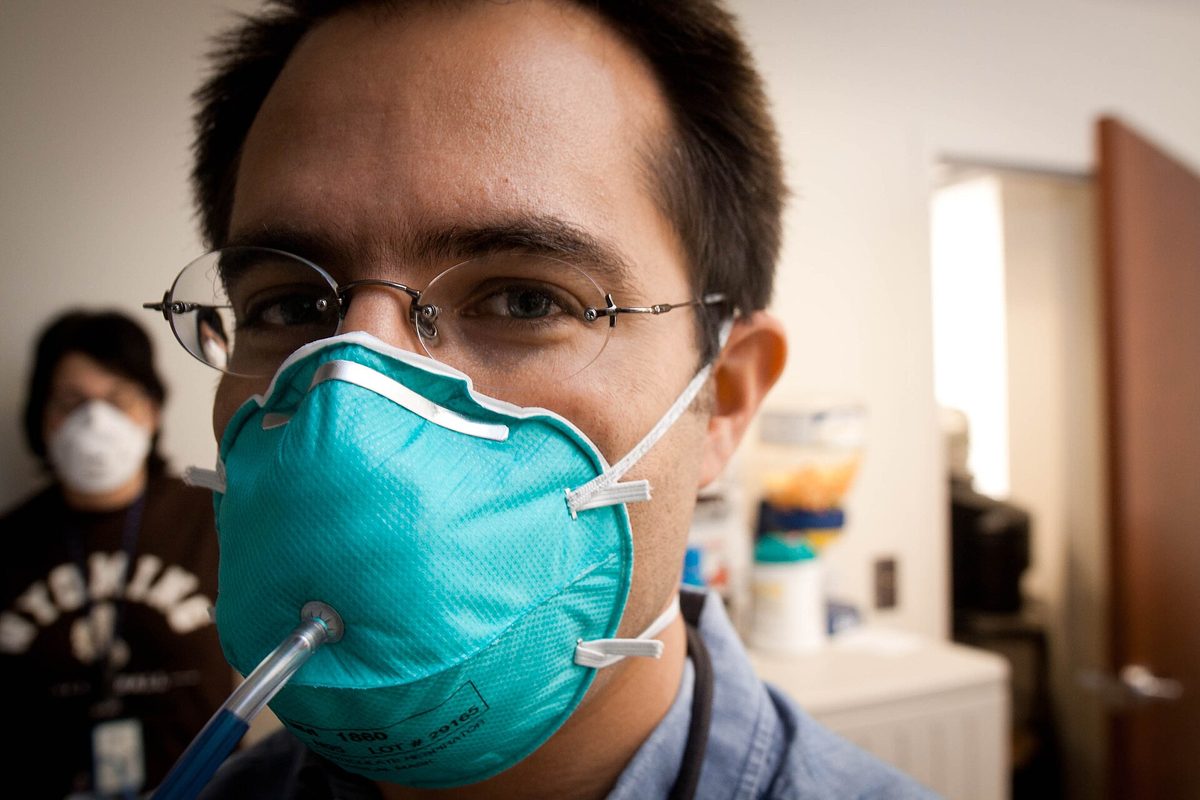
OSHA accepts specific shortened ambient aerosol CNC fit test protocols. Their exercise schedules apply to the facepiece categories named in Appendix A. A short appointment or a passing number alone does not identify which protocol was used.
Your fit-test provider offers shorter appointments for next month's shutdown. That would help the maintenance schedule, but the service proposal says only “quantitative testing.” Before approving it, ask which Appendix A protocol the provider will use for each respirator on your roster.
29 CFR 1910.134(f)(5) requires an OSHA-accepted qualitative or quantitative protocol from Appendix A. The modified ambient aerosol condensation nuclei counter, or CNC, protocols are accepted options. They are not a general permission to abbreviate the procedure already loaded in a device.
Identify the protocol by its full name
Appendix A to 29 CFR 1910.134 includes separate quantitative methods. Ambient aerosol CNC testing uses particles in the surrounding air to measure leakage. Controlled negative pressure, generated aerosol testing, and qualitative taste or odor methods have different procedures. Their exercise schedules cannot be exchanged because two reports both say “pass.”
The modified CNC sections distinguish full-facepiece and half-mask elastomeric respirators from filtering facepiece respirators. Ask the provider to identify the selected method and facepiece category in its service documentation. Calling every instrument-based method “the quantitative test” leaves an important technical decision undocumented.
Use the QLFT and QNFT guide when choosing between those methods. Once a provider proposes modified CNC testing, check the exact procedure against the facepieces on your roster and the records you will receive.
Match the exercise sequence to the facepiece
The modified CNC protocols in Appendix A to 29 CFR 1910.134 use four exercises. The schedules differ by facepiece category. This table is a comparison for EHS review; it does not replace the full instructions or the instrument manufacturer's directions.
| Facepiece category | Exercise sequence | Listed exercise times |
|---|---|---|
| Full-facepiece and half-mask elastomeric respirators | Bending over, jogging in place, head side to side, head up and down | 50, 30, 30, and 39 seconds |
| Filtering facepiece respirators | Bending over, talking, head side to side, head up and down | 50, 30, 30, and 39 seconds |
Those exercise times total 149 seconds by arithmetic. They don't describe the entire service visit. Appendix A still contains applicable preparation and general requirements, and a provider needs time to identify the worker, prepare the equipment, select and don the respirator, and address unsuccessful fits.
The difference between jogging and talking matters. A provider should not run an elastomeric sequence on a filtering facepiece because the employees were booked in one group. Separate the roster by respirator model and facepiece category before the appointment. Appendix A to 1910.134 supplies the method-specific schedule.
Retain the general fit-testing requirements
Shorter exercise schedules do not remove the general selection requirements in Appendix A. Employees need an acceptable facepiece from an adequate selection of models and sizes, instruction on donning and adjustment, and the opportunity to assess fit and comfort. A provider whose entire visit lasts the exercise time may be omitting preparation or assuming it occurred elsewhere.
Make that assumption explicit before contracting. Who will supply alternative sizes? Who checks interfering facial hair? Who manages a worker who finds the facepiece unacceptable? The duties in 1910.134(f) and Appendix A remain even when a test series runs faster.
The introductory text of 1910.134(f) requires the same make, model, style, and size of respirator that will be used. Appendix A also addresses other protective equipment that can interfere with fit. A different size brought from the warehouse after the appointment can invalidate the practical usefulness of a result tied to the original facepiece.
The medical evaluation under 1910.134(e) must occur before fit testing or required use. The shorter protocol is no exception to that sequence. Coordinate the medical evaluation separately, and keep the provider's appointment list from becoming the only evidence that prerequisites were checked.
Distinguish a seal check from the measured test
1910.134(g)(1)(iii) requires a user seal check each time a tight-fitting respirator is put on, using Appendix B-1 or an equally effective manufacturer procedure. That check is distinct from the fit test under 1910.134(f). Ask the provider to explain both to the wearer and keep the measured test distinct in the record.
A worker can complete the seal check and still fail the instrumented fit test. Investigate the fit through the accepted procedure rather than altering an exercise or accepting a partial run. Offer another suitable respirator when the selected facepiece does not fit. The purchasing decision may need to change.
For an employee wearing an unfamiliar model, preparation may take longer than the test series. Build that time into the schedule. A contract that rewards only the number of completed reports can leave no time for selection and training issues needed by Appendix A to 1910.134.
Ask for method-specific quality controls
Appendix A imposes requirements beyond body movements. The ambient aerosol method depends on appropriate equipment, test conditions, and the checks specified in its procedure. Obtain the provider's explanation of its quality-control process and how failed checks or inadequate test conditions are handled.
EHS does not need to improvise instrument settings. Ask the test administrator to explain how the equipment and software implement the selected Appendix A procedure. If a proposed report cannot identify which accepted procedure generated its result, resolve that before treating the report as evidence of compliance with 1910.134(f)(5).
Some instruments support more than one procedure. An instrument's trade name is not a protocol name. A software update may add an option without changing the settings used by a particular operator. The contract and sample report should identify what will actually be done for your facepieces.
Review the result against the correct facepiece
Under 1910.134(f)(7), a quantitative fit factor of at least 100 is required for tight-fitting half facepieces, and at least 500 for tight-fitting full facepieces. Keep those fit-test criteria separate from an assigned protection factor used in respirator selection under 1910.134(d).
A high fit factor does not authorize a respirator for every airborne concentration. Selection still considers the hazard, exposure, oxygen conditions, and equipment limitations. The respiratory program guide explains that larger process. Purchasing the faster test cannot settle those separate decisions.
Check the respirator identity printed on the report against the issued equipment. Resolve abbreviated model numbers that could refer to different facepieces. Where an employee uses more than one tight-fitting facepiece, identify which configurations need testing rather than treating the employee's name as a universal clearance for the respirator cabinet.
Specify the records before the provider arrives
1910.134(m)(2) lists the fit-test record elements: employee identification, type of test, make and model, style and size, test date, and the applicable result or quantitative recording. It calls for keeping the record until the next fit test is administered. The rule does not turn the four-exercise schedule into a shorter retention period.
Ask for a sample export before the event. Confirm that it contains the needed elements and that you can read it without the provider's proprietary dashboard. Recording the exact protocol name is a useful additional purchasing control, even where the federal record provision describes the field more broadly as the type of fit test.
Keep an exception log for incomplete appointments. A missing report, an unsuitable facepiece, and an employee who did not attend are different conditions requiring different follow-up. Do not classify all three as completed because the provider invoiced for the reserved slot.
Run a small acceptance review before a full rollout
For an illustrative mixed roster, send the provider the models for a disposable filtering facepiece, an elastomeric half mask, and an elastomeric full facepiece. Ask which protocol will be selected for each and how unsuccessful fits will be managed. Review this against Appendix A to 1910.134 before reserving the entire shutdown window.
During the first session, check the administrative path with a sample record. Confirm the respirator category, selected procedure, test date, and result. Ask the administrator to explain any difference from the agreed method. An unexpected substitute procedure needs its own accepted basis; a shorter elapsed time is not that basis.
After the session, reconcile the roster with the results. Verify that workers whose records remain incomplete have an assigned follow-up before required respirator use. Routine fit testing remains at least annual under 1910.134(f)(2), with additional tests when its other triggers apply. Booking a faster method does not extend that interval.
Use the fit-test log to organize the records, and the evaluation timing article to keep different training and evaluation clocks separate. Put the protocol name and the sample report in the purchase file so the next EHS manager can verify what the service included.
Frequently Asked Questions
Does OSHA accept shorter quantitative fit tests?
Yes. Appendix A to 29 CFR 1910.134 includes modified ambient aerosol CNC protocols for elastomeric facepieces and filtering facepieces. Their listed procedures and scope need to be followed.
Can a provider shorten any fit test by removing exercises?
No. Under 29 CFR 1910.134(f)(5), fit testing uses an OSHA-accepted protocol in Appendix A. The modified CNC procedures do not authorize editing a different protocol.
Are the two modified CNC exercise lists identical?
No. Appendix A to 29 CFR 1910.134 lists jogging for the elastomeric protocol and talking for the filtering-facepiece protocol, along with the other specified exercises.
What record do we need to retain?
29 CFR 1910.134(m)(2) calls for employee identity, test type, respirator identification, test date, and the result or quantitative record. Keep the record until the next fit test is administered.
Site-wide regulatory figures such as compliance dates and penalty amounts come from our regulatory source-of-truth modules, last checked against the eCFR, OSHA.gov, and the Federal Register on October 19, 2026. Last reviewed November 15, 2026.
About This Article
Published by: HazComFast
Published: November 15, 2026
Last Updated: November 15, 2026
- https://www.osha.gov/laws-regs/regulations/standardnumber/1910/1910.134AppA
- https://www.osha.gov/laws-regs/regulations/standardnumber/1910/1910.134
- https://www.federalregister.gov/documents/2019/09/26/2019-20686/additional-ambient-aerosol-cnc-quantitative-fit-testing-protocols-respiratory-protection-standard
This content is for informational purposes only and does not constitute legal advice.