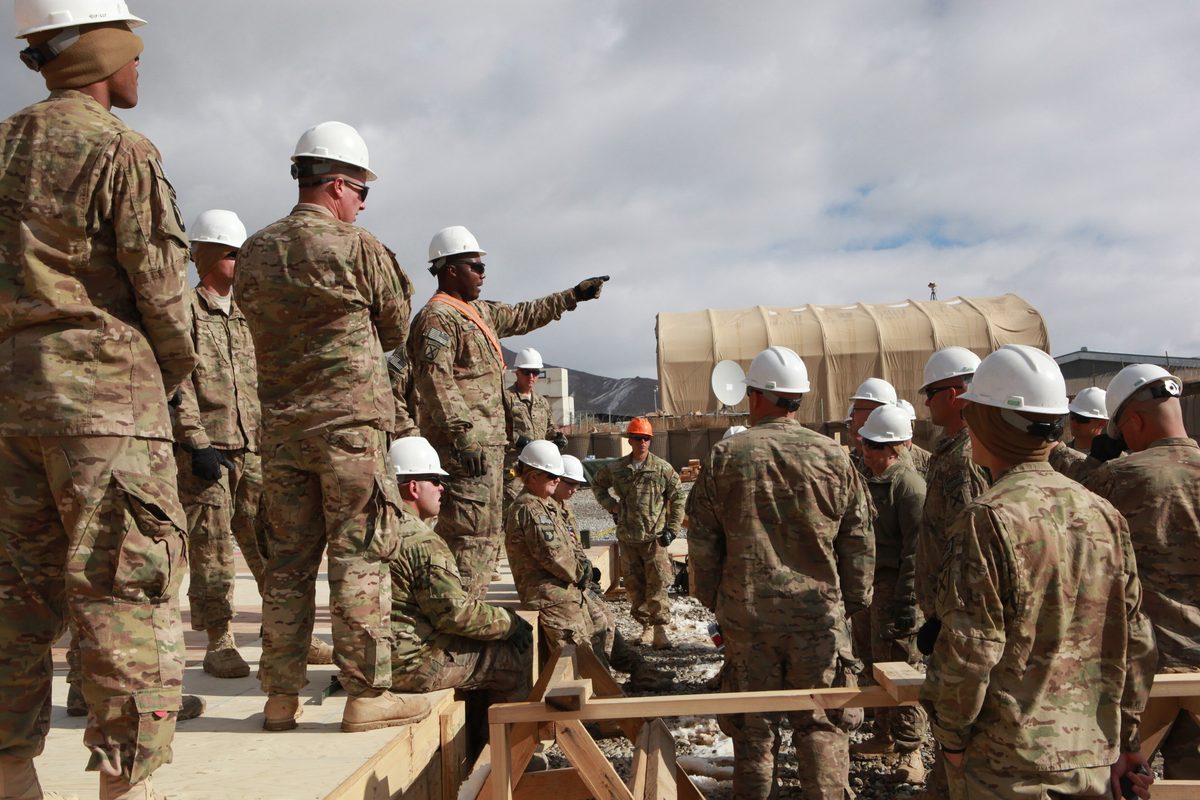
California's construction rule, 8 CCR 1509(e), has supervisory employees hold "toolbox" or "tailgate" safety meetings with their crews at least every 10 working days. The rule doesn't say how to count working days, and it asks for no sign-in sheet. Washington and Oregon set their own intervals, and the federal construction training provision, 29 CFR 1926.21(b)(2), sets no meeting interval.
A refinery coating crew last met on Monday, October 19, 2026. They have worked every weekday since, plus Saturday the 24th. On Thursday the 29th, the superintendent is planning the next tailgate meeting. A calendar that counts only Monday through Friday shows fewer working days than this crew has actually worked.
The two counts produce different dates. A Monday-through-Friday count reaches ten on November 2; counting this crew’s Saturday shift brings the tenth day to October 30. Section 1509(e) does not define working days. For scheduling, a weekly meeting avoids relying on the later date. Record which crew met and who attended.
What does 8 CCR 1509(e) require?
The requirement is one sentence. It sits in section 1509 of the Construction Safety Orders, the section titled Injury and Illness Prevention Program, as subsection (e):
Supervisory employees shall conduct "toolbox" or "tailgate" safety meetings, or equivalent, with their crews at least every 10 working days to emphasize safety. (8 CCR 1509(e))
"Shall conduct" makes the meeting mandatory. "At least every 10 working days" sets the longest gap allowed between two meetings, so a crew that meets more often is inside the rule. "Or equivalent" leaves room for a meeting under another name, and the sentence doesn't say what qualifies.
It's a California rule. The federal construction training rule in 29 CFR 1926.21(b)(2) prescribes no toolbox-talk interval. The ten-working-day requirement discussed here belongs to California’s Construction Safety Orders.
Which California jobs does 1509(e) cover?
Section 1502(a) sets the reach of the Construction Safety Orders:
These Orders establish minimum safety standards whenever employment exists in connection with the construction, alteration, painting, repairing, construction maintenance, renovation, removal, or wrecking of any fixed structure or its parts. These Orders also apply to all excavations not covered by other safety orders for a specific industry or operation. (8 CCR 1502)
The test is the work, whatever trade the employer is in. A crew repainting a fixed structure is doing work on that list. The section sets no minimum crew size and no minimum project length, so a two-week reroof counts the same as a two-year tower.
One carve-out concerns tunnel and pressurized work. Section 1502(b) gives these Orders precedence at construction projects over other general orders that conflict with them, "except for Tunnel Safety Orders or the Pressurized Worksite Standards in Article 154 of the General Industry Safety Orders." If you run tunnel work, read those orders as well. This article doesn't cover them.
Who has to hold the meeting, and with whom?
Supervisory employees, with their crews. The sentence runs from each supervisor to that supervisor's own crew, so it points to a meeting per crew. It says nothing about a meeting per jobsite.
That's also where California parts from the federal training rule. 29 CFR 1926.21(b)(2) is written to the employer: "The employer shall instruct each employee." California's sentence is written to the supervisors who run the work.
The words themselves aren't defined. Section 1504, the definitions section of the Construction Safety Orders, has no definition of crew, supervisory employee or foreman. On a job where a lead hand directs four people and answers to a general foreman, settle which of the two holds that crew's meeting. The rule won't settle it for you.
What does 1509(e) leave open?
Read on its own, the sentence doesn't answer the questions that come up when several crews share a site. It says nothing about:
- one meeting for several crews on the same jobsite
- a subcontractor's crew sitting in on the general contractor's meeting
- whether the whole crew has to be there
- how long the meeting lasts
- what it covers, beyond "to emphasize safety"
- any record of the meeting, whether attendance sheet, signature or retention period
Federal OSHA sets no retention period for a toolbox talk record either. Its retention rule, 29 CFR 1904.33(a), covers the OSHA 300 Log, the privacy case list, the annual summary and the 301 forms. California's training documentation under 8 CCR 3203(b)(2) is a separate question, and the toolbox talk guide goes through both.
What counts as a working day under 1509(e)?
Section 1509(e) sets the interval without defining working days. The definitions in section 1504 and the Division’s enforcement procedure, P&P C-45B, do not supply a counting method. A Monday-through-Friday calendar is an administrative convention; a crew’s actual work schedule can differ.
That leaves two readings. The first counts business days on the calendar, Monday to Friday. The second counts the days the crew works. On a five-day crew they land on the same date. They split as soon as the crew works Saturdays or four tens. Take a meeting held Monday, October 19, 2026, and count to the tenth working day:
| Crew schedule | Counting business days, Monday to Friday | Counting the days the crew works |
|---|---|---|
| Five eights, Monday to Friday | Monday, November 2 | Monday, November 2 |
| Four tens, Monday to Thursday | Monday, November 2 | Wednesday, November 4 |
| Six days, Monday to Saturday | Monday, November 2 | Friday, October 30 |
These are examples of two counting methods, not dates certified by Cal/OSHA. A holiday can create another difference between a weekday calendar and the crew’s schedule.
If you'd rather not bet on one reading, hold the meeting at least every 7 calendar days. Seven calendar days hold at most five weekdays and at most seven days of work, so the gap stays under 10 working days whichever way the count goes. Federal OSHA has no interval to borrow, since 29 CFR 1926.21(b)(2) sets none.
Where do the Code of Safe Practices and Plate A-3 fit in?
Section 1509 is the construction section on the Injury and Illness Prevention Program, or IIPP, and the crew meeting is one piece of it. Subsection (a) ties construction employers to the general IIPP rule: "Every employer shall establish, implement and maintain an effective Injury and Illness Prevention Program in accordance with section 3203 of the General Industry Safety Orders." Subsection (b) adds a written Code of Safe Practices, and its last sentence reads: "The Code shall contain language equivalent to the relevant parts of Plate A-3 of the Appendix." Subsection (c) has the Code posted at the jobsite office or given to each supervisor. The federal construction standards have their own program duty, in 29 CFR 1926.20(b)(1), and the federal section below quotes it.
Subsection (d) describes a different meeting: "Periodic meetings of supervisory employees shall be held under the direction of management for the discussion of safety problems and accidents that have occurred." That one is management sitting down with its supervisors, and it carries no interval. The 10 working days are in (e) alone.
Plate A-3 is the model code, and it says so in its own words: "This is a suggested code." Its item 3 repeats the 10-working-day meeting, so a Code of Safe Practices copied from the Plate carries the same interval. The binding sentence is still (e). The Division's guides, including its list of tailgate and toolbox topics, use words like should and consider, and they read as advice.
The IIPP rule that (a) brings in mentions meetings too. Section 3203(a)(3), on communicating with employees, says "Substantial compliance with this provision includes meetings, training programs, posting, written communications," and it goes on to list other means.
Who gets cited when the meetings don't happen?
The employer. The rule gives the meeting to supervisory employees, and Cal/OSHA's enforcement procedure for section 1509 puts the duty and the citation on the employer. That procedure is P&P C-45B, "Enforcement of 8 CCR Section 1509: Injury and Illness Prevention Program," issued March 17, 1992 and revised August 1, 1994 and April 1, 2003. Its paragraph F reads:
An employer subject to §1509 shall conduct "toolbox" or "tailgate" safety meetings, or the equivalent, with their crews at least every 10 working days to emphasize safety. Compliance personnel shall reference in the citation how the employer failed to comply with §1509(e). (DOSH P&P C-45B)
So the supervisor runs the meeting and the employer answers for it. C-45B doesn't define working days either.
How often do Washington and Oregon require safety meetings?
California, Washington and Oregon all run approved state plans, and each sets its own interval for safety meetings in construction.
Washington, WAC 296-155-110(5)(a):
You must hold crew leader-crew safety meetings at the beginning of each job, and at least weekly thereafter.
Oregon, OAR 437-001-0765(11), Table 3, for construction:
At least monthly and before the start of each job that lasts more than one week
Oregon's table only applies to an employer that holds safety meetings instead of having a safety committee, under 0765(1).
Both northern rules start with the job: Washington at the beginning of each job, Oregon before each job that runs more than a week. California's sentence says nothing about the start of a job. Washington counts in weeks and Oregon in months, and neither text converts to working days, so the table keeps each rule in its own unit.
| Jurisdiction | Rule | Interval in the text | Unit |
|---|---|---|---|
| California, construction | 8 CCR 1509(e) | "at least every 10 working days" | Working days, not defined |
| Washington, construction | WAC 296-155-110(5)(a) | "at the beginning of each job, and at least weekly thereafter" | Weeks |
| Oregon, construction employers holding safety meetings instead of a committee | OAR 437-001-0765(11), Table 3 | "At least monthly and before the start of each job that lasts more than one week" | Months |
| Federal OSHA, construction | 29 CFR 1926.21(b)(2) | None. The employer "shall instruct each employee" | None |
Other states can have different requirements. Check the rule for the state where the crew works. OSHA state plans explained describes which states run their own program.
Does federal OSHA require toolbox talks?
29 CFR 1926.21(b)(2), the federal construction training rule, requires instruction for each employee and gives no toolbox-talk interval. A meeting can deliver that instruction, provided it covers the hazards and rules the employee needs for the work.
The construction training rule is 29 CFR 1926.21. Paragraph (b)(2) reads:
The employer shall instruct each employee in the recognition and avoidance of unsafe conditions and the regulations applicable to his work environment to control or eliminate any hazards or other exposure to illness or injury.
29 CFR 1926.21(b)(2) requires instruction for each employee, and it names no meeting and no interval. The paragraph above it, 29 CFR 1926.21(b)(1), reads "The employer should avail himself of the safety and health training programs the Secretary provides." It says should, so it's a recommendation.
29 CFR 1926.20 carries the general program duty. Its paragraph (b)(1) says "It shall be the responsibility of the employer to initiate and maintain such programs as may be necessary to comply with this part," and (b)(2) adds "Such programs shall provide for frequent and regular inspections of the job sites, materials, and equipment to be made by competent persons designated by the employers." The words frequent and regular in 29 CFR 1926.20(b)(2) apply to inspections by competent persons, and the paragraph sets no interval for meetings.
So the intervals in this article come from the states, and in California it's the 10 working days of 1509(e). For running the talk itself, see the toolbox talk guide.
How do you keep track of the interval across crews and jobs?
With one crew on one job, a date on the trailer whiteboard is enough. With several jobs and a dozen crews, you need the date of each crew's last meeting, and that date is on the attendance sheet. Count forward from it the way the company has decided to count, and put the due date where the supervisor sees it before the crew starts work. Pick one count for the whole company and write it down, so two superintendents don't count the same crew two different ways.
HazComFast puts that due date in front of the people who run the jobs. The Cadence tab of Toolbox Talks lists every jobsite with the time since its last talk, in calendar days and working days side by side, and the jobsites with a gap come first. On a California construction jobsite, the card cites 8 CCR 1509(e), a talk at least every 10 working days, gives the date the next one is due, and links the rule with the date it was last checked. The counting convention is printed right on the card: working days run Monday to Friday, since the rule's text doesn't define them.
Your own company cadence runs alongside the state rule, every 7 days unless you set another interval. A reminder goes out before a California talk comes due, and an overdue notice follows if it doesn't happen. In Washington or Oregon, the card quotes the state's rule word for word. From any card, Hold a talk opens the form for that jobsite.
Talks planned under Schedules reach the crew the day before. A worker added to the attendance list gets a notification that opens the talk straight on the signature pad, and anyone still unsigned 24 hours later gets one reminder. When the last person signs, the presenter is told. A scheduled talk that doesn't happen turns Overdue, and the jobsite's managers hear about it. Crews who work in Spanish get the whole module in Spanish, and a talk prints as a one-page PDF in English and Spanish.
When someone asks for proof, Export cadence report turns any period into a PDF titled Toolbox talk cadence. It lists each talk with its date, topic and presenter, the calendar days and working days since the one before, and the gap.
Before the next talk
The Toolbox Talk Generator builds a talk with a built-in attendance sign-in sheet. The Safety Meeting Sign-In Sheet gives a blank or filled-in sheet in PDF, Word or Excel, in English or Spanish. Both are free.
Related reading: the toolbox talk guide · The toolbox talk guide · OSHA state plans explained · Cal/OSHA first aid and CPR in construction
Regulatory sources
Frequently Asked Questions
How often are toolbox talks required in California construction?
At least every 10 working days. 8 CCR § 1509(e) reads: “Supervisory employees shall conduct ‘toolbox’ or ‘tailgate’ safety meetings, or equivalent, with their crews at least every 10 working days to emphasize safety.” The section is in the Construction Safety Orders, which § 1502(a) applies whenever employment exists in connection with the construction, alteration, painting, repairing, construction maintenance, renovation, removal, or wrecking of any fixed structure or its parts.
What counts as a working day under 8 CCR 1509(e)?
8 CCR §1509(e) does not define working days. Section 1504 and enforcement procedure P&P C-45B do not give a counting method either. A Monday-through-Friday calendar may miss days worked by a Saturday crew. A meeting at least every seven calendar days stays within ten days under either count. Record the meetings for each crew.
Does federal OSHA require toolbox talks?
29 CFR 1926.21(b)(2) requires the employer to instruct each employee in recognizing and avoiding unsafe conditions and in the regulations applicable to the work. It prescribes no toolbox meeting or interval. State rules, including California’s 8 CCR 1509(e), may prescribe meetings.
Who gets cited if toolbox talks aren't held in California?
The employer. 8 CCR § 1509(e) has supervisory employees conduct the meetings, and paragraph F of Cal/OSHA's enforcement procedure P&P C-45B says an employer subject to § 1509 shall conduct them and that compliance personnel “shall reference in the citation how the employer failed to comply with §1509(e).”
How often do Washington and Oregon require construction safety meetings?
Washington's WAC 296-155-110(5)(a) says “You must hold crew leader-crew safety meetings at the beginning of each job, and at least weekly thereafter.” Oregon's OAR 437-001-0765(11), Table 3, sets “At least monthly and before the start of each job that lasts more than one week” for construction, for employers that hold safety meetings instead of having a safety committee. Neither rule counts in working days, as California's 8 CCR § 1509(e) does.
Does 8 CCR 1509(e) require a sign-in sheet for toolbox talks?
8 CCR §1509(e) prescribes the meetings but no sign-in sheet or retention period. If a meeting provides training required by 8 CCR 3203(a)(7), the documentation requirements of 3203(b)(2) apply to that training. Keep the two duties separate when deciding what to record.
Site-wide regulatory figures such as compliance dates and penalty amounts come from our regulatory source-of-truth modules, last checked against the eCFR, OSHA.gov, and the Federal Register on October 19, 2026. Last reviewed November 14, 2026.
About This Article
Published by: HazComFast
Published: November 2, 2026
Last Updated: November 14, 2026
- https://www.dir.ca.gov/title8/1509.html
- https://www.dir.ca.gov/title8/1502.html
- https://www.dir.ca.gov/title8/1504.html
- https://www.dir.ca.gov/title8/3203.html
- https://www.dir.ca.gov/DOSHPol/P&PC-45B.pdf
- https://app.leg.wa.gov/wac/default.aspx?cite=296-155-110
- https://osha.oregon.gov/rules/final/division-1/pages/437-001-0760-0765.aspx
- https://www.ecfr.gov/current/title-29/section-1926.21
- https://www.ecfr.gov/current/title-29/section-1926.20
- https://www.osha.gov/laws-regs/regulations/standardnumber/1904/1904.33
- https://www.osha.gov/stateplans
This content is for informational purposes only and does not constitute legal advice.