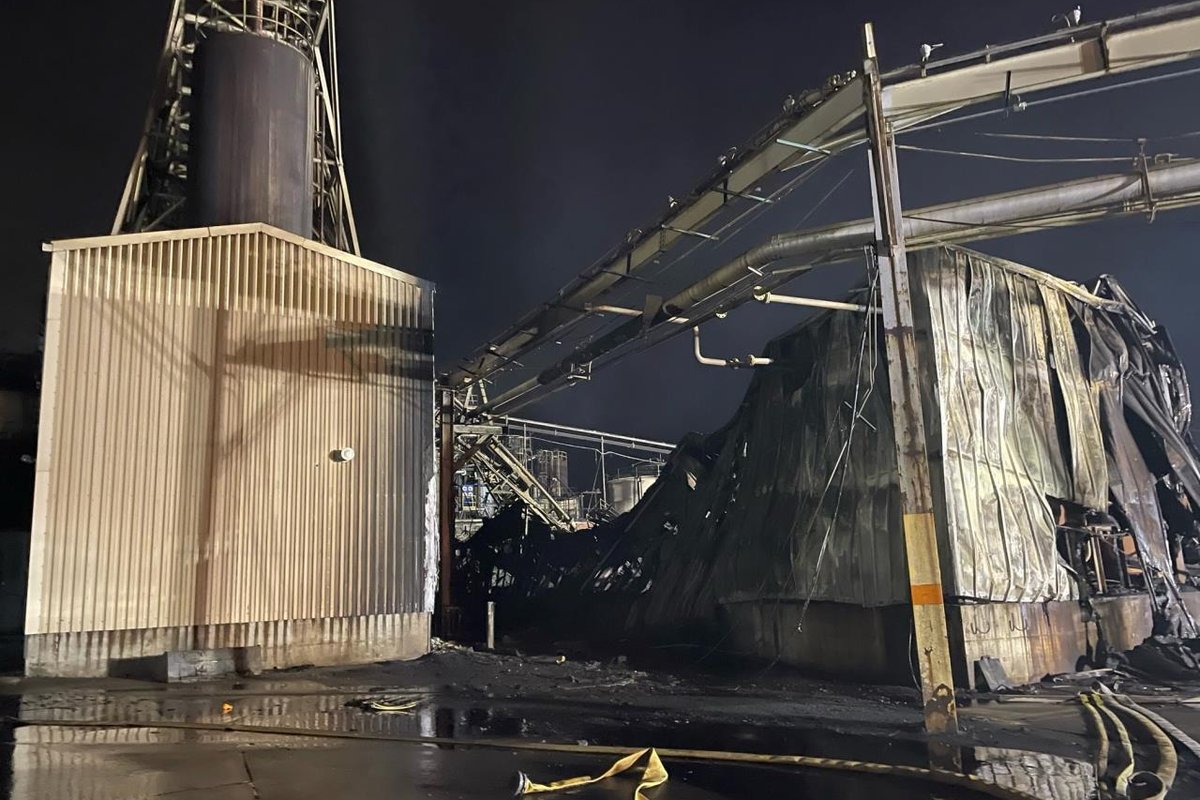
A chemical stored in a 12,000-pound tank may trigger an EPCRA Tier II inventory report without triggering a Toxics Release Inventory (TRI) Form R. Another chemical that moves through a plant in small batches may trigger Form R even though no more than 3,000 pounds is on site at once.
The distinction is maximum quantity present versus annual chemical activity. EPCRA Sections 311 and 312 are primarily about hazardous chemicals at a site and emergency planning. EPCRA Section 313 is about specified toxic chemicals manufactured, processed, or otherwise used by covered facilities, followed by reporting their releases and waste management. Neither filing substitutes for the other. EPA, Reporting for TRI Facilities; 40 CFR 370.10; 40 CFR 372.22.
TRI Form R vs. EPCRA Tier II: the detailed comparison
| Question | TRI Form R / Form A, EPCRA §313 | Hazardous chemical inventory (commonly Tier II), EPCRA §§311–312 |
|---|---|---|
| Regulatory framework | 40 CFR Part 372 | 40 CFR Part 370 |
| Primary purpose | Describe what happens to listed toxic chemicals, including environmental releases, recycling, treatment, energy recovery, and off-site waste transfers | Inform state/local emergency planners and firefighters which hazardous chemicals are present, how much, and where |
| Chemical universe | Specifically listed TRI chemicals and chemical categories; check the list for the reporting year | Hazardous chemicals requiring an OSHA Hazard Communication SDS, subject to EPCRA exemptions; not a fixed TRI-style list |
| Main screening basis | Covered industry, employment, and annual quantity manufactured, processed, or otherwise used | Maximum quantity present at any one time during the calendar year, plus SDS applicability and exemptions |
| Federal industry test | Generally covered six-digit NAICS classifications under 40 CFR 372.23; special EPA determinations can extend coverage | No general TRI-style NAICS limitation |
| Federal employee test | No less than 10 full-time-equivalent employees (20,000 work hours), subject to special EPA determinations | No general 10-employee eligibility test |
| Ordinary chemical threshold | More than 25,000 lb/year manufactured (including imported) or processed; more than 10,000 lb/year otherwise used | No less than 10,000 lb present at one time for most non-EHS hazardous chemicals |
| Lower thresholds | Some special-concern TRI chemicals: 100 lb, 10 lb, or 0.1 g depending on listing; listed PFAS generally 100 lb | Extremely Hazardous Substances (EHS): no less than 500 lb or the substance's §355 threshold planning quantity (TPQ), whichever is lower |
| Important special case | Qualified non-special-concern chemicals may use the shorter Form A certification rather than Form R | Narrow federal 75,000-gal gasoline and 100,000-gal diesel thresholds apply at qualifying retail gas stations with compliant entirely underground tanks |
| Mixtures and concentration rules | Determine the mass of listed TRI components and evaluate exemptions under 40 CFR 372.38; the ordinary de minimis exemption does not apply to 40 CFR 372.28 special-concern chemicals | Apply 40 CFR 370.14: aggregate EHS components across all mixtures and other sources, then use an authorized component-versus-mixture reporting option consistently |
| Additional chemical-specific attachment | Dioxin and dioxin-like compounds category has Form R Schedule 1, submitted with the needed Form R, not in place of it | No TRI Schedule 1 equivalent |
| Amount reported | Facility/chemical activity; environmental releases; off-site waste transfers; recycling, treatment, energy recovery; source reduction and related data | Chemical identity, hazard categories, peak and average inventory (federal range codes), days present, storage conditions, locations, facility and emergency contacts |
| Federal annual due date | July 1, for the previous calendar year | March 1, for the previous calendar year |
| Recipients and route | EPA and appropriate state/tribal recipient; submit via EPA TRI-MEweb/CDX | SERC/TERC, LEPC/TEPC, and fire department with jurisdiction, following authorized state/tribal procedures |
| Question | TRI Form R / Form A, EPCRA §313 | Hazardous chemical inventory (commonly Tier II), EPCRA §§311–312 |
|---|---|---|
| Is Tier II itself always required federally? | Not applicable | Federal §312 floor is Tier I data; Tier II is required on request (the response threshold is zero under 40 CFR 370.10(b)) and typically annually under state requirements |
| Threshold when an authority requests Tier II | No equivalent general §312-style zero-threshold request rule; EPA's §313(b)(2) determination authority is separate | Zero for responding to a qualifying SERC, LEPC, or fire-department request; provide Tier II within 30 days under 40 CFR 370.45(b) |
| Other related filing | TRI supplier notification, if applicable, is a separate question | §311 initial SDS-or-list filing is separate from the annual §312 inventory |
Sources: 40 CFR 372.22, 372.25, 372.27, 372.28, 370.10, 370.40, 370.42, 370.45; EPA Tier II forms.
What does a TRI Form R actually report?
Under EPCRA §313, a covered facility reports separately for each TRI-listed chemical that exceeds the applicable activity threshold. Form R does more than state how much chemical the plant purchased. In the core form, Section 5 addresses on-site environmental releases, Section 6 addresses off-site transfers of waste for disposal or further waste management, Section 7 addresses on-site waste treatment, energy recovery, and recycling, and Section 8 addresses quantities entering waste-management pathways and other relevant production-related waste data. The complete form also includes facility, chemical, and source-reduction information. An off-site transfer for waste treatment is not the same as a release to the environment by the sending facility. A facility may cross an activity threshold even if it reports little or no environmental release. EPA TRI program; EPA TRI terms; EPA, RY 2025 Reporting Forms and Instructions.
Use the reporting-year package. EPA’s GuideME reporting-forms portal provides the Form R and Form A instructions. Use the instructions, chemical list, and TRI-MEweb version for the year being reported. The RY 2025 instructions cited here explain the form’s structure; preparation of a 2026 return calls for the 2026 package and any applicable EPA updates.
The three TRI eligibility gates
For a typical private-sector facility, examine all three gates:
- Industry. Confirm the actual facility's six-digit 2022 NAICS code against the TRI-covered industry list in 40 CFR 372.23. Manufacturing is a major category, but covered sectors also include certain mining, utilities, waste management, chemical distribution, and others; do not assume all commercial businesses are covered. A multi-establishment site can call for special analysis under 40 CFR 372.22(b).
- Employment. Count hours worked during the calendar year by employees and qualifying contract workers, then divide by 2,000. 20,000 hours / 2,000 = 10 full-time equivalents. This is a facility-wide calculation, not simply the headcount on December 31.
- Chemical activity. For each listed chemical or category, independently compare the reporting-year amount manufactured, processed, and otherwise used with the applicable threshold. For ordinary chemicals, the limits are more than 25,000 lb for manufacturing (which includes import) or processing, or more than 10,000 lb for otherwise use. Exceeding any one activity threshold triggers reporting of the relevant chemical's reportable activities, subject to exclusions and exceptions.
EPA can also specifically call for certain facilities to report under its §313(b)(2) determination authority, so the three-gate summary is not the only route to TRI coverage. Federal facilities have their own applicable TRI reporting framework. 40 CFR 372.3; 372.22; 372.25; EPA, Covered Industry Sectors.
Manufacture, process, and otherwise use are not interchangeable
- Manufacture includes production of a TRI-listed chemical and qualifying import. A chemical produced as an impurity or byproduct can call for analysis, even when no one buys it as a raw material.
- Process generally means preparing a listed chemical, after manufacture, for distribution in commerce, for example, incorporating it into a product sold to customers.
- Otherwise use generally covers use that is neither manufacture nor processing, such as use of a solvent to clean equipment, subject to the detailed regulatory definitions and exemptions.
For a mixture containing 20% of a listed ordinary chemical by weight, processing 100,000 pounds of the mixture generally means screening 20,000 pounds of that listed chemical, not 100,000 pounds, unless a chemical category or other special rule calls for a different calculation. Separately determine each activity; compare the manufactured, processed, and otherwise-used quantities with their respective thresholds. Recycling, article exemptions, concentration rules, metal compounds, and chemical-specific qualifiers can change the calculation. 40 CFR 372.3; 372.25; 372.38; EPA TRI guidance.
TRI concentration and activity exemptions call for their own review
Under 40 CFR 372.38(a), the ordinary TRI de minimis exemption generally allows a listed chemical in a mixture to be excluded from threshold and release calculations when its concentration is below 1%, or below 0.1% for a listed chemical meeting the rule's carcinogenicity criteria. These are strict below tests: an exact 1.0% or 0.1% concentration does not meet the corresponding exemption. The exemption applies to the qualifying quantity in that mixture; it does not excuse separately reportable quantities used elsewhere at the facility. Most importantly, the de minimis exemption does not apply to chemicals of special concern under 40 CFR 372.28, including TRI-listed PFAS.
The same section contains defined exemptions for qualifying manufactured articles, specific uses such as routine janitorial maintenance, and certain supervised laboratory activities. They are conditional: an item does not qualify as an exempt article merely because it is solid, and the laboratory exemption excludes pilot-plant-scale operations and specialty chemical production. Document the factual basis for each exemption; neither a product SDS nor a supplier's trade-name description alone resolves all §313 questions. 40 CFR 372.38; 372.28.
When may a facility submit Form A instead of Form R?
Form A is an alternate certification statement, not a finding that a report is unnecessary. Under 40 CFR 372.27, a facility may be eligible for a chemical if:
- It meets the alternate threshold conditions: annual reportable releases and waste-management amounts combined are 500 lb or less (defined by the rule's Form R components), and no relevant manufacture, process, or otherwise-use activity exceeds 1,000,000 lb/year.
- The chemical is not excluded from Form A by the special-concern rule at 40 CFR 372.28.
If eligible, the facility files Form A for that chemical; it cannot simply omit it. Listed PFAS and other chemicals of special concern are ineligible for Form A. The 500-pound test includes more than air emissions and is not the Tier II EHS threshold. Maintain calculations supporting Form A eligibility. 40 CFR 372.27; 372.28; EPA Form A rule.
When is Form R schedule 1 necessary?
For the dioxin and dioxin-like compounds category, applicable TRI reporting includes EPA Form R Schedule 1, which provides additional constituent-level information for that category. Schedule 1 accompanies the needed Form R; it is not an alternative abbreviated form and is not the same as Form A.
The 0.1-gram special-concern threshold has a critical category qualifier under 40 CFR 372.28(a)(2): it covers manufacturing, and it covers processing or otherwise use only if the dioxin or dioxin-like compounds are present as contaminants in another chemical and were created during the manufacture of that chemical. Do not treat every conceivable activity involving 0.1 gram as automatically covered, and do not apply the ordinary 25,000-/10,000-pound thresholds to activities that fall within this qualified listing. 40 CFR 372.28(a)(2); 372.30(a); EPA, Dioxin Schedule 1 Data.
What is EPCRA Tier II reporting: and what does Section 311 add?
The annual EPCRA §312 inventory is based on hazardous chemicals for which OSHA's Hazard Communication Standard calls for a safety data sheet, after applying EPCRA §311–312 exclusions. For most such non-EHS chemicals, the federal trigger is 10,000 pounds or more present at any one time. EHSs listed in 40 CFR Part 355 have the lower of 500 pounds or their substance-specific TPQ. There is no universal employee minimum or TRI NAICS screen. The federal rule also provides narrow higher limits for certain gasoline and diesel held entirely underground at qualifying retail gas stations. 40 CFR 370.10; 370.13; EPA hazardous chemical inventory guidance.
Stored stock: not yearly deliveries, is the starting point
Suppose an industrial solvent is delivered 15 times at 2,000 pounds per shipment, but the greatest simultaneous quantity at the site was 4,000 pounds. 30,000 pounds received during the year does not by itself meet the ordinary 10,000-pound Tier II threshold. The maximum quantity actually present is the relevant inventory number. Conversely, one 11,000-pound stockpile on one day can trigger the inventory requirement even without a release. Include reportable chemical quantities throughout the relevant facility and review mixture-component calculations under 40 CFR 370.14. For an EHS in a mixture, determine the amount of the EHS itself; do not automatically treat the entire mixture as pure EHS. 40 CFR 370.10; 370.14; EPA, Threshold Calculations for Acid Mixtures.
The §311–312 exemptions include FDA-regulated foods and drugs, qualifying solid manufactured items, some consumer-packaged materials, specified supervised research or medical use, and routine agricultural operations. EPCRA §327 separately excludes chemicals in transportation or stored incident to transportation from §§311–312, subject to the scope of that exemption; ordinary warehouse storage after a shipment is received is not automatically exempt. An SDS on file is an important screening input, not conclusive proof of a federal Tier II duty. 40 CFR 370.13; EPA, Transportation and EPCRA §§311–312; EPA, General Guidance.
How to calculate and report chemical mixtures under 40 CFR 370.14
The Part 370 mixture rule is not interchangeable with TRI's 40 CFR 372.38 concentration exemption:
- For an EHS constituent, first aggregate the actual constituent weight across all mixtures and any other amounts of the same EHS at the facility at the same time. The facility cannot avoid an EHS threshold by dividing it among tanks or products.
- For a non-EHS constituent, 40 CFR 370.14 allows a component-based or whole-mixture approach in the circumstances described by its table. A component-based approach sums that hazardous chemical across mixtures and other inventories; the whole-mixture approach evaluates the mixture amount. Preserve the basis chosen and assess all relevant hazardous components.
- Once a threshold is reached, determine the authorized reporting option. Part 370 permits reporting the relevant chemical component or the mixture itself according to the table. When the mixture itself is reported, report its entire quantity, not merely the constituent's weight. For each specific mixture, the option needs to be consistent between the Section 311 SDS/list submission and the Section 312 inventory, unless consistency is not possible.
- Check the precise concentration exception. For purposes of constituent quantity under 40 CFR 370.14(c), a hazardous component at or below 1% of a mixture may be excluded, or at or below 0.1% if it is a carcinogenic chemical. That differs from TRI's below-only 40 CFR 372.38 language and does not eliminate other applicable mixture or state requirements.
EHS mixture example: A vessel holds 1,200 lb of 50%-by-weight sulfuric acid solution. Its sulfuric acid content is 1,200 × 0.50 = 600 lb. If this is the only sulfuric acid on site and no exception applies, 600 lb exceeds the 500-lb §311–312 EHS cutoff (the lower of 500 lb and sulfuric acid's 1,000-lb TPQ). A whole-mixture reporting option, when used as allowed, reports 1,200 lb of the solution, rather than mislabeling the entire 1,200 lb as pure acid. Add any other acid-bearing mixtures and pure acid inventory before deciding whether the EHS threshold is met. 40 CFR 370.14; 370.10; EPA acid mixture calculations.
Tier I and Tier II are different federal formats
The federal §312 baseline is Tier I information, grouped by hazard categories. Tier II identifies specific chemicals, estimated maximum and average daily amounts (federal range codes), number of days present, storage type and conditions, precise locations, and facility/emergency contacts. Federal rules require Tier II within 30 days after a request from a SERC, LEPC, or fire department. Critically, 40 CFR 370.10(b) sets the threshold for responding to these requests at zero. A qualifying request can therefore require Tier II information for a hazardous chemical even when its amount is below the ordinary 10,000-lb threshold or the applicable EHS threshold. This is a request-response obligation, not an automatic annual Tier II filing for every below-threshold chemical. Most states require Tier II annually, even without such a request. Check the actual filing method and whether a state submission automatically reaches local recipients. 40 CFR 370.10(b); 370.40; 370.42; 370.45(b); EPA state procedures.
Section 311 adds an initial SDS or hazardous-chemical list submission for chemicals reaching its thresholds; it is not the March 1 inventory. Under 40 CFR 370.33(a), the initial SDS/list is due within three months after first becoming subject. Under 40 CFR 370.33(b), a revised SDS must be submitted within three months after discovering significant new information about a hazardous chemical for which an SDS was submitted. EPA's 2026 transition guidance identifies reclassification or addition of hazard categories as significant new information for §311 list submissions; the new Part 370 hazard categories have a January 1, 2028 compliance date. Apply the three-month update rule to significant new information while following EPA's transition instructions for when the new category format must be used, and check any additional SERC/LEPC requirements. Separately, under 40 CFR 370.10(b)(1), the threshold for responding to an LEPC request for an SDS not previously submitted is zero; 40 CFR 370.33(c) gives the facility 30 days after receiving that request (see also 40 CFR 370.30(b)). Do not confuse this request deadline with the initial or revised SDS/list deadlines. 40 CFR 370.10(b); 370.30; 370.33; EPA, 2026 hazard-category transition guidance.
Decision tree: which report does the facility need?
Evaluate these branches independently for each facility and each reporting year.
-
EPCRA §§311–312 branch
- Does OSHA's HazCom rule require an SDS for the chemical, and is it not excluded under 40 CFR 370.13? No: no federal §311–312 inventory obligation for that chemical on these facts; still screen other chemicals and state rules.
- Yes: Did the maximum simultaneous on-site quantity reach 10,000 lb (ordinary non-EHS), 500 lb or the lower TPQ (EHS), or an applicable special fuel limit (40 CFR 370.10(a))? No: generally no routine federal annual inventory for that chemical on the ordinary threshold screen, subject to state requirements. Yes: §311 SDS/list obligation and annual §312 inventory; confirm whether the implementing authority requires Tier II instead of Tier I.
- Request-response override, regardless of the ordinary quantity result: If a SERC, LEPC, or fire department with jurisdiction requests Tier II information, the response threshold is zero under 40 CFR 370.10(b)(2), and the facility must provide Tier II within 30 days under 40 CFR 370.45(b). If an LEPC requests an SDS that has not been submitted, the response threshold is also zero and the SDS is due within 30 days under 40 CFR 370.33(c). These request rules do not create a routine annual filing obligation for every below-threshold chemical.
-
TRI §313 branch
- Is the chemical or category on the reporting-year TRI list? No: no §313 report for that chemical.
- Yes: Does the facility meet the applicable covered-sector and 20,000-hour tests, or is it subject to a specific EPA determination/other applicable coverage? No: ordinarily no TRI form; document the screen.
- Yes: Does a manufacture, process, or otherwise-use amount exceed that chemical's applicable annual activity threshold? No: no TRI form for that chemical. Yes: file Form R, or Form A if the 40 CFR 372.27 alternative is independently satisfied.
-
Combine the results: Neither / §311–312 only / §313 only / both. Do not infer one result from the other.
| Result of the independent screens | Reporting consequence |
|---|---|
| No §311–312 trigger; no §313 trigger | No filing under these two federal screens for the chemicals reviewed; still review other applicable programs and state rules |
| §311–312 trigger only | Section 311 SDS/list as applicable and Section 312 annual inventory (Tier II if requested or state-needed); no TRI form on the stated facts |
| §313 trigger only | Form R or eligible Form A, with any needed special schedule; no federal §312 inventory based solely on that TRI activity |
| Both triggers | File each applicable submission separately, using each program's threshold, recipient, format and deadline |
Federal rules: 40 CFR Part 370 and 40 CFR Part 372.
Three hypothetical facilities
Assumptions for all examples: Calendar year 2026; private-sector facilities; quantities represent actual chemical mass (not container capacity); specified chemicals call for SDSs; no pertinent statutory exemptions, special EPA §313(b)(2) determinations, extra state thresholds, or undisclosed other reportable chemicals. Each example addresses the stated chemicals and activities; a facility survey needs to cover its other chemicals and applicable exemptions.
Example 1: Industrial drum warehouse: §312 yes, TRI no
An independent warehouse (NAICS 493110; eight full-time-equivalent workers, 16,000 work hours) holds sealed drums of industrial xylene for commercial distribution. Peak xylene stock on one day is 12,400 lb. The drums are in ordinary fixed warehouse storage after receipt, not in transportation or storage incident to transportation under EPCRA §327; no other applicable inventory exemption applies. Xylene is assumed to be an SDS-needed, non-EHS hazardous chemical.
- Tier II calculation: 12,400 lb peak − 10,000 lb threshold = 2,400 lb above the ordinary §311–312 threshold. The warehouse owes the §311 SDS/list obligation and the §312 annual inventory for this chemical, with Tier II if its state calls for that format.
- TRI facility screening: 16,000 hours ÷ 2,000 = 8 full-time equivalents, below 10. Ordinary warehousing NAICS 493110 is not the facility's qualifying TRI-covered industry in this example. No TRI Form R is triggered on these facts, even though xylene can be TRI-listed and chemical distribution may call for a careful activity analysis at covered facilities.
- 2026 inventory due: March 1, 2027. A separate initial §311 submission may be due earlier, depending on when the threshold was first reached.
Rule basis: 40 CFR 370.10; 372.22; EPA, EPCRA transportation exemption; EPA covered NAICS guidance.
Example 2: Paint manufacturer: TRI Form R yes, §312 no
A paint and coatings plant (NAICS 325510) has 24 full-time equivalents (48,000 work hours). It processes 38,000 lb of toluene into coatings sold during 2026. Toluene is a listed ordinary TRI chemical. Peak simultaneous toluene mass, including its share of all mixtures, is 3,200 lb. Assume no other non-EHS hazardous component reaches 10,000 lb in aggregate, no SDS-needed hazardous mixture evaluated as a whole under 40 CFR 370.14 reaches 10,000 lb, and no EHS reaches its lower applicable threshold. Review each of these inventories before concluding that §312 does not apply.
- TRI facility test: Manufacturing NAICS qualifies; 48,000 ÷ 2,000 = 24 full-time equivalents, above 10.
- TRI activity test: 38,000 lb toluene processed − 25,000 lb = 13,000 lb above the ordinary processing threshold.
- Form R versus Form A: Suppose substantiated annual mass balance is 35,300 lb in finished coatings + 700 lb emitted to air + 2,000 lb sent off-site in waste for treatment = 38,000 lb. The combined 2,700 lb of release and off-site waste management in this simplified example exceeds the 500-lb Form A eligibility cap; Form R, not Form A, is needed. Actual Form R calculations need to follow every applicable Section 8 data element and avoid double-counting.
- §312 test: Peak toluene 3,200 < 10,000 lb; the separately assumed mixture, other-component, and EHS screens are also negative. Therefore no federal §312 inventory is triggered on these stipulated facts, notwithstanding 38,000 lb processed through the year. A mixture that independently reaches its reporting threshold would change that conclusion.
- 2026 TRI due: July 1, 2027.
Rule basis: 40 CFR 372.22; 372.25; 372.27; 370.10; 370.14.
Example 3: Adhesive manufacturer: both reports, for different reasons
An adhesive manufacturer (NAICS 325520) has 30 full-time equivalents (60,000 work hours). During 2026 it processes 44,000 lb of toluene into adhesives for distribution, with a 12,500-lb maximum simultaneous on-site stock. A documented material balance assigns 42,800 lb to shipped product, 400 lb to air emissions, and 800 lb to off-site waste treatment, adding to 44,000 lb. It also stores 1,200 lb of a 50%-by-weight sulfuric acid solution, equivalent to 600 lb sulfuric acid, at one time; assume the solution is an SDS-needed hazardous chemical.
- TRI: Covered NAICS + 60,000 ÷ 2,000 = 30 full-time equivalents. Toluene processing: 44,000 > 25,000 lb. The simplified 400 + 800 = 1,200 lb annual release/waste-management amount exceeds the Form A 500-lb cap. Toluene Form R needed for the year.
- Tier II for toluene: 12,500 ≥ 10,000 lb at one time; the federal §311–312 inventory trigger is met.
- Tier II EHS screening: Sulfuric acid is an EPCRA Extremely Hazardous Substance with 1,000-lb TPQ. Its §§311–312 cutoff is min(500, 1,000) = 500 lb. Actual acid in the solution: 1,200 × 0.50 = 600 lb; 600 ≥ 500, so the EHS inventory trigger is met, too. The example's 600-lb acid quantity is below its 1,000-lb §302 TPQ; do not confuse this §311–312 result with automatic §302 notification.
- Different chemical-specific duties: This hypothetical has a TRI Form R for toluene and §311–312 inventory for both toluene and the reportable acid/mixture information under 40 CFR 370.14. It does not establish a separate TRI report for sulfuric acid. The §313 sulfuric acid listing is limited to acid aerosol forms, and this example assumes no such aerosol is manufactured, processed, or otherwise used. Passive storage of the aqueous solution alone is not an annual TRI chemical-activity trigger. An operation that generates acid mist would need a separate TRI assessment. EPA, Guidance for Reporting Sulfuric Acid.
- 2026 deadlines: §312 inventory March 1, 2027; TRI Form R July 1, 2027. Any initial §311 SDS/list filing is independently timed.
Rule basis: 40 CFR 370.10; 370.14; 372.25; 372.27; EPA, Reporting Batteries/Sulfuric Acid; EPA Acid Mixture Guidance.
Due dates, recipients, and the reporting-year changes that matter in 2026
| What is being filed? | 2026 activity/inventory year | Where does it go? |
|---|---|---|
| §311 initial SDS or list | Within three months after first becoming subject (40 CFR 370.33(a)) | SERC/TERC, LEPC/TEPC, local fire department under 40 CFR 370.32 and state/tribal procedures |
| §311 revised SDS/list after significant new information | Within three months after discovering significant new information under 40 CFR 370.33(b); apply the 2026–2028 hazard-category transition instructions | Same recipients, subject to applicable state/tribal procedures |
| §311 SDS requested by LEPC | 30 days after request under 40 CFR 370.30(b); response threshold is zero under 40 CFR 370.10(b)(1) | LEPC |
| §312 annual inventory, Tier I/Tier II as applicable | March 1, 2027 | SERC/TERC, LEPC/TEPC, and local fire department; verify state/tribal portal and distribution |
| §312 Tier II requested by SERC, LEPC, or fire department | 30 days after request under 40 CFR 370.45(b); response threshold is zero under 40 CFR 370.10(b)(2) | Requesting SERC/TERC, LEPC/TEPC, or fire department |
| §313 Form R or qualified Form A | July 1, 2027 | EPA and state/appropriate tribal recipient via TRI-MEweb/CDX and applicable TRI data exchange |
See 40 CFR 370.32–370.33, 370.44–370.45, 372.27, 372.30, and EPA, Electronic TRI Submission.
PFAS in TRI. EPA identifies 206 PFAS reportable for reporting year 2026 under the statutory listing framework, including sodium perfluorohexanesulfonate (PFHxS-Na), first effective for the 2026 activity year and first due July 1, 2027, if the reporting criteria are met. TRI-listed PFAS generally have 100-lb chemical-activity thresholds, do not receive the customary de minimis exemption, and cannot use Form A. Do not mistake a proposed expansion for an effective list addition; check the chemical-specific list and effective reporting year. This TRI reporting is also distinct from other PFAS programs, including TSCA reporting. EPA, PFAS TRI Additions; EPA TRI list; EPA, PFAS Special-Concern Rule.
Tier II hazard categories. EPA's June 22, 2026 final rule (91 FR 37022) amended the alignment of §311–312 hazard categories with the revised OSHA Hazard Communication Standard. EPA directs facilities to use the 2017–2026 Tier II form for reporting year 2026, due March 1, 2027. The revised categories apply to reporting year 2027, with those forms due March 1, 2028. The new Section 311 list categories need to be used by January 1, 2028, with significant new hazard information potentially requiring a revised SDS/list submission earlier under 40 CFR 370.33. Do not replace the 2026 hazard-category crosswalk with 2027 categories a year early.
There is a practical SDS transition rule: when a facility receives an SDS revised under OSHA's 2024 HazCom rule during 2026, EPA says it may use the previously held SDS information for the 2026 annual §312 report. For its 2027 annual report, it should use the revised SDS when available. For a 2024-format SDS used in the 2026 report, EPA's crosswalk maps the newer “Flammable Gases, Pyrophoric Gas, Category 1A” classification to the older “Pyrophoric Gas” reporting choice; twelve other nonaligned new hazard categories use the “Hazard Not Otherwise Classified” selection for that reporting period. Use this crosswalk to map an updated SDS to the hazard choices available on the 2026 form. The 2026 rule did not transform §312 into TRI or change its basic maximum-inventory screening method. EPA, Hazard-Category Revisions and Transition FAQs; EPA, Tier II Forms and Instructions.
Federal versus state requirements. The federal §312 rule generally sets the minimum framework, but a state may have lower inventory thresholds, additional chemicals, different information fields, an annual Tier II requirement, electronic filing, fees, or a designated single-submission process. Federal §311–312 rules impose no federal filing fees; a state may. Confirm that state routing covers local recipients rather than assuming a single upload satisfies everyone. EPA, State Procedures; EPA, General Reporting Guidance.
The errors most likely to produce the wrong filing decision
- Substituting yearly purchases for peak stock. This produces false-positive Tier II results and can miss the relevance of short-lived large inventories.
- Using only peak storage for TRI. A high-throughput plant may cross a manufacturing or processing threshold with modest day-to-day inventory.
- Assuming “SDS needed” means “TRI listed.” SDS obligations cover many chemicals absent from the finite §313 list.
- Assuming every Tier II filer needs Form R. §313 has separate industry, employee, chemical-list, and chemical-activity screens.
- Screening TRI chemicals only against 25,000/10,000 lb. PFAS, lead/lead compounds, mercury, dioxins, and other special-concern chemicals may use much lower thresholds.
- Forgetting the quantity within mixtures. A product's full gross mass is not necessarily the mass of its TRI constituent or EHS constituent. Apply the respective Part 372 and Part 370 mixture rules. Do not borrow TRI's concentration cutoff for Tier II: TRI 40 CFR 372.38 uses below 1%/0.1%, while EPCRA 40 CFR 370.14(c) uses less than or equal to 1%/0.1% for the relevant mixture-component calculation.
- Treating “no releases” as “no TRI report.” TRI begins with covered activity. A detailed Form R or eligible Form A may still be due.
- Misusing Form A. Its 500-lb criterion is a defined aggregate release/waste-management calculation, not a 500-lb maximum onsite inventory and not a free pass for special-concern chemicals.
- Treating federal Tier I as universal state acceptance. Many states expect Tier II once a year; an EPA software file is not proof that the state received it.
- Mixing §302, §311, §312 and §313 thresholds. A substance's emergency-planning TPQ is not the same as its TRI activity trigger or the §311–312 EHS trigger.
- Ignoring current reporting-year chemical lists and category changes. Particularly risky for PFAS and the transition to the 2027 Tier II hazard categories.
- Confusing SPCC “Tier II” with EPCRA Tier II. Under 40 CFR Part 112, a qualified SPCC Tier II facility concerns oil spill prevention planning, not the chemical inventory form under EPCRA §312 / 40 CFR Part 370. These are unrelated uses of “Tier II.”
- Omitting Form R Schedule 1 for dioxins. A reportable dioxin-category TRI Form R calls for the accompanying constituent schedule; ordinary Form R and Form A logic alone is incomplete.
- Treating every waste transfer as a facility release. TRI off-site transfers and on-site environmental releases occupy different Form R fields; preserve transfer destinations and avoid double-counting.
One internal inventory, two distinct compliance calculations
A useful working inventory retains both daily inventory evidence and annual activity evidence. The same SDS catalog can identify chemicals for screening, but it cannot by itself calculate both programs.
For each chemical or mixture, retain:
- Product name, manufacturer, SDS revision, CAS/chemical-category identification, component concentrations or documented bounds, physical form, and HazCom hazards.
- Applicable EHS/TPQ/§311–312 status and reporting-year TRI listing, including qualifiers, special-concern status, and exemptions reviewed.
- Storage locations and containers, maximum simultaneous quantity by facility, daily inventory or other traceable basis for the maximum, average daily amount, days present, and conversion factors (density when needed).
- Receipts, production batches, import records, formulation bills of materials, annual manufactured/processed/otherwise-used chemical mass, and category-specific calculations.
- Air/water/land release calculations, waste manifests, off-site transfer quantities and destinations, recycling/treatment/energy-recovery estimates, supporting monitoring or engineering estimates, and documented assumptions.
- NAICS determination, employee/contractor work-hour evidence, facility boundaries, state procedures, filing/certification receipts, and any agency correspondence.
Operational field crosswalk: Use daily tank-gauge, warehouse, and container records to derive §312 peak simultaneous mass, average daily inventory, days present, storage locations and hazard categories. Use manufacturing logs, purchasing/import records, formulation percentages and work-hour logs to derive TRI annual chemical activity and eligibility. Then use permits, monitoring, process balances, waste manifests and destination information to develop the Form R release, transfer and waste-management fields. Each figure should have a source, units, conversion method, calculation owner, and reporting year. A shared inventory table is useful, but a peak-inventory query cannot stand in for an annual TRI mass balance.
Annual filing QA: verify the reporting year before submitting
Before certifying either program, the facility should complete a dated review:
- TRI: confirm the chemical list and any category-specific qualifiers for the exact reporting year; retrieve that year's Form R/Form A instructions and TRI-MEweb release from EPA GuideME; do not reuse the prior year's instructions without checking for revisions.
- TRI calculations: document the NAICS determination, employee-hour calculation, each activity threshold, exemptions, Form A eligibility, release estimates, waste-management quantities, and any needed Schedule 1.
- EPCRA §§311–312: confirm the SDS revision and significant-new-information date; track the three-month initial/revised submission deadlines and any 30-day LEPC SDS request.
- Tier II requests: log the requesting authority, date received, chemicals covered, and 30-day due date. A qualifying request has a zero response threshold even when routine inventory thresholds are not met.
- State/tribal implementation: verify lower thresholds, additional chemicals, annual Tier II requirements, fees, electronic portal, certification, and whether the state submission reaches every needed local recipient.
- Proof of filing: retain submitted forms, calculation workpapers, portal acknowledgments, certification records, and agency correspondence under the applicable federal and state retention rules.
For TRI, 40 CFR 372.10 explicitly calls for covered records to be retained three years from the relevant Form R/Form A submission, including threshold and waste-estimation support. Do not automatically impose that same federal three-year TRI record rule on every Tier II file: review §311–312 record requirements and applicable state or tribal rules separately, and retain working inventory evidence sufficient to substantiate filings. 40 CFR 372.10; 40 CFR 370.42.
For the site-specific inventory mechanics, consult HazComFast's existing EPCRA Tier II overview, OSHA chemical inventory guide, Tier II threshold screener, and Tier II inventory builder. This article addresses TRI-versus-Tier-II eligibility; those pages provide the separate Tier II workflow. Submit needed reports through the official federal and state or tribal channels identified above.
Frequently Asked Questions
If I file EPCRA Tier II, do I also have to file TRI Form R?
No. Section 313 (40 CFR Part 372) applies only when its separate facility and chemical-activity criteria are met, or when a specific EPA reporting determination applies. Many facilities with reportable hazardous-chemical storage do not meet those tests.
Can I owe Form R when I never store 10,000 pounds of a chemical?
Yes. Processing 38,000 pounds of a listed ordinary chemical through repeated small batches may exceed the §313 annual processing threshold while the peak on-site amount remains below the ordinary §312 inventory threshold. Check all other chemicals and applicable EHS limits.
Is Tier II mandated by EPA everywhere, or is Tier I enough?
Tier I data are the federal §312 minimum for the routine annual submission. A SERC, LEPC, or fire department with jurisdiction may request Tier II information, which is due within 30 days under §370.45(b); for responding to that request, §370.10(b)(2) sets the threshold at zero. A requested Tier II response may therefore cover a hazardous chemical below the ordinary inventory threshold. This does not create a routine annual Tier II filing for every below-threshold chemical. Many states require Tier II annually, so follow the applicable state, territorial, or tribal instructions.
Are Form R and Tier II due on the same date?
No. For the 2026 calendar year, the annual §312 inventory is due March 1, 2027, and the TRI Form R or eligible Form A is due July 1, 2027. The §311 initial SDS/list has its own timing.
Does storing a reportable PFAS automatically trigger TRI?
No. A 100-pound PFAS activity threshold applies to listed PFAS under TRI, but TRI still calls for covered facility and relevant manufacturing, processing, or otherwise-use screening. Passive storage alone is not a universal TRI trigger. The same PFAS-containing product may need separate §311–312 evaluation under its OSHA SDS and applicable inventory threshold.
Is an SPCC Tier II facility the same thing as an EPCRA Tier II filer?
No. SPCC Tier II is an oil-spill-prevention qualified-facility plan category under 40 CFR Part 112. EPCRA Tier II is hazardous-chemical inventory information under 40 CFR Part 370. Their names overlap; their tests and reports do not.
Site-wide regulatory figures such as compliance dates and penalty amounts come from our regulatory source-of-truth modules, last checked against the eCFR, OSHA.gov, and the Federal Register on October 19, 2026. Last reviewed November 14, 2026.
About This Article
Published by: HazComFast
Published: November 14, 2026
Last Updated: November 14, 2026
- https://www.epa.gov/toxics-release-inventory-tri-program/reporting-tri-facilities
- https://www.ecfr.gov/current/title-40/section-370.10
- https://www.ecfr.gov/current/title-40/section-372.22
- https://www.ecfr.gov/current/title-40/section-372.25
- https://www.ecfr.gov/current/title-40/section-372.27
- https://www.ecfr.gov/current/title-40/section-372.28
- https://www.ecfr.gov/current/title-40/section-370.40
- https://www.ecfr.gov/current/title-40/section-370.42
This content is for informational purposes only and does not constitute legal advice.