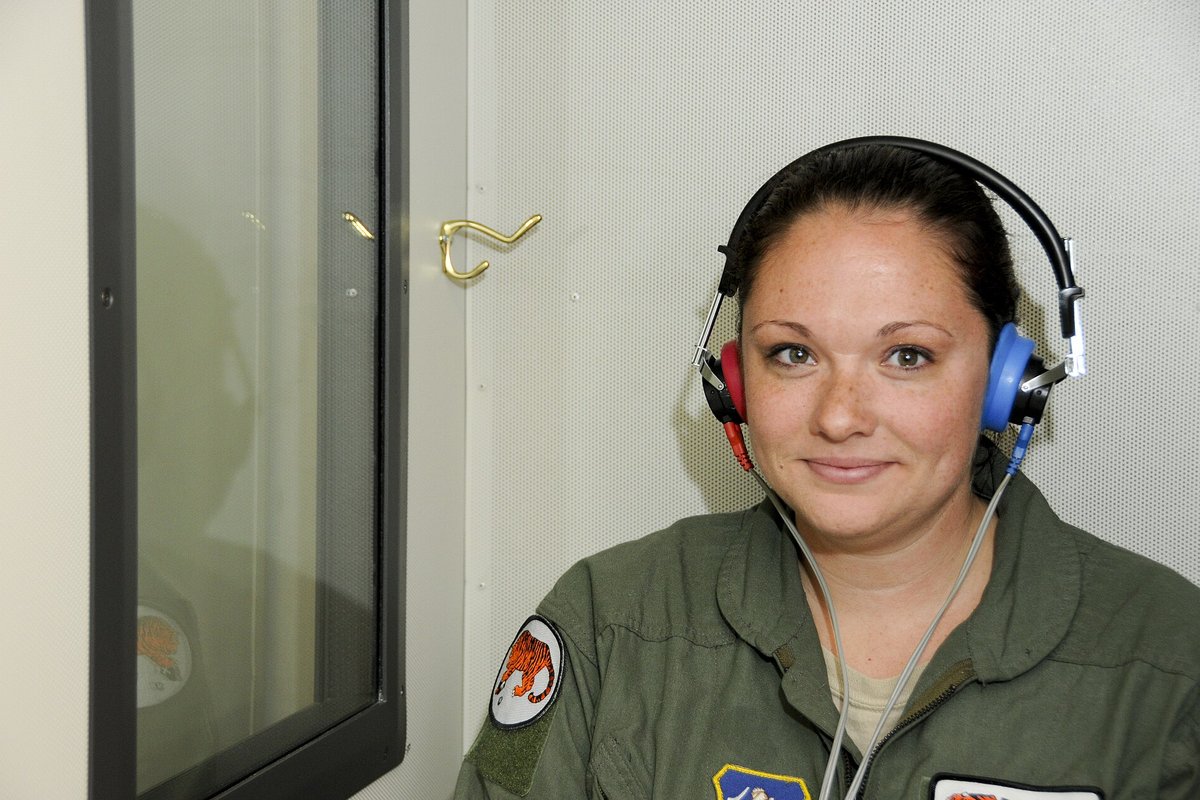
A noise survey answers an exposure question. An audiogram answers a different question: has an employee's measured hearing threshold changed? The OSHA 300 Log calls for a third determination: has a work-related change reached the specific recording threshold in 29 CFR 1904.10?
Confusing those questions creates two kinds of error. An employer may omit someone from hearing conservation because a short sound-level reading looks acceptable. Or it may record every 10-dB standard threshold shift (STS) as an OSHA hearing-loss case, even though some STSs are not recordable.
The distinction is exact: a 10-dB STS alone does not make a hearing-loss case OSHA-recordable. To meet 1904.10, an employee needs to have a work-related STS averaging no less than 10 dB at 2,000, 3,000 and 4,000 Hz and, in the same ear, a current hearing threshold averaging no less than 25 dB above audiometric zero at those frequencies. Other rules govern baseline selection, age correction, retesting and work-relatedness.
This guide provides a field sampling workflow, the OSHA calculation method, hypothetical audiogram examples, and a decision procedure an EHS team can use with its occupational audiology provider.
1. Start with the correct standard and noise metric
For general industry, 29 CFR 1910.95 contains two different exposure benchmarks. They serve different purposes.
| General-industry measure | Benchmark | What it means |
|---|---|---|
| Hearing conservation action level | 85 dBA eight-hour TWA, equivalent to 50% OSHA dose when computed for the program | Establish a continuing, effective hearing conservation program, including applicable monitoring, audiometry, training and hearing protectors; §1910.95(c). |
| Permissible exposure limit (PEL) | 90 dBA eight-hour TWA or the applicable mixed-duration limits in Table G-16 | §1910.95(b) addresses feasible engineering/administrative controls and PPE; OSHA's current enforcement policy adds a separate practical qualification explained below. |
| Impulse/impact sound | The standard says exposure should not exceed 140 dB peak SPL | OSHA's 2025 interpretation says this wording does not create a separate AL or PEL. Assess peak exposure and applicable noise-control requirements independently. |
The hearing-conservation decision is based on employee exposure without deducting hearing protector attenuation. It is not valid to subtract an earplug's noise reduction rating from a dosimeter TWA and use the result to decide whether the worker belongs in the program. The protected-exposure estimate is a separate question governed by §1910.95(j).
Regulation versus enforcement policy: The text of §1910.95(b)(1) requires feasible engineering or administrative controls when Table G-16 is exceeded, followed by protective equipment when controls do not bring exposure within the table. OSHA's July 30, 2025 interpretation points to a qualified inspection/citation policy, not a change to that regulatory language. The operative distinctions are in OSHA's Field Operations Manual, Chapter 4, XI.B:
| Inspection circumstance under the FOM | How OSHA describes the enforcement approach |
|---|---|
| Effective hearing protectors reliably reduce noise to the applicable levels and the employer operates an effective hearing conservation program | The policy may permit reliance on protectors and the program without a citation solely for lack of engineering controls; missing program elements may still be cited. |
| Exposure is so high that hearing protectors alone cannot reliably provide adequate attenuation, and technologically and economically feasible controls exist | OSHA calls for citing the failure to implement those feasible engineering or administrative controls. |
| Technologically feasible controls cost less than an effective hearing conservation program | The FOM identifies economic feasibility as another reason an engineering/administrative-control citation can be appropriate when the controls are not used. |
| Audiograms or other evidence indicate the existing hearing conservation program is ineffective | OSHA considers what improvements or feasible controls are necessary; the mere presence of earplugs or a written plan is insufficient. |
This is not a universal exemption or a numerical safe harbor below 100 dBA. OSHA discusses approximately 100 dBA as an example relevant to reliable attenuation, not a separate legal cutoff. For an actual exposure assessment, document feasibility considerations, the employer's hearing conservation performance, hearing-protector selection and fitting, and the attenuation evaluation needed by §1910.95(j). State-plan requirements may differ.
Impulse and peak sound are different quantities. The 2025 OSHA interpretation confirms that 140 dB is not itself a separate enforceable action level or PEL merely because Table G-16 says “should not exceed.” For the peak sound-pressure measurement, OSHA identifies a true unweighted/Z-weighted peak, not an A-weighted slow-response TWA. Ordinary dosimeters can miss or underestimate very brief high-level impulses; where the task involves impacts, firing or explosive events, use instrumentation suited to true peak measurement. OSHA still calls for inclusion of continuous, intermittent and impulsive levels from 80 to 130 dB in covered hearing-conservation measurements and may enforce other noise duties where exposure warrants it. The absence of a standalone peak PEL does not make such operations compliant.
Construction uses 29 CFR 1926.52, Table D-2, and 1926.101. Its obligations differ; see Section 9.
2. Sound level meter versus personal noise dosimeter
A sound level meter (SLM) records the sound pressure level at a chosen place and time. It is useful for identifying loud equipment, mapping fixed work areas, comparing equipment before and after controls, and taking octave-band data when the instrument supports that function. A single SLM reading by a machine is not automatically a worker's shift exposure.
A personal noise dosimeter integrates the sound reaching a worker over a measurement period and calculates noise dose and often an eight-hour-normalized TWA using the configured exchange rate, criterion and threshold. For mobile trades, changing workstations, intermittent equipment use or varying sound levels, representative personal sampling is especially important. Indeed, §1910.95(d)(1)(ii) calls for representative personal sampling when area monitoring is generally inappropriate because of mobility, level variation or substantial impulse noise, unless area monitoring demonstrably gives equivalent results.
The microphone belongs in the hearing zone, generally on the shoulder near the ear, positioned in accordance with the instrument manufacturer's instructions. Keep it clear of clothing abrasion, hard-hat interference, collisions and tampering. Note unusual events rather than silently deleting their data. A dosimeter does not diagnose hearing damage; an audiogram does not establish how loud a past shift was.
3. Build a workplace noise sampling plan
Before attaching instruments, inventory tasks, not merely job titles. A job classification such as “maintenance mechanic” may cover quiet inspections, pneumatic tool use, forklift operation and cleaning. The exposure profile changes with time spent on each task.
- Define similarly exposed groups. Identify processes, tools, work areas, maintenance cycles, shifts, overtime, contractors and tasks with irregular or impulsive noise. Don't group workers together solely because their payroll titles match.
- Walk the process. Use an SLM to locate dominant sources and high-exposure areas. Record operating conditions and controls in place. Use suitable specialized instrumentation where peak or impulse assessment is needed.
- Choose representative workers and days. Include normal high-exposure operations, predictable worst-case tasks, alternate shifts and relevant longer shifts. A quiet production day should not stand in for a noisy production cycle. Document why each sampled person represents the group.
- Plan duration. Prefer full-shift personal measurements for variable work. If only part of the shift is monitored, document the remaining tasks and justify any extension or reconstruction; don't present a partial result as if it were a complete shift.
- Measure using the correct profiles. Capture OSHA hearing-conservation and PEL profiles separately when the instrument supports both. For occupational-health assessment, consider a separate NIOSH profile as an advisory comparison.
- Check the data. Review run time, microphone placement, interruptions, overload/under-range flags, settings, battery condition, logged events and instrument checks before accepting a result.
- Document and act. Assign hearing conservation enrollment and controls according to the applicable result; notify employees at or above the action level and allow affected employees or representatives to observe covered measurements as §1910.95(e)–(f) provide.
- Repeat when exposures change. Under §1910.95(d)(3), repeat monitoring when changes in production, processes, equipment or controls could newly expose employees at the action level or make existing hearing protection inadequate. OSHA does not impose a blanket annual personal-dosimetry schedule in §1910.95.
Sampling strategy should be defensible even when the result falls just below an action level. Record why the shifts and conditions selected were representative.
4. OSHA dose and TWA: duration is part of the answer
Decibels are logarithmic. Exposure cannot be evaluated by simply taking the arithmetic average of readings with different durations. Appendix A to §1910.95 specifies an exposure-dose approach:
D (%) = 100 × sum of (C_i / T_i) for the included exposure periods
Here, C_i is the actual exposure duration at level L_i, and T_i is the reference duration from Table G-16a. With OSHA's 5-dB exchange rate:
T_i = 8 / 2^((L_i - 90) / 5) hours
To convert a valid OSHA dose into an eight-hour TWA:
TWA_OSHA = 90 + 16.61 × log10(D / 100) dBA
The dose equation needs to use the same exposure-integration threshold as the dosimeter profile. The OSHA Technical Manual specifies two distinct compliance configurations:
| Setting | OSHA hearing-conservation profile | OSHA PEL profile |
|---|---|---|
| Exchange rate | 5 dB | 5 dB |
| Criterion level | 90 dBA | 90 dBA |
| Frequency weighting / response | A / slow | A / slow |
| Integration threshold | 80 dBA | 90 dBA |
| Interpretation | Compare to 50% dose / 85-dBA TWA action level | Compare to 100% dose / 90-dBA TWA PEL |
The 80-dBA threshold is not an “80-dBA PEL”; it means sound at or above that threshold contributes to the hearing-conservation dose. Similarly, OSHA's 90-dBA PEL profile excludes lower-level exposure from that specific assessment. Where the dosimeter supports simultaneous profiles, save both and name the profiles on the report. Do not compare a NIOSH 3-dB dose directly against OSHA's compliance limits.
Regulatory criteria versus Type 2 inspection uncertainty. OSHA's Technical Manual, Section III, Chapter 5 specifies a +2-dB uncertainty allowance for compliance officers using a Type 2 instrument. Its examples distinguish the instrument-corrected threshold for a citation decision from the underlying regulatory levels:
| Decision | OSHA regulatory reference | OTM Type 2 inspection comparison |
|---|---|---|
| General-industry hearing-conservation action level, 80-dBA integration threshold | 85-dBA normalized TWA = 50% dose; program duties begin at or above this level | 87-dBA normalized TWA ≈ 66% indicated dose, when the described ±2-dB allowance applies |
| PEL exposure assessment, 90-dBA integration threshold | 90-dBA normalized TWA = 100% dose; assess exceedance under Table G-16 | Approximately 92-dBA normalized TWA ≈ 132% indicated dose for the OTM's Type 2 citation evaluation |
Do not substitute 87 dBA or 92 dBA for the employer's legal 85-dBA action level or 90-dBA PEL. These adjusted figures concern OSHA's treatment of a particular instrument's uncertainty in inspection evidence; they are not new limits, a guaranteed enforcement outcome or a permissible way to withhold a hearing conservation program. Apply the correct profile first, then separately document uncertainty and the purpose of the comparison.
Worked duration example: two different OSHA results for one hypothetical shift
Hypothetical shift: four hours at a constant 90 dBA followed by four hours at exactly 80 dBA, with no other relevant exposure. Calculate the dose separately for each instrument profile.
Under the 80-dBA threshold for hearing conservation, Table G-16a assigns 8 hours to 90 dBA and 32 hours to 80 dBA:
D_80 = 100 × (4/8 + 4/32) = 62.5%
TWA_80 = 90 + 16.61 × log10(0.625) = 86.6 dBA
This hypothetical worker meets the 85-dBA hearing conservation action level, despite remaining below the PEL.
Under the 90-dBA threshold for the PEL profile, the four hours at 80 dBA do not contribute:
D_90 = 100 × (4/8) = 50%
TWA_90 = 90 + 16.61 × log10(0.50) = 85.0 dBA
These different TWAs are not conflicting measurements. They are different OSHA computations of the same stated hypothetical exposure. A real assessment still calls for representative sampling and a quality check.
At the top of OSHA's duration table: 115 dBA is not the 140-dB peak metric
The highest listed steady-sound entry in general industry's Table G-16 and construction's Table D-2 is 115 dBA for one-quarter hour or less. As a hypothetical arithmetic example, 15 minutes at a constant 115 dBA contributes D=100(0.25/0.25)=100% of the OSHA PEL-profile dose before any other qualifying noise exposure is added. That table entry is not permission to extrapolate the 5-dB formula upward and declare brief exposures above 115 dBA compliant. Evaluate unusually high sound levels, instrument overload and appropriate controls using the applicable standard and competent industrial hygiene judgment.
This table endpoint concerns A-weighted, slow-response, duration-based exposure. It is distinct from the 140-dB peak sound-pressure wording for impulse/impact noise, which OSHA's July 2025 interpretation identifies as not a separate action level or PEL under §1910.95. A routine TWA calculation cannot establish the actual peak of a gunshot or another very short impulse. See §1910.95 Table G-16, §1926.52 Table D-2, and OSHA's 2025 peak-noise interpretation.
OSHA versus NIOSH: five decibels versus three
OSHA uses a 5-dB exchange rate for the cited workplace compliance computations. NIOSH recommends an 85-dBA eight-hour exposure limit with a 3-dB exchange rate. Under NIOSH's approach, every 3-dB increase halves the recommended exposure duration; under OSHA's dose convention, it takes a 5-dB increase to halve the reference duration.
For a constant 100 dBA exposure:
- OSHA Table G-16 / G-16a reference duration: 2 hours.
- NIOSH recommended duration:
8/2^((100-85)/3)=0.25hour, or 15 minutes.
This is a comparison of two methods, not a claim that 100 dBA for two hours is risk-free. Neither method replaces a separate evaluation of impulsive or peak exposure.
Extended shifts: the action-level method is not the PEL method
An eight-hour normalized TWA and a worker's average level over a ten- or twelve-hour shift are not identical. For a longer shift, take representative full-shift personal noise data where feasible, then make two distinct decisions:
-
Hearing-conservation action level: Accumulate the exposure dose for as much of the extended shift as possible on the 80-dBA-threshold profile. Under the governing standard, 50% dose remains the basic action-level comparison. If using a full-shift average
LAVGoverThours instead, its equivalent action-level sound level falls as the shift becomes longer:AL_LAVG = 90 + 16.61 × log10(50 / (12.5 × T)) dBA T = shift duration in hoursOSHA's Technical Manual describes a separate enforcement adjustment for Type 2 instrument uncertainty, for example, comparing a measured 66% dose/87-dBA normalized TWA where a ±2-dB instrument correction is applicable. That allowance does not rewrite the employer's 50%-dose, 85-dBA regulatory action level. Nor should it be confused with the OTM's separate approximately 132%-dose / 92-dBA Type 2 PEL inspection comparison described earlier. Do not use either adjusted screening number as a replacement for the standard.
-
PEL: Under OSHA's November 10, 1999 memorandum and Technical Manual, the noise PEL is not simply lowered or prorated for the entire extended shift. Evaluate the worst eight hours of exposure, using the 90-dBA-threshold PEL data and applicable mixed-exposure methods. OSHA permits a full-shift sampling design to identify that worst eight-hour period. Do not simply divide a ten-hour PEL dose by ten and compare the result with 90 dBA, and do not declare that only the first eight hours matter.
Hypothetical ten-hour calculation (not a measurement): Assume an otherwise steady ten-hour work period at 84 dBA, with all exposure captured by the 80-dBA hearing-conservation profile. Table G-16a gives T84=8 × 2^(6/5)=18.38 hours. The ten-hour dose is 100(10/18.38)=54.4% and its eight-hour normalized TWA is 90+16.61log10(0.544)=85.6 dBA. The actual ten-hour average sound level remains 84 dBA; the lowered action-level comparison for ten hours is approximately 83.4 dBA without an inspector's Type 2 uncertainty adjustment. This stipulated exposure meets the general-industry hearing-conservation action level. It does not exceed OSHA's PEL, because no part of this hypothetical shift reaches the PEL profile's 90-dBA integration threshold.
This difference is a reason to retain actual run duration, time history and both dosimeter profiles. A single printed “TWA” number, without its settings and sampling duration, is inadequate evidence for these two separate judgments.
5. Instrument quality: what makes a dosimetry result usable?
A professionally useful noise assessment identifies the instrument and settings as clearly as the result.
- Calibration: §1910.95(d)(2)(ii) calls for instrumentation calibrated to ensure accuracy. Record the field acoustic check before and after use, the calibrator and instrument identification, and the current calibration service information. Evaluate material drift, overload and damage against instrument guidance.
- Meter class and uncertainty: Use an occupational-grade instrument appropriate to the survey. OSHA's Technical Manual discusses Type 1 and Type 2 sound-level meters and associated uncertainty. A close-to-threshold result deserves appropriate technical evaluation, not false decimal precision.
- Weighting and response: For OSHA occupational dose, use A-weighting and slow response; a smartphone sound-level application or an unconfigured meter is not necessarily suitable for compliance assessment.
- Criterion, exchange and threshold: Keep a copy of the actual dosimeter profile. A three-decibel profile will not generate the OSHA compliance dose.
- Microphone and environment: Record worker activity, microphone placement, shielding, rubbing, wind, unusual equipment events and whether data were excluded with a defensible reason.
- Impulse noise: A slow-response TWA or routine dosimeter peak flag may miss or misrepresent brief high peaks. Use instrumentation capable of appropriate peak sound-pressure measurement where those exposures are present.
- Hearing protection: Assess the unattenuated exposure for program enrollment. Evaluate attenuation and actual fit separately under §1910.95(j); don't deduct the labeled NRR mechanically to claim the hearing-conservation trigger is avoided.
Preserve the time history, not just the final dose
For a variable or extended shift, an instrument report showing only one final TWA may conceal the timing needed to identify the worst eight-hour PEL period. Where the instrument allows it, retain the timestamped noise history for the 80-dBA-threshold hearing-conservation profile and the 90-dBA-threshold PEL profile, the actual measurement period, any periods excluded and the field notes needed to explain them. Do not reconstruct unmonitored hours by assuming they were quiet. Ask whether a second shift, overtime assignment, intermittent maintenance shutdown or impulsive operation could make the selected day unrepresentative.
Audiometric test quality is a separate compliance obligation
Accurate dosimetry does not make an unreliable audiogram usable. In general industry, §1910.95(h) imposes its own instrument, calibration and room requirements, including the binding Appendix D (audiometric test rooms) and Appendix E (acoustic calibration).
| Audiometric quality check | Federal general-industry requirement | What the program should retain |
|---|---|---|
| Before each day's use | Check audiometer function with a person whose hearing thresholds are known to be stable; listen for unwanted or distorted sounds. A ≥10-dB deviation calls for acoustic calibration (§1910.95(h)(5)(i)). | Date, check person's identification, comparison, listening check, action on any deviation. |
| No less than once a year | Check acoustic calibration according to Appendix E. A deviation of ≥15 dB calls for exhaustive calibration (§1910.95(h)(5)(ii)); Appendix E also advises exhaustive calibration for specified smaller out-of-tolerance results. | Calibration report, test frequencies, headphones/transducers, service action and release-to-use decision. |
| No less than every two years | Perform an exhaustive calibration under §1910.95(h)(5)(iii) and its incorporated specification. | Complete report and date, including any corrective work. |
| During testing | Use a room meeting Appendix D background-noise limits and an audiometer meeting §1910.95(h)(2)–(3). | Ambient room-noise measurement record and evidence of qualified test administration. |
Appendix E's finer checks: During the annual acoustic check, Appendix E advises exhaustive calibration when measured output differs from the specified reference by ±3 dB at 500–3,000 Hz, 4 dB at 4,000 Hz, or 5 dB at 6,000 Hz. These advisory tolerances may not be mistaken for the separate ≥15-dB deviation requiring exhaustive calibration under §1910.95(h)(5)(ii). Record the affected frequencies, magnitude, equipment response and decision; see binding Appendix E.
A failed check, excessive ambient noise or apparent test inconsistency calls for evaluation and, where appropriate, repeat valid testing, not an assumption that the employee has or lacks occupational hearing loss. The 10-dB and 15-dB numbers in this table are audiometer quality-check deviations, not employee STS or OSHA 300 thresholds. Keep those three concepts separate.
Appendix D sets octave-band room-noise ceilings, not one universal overall dBA limit. These are the actual federal general-industry maximum ambient octave-band sound pressure levels for audiometric rooms:
| Octave-band center frequency | 500 Hz | 1,000 Hz | 2,000 Hz | 4,000 Hz | 8,000 Hz |
|---|---|---|---|---|---|
| Maximum ambient sound pressure level, dB | 40 | 40 | 47 | 57 | 62 |
Quality-control response: If the daily stable-listener check fails or an audiometer produces audible distortion, suspend its use until the needed checks/calibration and corrective action are complete. If a booth or mobile testing room exceeds applicable Appendix D limits, resolve the ambient interference and assess which tests may call for repetition. Record the test-room measurement, the audiometer service/calibration history, any invalid or repeated test and the professional disposition. The regulatory values do not authorize an unqualified safety manager to diagnose an employee's hearing condition or to discard an adverse audiogram without appropriate evaluation.
6. Baseline audiograms, annual testing and STS
An audiogram reports the softest test tones a person detects at particular frequencies, in decibels hearing level (dB HL). That is not the same quantity as the workplace environmental sound level measured in dBA. Higher positive thresholds generally represent worse sensitivity at that frequency, but clinical significance and causes call for qualified evaluation.
Under general-industry §1910.95(g), employers must provide audiometric testing at no cost to employees whose exposures equal or exceed the 85-dBA eight-hour TWA action level.
Baseline timing. Establish a valid baseline within six months of the first qualifying exposure. Where mobile test vans are used, OSHA allows one year, with hearing protectors needed during the period after month six until the baseline is obtained. Before the baseline test there needs to be no less than 14 hours without workplace noise; hearing protectors may substitute for the absence-of-workplace-noise requirement. Employees need to be advised to avoid high nonoccupational noise during that period.
Annual testing. No less than once a year after the baseline, obtain a new audiogram for covered employees. The test needs to include, separately for each ear, no less than 500, 1,000, 2,000, 3,000, 4,000 and 6,000 Hz (§1910.95(h)(1)). Qualified audiologists, otolaryngologists, physicians or appropriately qualified technicians perform testing, with the professional oversight and calibration/room-noise requirements in the standard.
Reliability before arithmetic. The reviewer should check the audiogram's identity, ear, date, usable thresholds, masking or clinical-testing questions when indicated, test environment and equipment checks. An unexplained pattern, an unusually large apparent improvement, inconsistent responses or a significant inter-ear difference may justify professional review. These observations are not diagnoses and do not establish whether a change is work-related. Under §1910.95(g)(7)(iii), the audiologist, otolaryngologist or physician reviews problem audiograms and decides whether further evaluation is needed.
Severe loss or an unmeasurable threshold: OSHA's February 25, 2026 interpretation clarifies that bone-conduction audiometry cannot simply replace the needed pure-tone or pulsed-tone air-conduction audiogram. If valid air-conduction thresholds at 2,000, 3,000 or 4,000 Hz cannot be obtained, document the result as “no response” or “unable to record threshold”, rather than entering guessed numerical values. Treat it as a problem audiogram for review by an audiologist, otolaryngologist or physician. OSHA explains that an appropriately documented professional determination may support alternative testing and repeat annual evaluation when air-conduction levels cannot be obtained. Such testing needs to be interpreted in its proper clinical context; it does not turn an absent threshold into a calculated STS or create a blanket OSHA 300 exemption for workers with severe hearing loss.
STS calculation. For each ear separately, subtract baseline thresholds from current thresholds at 2,000, 3,000 and 4,000 Hz, and average the three changes:
STS_ear = [(H_now,2000 - H_base,2000)
         + (H_now,3000 - H_base,3000)
         + (H_now,4000 - H_base,4000)] / 3
An average ≥10 dB is an STS for that ear before any allowed age adjustment. A dramatic change at one frequency alone is not automatically a regulatory STS if the three-frequency average falls below 10 dB. Neither ear's values may be averaged with the other ear to dilute or create an STS.
When an STS appears
OSHA permits a retest within 30 days and use of that retest as the annual audiogram under §1910.95(g)(7)(ii); the recording rule in 1904.10(b)(4) uses the same 30-day window. An employee with an STS must be informed in writing within 21 days of the STS determination. Unless a physician determines it is not work-related or aggravated by occupational noise, §1910.95(g)(8) calls for the applicable protection, refitting, retraining and professional follow-up steps. Problem audiograms must receive professional review. For an employee with an STS, hearing protection must attenuate exposure to 85 dBA TWA or below under §1910.95(j)(3), the action level of §1910.95(c)(1).
Which baseline applies after a previous STS or OSHA 300 entry?
Revising the audiometric baseline is not an administrative reset at an employer's discretion. Under §1910.95(g)(9), the evaluating audiologist, otolaryngologist or physician may substitute an annual audiogram when an STS is persistent or the employee shows significant improvement. The professional's decision should identify the ear to which the revision applies; the other ear should not automatically be reset. Retain the original and revised values, dates and rationale so that a later reviewer can reproduce the comparison.
There are two regulatory statements to read together:
- §1904.10(b)(2)(i) states that, after a previously recordable hearing-loss case, the employer compares the current audiogram with the revised baseline reflecting that previous case.
- OSHA FAQ 10-2 explains that employers use the same baseline used under the hearing conservation standard for recordability. If the employer has appropriately revised that baseline following a prior STS under §1910.95, it uses that same revised baseline in the §1904.10 decision, even if the earlier STS was not itself OSHA-recordable.
Thus, a past STS does not authorize automatic baseline substitution, and a past OSHA 300 entry does not authorize comparing against whichever historical test gives the lowest shift. Apply the legitimately revised, ear-specific baseline consistently to hearing conservation and OSHA 300 analysis. If the history is incomplete, obtain the prior audiograms and professional review before making a definitive STS calculation.
Two baseline-history examples: prior STS versus prior recordable loss
These numbers are synthetic right-ear test values (dB HL) at 2,000 / 3,000 / 4,000 Hz. They illustrate which audiogram to compare; they do not establish work-relatedness, a clinical diagnosis, valid test quality or the need for an OSHA 300 entry.
| Hypothetical history | Earlier audiograms | Correct comparison for a later test | What the calculation shows |
|---|---|---|---|
| A. Prior STS, not previously recorded: original baseline 5 / 10 / 15; later annual 15 / 20 / 25 (10-dB STS, current mean 20 dB HL, below 25). Assume an evaluating audiologist later documented that the STS was persistent and legitimately adopted 15 / 20 / 25 as that ear's revised baseline. | Original 5 / 10 / 15; revised 15 / 20 / 25 | New current test 25 / 30 / 35 minus the documented revised baseline 15 / 20 / 25 | New change +10 / +10 / +10, average STS 10 dB; current mean 30 dB HL. Both numerical tests now pass, subject to work-relatedness and other conditions. If no legitimate revision occurred, use the original baseline instead. |
| B. Prior recordable case: initial baseline 15 / 20 / 25; previous recorded case 30 / 35 / 40 (15-dB STS, current mean 35 dB HL). Assume that prior case was in fact recorded under Part 1904 and its case audiogram is the appropriate revised baseline. | Original 15 / 20 / 25; prior recorded 30 / 35 / 40 | New current test 40 / 45 / 50 minus revised baseline 30 / 35 / 40 | Additional change +10 / +10 / +10, average STS 10 dB; current mean 45 dB HL. It is a new numerical shift beyond the prior recorded deterioration, not a recount of the original +15-dB loss. |
In Scenario B, §1904.10(b)(2)(i) calls for the revised baseline reflecting the prior recorded loss. In Scenario A, the professional's valid §1910.95(g)(9) revision is used even though the prior STS was not recordable, consistent with OSHA FAQ 10-2. The recordkeeping final-rule explanation discusses the objective: do not record the same deterioration twice, but recognize a later additional STS when warranted. Neither hypothetical record supplies a factual finding that occupational noise contributed to the change.
7. When is hearing loss recordable on the OSHA 300 Log?
The specific recording test is 29 CFR 1904.10, applied with §1904.5 work-relatedness rules, the Part 1904 recordkeeping scope and the appropriate baseline.
Check each ear independently. The employer needs to establish all of the following:
- An STS of no less than 10 dB averaged at 2,000, 3,000 and 4,000 Hz, relative to the correct baseline (1904.10(a) and (b)(1)), after any appropriately elected age adjustment under Appendix F or an alternative meeting OSHA's February 9, 2024 interpretation.
- A current, unadjusted average hearing threshold ≥25 dB HL above audiometric zero at 2,000, 3,000 and 4,000 Hz in that same ear.
- Work-relatedness under §1904.5: workplace exposure caused or contributed to the loss, or significantly aggravated a preexisting loss, unless a physician or other licensed health-care professional has determined the loss is not work-related or not significantly aggravated by workplace noise as §1904.10(b)(6) permits.
- A recordable case after the applicable retest determination, rather than an unconfirmed change removed by a timely retest. If the employer retests within 30 days and it does not confirm the recordable STS, no entry is needed. If it confirms the recordable STS, enter the illness within seven calendar days of the retest (§1904.10(b)(4)). If a previously entered STS is later shown not persistent in testing performed under §1910.95, OSHA allows the entry to be erased or lined out.
The 25-dB criterion is not a 25-dB shift from baseline. It is the current hearing-level average compared with audiometric zero. Do not age-correct that second calculation. If recording is needed, use the OSHA 300 Log's hearing-loss illness checkbox; complete the associated incident report under the applicable §1904.29 requirements.
The OSHA 300 recording test has no separate requirement that the employee's measured TWA first exceed 85 or 90 dBA. The 85-dBA general-industry figure determines hearing-conservation obligations; it is not a safe-harbor exemption from the work-related hearing-loss recording criteria. Conversely, exposure above 85 dBA does not prove that a particular hearing shift was occupational. Apply the §1904.5 work-relatedness and §1904.6 new-case rules where relevant, including a review of prior recorded hearing-loss cases and legitimately revised baselines.
Work-relatedness: document the evidence, not a guess about causation
The numerical audiogram test does not establish occupational causation. Under §1904.5, an event or exposure in the work environment that caused or contributed to the hearing loss makes it work-related; significant aggravation of a preexisting condition also counts. OSHA's FAQ 10-4 expressly rejects the idea that occupational noise needs to be the sole, predominant or substantial cause. Some nonoccupational noise exposure does not automatically negate a contribution from work.
Document relevant facts: the worker's job and exposure history, applicable noise measurements and their limits, prior audiograms and revisions, hearing protection assessment, reported nonoccupational exposures where available, identified medical or ear conditions if evaluated, and the qualified reviewer's conclusions. Avoid inferring a clinical diagnosis from a 2/3/4-kHz average or declaring a loss nonwork-related solely because the worker also reports hobbies involving noise.
Under §1904.10(b)(6), an employer may rely on a physician or other licensed health-care professional's determination that the hearing loss was not work-related or was not significantly aggravated by occupational noise only when that professional applies the §1904.5 test. Employers remain responsible for the recording decision. A report stating only “possibly age-related” or “nonoccupational contribution present” is not, by itself, a documented application of the legal work-relatedness criteria.
Three different clocks: retest, notice and OSHA 300 entry
| Requirement | When the clock runs | Authority |
|---|---|---|
| Optional STS retest | Within 30 days after the first test showing an STS; a timely retest may replace the annual audiogram. For §1904.10, a timely retest that does not confirm the recordable STS removes the need for that entry. | §§1910.95(g)(7)(ii), 1904.10(b)(4) |
| Written employee STS notice | Within 21 days after determining that an STS occurred. This is an employee hearing-conservation obligation, not the OSHA 300 filing deadline. | §1910.95(g)(8)(i) |
| OSHA 300 recording | If a timely retest confirms a recordable STS, within seven calendar days after that retest. Otherwise use the general rule: within seven calendar days after receiving information that a recordable case occurred, subject to the actual recordability determination. | §§1904.10(b)(4), 1904.29(b)(3) |
Do not label a case “pending” indefinitely while an audiogram is evaluated. A delayed retest does not retroactively qualify for the 30-day exception; if later testing under §1910.95 shows the STS was not persistent, §1904.10 permits correction of an earlier entry. Work-relatedness and clinical review should proceed promptly, with the date the employer received recordability information recorded in the case file.
Worked audiogram examples: the same 10-dB STS can lead to different recording outcomes
The examples below use hypothetical right-ear audiograms, in dB HL, for two employees with no earlier recordable hearing loss. Neither example uses age correction. Work-relatedness calls for a separate determination.
| Right ear, frequency | Example A baseline | Example A current | A shift | Example B baseline | Example B current | B shift |
|---|---|---|---|---|---|---|
| 2,000 Hz | 5 | 15 | +10 | 5 | 20 | +15 |
| 3,000 Hz | 10 | 20 | +10 | 10 | 30 | +20 |
| 4,000 Hz | 15 | 25 | +10 | 15 | 40 | +25 |
| Three-frequency mean | 10 | 20 | +10 | 10 | 30 | +20 |
Example A: (10+10+10)/3=10 dB shift. An STS exists. But the current average is (15+20+25)/3=20 dB HL, below 25. This does not satisfy the special OSHA 300 hearing-loss recording criterion, although general-industry STS notification and follow-up can still apply.
Example B: (15+20+25)/3=20 dB shift. The current hearing-level average is (20+30+40)/3=30 dB HL. Both audiometric numerical criteria are met in the same ear. It is OSHA-recordable if the case is work-related, remains recordable after the applicable retest decision, and the employer is needed to maintain the log. The table itself cannot establish those additional facts.
A completed illustrative decision worksheet for Example B
The worksheet uses Example B to illustrate the retest and recording deadlines. In an actual case, enter the employee’s test dates and retain the supporting clinical and exposure evidence.
| Review field | Fictional exercise entry | Decision supported |
|---|---|---|
| Test date and status | April 6, 2026; assume a valid current test and an appropriately documented right-ear baseline | Proceed with ear-specific math; does not establish causation. |
| Right-ear raw STS | (15 + 20 + 25)/3 = 20.0 dB; assume no age adjustment was elected | STS numeric criterion met. |
| Right-ear current hearing-level average | (20 + 30 + 40)/3 = 30.0 dB HL, uncorrected | Current 25-dB HL criterion met in the same ear. |
| Retest decision | Assume retest on April 20, 2026 with unchanged stipulated right-ear thresholds and valid test conditions | The retest falls inside the 30-day window and confirms the two numeric criteria. |
| Work-relatedness | Unresolved until evidence review under §1904.5; calls for the actual exposure history and clinical review | No final OSHA 300 result can be certified from audiometric values alone. |
| Conditional OSHA 300 outcome | If work contribution is established, the employer has Part 1904 log duties, and no other exception applies, record as hearing loss by April 27, 2026 (7 calendar days after retest). If a qualified §1904.5-based determination establishes non-work-related loss, do not record on that basis. | Separates the numerical criteria, causation decision and recording deadline. |
The general-industry 21-day written STS notice and applicable §1910.95(g)(8) protection/follow-up actions must also be tracked; they are not displaced by the OSHA 300 decision. A real file needs the actual date of STS determination, notice and reviewer disposition.
Age correction: Appendix F, the 2024 NHANES interpretation, and NIOSH's position
Age adjustment for STS is optional, not a requirement and not proof that a particular employee's loss was caused by aging. The familiar regulatory method is §1910.95 Appendix F: the sex-specific table values for the employee's age at baseline and current test are compared at each frequency; the difference between those age allowances is deducted from the raw threshold change before averaging for STS.
For example, Appendix F's male values between age 30 and age 40 increase by 2 dB at 2,000 Hz, 4 dB at 3,000 Hz and 5 dB at 4,000 Hz. For a hypothetical equal raw 10-dB change at all three frequencies, the age-adjusted changes become 8, 6 and 5 dB, averaging 6.3 dB. Under an elected Appendix F adjustment, that particular illustrative raw 10-dB shift would no longer meet the 10-dB STS criterion. The current 25-dB HL test needs to still use the unadjusted audiogram.
Important 2024 clarification. OSHA's February 9, 2024 interpretation says that NHANES-data-derived age-correction tables other than Appendix F may be used under specified conditions. They are not a free choice of numbers for an EHS spreadsheet:
- The decision to age-correct and the selection of the NHANES-based table need to be made by a certified audiologist, otolaryngologist or other physician, considering the employee's noise levels, years of exposure, hearing-conservation enrollment, hearing protection and relevant medical history.
- The alternative table needs to use values from one underlying dataset. OSHA specifically rejects a hybrid of Appendix F values for younger workers and NHANES values for older workers.
- OSHA recommends selecting a consistent set of tables equitably when workers enter the hearing conservation program, and keeping the published reference and tables with the audiometric records. The recommendation is distinct from the conditions OSHA imposes on using alternative tables.
- Neither Appendix F nor an accepted NHANES alternative may reduce the uncorrected current 25-dB HL criterion for §1904.10.
OSHA's same 2024 interpretation notes that NIOSH's 1998 recommended criteria advise against applying age correction to an individual's audiogram for STS determination. That is a prevention recommendation; it does not repeal OSHA's optional regulatory correction provisions.
Because baseline years, ages, later recordable cases and test reliability complicate interpretation, keep the original audiograms and have the appropriately qualified program reviewer validate any correction. Use the published allowances consistently. Alternative tables need to satisfy the conditions in OSHA’s interpretation.
OSHA 300 hearing-loss decision tree
START: Valid current audiogram and correct ear-specific baseline?
  No → Obtain/verify valid data; do not make a numerical determination yet.
  Yes → Calculate 2,000/3,000/4,000-Hz STS, one ear at a time.
       STS <10 dB after any permitted/elected correction?
         Yes → No 1904.10 hearing-loss entry on this basis.
         No  → Calculate CURRENT, UNCORRECTED three-frequency mean, same ear.
               Mean <25 dB HL?
                 Yes → No 1904.10 entry; apply relevant STS follow-up.
                 No  → Determine work-relatedness under 1904.5;
                       consider valid professional non-work-related finding.
                       Not work-related → No 1904.10 entry.
                       Work-related → Will a retest be performed within 30 days?
                         Yes → Retest does not confirm → No entry.
                                Retest confirms → Enter within 7 calendar days.
                         No  → Enter when recordable under 1904.29 timing.

Check both ears separately. Also confirm the employer's Part 1904 log obligation.
Do not conflate decisions. An employee can call for enrollment and hearing protectors without an STS; can have an STS without an OSHA 300 entry; and can have a recordable occupational hearing-loss case even though the numerical 25-dB threshold is not a 25-dB deterioration since baseline.
8. Noise monitoring and audiometric records: what to retain
Under §1910.95(m), the general-industry employer maintains accurate records of required noise exposure measurements. Audiometric test records must include the employee's name and job classification, audiogram date, examiner name, date of the last acoustic or exhaustive audiometer calibration, and the employee's most recent noise exposure assessment. The employer must also keep accurate measurement records of audiometric test-room background noise levels.
Retention requirements are different: needed occupational noise exposure measurements: no less than two years; audiometric test records: duration of the affected employee's employment. OSHA 300/301/300A record retention is governed separately by Part 1904, generally five years after the calendar year covered. Do not replace these distinct periods with a generic “all noise records for 30 years” rule. Access and transfer duties in §1910.95(m)(4)–(5) also apply; handle employee-level audiograms as confidential medical information.
Blank, documented personal noise sampling record
Enter the field measurements, instrument settings and observations supporting the assessment.
| Field | Entry |
|---|---|
| Establishment, area and task / similarly exposed group | __________ |
| Employee ID or representative sample identifier; job class | __________ |
| Monitoring date, shift start/end, actual sample start/end | __________ |
| Equipment/operations observed, production conditions, shift changes | __________ |
| Instrument manufacturer/model, serial number; acoustic calibrator ID | __________ |
| Current service calibration; pre-/post-use acoustic check and any drift | __________ |
| Microphone position, windscreen, observed interference, unusual events | __________ |
| OSHA-HCP settings: A, slow, 5-dB exchange, 90-dBA criterion, 80-dBA threshold | Confirmed / exception: ______ |
| OSHA-PEL settings: A, slow, 5-dB exchange, 90-dBA criterion, 90-dBA threshold | Confirmed / exception: ______ |
| Run time, excluded periods/reasons, unmonitored time and treatment | __________ |
| OSHA-HCP dose (%) and eight-hour TWA (dBA) | __________ |
| OSHA-PEL dose (%) and eight-hour TWA (dBA) | __________ |
| Extended shift: full-shift HCP dose, LAVG, and applicable shift length | __________ |
| Extended shift: identified worst eight-hour PEL interval and basis | __________ |
| Timestamped history / original report location, both settings profiles | __________ |
| Peak measurement method and result, if appropriate | __________ |
| Control condition; hearing protectors used; separate attenuation review | __________ |
| Representative group, uncertainty/limitations and reviewer | __________ |
| Action-level notification date and follow-up/corrective-action reference | __________ |
| Repeat-monitoring trigger and scheduled review | __________ |
The regulation does not prescribe every recommended field in this form. The extra fields preserve measurement traceability and make the result reviewable when conditions change.
Audiogram/recordability case review form
For each ear, retain baseline date and 2/3/4-kHz levels, current-test date and levels, baseline-revision history, raw STS calculation, any elected age adjustment and its documented legal basis, resulting STS determination, uncorrected current three-frequency average, 30-day retest outcome, clinical review, work-relatedness rationale, employee written-notification date, protection response, OSHA 300/301 decision and applicable recording date. The numbers do not substitute for a clinical determination.
| Audiometric/OSHA 300 case-file control | Complete from actual evidence |
|---|---|
| Identity, job class, affected ear, original baseline/date | __________ |
| Baseline revisions: ear, revised date/levels, reviewer and reason | __________ |
| Annual test and any retest: dates, 2/3/4-kHz values, test reliability | __________ |
| Test-room background noise record; daily functional test; annual and biennial audiometer checks | __________ |
| Raw frequency-by-frequency differences and three-frequency STS average | __________ |
| Age adjustment elected? Appendix F or permitted NHANES table; professional selection, reference/dataset, age and corrected STS | __________ |
| Current uncorrected 2/3/4-kHz mean in dB HL, same ear | __________ |
| Exposure history and §1904.5 work-relatedness evaluation; professional opinion if relied upon | __________ |
| STS determination date; 21-day written notice; follow-up and hearing protector checks | __________ |
| Retest inside the 30-day window? Result and date; 1904.29 information-received date | __________ |
| Part 1904 coverage; final OSHA 300/301 decision and recording date | __________ |
9. General industry versus construction: do not import an entire standard by assumption
| Topic | Federal general industry | Federal construction |
|---|---|---|
| Primary noise rule | 29 CFR 1910.95 | 29 CFR 1926.52 and 1926.101 |
| Daily exposure limits | 90-dBA eight-hour PEL with 5-dB exchange, Table G-16 | Table D-2, same listed time/level pairs; mixed-exposure factor under §1926.52(d)(2) |
| Hearing-conservation program trigger | At or above 85-dBA eight-hour TWA under §1910.95(c), with defined program content | Under §1926.52(d)(1), where noise exceeds Table D-2 values; the construction standard does not contain a blanket 85-dBA program trigger |
| Audiometry and training text | Detailed baseline/annual audiometry, follow-up and annual training in §1910.95(g), (k) | §1926.52 states the program duty but does not copy those detailed paragraphs; the 1992 OSHA interpretation identifies baseline/annual audiometry and other elements to incorporate as feasible |
| Hearing protectors | Availability, use, selection and attenuation under §1910.95(i)–(j) | Where limits cannot feasibly be met, §1926.101 specifies devices provided and used, individual fitting and that plain cotton is unacceptable |
| OSHA 300 hearing loss | §1904.10 for employers required to keep Part 1904 logs | Same §1904.10 recording test for employers subject to Part 1904; construction program differences do not erase recordkeeping criteria |
The August 4, 1992 OSHA interpretation lists seven elements of an effective construction program, including monitoring, controls, protectors, employee education, baseline/annual audiometry, follow-up and recordkeeping, and says employers need to incorporate as many as feasible. It explains OSHA's interpretation; it is not a substitute for the regulation, nor does it turn the 1910.95 general-industry 85-dBA action level into an automatic federal construction requirement. Section 1926.52(e) separately says impulsive or impact noise “should not exceed” 140 dB peak SPL; do not mistake that sentence for a new 85-dBA program threshold or evaluate peaks as A-weighted TWA. Applicable state-plan provisions and contractual duties need to be checked separately.
For general-industry hearing conservation, §1910.95(o) also contains a specific exception for oil and gas well drilling and servicing operations with respect to paragraphs (c)–(n). Do not generalize that exception to manufacturing or construction operations.
10. A practical review sequence for the safety manager
- Read the sampling report first: Was the shift representative, the microphone positioned correctly, and each OSHA profile properly configured?
- Assign covered employees based on the unprotected 85-dBA TWA action-level decision where §1910.95 applies. Evaluate PEL exceedances and controls separately.
- Confirm the baseline and annual audiograms, test dates, instrument/room quality, and professional reviewer.
- When a shift appears, process one ear at a time: correct baseline, three-frequency change, any elected age adjustment, then the uncorrected 25-dB HL current average.
- Address retesting, work-relatedness, employee notification and hearing-protector correction on their distinct regulatory timelines.
- Record cases meeting §1904.10; preserve the rationale for both recorded and nonrecorded outcomes.
- Use changed operations, recurring STSs or ineffective protection as reasons to revisit engineering controls and sampling design, rather than simply adding more hearing tests.
Look beyond the audiogram when evaluating controls
An STS is a signal to review exposure and protection, not proof that a particular machine or event caused that employee's change. An effective investigation checks noise-source reduction, enclosure or isolation, tool maintenance, schedules, fit and consistent use of protectors, and whether sampled shifts reflect the highest routine exposure. The regulatory hierarchy and OSHA's current enforcement policy needs to be distinguished as described in Section 1; engineering and administrative options should be documented before assuming that earplugs alone resolve the hazard.
NIOSH also identifies certain chemicals and combinations of chemical and noise exposure as ototoxicity concerns, including some solvents, metals and other agents. Where such substances are present, review the NIOSH ototoxicity guidance along with the employer's chemical exposure assessment. The guidance supports assessment of combined hazards; it does not establish a separate OSHA ototoxicant exposure limit.
For related HazComFast coverage, see the general hearing conservation program, the construction noise rule comparison, the Noise Exposure Calculator for screening, not a replacement for field monitoring, and the OSHA recordkeeping guide. The underlying federal requirements are in 29 CFR 1910.95, 1926.52, and 1904.10.
Frequently Asked Questions
Does every 10-dB standard threshold shift go on the OSHA 300 Log?
No. For the special hearing-loss rule, the STS needs to be work-related, and the same ear also needs to show a current average hearing level of no less than 25 dB HL above audiometric zero at 2,000, 3,000 and 4,000 Hz. Retesting and related rules can affect the entry decision. See §1904.10.
What dosimeter settings should I use for OSHA hearing conservation versus the PEL?
Both use A-weighting, slow response, a 5-dB exchange rate and a 90-dBA criterion. The hearing-conservation profile integrates sound from 80 dBA, while OSHA's PEL assessment profile uses a 90-dBA threshold. Save and label the separate outputs (29 CFR 1910.95, Table G-16a).
Does the 85-dBA hearing conservation trigger change for ten-hour shifts?
The 50% full-shift OSHA hearing-conservation dose under 29 CFR 1910.95 remains the basic action-level threshold. For a ten-hour shift, it corresponds to a full-shift average of approximately 83.4 dBA using OSHA's uncorrected calculation; the PEL is assessed separately using the worst eight hours, rather than automatically reduced to a ten-hour limit. OSHA's Technical Manual uses a separate Type 2 instrument-uncertainty adjustment for inspection decisions, not a change to the legal 50% dose.
Can age correction remove an OSHA-recordable hearing-loss case?
An elected Appendix F correction, or a professionally selected NHANES-derived method meeting OSHA's 2024 interpretation, can affect whether the 10-dB STS criterion of 29 CFR 1904.10 is met. Neither method may reduce the current, uncorrected 25-dB HL average. NIOSH recommends against age-correcting an individual's STS; work-relatedness and retest findings remain separate decisions.
How long can the employer wait before recording a confirmed hearing-loss case?
Under §1904.10(b)(4), if a retest is performed within 30 days and confirms the recordable STS, record within seven calendar days of the retest. Without that retest route, apply the normal Part 1904 timing when information establishes a recordable case. Do not delay an entry indefinitely while seeking an optional evaluation.
Does federal construction OSHA mandate the exact annual audiogram program in 1910.95?
Not by importing the text of §1910.95(g) wholesale. Federal §1926.52(d)(1) requires an effective hearing conservation program when construction exposures exceed its listed limits, and OSHA's 1992 interpretation identifies baseline and annual audiometry among program elements to incorporate as feasible. State-plan or other requirements can be more specific. ---
Site-wide regulatory figures such as compliance dates and penalty amounts come from our regulatory source-of-truth modules, last checked against the eCFR, OSHA.gov, and the Federal Register on October 19, 2026. Last reviewed November 14, 2026.
About This Article
Published by: HazComFast
Published: November 14, 2026
Last Updated: November 14, 2026
- https://www.osha.gov/laws-regs/regulations/standardnumber/1904/1904.10
- https://www.osha.gov/laws-regs/regulations/standardnumber/1910/1910.95
- https://www.osha.gov/laws-regs/standardinterpretations/2025-07-30
- https://www.osha.gov/fom/chapter-4
- https://www.osha.gov/laws-regs/regulations/standardnumber/1926/1926.52
- https://www.osha.gov/laws-regs/regulations/standardnumber/1926/1926.101
- https://www.osha.gov/laws-regs/regulations/standardnumber/1910/1910.95AppA
- https://www.osha.gov/otm/section-3-health-hazards/chapter-5
This content is for informational purposes only and does not constitute legal advice.