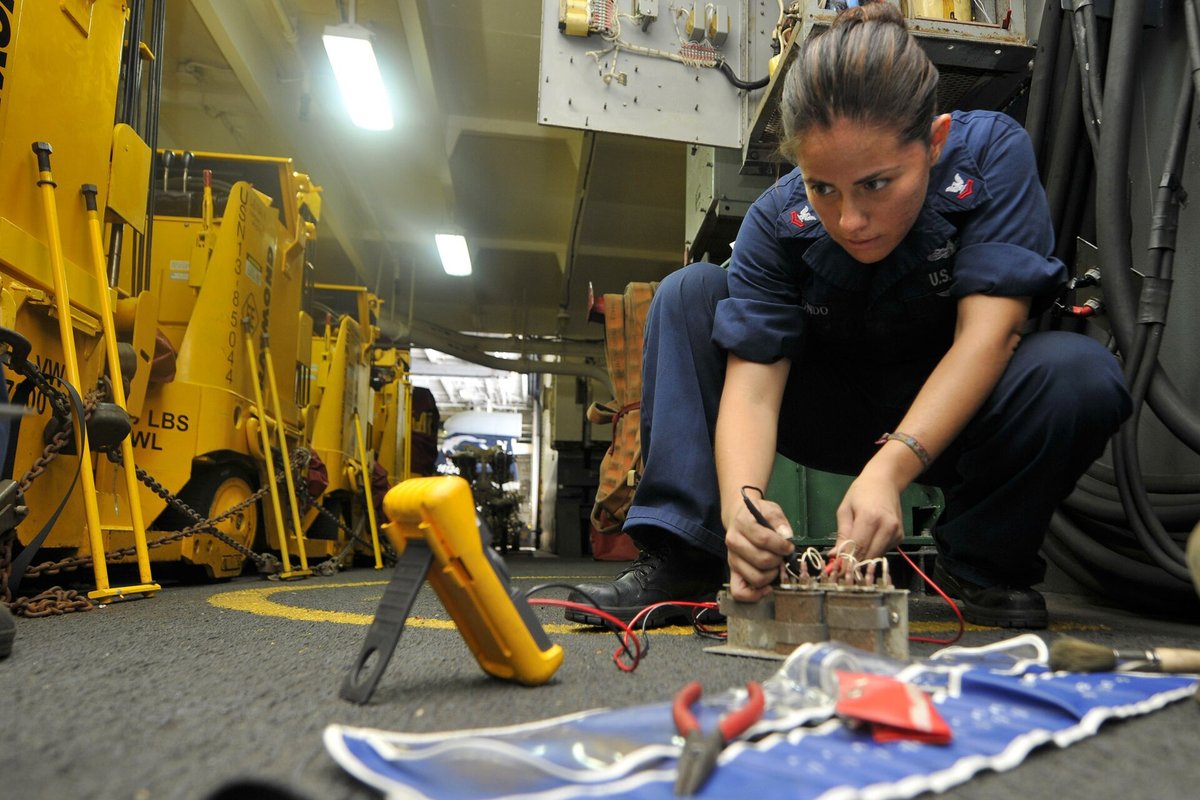
Forklift charging-area requirements depend on battery technology and the work performed at the station. Connecting an approved charger to a battery left in a truck differs from removing heavy batteries, opening flooded lead-acid cells or handling sulfuric acid. Industrial lithium-ion charging introduces battery-management, compatibility and thermal-failure concerns.
OSHA's central general-industry rule is 29 CFR 1910.178(g). It must be read alongside an unusually important OSHA charging-only enforcement directive, the general PPE and electrical rules, and the relevant local fire code. These documents do not establish one universal battery-room design for every electric forklift.
Start with the charging activity:
- Charge in place, without maintenance, battery removal or electrolyte present in the area: assess the OSHA charging-only interpretation; the designated-area, truck-positioning, cover/vent, ignition-control and other applicable duties remain.
- Change batteries, open flooded cells or handle electrolyte: evaluate §1910.178(g)(2) and the applicable lifting, transfer, ventilation, eyewash and PPE controls.
- Charge an industrial lithium-ion system: verify the approved truck–battery–charger combination and BMS instructions; prepare a separate response for damage, abnormal heat, gas release and thermal runaway.
The checklist and supervisor procedure near the end translate these distinctions into inspection and stop-work decisions.
What does OSHA mandate for a forklift battery charging area?
Under 1910.178(g)(1), charging installations must be in designated areas. That obligation is not confined to a particular battery chemistry. Paragraph (g)(8) requires the truck to be properly positioned and its brake applied before charging or changing batteries. (g)(10) prohibits smoking in the charging area, and (g)(11) requires precautions against flames, sparks and electric arcs. (g)(12) addresses metallic objects near uncovered batteries.
For operations within (g)(2), OSHA also specifies facilities for flushing and neutralizing spilled electrolyte, fire protection, protection of chargers against truck damage, and sufficient ventilation to disperse fumes from gassing batteries. Other provisions address material-handling equipment when batteries are handled; securing batteries after reinstallation; electrolyte transfer and dilution when that work actually occurs; and functioning vent caps/heat dissipation. Paragraph (g)(3) is reserved. The full regulatory text controls the legal wording.
The charging-only exception changes the facility assessment
OSHA Directive STD 01-11-004 clarifies that (g)(2) does not apply to an area in which batteries are only charged, with no maintenance, no battery removal from the truck, and no electrolyte present in the area. The directive expressly retains (g)(1), (8), (9), (10), (11) and (12) and needed PPE. For example, a no-maintenance charging position for a sealed lithium-ion pack may qualify on its actual facts. A conventional lead-acid battery service area where caps are opened or acid is handled ordinarily does not meet those three conditions.
The directive is activity-based, not chemistry-based: a lead-acid truck charged in place may qualify; a lithium-ion station does not qualify merely because of its label. Document each position's actual operations and evaluate other electrical, fire, PPE and emergency duties independently. OSHA directive.
Apply the correct paragraph to the actual work
| OSHA paragraph | What triggers or limits its application | What the supervisor should verify |
|---|---|---|
| (g)(1) | A forklift battery charging installation, including a charging-only station | Charging location is designated and recognizable. |
| (g)(2) | Changing/servicing operations covered by the rule; OSHA's charging-only directive removes this paragraph when all three stated conditions are satisfied | Where applicable: spill flushing/neutralization, fire protection, charger impact protection, and ventilation for gassing batteries. |
| (g)(4)–(5) | Batteries are physically handled or reinstalled | Appropriate mechanical handling equipment; correct battery positioning and restraint. |
| (g)(6)–(7) | Electrolyte is handled or acid is diluted | (g)(6): a carboy tilter or siphon for electrolyte handling; (g)(7): add acid to water when dilution is performed. Neither directs routine acid addition during battery watering. |
| (g)(8) | Before changing or charging a truck battery | Secure positioning and applied brake. |
| (g)(9) | Battery charging, including stations still covered under the charging-only directive | Functioning vent caps where present; needed heat-dissipation cover practice; resolve any conflicting sealed-system manual before approving a charging configuration. |
| (g)(10)–(12) | Charging locations; the metallic-object precaution specifically concerns uncovered batteries | No smoking; prevent flame/spark/arc exposure; keep metal tools off uncovered battery tops. |
The full rule governs; notably, the charging-only directive retains (g)(9).
Choose the area and separate conflicting activities
An effective designated location identifies where each truck parks, which charger it uses, who may connect it and how equipment is protected from traffic. Provide a stable parking surface and accessible charging controls. Keep evacuation routes, fire equipment and electrical working spaces unobstructed. Protect fixed chargers, cables and connectors from vehicle impact; route leads to avoid abrasion, crushing, trips and fork contact. Post clear no-smoking and equipment-specific instructions.
Segregate active charging from battery maintenance wherever the tasks and hazards warrant it. A nearby workbench used to open cells, mix electrolyte or repair battery connections changes the exposure assessment. Likewise, a rack containing damaged lithium-ion packs is a fundamentally different risk from normal charging of intact, approved packs. Avoid placing either operation in an exit route or using the charger area as miscellaneous combustible storage.
The 2024 International Fire Code model §309 provides an example of how a fire code can add site design details: it calls for approved battery chargers, a 3-foot separation from combustible storage, ventilation against dangerous accumulation of flammable gas, and a minimum 4-A:20-B:C extinguisher within 20 feet of the charger. These are model-code provisions, not nationwide federal OSHA clearances; verify the jurisdiction's adopted edition, amendments, and fire official interpretation before applying numbers. ICC's official 2024 IFC sample, §309.
That model §309 also addresses charging in areas open to the public and industrial-truck use in hazardous locations. Assess electrical classification under 29 CFR 1910.307 and the locally adopted code based on actual conditions, not the mere presence of chargers. Record the layout reviewer, code edition and bases for ventilation and fire/electrical safeguards. Fire-code approval and OSHA compliance remain distinct.
Flooded lead-acid batteries: gas, acid and moving heavy equipment
Hydrogen is a normal-charging hazard for vented systems
During charging, flooded lead-acid cells can generate hydrogen and oxygen, particularly near the end of charge and during overcharge/equalization. Hydrogen is colorless, rises readily, and can collect at high points or in pockets where dilution is poor. A nearby electrical arc or other ignition source can ignite a flammable mixture. Charging current, charging stage, battery count, room geometry and ventilation performance influence the release and accumulation hazard. OSHA forklift eTool.
When the ventilation element of 1910.178(g)(2) applies, an OSHA 1976 interpretation explains adequate ventilation as natural or mechanical ventilation sufficient to keep accumulated hydrogen below the lower explosive limit, which the letter describes as 4.1% in air. That is an interpretive flammability boundary, not a recommended design concentration or automatic safe operating setpoint. The rule and letter prescribe no single cubic-feet-per-minute figure, air-change rate or fan type.
Have a competent designer evaluate simultaneous charging demand, the battery and charger specifications, likely gas release, roof and ceiling pockets, exhaust and makeup air, and the risk if a fan fails. Any installed detection or interlock arrangement should be based on a documented design and maintained accordingly. Do not treat the absence of a noticeable odor as evidence that hydrogen is absent.
Ventilation design and commissioning record: the questions to answer
For a lead-acid service area with gassing batteries, the person responsible for ventilation should document the actual operating case, not rely on a generic air-change rule. A record that a supervisor can maintain alongside the equipment documents should answer the following questions:
| Design or verification input | Evidence to retain | What makes the finding actionable |
|---|---|---|
| Battery inventory and charging behavior | Battery chemistry and model, manufacturer gas-release information where available, battery/charger capacity, normal versus equalization or exceptional charge modes | Identify which configurations can gas and under what conditions; do not use normal-charge assumptions to dismiss abnormal operation. |
| Simultaneous charging case | Maximum foreseeable number of active chargers, charging schedules, automatic equalization and any permitted unattended operation | Size and assess for credible overlapping demand, not just the usual number of connected trucks. |
| Area geometry | Charging position map, enclosure/open-room configuration, high points and pockets, supply and discharge paths, makeup air | Identify locations where hydrogen could accumulate despite apparent room air movement. |
| Engineering basis | Designer's calculations or justified alternative, applicable OEM information, fan and duct specifications, any detection/interlock design | Record why the system is adequate under the site's actual conditions. OSHA's 1976 letter is not a universal design calculation. |
| Commissioning and ongoing verification | Qualified designer/installer signoff; relevant airflow/operational checks, alarm/interlock functional tests and deficiencies; service records | Define the tests that demonstrate the design still works; use the equipment maker's and governing code's applicable requirements for their frequency. |
| Ventilation unavailable or alarm active | Documented response, affected chargers, safe stopping method, assigned notifications and conditions for recommissioning | Workers need to know whether charging is to be withheld or stopped; they may not enter an unsafe atmosphere to reach a local switch. |
Fan failure or hydrogen alarm: Withhold new affected charges. Use an approved remote or otherwise safe stop only if employees can avoid a suspect atmosphere and arcing. Keep personnel clear, control ignition sources without exposure, and follow the alarm/evacuation plan. A qualified person must evaluate the failure and verify safeguards before restart. Alarm setpoints, shutdown methods and reentry criteria belong in the site-specific engineering design, not in a universal rule of thumb. OSHA §1910.178(g)(2); OSHA ventilation interpretation.
Valve-regulated lead-acid designs have different gassing characteristics but still warrant abnormal-venting assessment. Lithium-ion packs do not normally produce lead-acid-style electrolysis hydrogen during routine charging.
Sulfuric acid calls for its own controls
Flooded lead-acid batteries contain corrosive sulfuric-acid electrolyte. Exposure may occur while watering, opening vents, inspecting cells, disconnecting damaged equipment or cleaning a spill. A charger-only employee who never contacts electrolyte does not have the same exposure as a battery technician.
Where employees actually handle electrolyte, provide suitable spill containment, flushing water, compatible neutralizing supplies, an established spill-response procedure and task-appropriate PPE. Use trained employees for any acid transfer and follow the battery's instructions. If acid must be diluted, add acid to water, not water to concentrated acid, as 1910.178(g)(7) states. Do not turn this into a recommendation to add acid during routine battery watering; normal approved battery watering uses water according to manufacturer instructions. Never put neutralizing chemical in a worker's eyes or on skin as a substitute for immediate water flushing and medical care. OSHA §1910.178(g); NIOSH sulfuric-acid information.
Electrolyte transfer is a distinct task. Section 1910.178(g)(6) specifies a carboy tilter or siphon. Confirm compatible containers/hoses, vessel stability and splash protection; a battery-water filling gun is not a substitute for handling electrolyte. For spills, stop work, isolate the area and flush exposures immediately. Only trained, equipped personnel should determine whether neutralization is safe; escalate uncontrolled releases. 29 CFR 1910.178(g)(2), (g)(6)–(7).
Eyewash and emergency shower: hazard-based, not one universal distance
29 CFR 1910.151(c) requires suitable immediate emergency drenching/flushing facilities within the work area where a person may be exposed to injurious corrosive substances. OSHA's 1982 battery-area directive instructs inspectors to assess the electrolyte type, exposure potential, work performed, protections and layout. It calls for properly plumbed eyewash/body drenching equipment immediately adjacent to industrial-truck battery servicing and handling workstations. It does not demand an emergency shower for every intact battery merely plugged in to charge where exposure is not reasonably expected.
OSHA's 2002 interpretation discusses ANSI Z358.1 guidance, access typically within 10 seconds, and immediately adjacent for strong corrosives. OSHA's eTool recommends an eyewash capable of a 15-minute flow.
Neither value appears as a universal distance/flow command in the text of 1910.151(c). Select and locate equipment based on the credible splash scenario, the applicable standard/code, consensus guidance, and professional hazard assessment; keep access unobstructed and equipment operable.
Construction is different: for covered construction battery-handling areas, 29 CFR 1926.441(a)(6) specifies quick-drenching facilities within 25 feet. Do not import that construction-specific distance into a general-industry warehouse article without labeling it.
Battery lifting, installation and watering
Industrial motive-power batteries may be extremely heavy. When a battery is removed, 1910.178(g)(4) calls for a conveyor, overhead hoist or equivalent material-handling equipment; (g)(5) calls for correct positioning and securing on reinstallation. Inspect the lifting beam, rated attachment, hooks and battery pick-up points, and control pinch/crush exposure. Never improvise a lift from arbitrary cell links or connectors. Maintain correct truck battery weight and placement: the battery may be part of the truck's counterweight system.
For flooded lead-acid units, check liquid level and add the water specified by the actual battery manufacturer using that model's procedure. Do not extrapolate a watering interval from another battery. As one concrete example, the EnerSys Water Less/Perfect Plus/Ironclad flooded-battery service sheet distinguishes the battery cover from the watering plugs: it directs that the cover be removed for the charging operation, the watering plugs stay closed, and water topping-up occur near the end of or just after charging. Those directions belong to the identified EnerSys flooded products and are not a rule for every lead-acid battery.
Valve-regulated gel and absorbed-glass-mat lead-acid units are another category: do not remove their sealed valve assemblies or water them as though they were open flooded cells. The East Penn Deka POWR MATE operating instructions, for example, call for its supplied charger, an open truck compartment/tray cover during charging and intact pressure-relief vents. That model's instructions are not a substitute for instructions on the battery installed at your facility.
OSHA cover requirement versus sealed lithium-ion design. Section 1910.178(g)(9) states that vent caps need to function and that battery or compartment covers shall be open to dissipate heat. OSHA's charging-only directive expressly retains (g)(9). In contrast, EnerSys's 2026 NexSys iON manual states that, for its on-truck lithium-ion configuration, opening the truck battery-compartment covers is not needed during charging. That manufacturer language does not itself amend or exempt an OSHA requirement. Never open a sealed lithium-ion battery housing, defeat built-in protection or improvise ventilation to resolve an apparent conflict. Before commissioning a closed-compartment configuration, obtain the truck and battery manufacturers' written installation/thermal guidance, document the applicable OSHA analysis, and seek clarification from the relevant OSHA or state-plan authority when the conflict remains material. Approval needs to address the actual configuration and applicable requirements.
Closed-compartment commissioning file: identify (1) the truck, battery, compartment and charger configurations; (2) current battery/truck instructions, distinguishing sealed battery housing from truck compartment cover; (3) written manufacturer confirmation of approved heat dissipation; (4) dated, attributed analysis of (g)(9) and OSHA's directive; and (5) how material conflicts were addressed, including OSHA/state-plan clarification when warranted. Do not assume a listing or OEM statement automatically supersedes the regulation.
Lithium-ion batteries: compatible charging and thermal-runaway precautions
A purpose-built industrial lithium-ion battery usually remains sealed and does not need lead-acid watering, hydrometer readings or routine electrolyte neutralization. It may include a battery management system (BMS) to monitor battery conditions and communicate with the charger/truck. These systems still contain substantial stored electrical energy and chemical materials and can fail following internal faults, physical damage, environmental exposure or improper charging. OSHA lithium-ion fact sheet; Toyota industrial battery example.
Confirm the battery–charger–truck combination
Before putting a lithium-ion truck or retrofit into service, obtain the exact approved charging method and compatible charger model from the installed equipment documentation. Verify chemistry, voltage, connector type, cable/connector ratings, communications requirements, software/integration restrictions, environmental limits and any BMS alarms or inhibits. A connector that physically fits does not prove compatibility. Do not bypass a BMS interlock, improvise a charging adapter or charge a battery that the system has locked out. Toyota forklift compatibility guidance; 29 CFR 1910.303(b)(2).
Replacing a lead-acid battery with a lighter lithium-ion pack may change battery ballast, stability, electrical operation and approved truck configuration. Where a modification affects capacity or safe operation, 1910.178(a)(4) calls for the truck manufacturer's prior written approval and corresponding updates to capacity and instruction markings. OSHA has also published a limited professional-engineer alternative interpretation when manufacturer approval is unavailable or refused; it is not a license for unsupervised conversions. Check vehicle and battery certification/approval status, including UL 583 and UL 2580 where pertinent. UL on industrial trucks; UL 2580 scope.
What an actual industrial lithium-ion manual changes at the charger
The EnerSys NexSys iON owner's manual (June 2026) demonstrates why chemistry alone is an inadequate charging specification:
- Approved system. This named battery family calls for an EnerSys-approved lithium-ion charger and a CAN-enabled charging connection so the charger and BMS exchange operating information. A generic charger with an apparently matching voltage is not thereby approved.
- Correct connector. For its ordinary industrial-truck arrangement, the manual distinguishes the battery's charging connector from its traction/discharge connector and says not to use the truck's battery-power connector for charging. It explains separate configurations for automated guided vehicles (AGVs); do not apply the ordinary truck sequence to a specialized AGV by assumption.
- Prevent drive-away. In its standard installation, connecting the charging cable opens the traction contactor and prevents truck movement. In particular AGV/integrated configurations, the manual states that this protection may be supplied by the truck instead. A supervisor needs to check the actual integration rather than assume every lithium-ion charger has an active drive-away interlock.
- Stop before unplugging. Its opportunity-charge procedure calls for stopping charging at the charger before disconnecting; the manual warns against unplugging during active charging. Operators need to follow their own installed battery and charger manuals even when the sequence differs from this example.
- Inspect the equipment. Its instructions call for checking cables and connectors for damage or contamination and referring repairs to its trained service technicians. Its specific battery limits, alarms and error codes should be taken from its current manual; do not transfer its temperature limits or diagnostic codes to other brands.
The local charging card should identify truck/battery IDs, approved charger, charging connector, start/stop sequence, drive-away protection, fault indicators and service contact, using the installed manuals.
Recognize possible thermal runaway
Thermal runaway is a self-heating failure that can propagate from one cell to others. Warning indications may include an unusual temperature rise, BMS overtemperature or critical-fault alarm, swelling or deformation, hissing, unusual vapor, smoke, odor or visible flame. A damaged pack may be hazardous even if it initially appears stable. Fire and vent gases can include toxic and irritating products, and a fire may reignite. OSHA lithium-ion hazards.
Treat a critical BMS warning as an operational stop, not a nuisance alarm to clear repeatedly. Stop using and charging the affected equipment if it can be done safely, prevent further access, notify the designated supervisor and follow the manufacturer-directed isolation pathway. Do not approach, disconnect, move or cover a smoking, venting or rapidly heating pack merely to place it in a supposedly safer location. Move people away, activate the facility alarm and summon emergency responders under the site plan. Only designated, trained and properly equipped responders should take further action. Workers should not assume an ordinary portable extinguisher can halt an industrial battery's internal thermal runaway. OSHA controls.
If an apparently damaged but cool, non-venting pack needs to be quarantined, have qualified personnel determine whether and how it can be moved, where it may be placed, what separation or fire precautions are needed, and how it will be monitored and transferred for service or disposal. Obtain the equipment manufacturer's instructions and local fire authority guidance. A convenient corner of the warehouse is not automatically a safe quarantine site.
Do not confuse worker response with firefighter tactics. The EnerSys NexSys iON manual's fire guidance calls for immediate evacuation and trained emergency response; it also discusses water spray for cooling in trained firefighting operations and continued monitoring for reignition. This does not authorize a forklift operator to approach a venting pack with a hose or extinguisher, and it does not establish a universal post-incident isolation time for other products. Give responders the installed product's emergency instructions, battery identification and available capacity/chemistry information. Keep personnel out until the incident commander and responsible qualified personnel authorize reentry and disposition.
Lead-acid vs. lithium-ion forklift charging: control comparison
| Topic | Flooded lead-acid forklift battery | Industrial lithium-ion forklift battery |
|---|---|---|
| Typical charging configuration | On-truck or removed/swapped; service may include watering | Frequently on-truck/opportunity charging; depends on the installed system |
| Main normal-service hazard | Charging hydrogen, acid splash, electrical short, heavy lifting | Stored electrical energy, charger/BMS faults, connector damage; critical failure may involve thermal runaway |
| Hydrogen ventilation | Assess gassing and required dispersion where (g)(2) applies | Do not assume normal lead-acid gassing; assess thermal-failure vent gases and site/fire-code requirements separately |
| Electrolyte/watering | Sulfuric acid; watering or maintenance only per manufacturer | Sealed pack: no lead-acid-style watering, acid mixing, or hydrometer checks |
| Eyewash/shower | Evaluate potential corrosive exposure, especially servicing and acid handling | Not automatic for sealed charger-only use; evaluate realistic electrolyte exposure in service/damage tasks |
| Heavy battery moves | Use appropriate rated handling equipment when removed | If removable, use OEM lifting points and rated equipment; no generic exemption from crush hazards |
| Charging protection | Correct charger settings, vent caps, heat dissipation, cable inspection | OEM-approved charger, BMS communications, alarm response, thermal/environmental limits |
| Failed battery | Remove from service; address acid, electrical and gas hazards | Stop charge/use; isolate access; potential delayed failure/reignition; specialist disposition |
| Fire planning | Hydrogen ignition, electrical faults, acid exposure | Thermal runaway, hazardous vent gas, propagation and potential reignition |
| Regulatory basis | §1910.178(g), 1910.151(c), 1910.132, electrical rules; fire code as adopted | Applicable §1910.178 provisions, electrical/PPE/HCS rules and hazard-based duties; fire code as adopted |
This comparison addresses flooded lead-acid and industrial lithium-ion systems. Valve-regulated lead-acid and individual lithium chemistries call for their own instructions.
Charger condition, electrical controls and ignition sources
Before use, check that the correct charger is identified for the truck/battery, its housing and protective devices are intact, cables have no cuts or crushed insulation, connectors are not loose, cracked, overheated or contaminated, and ventilation openings are not blocked. Keep the charger protected from truck impact and use its specified disconnect/connection sequence. Prohibit improvised repairs by operators and follow the qualified-service process for exposed energized parts. The OSHA electrical installation rule, 1910.303, calls for listed/labeled equipment to be installed and used with its listing/label instructions. OSHA's PIT eTool supplies useful inspection and charging practices, but its legacy details do not replace model-specific manuals.
Identify the electrical task before assigning it. The following distinction prevents a routine charger operator from becoming an unauthorized electrical troubleshooter:
| Work activity | Who should perform it and what controls apply | OSHA basis or limitation |
|---|---|---|
| Normal connection, status check and disconnection of an intact, approved system | Trained, authorized operator follows the model-specific charge/stop sequence and checks for visible damage; does not open electrical covers. | §1910.178(l) for the relevant truck/operator duties; §1910.303(b)(2) for instructions associated with listed/labeled equipment. |
| Nonintrusive condition inspection | Authorized person checks visible cords, connectors, guards, displays and blocked ventilation; takes defective equipment out of use and reports it. | OEM and facility program; no blanket federal daily charger-log mandate. |
| Repair of fixed charger equipment with access to electrical parts | Qualified electrical service personnel identify all applicable energy sources; normally deenergize exposed live parts, apply the required electrical lockout/tagging and verify safe condition before work. | §1910.333(a), (b); evaluate §1910.147 separately where its servicing hazards and scope apply. |
| Necessary testing near exposed energized parts | Only appropriately qualified persons using controls suitable for the hazards and voltage; energized work is not justified merely by convenience. | §1910.333(a)(1)–(2), (c)(2). |
| Internal work on a battery/BMS, suspect damaged pack or faulted high-energy connectors | Use manufacturer-authorized specialists and a documented electrical/chemical/fire hazard assessment. Do not treat operator training as battery-repair qualification. | System-specific OEM instructions and applicable OSHA electrical, PPE and hazardous-energy requirements. |
For fixed electrical equipment, preserve the working space and access required by §1910.303(g)(1). Do not use it for pallets, spare batteries or charger cords. The applicable clearance depends on the actual equipment and installation; it is not a universal forklift-battery separation distance. OSHA §1910.303.
Keep hot work, smoking, flames and potential arcing sources out of the designated charging space as needed by 1910.178(g)(10)–(11). Review heater placement, combustible stock, electrical receptacles, damaged extension arrangements, cable supports, splash/water sources and traffic barriers in the facility assessment. Fire protection needs to consider both ordinary adjacent combustibles and the particular battery hazard; choose appropriate systems with the fire protection professional and authority having jurisdiction (AHJ). No single portable-extinguisher label guarantees control of thermal runaway.
Set an explicit extinguisher-use or evacuation policy. A small, ordinary incipient-stage fire is different from a venting, smoking or rapidly heating traction battery: employees should withdraw from the latter and activate the emergency plan. Where portable extinguishers are provided for employee use, §1910.157(g)(1)–(2) requires education on use and incipient-stage firefighting hazards at initial employment and at least annually. Employees designated to use firefighting equipment under an emergency action plan require equipment-specific training upon initial assignment and at least annually under (g)(3)–(4). The §1910.157(a)–(b) exceptions distinguish employee-use programs, designated-user/evacuation arrangements, and qualifying total-evacuation policies; do not assign the same training duties to every evacuation-only workplace without checking the facts. Extinguisher inspections and maintenance under (e) are separate from charger checks. An extinguisher located near a charger does not make industrial-battery thermal runaway safe for operator intervention. OSHA lithium-ion controls.
Employee training and PPE by task
The forklift operator training standard 1910.178(l)(3)(i)(K) includes refueling and/or battery charging/recharging where relevant. Employers must certify PIT operator training and evaluation under (l)(6), evaluate performance at least every three years under 1910.178(l)(4)(iii), and provide refresher training when the triggers in (l)(4) occur. Employees specifically assigned to change or service batteries also need the task instructions, lifting training, chemical protection and emergency procedures applicable to the work. 29 CFR 1910.178.
1910.132(d) requires the general-industry PPE hazard assessment and its written certification; 1910.132(f) requires training for workers required to use PPE. For flooded-battery electrolyte service this may require chemical splash eye/face protection, chemical-resistant gloves and apron, and suitable footwear. For normal connection of an intact lithium-ion pack, PPE depends on the assessed electrical, mechanical and other task hazards; do not prescribe an acid apron automatically. Electrical troubleshooting or exposed energized work requires separate qualification and controls. OSHA PPE standard.
| Task | Exposure to assess | PPE/training decision |
|---|---|---|
| Connect an intact, enclosed pack to its approved charger | Damaged connector, arc from misuse, mechanical and trip hazards | Follow the battery/charger connection procedure; use site-assessed PPE, not automatic acid-handling PPE. |
| Water or service flooded lead-acid cells | Sulfuric-acid splash, contact with live conductors, hydrogen and battery weight | Document splash/eye/skin protection and emergency flushing; only trained battery-service personnel. |
| Lift or reinstall any heavy removable pack | Crush/pinch, dropped load, unrestrained battery, exposed conductors | Rated handling tools, exclusion from the suspended-load path, qualified handlers and manufacturer lift/secure procedure. |
| Troubleshoot energized charging equipment | Electric shock, arc flash, unexpected energization and stored energy | Assign appropriately qualified electrical personnel; evaluate electrical safe-work requirements and isolation. Do not treat operator charging authorization as electrical qualification. |
| Handle a leaking, crushed or hot lithium-ion pack | Toxic/irritant off-gas, fire/explosion, chemical contact and delayed thermal runaway | Stop the task; use an approved specialist assessment and emergency-response plan. Ordinary operating PPE is not a license to approach a venting battery. |
The table is a hazard-assessment framework, not a universal list of OSHA-prescribed garments. For repair work, evaluate 29 CFR 1910.147 when servicing/maintenance can expose workers to hazardous energy and consider electrical safe-work rules separately. Routine normal charging is not automatically a lockout/tagout task.
The Hazard Communication Standard applies according to the product's classification and exemption status; OSHA's 2022 lithium-ion interpretation does not support a simplistic rule that every intact battery always needs, or never needs, an SDS. Obtain hazard information for the actual product and ensure employees receive the HCS training and access needed when the standard applies.
Train employees to recognize a damaged battery and distinguish the two needed reactions: routine defects reported and tagged out, versus immediate evacuation when heat, venting or fire suggests an escalating event. A site plan should specify emergency communication, evacuation, responder handoff, first aid/eye flushing, after-hours response and how to prevent unauthorized restart. Whether a written emergency action plan is legally needed by 1910.38 depends on the applicable triggers; its lithium-specific content is a sound recommendation even where not expressly mandated. OSHA lithium-ion control guidance.
Keep extinguisher education and designated-user training on the schedule established for the facility’s fire-response policy. The applicable initial and annual requirements are summarized above.
What records should a charging-area program maintain?
Retain an inventory mapping truck ID to battery type/model and charger; manufacturer manuals and approved compatibility data; conversion approvals/updated nameplates where needed; the PPE hazard assessment and needed training certifications; ventilation design and maintenance data where applicable; eyewash, fire protection and lifting-equipment checks; defect/work-order records; and any battery fault, damage, quarantine and emergency-response documentation. Document fire-authority approvals when needed locally.
Truck examinations and charger records have different requirements. Under 1910.178(q)(7), trucks must be examined before use at least daily (and after each shift if used around the clock), but OSHA has expressly said that the PIT inspection need not be recorded in a written checklist. Similarly, OSHA (g) does not set an across-the-board daily, weekly or monthly charger-inspection interval; use the maker's procedures, hazard assessment, adopted code and facility program. Portable extinguishers covered by 1910.157(e) do have their own inspection and maintenance rules, including monthly visual checks and annual maintenance. OSHA forklift-inspection interpretation; 29 CFR 1910.157.
Separate legal records from program evidence:
| Record | Federal OSHA status in a typical general-industry charging program | Program use |
|---|---|---|
| Powered industrial truck operator training/evaluation certification | Required by 1910.178(l)(6); must include operator name, training date, evaluation date and identity of person(s) performing training/evaluation | Match authorization to equipment and relevant charging tasks. |
| PPE hazard-assessment written certification | Required by 1910.132(d)(2) when this PPE standard applies | Identify evaluated jobs, evaluator and date; update assessment when tasks or hazards change. |
| Pre-use PIT examination | The examination is required by 1910.178(q)(7); OSHA does not mandate a daily written checklist under that paragraph | An optional inspection log makes defect escalation and closure easier. |
| Charger/battery condition log | No universal daily written interval in 1910.178(g) | Use the specified manufacturer interval and your preventive-maintenance plan; capture connector wear, error codes, repairs and service release. |
| Gassing-battery ventilation basis, commissioning and failure-response record | Required protection must be adequate where §1910.178(g)(2) applies; the paragraph does not itself prescribe a universal written ventilation worksheet, numerical design rate or test interval | Document the credible simultaneous-charge case, high-point gas accumulation assessment, design verification, any alarms/interlocks, repairs and restart authorization. |
| Ventilation/eyewash/fire-system check | Frequency and records depend on installed systems, manufacturer, other OSHA provisions and enforceable local code | Retain design basis, commissioning, testing, corrective work and authority approval where needed. |
| Portable-extinguisher inspection and annual maintenance record | §1910.157(e)(2) and (e)(3) requires monthly visual inspection and annual maintenance of covered extinguishers; document the annual maintenance date and retain that record for one year after the last entry or the shell's life, whichever is less | Track extinguisher identity and location separately from charger checks; retain education/training evidence as a useful program record without claiming §1910.157(g) specifies a universal signed training log. |
| Battery incident and damaged-pack disposition | No single universal “lithium battery quarantine log” in §1910.178(g); distinct injury reporting, HCS, waste or emergency duties can apply on their facts | Record who isolated it, its condition, responder/OEM instructions, custody and release to service or disposal. |
Assign an owner to each station and set internal check frequency using manufacturer directions, actual duty cycle, ventilation and alarm reliability, and prior defects. Record why the interval was selected. Do not confuse an employer-set weekly inspection with a federal OSHA weekly requirement.
Relevant consensus standards and local fire approval
The legal force and technical scope of a standard are separate questions:
| Source | Relevant scope | When it governs the workplace |
|---|---|---|
| OSHA 29 CFR 1910.178(a)(2) | Powered industrial truck design and construction; expressly incorporates ANSI B56.1-1969, Part II for new trucks acquired and used by employers | Federal OSHA provision directly applies where the regulated truck is within scope. It does not automatically incorporate every later ANSI B56.1 edition. |
| OSHA 1910.178(g), (l), (p), (q) | Charging/changing, operator training, defective-truck removal, pre-use examinations | Directly applicable federal general-industry rules according to the actual task. |
| NFPA 505, 2024 edition | Fire safety for powered industrial trucks, their designations, use areas, conversions, maintenance and operations | Relevant technical benchmark; current publication alone is not proof that the 2024 edition is enforceable locally. NFPA scope. |
| 2024 IFC model §309 | Charging, fire protection, flammable-gas ventilation, combustible storage and certain truck uses/repairs | Enforceable only to the extent adopted and amended by the jurisdiction; confirm with the authority having jurisdiction (AHJ). ICC model text. |
| UL 583 | Safety evaluation of electric-battery-powered industrial trucks | Can establish an evaluated vehicle/listing basis, not by itself a site ventilation design. UL industrial mobility. |
| UL 2580 | Evaluation of relevant lithium-ion motive-power battery systems, including certain ride-on forklift applications | Battery-system testing/recognition must be matched to actual product and installation; it is not proof of full truck or building approval. UL scope. |
| NFPA 855, 2026 edition | Stationary energy storage systems | Do not automatically classify a forklift traction battery connected to its charger as a stationary ESS. Assess only if a distinct in-scope stationary installation exists and the adopted rules apply. NFPA scope. |
These sources cannot be substituted for each other. Under §1910.178(a)(7), an approved truck has its own intended-use fire-safety listing/approval considerations; a UL-rated battery component does not automatically establish that a modified truck is approved for every environment. The code edition and any applicable amendments need to be recorded for the specific facility, rather than presented as national OSHA requirements.
Forklift charging-area inspection checklist (print or adapt)
Use Pass / Fail / N/A, with a corrective-action owner and due date. The recommended check frequency for a station is selected by the facility and manufacturer unless a particular applicable rule supplies one. A "Pass" here is not a legal certification.
| Inspection item | Pass / Fail / N/A | Basis / notes |
|---|---|---|
| Area designated; actual charging, changing and maintenance tasks match the station classification | OSHA 1910.178(g)(1); no-service exception requires a factual check | |
| Determine whether station is charging-only or includes changing/service/electrolyte | OSHA STD 01-11-004; document actual facts | |
| Truck can park securely; brake applied for charge/change | OSHA 1910.178(g)(8) | |
| Smoking banned and ignition sources controlled | OSHA 1910.178(g)(10)–(11) | |
| Charger and cables protected against impact and physical damage | OSHA 1910.178(g)(2) if applicable; electrical/code checks independently | |
| Correct charger/battery model and instructions available; no unauthorized adapters | OEM; OSHA 1910.303(b)(2) as applicable | |
| Cord, connector, housing, guards, cooling openings and error indicators examined | OEM; site program; OSHA electrical duties | |
| Electrical working space unobstructed; fixed-charger repairs assigned only to qualified service personnel | OSHA 1910.303(g)(1), 1910.333 when tasks expose workers to electrical parts | |
| Correct battery-specific charge connection, termination sequence, and drive-away protection verified where provided | Actual charger/battery/truck manuals; do not assume every system uses the same connector | |
| Fire controls/extinguisher placement verified for locally adopted code | OSHA 1910.157 as applicable; IFC/NFPA as adopted | |
| Extinguisher-use versus evacuation policy clear; applicable initial/annual employee education and initial-assignment/annual designated-user training verified | OSHA 1910.157(a)–(b), (g)(1)–(4); inspect the actual policy and exemptions | |
| Exits, aisles, electrical access and fire equipment unobstructed | OSHA exit/housekeeping/electrical provisions | |
| If flooded lead-acid gassing occurs: ventilation and engineering basis verified, including concurrent chargers and high-point accumulation | OSHA 1910.178(g)(2) where applicable; 1976 interpretation; site-specific design record | |
| Where ventilation/detection/interlocks are installed: commissioning, relevant checks and failure response documented | System-specific engineering/OEM/code basis; no universal OSHA setpoint or test frequency asserted | |
| If lead-acid electrolyte service occurs: spill/flushing/neutralization facilities ready | OSHA 1910.178(g)(2), 1910.151(c) as applicable | |
| If electrolyte is handled: carboy tilter or siphon and compatible transfer arrangement provided | OSHA 1910.178(g)(6); not a battery-watering rule | |
| Emergency eyewash/drenching fits actual corrosive exposure; tested under site program | OSHA 1910.151(c); 1982 directive; not blanket for sealed charge-only | |
| Lifting device, battery restraint and approved handling method verified if batteries are removed | OSHA 1910.178(g)(4)–(5); OEM | |
| Flooded-battery watering/vent-cap and heat instructions available; sealed packs never opened for watering | OSHA 1910.178(g)(9); battery OEM | |
| Compartment-cover charging instructions assessed against OSHA §1910.178(g)(9); closed-compartment configuration file retained and unresolved conflicts escalated before authorization | Exact truck/battery/charger IDs, manual revisions, thermal arrangement, written OEM review, OSHA/state-plan analysis | |
| Lithium-ion BMS alarms, operating limits and isolation instructions posted/known | OEM; OSHA lithium fact sheet/guidance | |
| Lithium-ion pack inspected for impact, deformity, leak, abnormal heat and warnings without approaching an unsafe pack | Manufacturer inspection and response instructions | |
| Damaged/venting-battery escalation and evacuation procedure understood | OSHA lithium guidance; site EAP as applicable | |
| Damaged-battery quarantine/disposition requires qualified review; no improvised storage of suspect packs | OEM and AHJ case-specific plan; not a mandatory universal OSHA exclusion distance | |
| Authorized workers trained; task PPE and eye/face protection available | OSHA 1910.178(l), 1910.132 | |
| Truck pre-use examination completed; unsafe trucks removed from service | OSHA 1910.178(q)(7), (p)(1) | |
| Defects entered for correction; no return to service without authorization | OEM/site program; OSHA unsafe-truck rules | |
| Area-specific records identify inspector, station/equipment, defect owner, corrective action and closure | Facility program; do not label this entire form a mandatory OSHA log |
Inspection header: Facility ____ · Charging location ____ · Date/time ____ · Inspector ____ · Supervisor ____ · Truck/battery/charger IDs ____ · Battery technology ____ · Charging-only or changing/servicing classification ____ · OEM manual revision ____ · Locally adopted fire-code edition/AHJ reference (if applicable) ____.
Deficiency and closure record: Row/item ____ · Observed condition ____ · Immediate stop/isolation/evacuation needed? ____ · Corrective-action owner ____ · Priority/due date ____ · Work order/OEM advice ____ · Completion verification ____ · Supervisor release and date ____.
How to use this form: Mark N/A only with a reason (for example, there is no flooded-cell watering activity). Marking an absent eyewash N/A when corrosive exposure exists is not acceptable. Failure of a safety-critical item calls for stopping the affected activity while the supervisor determines the appropriate correction. Set recurring inspection intervals through the manufacturer's requirements, the adopted code and your hazard assessment; this is not a federal daily-charger-log mandate.
Supervisor charging-area procedure: authorization, fault triage and restart
Use this as a supervisor template, then insert site-specific emergency numbers, battery manuals, charger isolation controls and approval responsibilities. It is not an equipment-specific repair authorization.
A. Commission and authorize each charging position
- Identify the system. Record truck and battery IDs, model/chemistry, charger make and model, software or BMS integration where relevant, designated connection and disconnection method, and OEM emergency contact. Confirm that charger/battery/truck combinations are approved; check battery ballast and conversion/nameplate issues.
- Classify the work. Record whether the station is genuinely charging-only or also involves battery removal, cell access, watering, repairs, electrolyte handling or damaged-battery storage. Apply OSHA STD 01-11-004 only when all its charging-only conditions are met.
- Approve the site. Check location designation, truck parking and brake practices, safe vehicle movement, charger impact barriers, cable routing, ignition sources, ventilation engineering where warranted, extinguisher/fire access, and any local fire-code rules. For gassing lead-acid installations, call for the ventilation design/commissioning record, maximum simultaneous-charge scenario and failure response. Separately assess corrosive exposure and immediately available emergency flushing. Resolve any (g)(9) cover/OEM design conflict using the documented closed-compartment review before commissioning.
- Assign roles. Identify who can connect chargers, who can open flooded cells, who may transfer electrolyte using a carboy tilter or siphon, who may lift batteries, which personnel are electrically qualified to troubleshoot, who may call an emergency stop and who authorizes a restart. Identify whether employees are permitted to use portable extinguishers and provide the applicable education/training. Train each role, record needed operator certification and PPE assessment, and place the correct model instructions at the charging position.
B. Run a normal charging event
- Pre-connect check, operator. Confirm correct charger and connector, safe park/brake, accessible exit, undamaged housing/cords/connectors, unobstructed charger cooling, no battery leak/swelling/impact damage, and no active critical battery/charger alarm. For exposed flooded cells, follow needed cover, cap and ventilation procedures.
- Connect, operator. Follow the installed model's start sequence. Check charging status and, where provided, drive-away prevention. Do not force connectors, bypass BMS communication or reset repeated faults simply to start a charge.
- Monitor, assigned station owner. Follow manufacturer or risk-based checking provisions. Consider high utilization, simultaneous chargers, ventilation failure alarms and unattended/overnight operation in the site-specific program. A ventilation failure or hydrogen alarm calls for the approved stop/exclusion/escalation sequence; do not enter a suspect atmosphere to reach a switch. Use the documented interval for that station.
- Disconnect, operator. When charge has completed or approved opportunity charging ends, use the OEM stop/disconnect sequence. Return to use only after a normal termination, safe cable stowage and needed battery/compartment checks. Never pull an energized connector contrary to its manual.
C. Decide what to do when something is wrong
| Condition observed | Operator: immediate response | Supervisor/qualified-person response | Return-to-service gate |
|---|---|---|---|
| Normal indication; no defect | Use the approved charging sequence and standard pre-use truck checks. | Monitor recurring maintenance or design issues. | Normal completion and normal equipment condition. |
| Stable fault, charger fails to start, cable wear, connector damage or BMS error without heat, venting, smoke or suspected unstable damage | Do not start a new charge; if already charging, use only a safe, OEM-authorized stop sequence. Mark unavailable and notify supervisor. Do not repeatedly clear faults. | Restrict use; identify fault code; contact authorized charger/battery service; determine if de-energizing is safe and whether qualified electrical lockout procedures apply. | Defect corrected, manufacturer's needed verification completed, and supervisor documents approval. |
| Ventilation failure or abnormal hydrogen indication at a gassing-battery area | Do not start new affected charges. Use only a safely accessible, approved stop; withdraw and report. If dangerous accumulation is suspected, raise alarm and keep people clear. | Follow the engineered ventilation/detection response, evaluate affected chargers and potential atmosphere, arrange qualified repair and system verification. Do not create sparks or enter to reach switches. | Ventilation/protection restored and verified against site design; cause evaluated, applicable alarms/interlocks function-tested and responsible authority releases charging. |
| Suspected battery damage but no active escalation, crushed enclosure, liquid leak, significant impact, unexplained temperature concern or an OEM warning of compromised pack | Stop activity and keep people clear. Do not charge, open, move or disconnect a potentially unstable pack merely to clear floor space. | Treat as a damaged-battery assessment: involve battery OEM/qualified specialist; determine whether isolation, monitoring, relocation or external authority consultation is safe. Escalate immediately if heat, odor, gas or smoke develops. | Written disposition by an appropriately qualified/OEM-authorized party; applicable charger/truck safety checks and supervisor release. |
| Emergency escalation, rapid heat rise, hissing, venting, smoke, flames or a credible thermal-runaway warning | Withdraw immediately, raise alarm, keep others away, use the site evacuation procedure and call emergency services. Do not approach to unplug, carry away, cover or fight the battery. | Account for personnel, establish safe exclusion, give responders battery identity/location, manufacturer response document and known hazards. Remote power isolation may be considered only where designed, authorized and safe without approaching the hazard. | Incident command releases the scene; specialist/OEM assessment, repair or disposal decision; site controls revalidated and formally authorized before any operation resumes. |
Do not classify a battery as safe solely because a charger fault has disappeared, the flames are out or a hot pack has cooled temporarily. A lithium-ion fault can evolve after the first warning. Conversely, a normal charger fault is not automatically proof of imminent thermal runaway; the response is matched to the available evidence and OEM fault guidance. OSHA lithium-ion guidance; EnerSys NexSys iON manual.
D. Manage an acid exposure or emergency handoff
- Acid splash, lead-acid service: Immediately flush affected skin/eyes with emergency water, summon medical care and follow emergency instructions. Never apply a neutralizing substance directly to the employee. Initiate the spill procedure only with trained and appropriately equipped personnel; an uncontrolled or large spill may warrant evacuation and specialized response.
- Battery incident, responder information: Pass the facility charging-area location, truck and battery identification, battery chemistry/capacity when known, charger status, any visible damage, the sequence of observed events, available manufacturer emergency sheet/SDS, and any hazards near the battery (combustibles, access obstructions, energized conductors).
- Post-incident control: Do not restart, move, dismantle, ship or dispose of a damaged pack on the judgment of an unqualified operator. Obtain instructions for cooling/monitoring, containment, transport and waste disposition appropriate to its condition. Fire-code/transport/waste requirements may arise separately; they are not exhaustively established by §1910.178(g).
E. Close the record before restarting
Record the time, equipment IDs, observed symptom and alarm code, stop/evacuation decision, personnel notified, service/OEM or responder advice, repairs or disposition, testing, and name/date of release authority. Recheck the charging arrangement if the incident shows a design issue (vehicle impact, blocked ventilation, inadequate exclusion, unprotected cables or missing drive-away prevention). Require a fresh operator pre-use examination before returning a repaired truck to service under 1910.178(p)(1) and (q)(7).
Related HazComFast resources
- Forklift Daily Inspection Checklist, covers truck pre-use examination under §1910.178(q)(7). It is not a charging-area electrical/fire inspection.
- Forklift Operator Certification Record, a template for the training and evaluation certification required by §1910.178(l)(6).
- Warehouse Safety Checklist, a wider inspection of aisles, exits, storage, electrical and equipment issues in warehouses.
- Thermal Runaway: The Workplace Fire Hazard OSHA Has No Standard For, HazComFast's separate research on lithium-ion incident datasets and cross-industry regulatory issues.
Frequently Asked Questions
Does OSHA mandate a separate battery charging room for every electric forklift?
No. 1910.178(g)(1) requires a designated charging area, not necessarily a separate enclosed room. The operations, fire exposure, ventilation needs, equipment instructions and applicable fire code determine the arrangement.
Is a hydrogen exhaust fan always mandated for lithium-ion forklift chargers?
No federal OSHA rule cited here, including 1910.178(g)(2), assigns lithium-ion forklift chargers a universal hydrogen-exhaust rate. Lithium-ion packs do not normally gas like flooded lead-acid cells during charging, but abnormal vent gases, the equipment and adopted fire code still call for evaluation.
Does every charging station need an eyewash and emergency shower?
No blanket general-industry rule says so. 1910.151(c) depends on potential exposure to injurious corrosive substances. Substantial lead-acid battery servicing commonly warrants immediate eyewash/body drenching. Charging-only locations without electrolyte exposure are addressed differently in OSHA directives. Covered construction operations also have the distinct 1926.441 rule.
Can a lead-acid forklift charger be used for a lithium-ion battery?
Only if the installed battery and charger manufacturers approve that specific combination and its controls, within the charging rules of 1910.178(g). Matching plugs or nominal voltage alone are inadequate. Lithium-ion charging may call for dedicated BMS communication and charging profiles.
What should an employee do if a lithium-ion forklift battery hisses or smokes?
Do not continue charging, investigate up close or attempt to carry the battery away. Raise the alarm, withdraw, keep others out and call trained responders. Follow the site's emergency action plan (29 CFR 1910.38); only isolate power if that can be done without approaching the hazard and the procedure authorizes it.
Does OSHA mandate a written daily battery charger inspection log?
Not as a universal requirement in 1910.178(g). OSHA requires powered trucks to be examined under (q)(7) but does not require a written daily PIT checklist. Charger maintenance documentation may be necessary under other applicable rules, code, equipment instructions or the employer's program.
Site-wide regulatory figures such as compliance dates and penalty amounts come from our regulatory source-of-truth modules, last checked against the eCFR, OSHA.gov, and the Federal Register on October 19, 2026. Last reviewed November 14, 2026.
About This Article
Published by: HazComFast
Published: November 14, 2026
Last Updated: November 14, 2026
- https://www.osha.gov/laws-regs/regulations/standardnumber/1910/1910.178
- https://www.osha.gov/enforcement/directives/std-01-11-004
- https://shop.iccsafe.org/media/wysiwyg/material/3400S24-Sample.pdf
- https://www.osha.gov/laws-regs/regulations/standardnumber/1910/1910.307
- https://www.osha.gov/etools/powered-industrial-trucks/types-fundamentals/power-sources/electrical
- https://www.osha.gov/laws-regs/standardinterpretations/1976-01-26
- https://www.cdc.gov/niosh/npg/npgd0577.html
- https://www.osha.gov/enforcement/directives/std-01-08-002
This content is for informational purposes only and does not constitute legal advice.