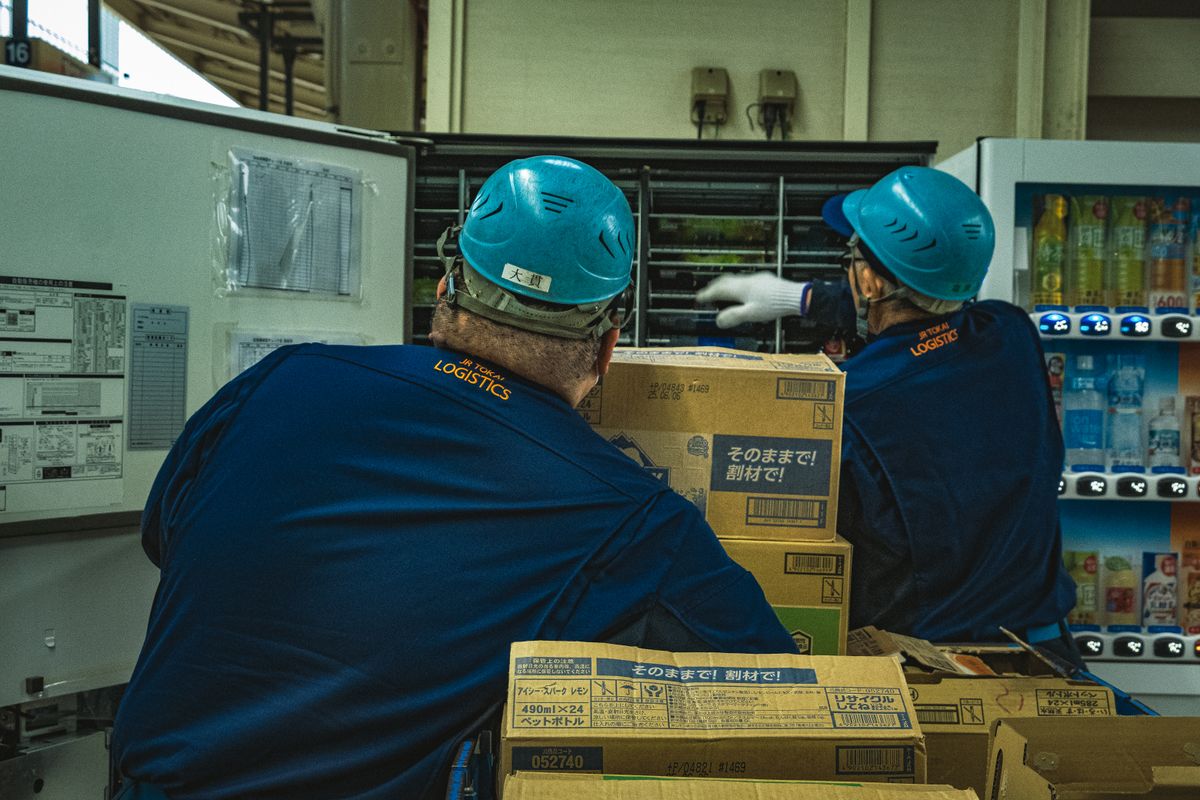
On January 16, 2001, the United States had a federal ergonomics standard. Sixty-three days later, it did not — and it has not had one since. That single fact explains one of the strangest gaps in American workplace safety: musculoskeletal disorders are the largest category of serious injury and the most expensive, and yet the hazard that causes them is the one major hazard OSHA is not allowed to regulate with a rule of its own. This analysis lays out the data — how big the MSD problem is, what it costs, and the remarkable 63-day life of the standard that was supposed to address it.
At a glance: MSDs ≈ 30% of all days-away-from-work injuries · 502,380 MSD days-away cases in 2021–2022 · median 12 days away (vs 8 overall) · overexertion = #1 disabling-injury cost, ~$13.7B/yr · OSHA ergonomics standard: in force 63 days (2001), none since. Sources: BLS SOII; Liberty Mutual; OSHA.
Key findings — the ergonomics gap
- MSDs are the #1 serious injury. About a third of all days-away-from-work cases are musculoskeletal — more than any other category.
- They cost the most. Overexertion is the single most expensive cause of disabling injury, ~$13.7 billion a year.
- And OSHA has no standard for them. The one it issued in 2000 was repealed by Congress in 2001 — in effect for just 63 days.
- Congress killed it with the Congressional Review Act. In 2017 it used the same law against OSHA again, voiding a recordkeeping rule (Public Law 115-21, April 3, 2017).
- This is an every-industry problem. Warehousing, health care, and manufacturing carry the heaviest MSD burden — not just construction.
The size of the problem: a third of every serious injury
Start with how common these injuries are, because the scale is the whole point. Musculoskeletal disorders — the sprains, strains, and tears that come from lifting, repetitive motion, awkward postures, and overexertion — are not a niche hazard. They are the baseline of American workplace injury.
Musculoskeletal disorders, by the numbers
Source: BLS Survey of Occupational Injuries and Illnesses (SOII) and MSD fact sheet. MSDs are more disabling than the average injury — half keep a worker out longer than 12 days.
Two things make that median of 12 days matter more than the headcount. First, MSDs don't just happen often — they keep people off the job longer than the typical injury (a median of 12 days versus 8 for all cases). Second, they are cumulative and career-ending in a way a laceration is not: a back injured by years of lifting doesn't fully heal. The injury pyramid has a musculoskeletal core. Those counts follow OSHA's recording criteria: a case is recordable when it leads to days away, restricted work or job transfer, or medical treatment beyond first aid, among other outcomes (29 CFR 1904.7(a)).
The cost: the most expensive injury in America
If the frequency doesn't move a budget, the cost should. Insurers track which injuries actually drain workers'-compensation dollars, and the answer has been the same for years.
Overexertion is the #1 cost driver of disabling injury
Liberty Mutual Workplace Safety Index (2025 edition, 2022 data) · annual cost, top causes
Source: Liberty Mutual Workplace Safety Index. Overexertion has consistently accounted for roughly 23% of all disabling-injury costs — the single largest share, and about a quarter of the entire $50.87B top-10 total. (Liberty Mutual is a private index, not a government dataset.)
Overexertion — the bodily-reaction mechanism behind most MSDs — is the single most expensive cause of disabling injury in the country, about $13.7 billion a year, roughly a quarter of the top-10 total. Put the frequency and the cost together and you have a hazard that is simultaneously the most common serious injury and the most expensive one. That is precisely the profile a regulator would prioritize. OSHA did — once.
The 63-day standard
Here is the history, and it is genuinely unusual. After a decade of rulemaking, OSHA published the Ergonomics Program Standard (29 CFR 1910.900) on November 14, 2000 (65 FR 68262). It took effect on January 16, 2001. Then Congress reached for a tool it had never before used on a safety rule.
The life and death of the ergonomics standard
From a decade of rulemaking to repeal in weeks.
Sources: OSHA (1910.900, published Nov 14, 2000, effective Jan 16, 2001); Congressional Review Act repeal, Public Law 107-5, signed March 20, 2001 (Senate 56–44; House 223–206). The standard was in effect for 63 days.
Congress passed a joint resolution of disapproval under the Congressional Review Act — the Senate 56–44, the House 223–206 — and the President signed it as Public Law 107-5 on March 20, 2001. Because a CRA repeal also bars the agency from issuing a rule in "substantially the same form," it didn't just delete the standard; it froze OSHA out of the space. In 2017 Congress used the same law against OSHA again, voiding a recordkeeping rule (Public Law 115-21, April 3, 2017). Twenty-five years later, there is still no replacement.
OSHA carried out the repeal itself on April 23, 2001, removing 29 CFR 1910.900 from the Code of Federal Regulations because Public Law 107-5 invalidates the standard (66 FR 20403).
What fills the gap: the General Duty Clause (barely)
With no standard, OSHA is left with the General Duty Clause, Section 5(a)(1) of the OSH Act (29 U.S.C. 654(a)(1)) — the catch-all requiring a workplace free of "recognized hazards." It is a real tool, but a blunt one for ergonomics. To win a General Duty Clause case, OSHA generally has to prove the hazard was recognized, was causing or likely to cause serious harm, and had a feasible fix — often leaning on NIOSH guidance like the Lifting Equation and its recommended weight limits. That is a far higher bar than pointing to a specific numeric standard, which is why ergonomics citations are comparatively rare even though the hazard is everywhere. When OSHA does issue one, the ceiling is $16,550 per serious violation (29 CFR 1903.15(d)(3)), or $165,514 if the violation is willful or repeated (29 CFR 1903.15(d)(1)-(2)). OSHA also publishes voluntary industry guidelines (nursing homes, retail grocery, poultry) — helpful, but unenforceable.
This is the same structural pattern we keep finding across the rulebook: where a specific standard is missing, the duty survives only through 5(a)(1). It is exactly how OSHA reaches heat, PFAS, and lithium-ion batteries — and, uniquely, ergonomics is a case where a standard existed and was deliberately taken away.
The rules that still reach an MSD
No standard governs the lift itself, yet the recordkeeping rules treat a strain or a sprain like any other injury, and they decide how it shows up in the data above:
| Duty | What it means for an MSD | Rule |
|---|---|---|
| Work-relatedness | A task that caused or contributed to the condition, or significantly aggravated a pre-existing one, makes it work-related | 29 CFR 1904.5(a) |
| Recordability | Days away, restricted work or job transfer, or medical treatment beyond first aid puts the case on the 300 Log | 29 CFR 1904.7(a) |
| First aid, not recordable | Hot or cold therapy, non-rigid supports such as wraps and non-rigid back belts, and massages | 29 CFR 1904.7(b)(5)(ii)(E), (F), (M) |
| Medical treatment, recordable | Physical therapy, chiropractic treatment, and rigid devices that immobilize part of the body | 29 CFR 1904.7(b)(5)(ii)(F), (M) |
| Restricted work | Keeping the worker from one or more routine functions of the job, or from a full workday | 29 CFR 1904.7(b)(4)(i)(A) |
| Days away | Counted in calendar days, starting the day after the injury, with an optional cap at 180 | 29 CFR 1904.7(b)(3)(i), (vii) |
| Recording deadline | The 300 Log and 301 report within 7 calendar days of learning of the case | 29 CFR 1904.29(b)(3) |
| Employee reporting | A reasonable reporting procedure, and no discharge or discrimination for reporting | 29 CFR 1904.35(b)(1)(i), (iv) |
| Electronic submission | 300 Log and 301 data each year from establishments with 100 or more employees in designated industries | 29 CFR 1904.41(a)(2) |
| The hazard itself | Cited, if at all, under the General Duty Clause, with serious penalties up to $16,550 | 29 U.S.C. 654(a)(1); 29 CFR 1903.15(d)(3) |
Not just construction: an every-industry hazard
Because lifting and repetitive motion are universal, MSDs are one of the most industry-agnostic hazards there is — which is what makes the missing standard so consequential. The burden concentrates wherever people move loads and bodies:
Where the musculoskeletal burden lands
Source: BLS SOII (nature/event of injury by industry). MSDs are the leading injury mechanism across manual-handling sectors — the reason ergonomics is an every-workplace issue, not a construction one.
For an EHS professional, the takeaway is that "no standard" does not mean "no problem" or "no liability." It means the responsibility to control the single most common and most expensive injury falls almost entirely on the employer's own program — job hazard analysis, engineering out the lift, rotating tasks, and training. In construction, part of that training duty is written down: the employer must instruct each employee in the recognition and avoidance of unsafe conditions (29 CFR 1926.21(b)(2)).
Manage the injury the rulebook forgot
No ergonomics standard means your own program is the only control on the #1 injury. Analyze the high-strain tasks, put a dollar figure on the exposure, and build the record that answers a General Duty Clause inquiry — HazComFast keeps it all audit-ready.
Methodology and limits
- MSD figures are BLS. The ~30% share (272,780 of 900,380 days-away cases) is 2018; the 502,380 MSD days-away figure is the 2021–2022 period; the 12-day vs 8-day medians are from the SOII. Detailed MSD breakdowns come from the biennial SOII Case and Demographic tables, so the newest granular figures lag the headline injury totals.
- Cost figures are Liberty Mutual, not government. The $13.7B overexertion cost and the $50.87B top-10 total are from the Liberty Mutual Workplace Safety Index (2025 edition, 2022 data) — the standard industry source for injury cost, but a private index, clearly labeled as such.
- The repeal record is exact. 29 CFR 1910.900 published Nov 14, 2000; effective Jan 16, 2001; repealed via Public Law 107-5, signed March 20, 2001 (Senate 56–44; House 223–206); removed from the CFR on April 23, 2001 (66 FR 20403). "63 days" counts the effective-to-repeal window.
- "No standard" is precise. OSHA has no ergonomics standard; it uses the General Duty Clause plus voluntary industry guidelines. A few states (e.g., California) have their own ergonomics rules.
Manage lifting and repetition without a federal rule
The ergonomics gap is the sharpest illustration of a truth that runs through workplace-safety data: what gets regulated is not always what does the most harm. Musculoskeletal disorders are the most common serious injury and the most expensive, they strike every industry that lifts or repeats a motion, and the one standard written to prevent them lived for 63 days before Congress erased it — and barred its return. Until that changes, the injury the rulebook forgot is managed one employer at a time, or not at all. The data says it deserves better than that.
Related data studies
- The "no standard" series: The Data Behind the Coming Heat Standard · PFAS: Regulated in Water, Silent on the SDS · Lithium-Ion: A Fire Hazard With No Standard
- The injury picture: The Injury Pyramid (SOII 2024) · What 5,070 Workplace Deaths Reveal (CFOI)
- Reference: OSHA Data & Research
Sources & verification (verified 2026-07-13): Musculoskeletal-disorder figures from the BLS Survey of Occupational Injuries and Illnesses and MSD fact sheet: MSDs ≈ 30% of days-away-from-work cases (272,780 of 900,380, 2018); 502,380 MSD days-away cases in the 2021–2022 period; median 12 days away for MSDs vs 8 for all injuries. Cost figures from the Liberty Mutual Workplace Safety Index (2025 edition, 2022 data): overexertion involving outside sources is the #1 disabling-injury cause at ~$13.7 billion/year, ~23% of costs; top-10 causes total $50.87 billion (private index, not government data). Regulatory history: OSHA Ergonomics Program Standard, 29 CFR 1910.900, published November 14, 2000, effective January 16, 2001; repealed under the Congressional Review Act via Public Law 107-5, signed March 20, 2001 (Senate 56–44; House 223–206); in effect 63 days. Congress used the same law against OSHA again in 2017, voiding a recordkeeping rule (Public Law 115-21, April 3, 2017). No federal ergonomics standard since; ergonomic hazards addressed under the General Duty Clause, Section 5(a)(1), plus voluntary OSHA industry guidelines and NIOSH guidance (Lifting Equation). Some states maintain their own ergonomics rules. Not legal advice.
Frequently Asked Questions
Does OSHA have an ergonomics standard?
No. There is no federal OSHA ergonomics standard. OSHA issued one — the Ergonomics Program Standard, 29 CFR 1910.900 — on November 14, 2000, effective January 16, 2001, but Congress repealed it under the Congressional Review Act (Public Law 107-5), signed March 20, 2001. It was in effect for 63 days. In 2017 Congress used the same law against OSHA again, voiding a recordkeeping rule (Public Law 115-21, April 3, 2017). Today OSHA addresses ergonomic hazards through the General Duty Clause, Section 5(a)(1).
How common are musculoskeletal disorders at work?
They are the single largest category of serious workplace injury. Musculoskeletal disorders (MSDs) — sprains, strains, and tears from overexertion, repetitive motion, and awkward postures — have accounted for roughly 30% of all days-away-from-work cases (272,780 of 900,380 in 2018), and 502,380 MSD cases involved days away from work in the 2021–2022 period. They also keep workers out longer: a median of 12 days away versus 8 for injuries overall. On the employer's OSHA 300 Log, a case with days away from work meets the general recording criteria (29 CFR 1904.7(a)), and its days away are counted in calendar days, with an optional cap at 180 (29 CFR 1904.7(b)(3)(vii)).
What is the most expensive type of workplace injury?
Overexertion — the bodily-reaction mechanism behind most MSDs. According to the Liberty Mutual Workplace Safety Index (2025 edition, 2022 data), overexertion involving an outside source is the #1 cause of disabling workplace injury, costing employers about $13.7 billion a year, and overexertion has consistently represented roughly 23% of all disabling-injury costs. Before it is a cost, a work-related overexertion injury is a recordkeeping entry: if it leads to days away, restricted work, or medical treatment beyond first aid, it goes on the OSHA 300 Log within 7 calendar days (29 CFR 1904.7(a), 1904.29(b)(3)).
How does OSHA cite ergonomic hazards without a standard?
Through the General Duty Clause, Section 5(a)(1) of the OSH Act (29 U.S.C. 654(a)(1)), which requires a workplace free of recognized hazards likely to cause death or serious physical harm. To cite an ergonomic hazard, OSHA generally must show the hazard was recognized, was causing or likely to cause serious harm, and had a feasible abatement — often referencing NIOSH guidance such as the Lifting Equation. It is a higher bar than a specific standard, so ergonomics enforcement is comparatively rare.
Which industries have the most musculoskeletal disorders?
MSDs concentrate wherever people lift, carry, and move — which is nearly everywhere, not just construction. Transportation and warehousing, health care (especially patient handling in nursing and residential care), and manufacturing carry some of the highest MSD burdens; among transportation and material-moving occupations alone, overexertion and bodily reaction produced hundreds of thousands of cases. Because the hazard is universal, the absence of a standard affects almost every workplace. Several of those industries are also on OSHA's list for detailed electronic reporting: establishments with 100 or more employees in warehousing and storage, general medical and surgical hospitals, nursing care facilities, and animal slaughtering and processing must send their 300 Log and 301 case data to OSHA each year (29 CFR 1904.41(a)(2) and Appendix B to Subpart E).
OSHA figures and citations here come from our regulatory source-of-truth modules, last checked against the eCFR, OSHA.gov, and the Federal Register on October 5, 2026. Last reviewed October 6, 2026.
About This Article
Published by: HazComFast
Published: July 13, 2026
Last Updated: October 6, 2026
This content is for informational purposes only and does not constitute legal advice.